How to Choose Steel Sheet Pile Thickness for Heavy-Duty Retaining Applications?
Choose a steel sheet pile that is too thin for a heavy-duty retaining wall, and you will not discover the mistake on paper. You will discover it when the wall starts moving.
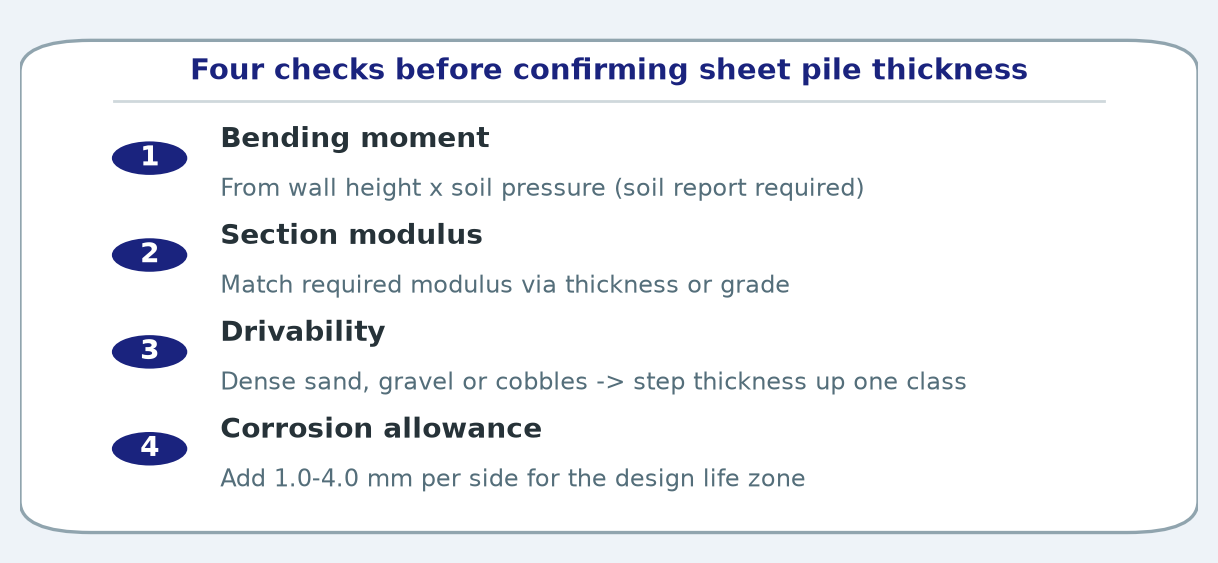
For heavy-duty retaining applications, choose steel sheet pile thickness from four checks together: bending moment from wall height and soil, the section modulus of the profile, drivability in hard ground, and a corrosion allowance for the design life. Flange thickness between 10 mm and 16 mm covers most heavy walls.
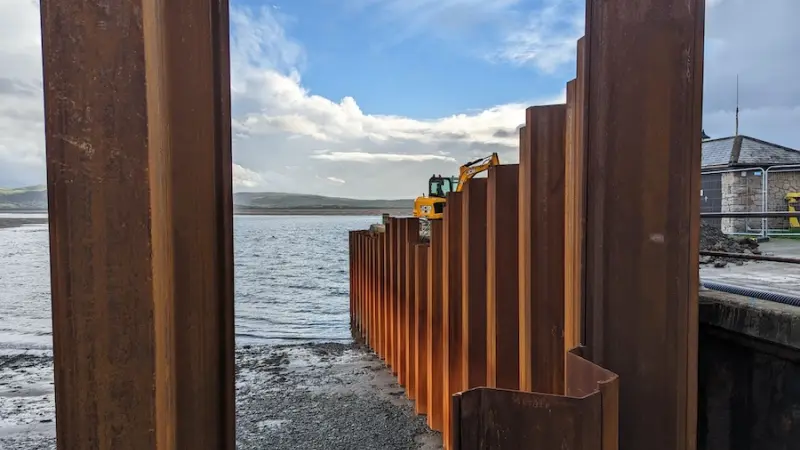
When I help contractors and distributors size piles for demanding walls — deep basement excavations, port quay walls, bridge pier cofferdams — thickness is the question they ask most often, and the one they most often ask too early. Thickness is not an isolated number on a datasheet. It is the visible end of a chain that starts with your retained height and your soil report, passes through section modulus and steel grade, and ends with the driving conditions on your site. In this article I walk through that chain the way I walk through it when our customers at cnsteelplant.com ask me to confirm their section choice before we quote, so you can order a wall that is strong on day one and still strong in year twenty-five.
What Does Steel Sheet Pile Thickness Actually Control?
Thickness looks like a simple datasheet value, but it quietly controls four different things at once. Understanding which one you are actually buying is the first step to choosing it well.
Thickness drives the section modulus and bending resistance of the profile, the stiffness of the wall, its ability to survive hard driving without damage, and how many years of corrosion the section can lose before strength becomes critical. Never buy thickness for only one of these four reasons.
From Flange Thickness to Section Modulus
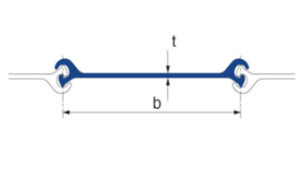
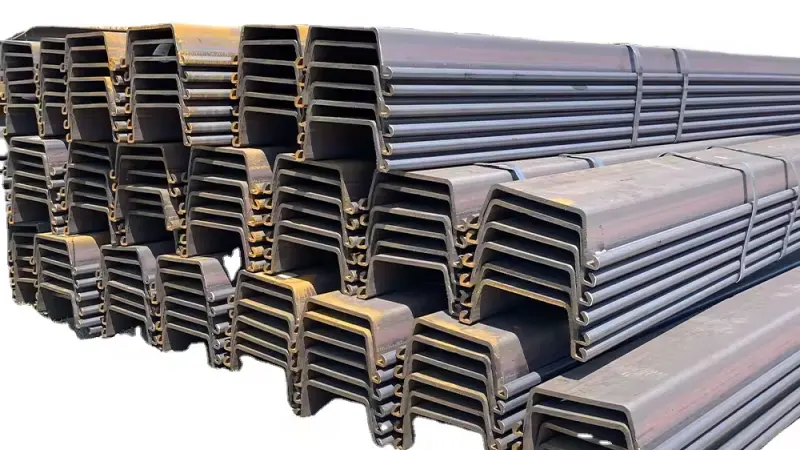
In U and Z profiles, most of the bending resistance lives in the flanges, so flange thickness is the number that moves the needle. When a mill increases flange thickness while keeping the profile height and width the same, the section modulus rises almost linearly, and the wall can carry a larger bending moment at the same steel grade. This is why two profiles that look similar on a drawing can behave completely differently in a heavy wall: the taller, thicker flange version will show a section modulus two or three times higher than the shallow thin one. The relationship is standardized — profiles for steel sheet piling are published with their mass, section modulus, and moment of inertia together, and I always ask buyers to compare those three numbers as a set rather than reading thickness alone.
Stiffness, Drivability, and Corrosion in One Number
The other three roles of thickness are less obvious but just as real. A thicker section has a larger moment of inertia, so the wall deflects less under the same load — this matters when your retaining wall stands next to a road, a railway, or existing basements. Thicker flanges also survive driving better: when the pile toe meets gravel, boulders, or hard obstructions, thin flanges can fold, tear, or deform the interlocks, while a heavier section drives through and stays straight. I have seen more walls ruined by under-specifying thickness for ground conditions than by underestimating the soil load itself; the mechanics of that failure mode are the same one I describe in my article on how to prevent steel sheet pile buckling in retaining structures. Finally, thickness is your corrosion budget. A wall in seawater loses steel at a predictable rate, and every extra millimetre is years of service life you bank at the factory instead of repairs you pay for at the quay.
| Property | What Thickness Does | Where It Matters Most |
|---|---|---|
| Section modulus | Raises bending resistance | Tall walls, heavy surcharges |
| Wall stiffness | Reduces deflection | Urban excavations, sensitive neighbors |
| Drivability | Survives hard ground and obstructions | Gravel, boulders, dense sand |
| Corrosion allowance | Adds service life | Marine, contaminated soil |
How Do Wall Height and Soil Conditions Set the Minimum Thickness?
The minimum thickness your wall needs is not chosen from a catalogue. It falls out of two inputs: how high your wall retains, and how hard the soil pushes against it.
Taller walls and softer soils both increase the bending moment, and the moment decides the section modulus, which decides the thickness class. As a working band, walls under 4 m in firm soil can use thinner flanges near 8–10 mm, while 10–12 m walls in soft clay usually need 14–16 mm or an anchored system.
Turning Height and Soil Into a Moment
The bending moment in a sheet pile wall grows steeply with retained height — in simple cantilever cases roughly with the cube of the height, which is why one extra metre of excavation can push you into a completely different thickness class. Soil does the same work in the other direction: soft clay and loose silt press harder and need deeper embedment, so the loaded length grows again. I explain this height effect in detail in my article on how sheet pile wall height affects section selection and structural design, and the soil side is exactly why I ask every buyer to send the geotechnical report before we fix a section; my guide on interpreting soil investigation reports for sheet pile procurement shows which lines of that report actually matter. The bending moment that comes out of these two inputs is then converted into a required section modulus using the design method I step through in calculating bending moments in sheet piles.
The Table I Use on First Enquiry
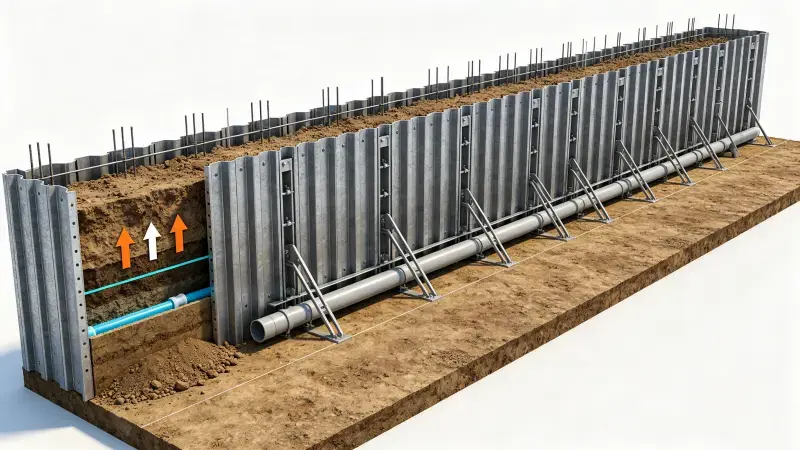
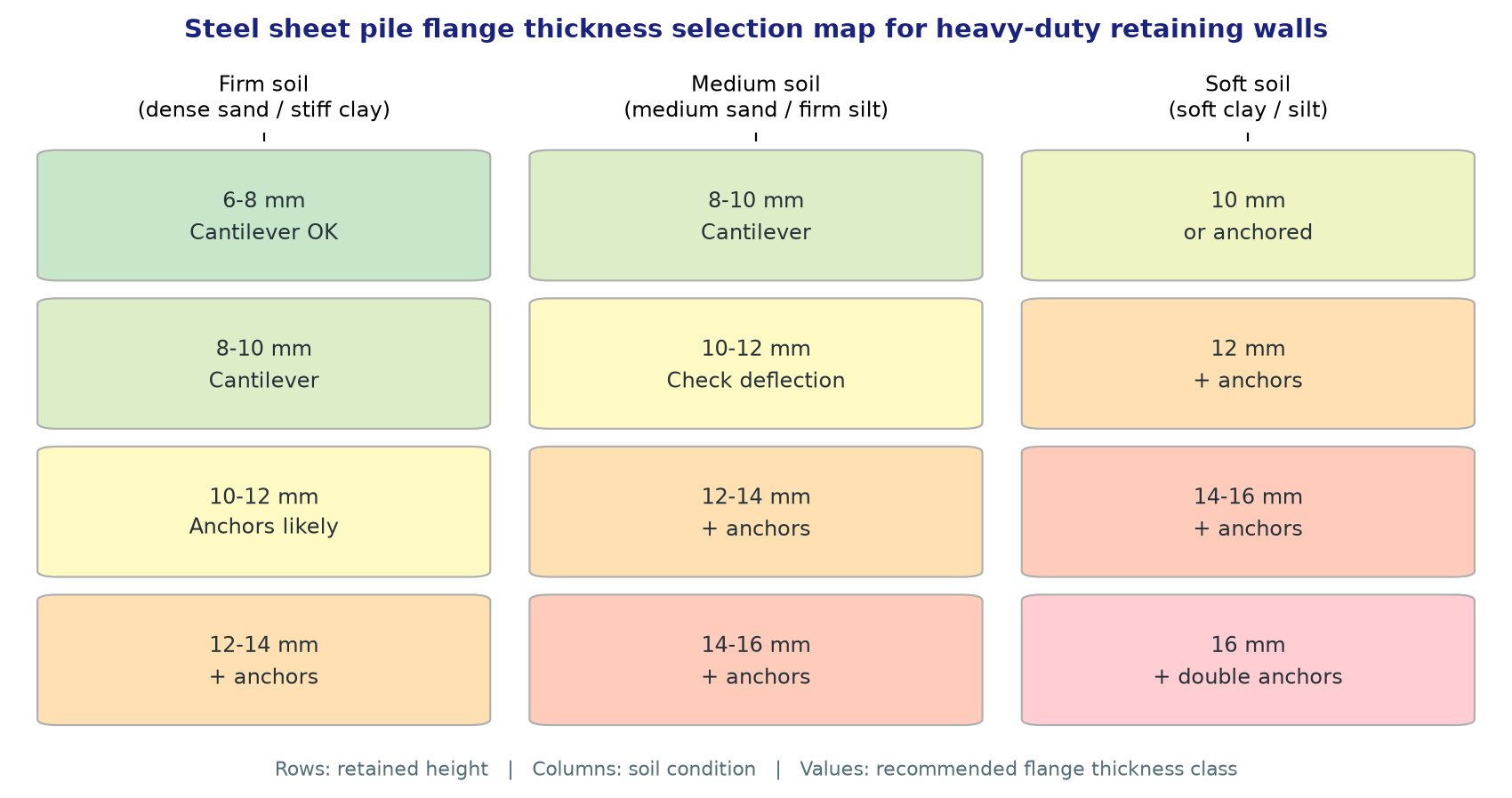
The table below is the shortcut I use when a buyer calls me before the full design is done. It is not a substitute for an engineer’s calculation, but it tells you immediately whether you are in the thin, medium, or heavy band, and it makes conversations with your consultant much faster. Notice how the anchored option appears in the bottom rows: adding ties and waling beams, as I describe in the role of waling beams in sheet pile walls, cuts the moment in the pile itself and often lets a thinner, cheaper section do the job of a very heavy cantilever.
| Retained Height | Firm Soil (dense sand / stiff clay) | Medium Soil | Soft Clay / Silt | My Starting Point |
|---|---|---|---|---|
| Up to 4 m | 6–8 mm flange | 8–10 mm | 10 mm or anchored | Cantilever OK |
| 4–7 m | 8–10 mm | 10–12 mm | 12 mm + anchors | Check deflection |
| 7–10 m | 10–12 mm | 12–14 mm + anchors | 14–16 mm + anchors | Anchors likely |
| 10–14 m | 12–14 mm + anchors | 14–16 mm + anchors | 16 mm + double anchors | Heavy-duty class |
One warning from the field: the table assumes the wall is a simple retained cut. If your wall also carries a crane road, stacked containers, or a building foundation behind it, surcharge loads can add the equivalent of metres of retained height, and the thickness class moves up accordingly.
Should I Buy Thickness Through Section Modulus or Through Steel Grade?
Once the required section modulus is known, you have two levers: more steel or stronger steel. This is the point where thickness decisions become purchasing decisions, and where I see buyers either save money or waste it.
A thicker section at a normal grade and a thinner section at a high-strength grade can deliver the same section modulus performance, but they differ in stiffness, drivability, price, and availability. For heavy-duty walls I usually favor the thicker section, because stiffness and durability come with the mass.
The Grade-for-Thickness Trade
Switching to a higher-strength grade raises the allowable bending stress, so a thinner profile can pass the same moment check — the mechanics behind this trade are laid out in my comparison of matching steel sheet pile grades with project load requirements. Grades like the ones covered by ASTM A572 deliver yield strengths well above baseline piling grades, and the section modulus you actually need is defined by that combined check, which I summarize in what section modulus you need for sheet piles. But strength is not stiffness: the elastic modulus of steel is the same at every grade, so a thinner high-strength wall deflects more under the same load, drives with less reserve in hard ground, and offers less corrosion buffer. In marine and long-life walls, that missing buffer often costs more than the steel you saved.
| Approach | Same Moment, Different Mix | Deflection | Drivability | Corrosion Reserve | Relative Price |
|---|---|---|---|---|---|
| Thick + normal grade | 14–16 mm, S270–S355 | Low | Strong | Large | Higher steel mass |
| Thin + high grade | 10–12 mm, S430–S460 | Higher | Moderate | Small | Lower mass, premium grade |
| Thick + anchors | 10–12 mm + tie rods | Low | Moderate | Medium | Adds anchoring cost |
What I Recommend for Heavy-Duty Walls
For permanent heavy-duty retaining walls — quay walls, bridge foundations, permanent basement walls — I recommend buying performance through thickness and anchors first, and using grade upgrades to fine-tune the result. For temporary works with short design lives, the thin-plus-high-grade route is often genuinely economical, because deflection and corrosion matter less when the wall comes out in eighteen months. The choice also interacts with availability: at export volumes, common thick sections in standard grades ship faster than exotic combinations, and lead time is a cost my buyers in the Middle East and Africa feel directly. If your wall sits in that gray zone between temporary and permanent, my article on temporary versus permanent sheet pile structures walks through how the whole specification, not just thickness, changes between the two.
How Do Driving Conditions Change the Thickness I Should Order?
A wall that passes every structural check can still fail in the ground if the section cannot be installed intact. Drivability is the most underestimated thickness factor I see in export projects.
In hard driving conditions, thin flanges fold and interlocks deform, and a deformed pile loses both strength and water-tightness. When the borehole log shows dense sand, gravel, cobbles, or refusal above design toe level, I step the flange thickness up one class and confirm the driving method before quoting.
Reading the Ground for Drivability
The same soil report that sets your bending moment also tells you how hard the pile will be to install. SPT N-values above 40, gravel layers, cobble zones, and shallow rock all raise driving resistance sharply, and they are exactly the conditions where 6 mm flanges wrinkle and interlocks tear. The fix costs little at the order stage: a thicker section with a heavier toe drives with more reserve, and the incremental steel price is far below the cost of extracting a damaged wall and re-driving. The alternative is a change of method rather than section — jetting, pre-drilling, or pressing systems, which the FHWA geotechnical guidance covers for public works in the United States. On our own export projects I ask one question before quoting: what hammer is on site? If the answer is a light vibratory hammer and the soil is dense gravel, I push the thickness up regardless of what the moment calculation says, because installation risk has become the controlling check, not bending.
Matching Hammer, Section, and Wall Together
Drivability is a three-way match. A heavy section driven with an underpowered hammer may stall above design depth; a light section driven with an overly aggressive hammer can be damaged by the very energy meant to install it. My field checklist before confirming thickness is simple: verify the hammer energy against the section mass, verify the soil resistance against both, and keep a driving stress margin for the inevitable obstruction nobody predicted. Where the wall is braced or anchored, the sequence also matters — installing walings and ties at the right stage reduces unsupported wall length, which indirectly lets a moderate section work where a cantilever would need to be much heavier. When a customer sends me both the soil report and the piling plan, I can check all of this in a day, and that check has saved more walls than any other review I perform.
| Site Condition | Thickness Risk | My Response |
|---|---|---|
| Dense sand, N > 40 | Flange folding, toe damage | Step up one thickness class |
| Gravel / cobbles | Interlock deformation | Thicker toe section or pre-drilling |
| Shallow rock refusal | Cant drive to design toe | Rock-toothed section + jetting/pre-drill |
| Light hammer only | Stall above depth | Bigger hammer or lighter wall |
How Much Extra Thickness Should Corrosion Take?
The last check converts design life into millimetres. Corrosion eats steel at a fairly predictable rate, and the thickness you order must include the steel you expect to lose.
Add a corrosion allowance to the structural thickness: roughly 1.0–1.5 mm per side for soil zones, 1.5–2.0 mm per side in freshwater, and 2.5–4.0 mm per side in aggressive marine splash zones over a 25–50 year life. Coatings and cathodic protection reduce, but do not delete, this allowance.
Converting Design Life Into Millimetres
Corrosion rates depend on the exposure zone, and the worst zone is not underwater — it is the splash and low-water zone at marine sites, where oxygen, salt, and wet-dry cycling combine. For a quay wall with a 50-year design life, that can mean 4 mm per side at the splash band alone, which is 8 mm of the section consumed before any live load arrives. This is the arithmetic behind my articles on corrosion resistance solutions for steel sheet piles and the real-world service life and durability of steel sheet piling systems, and it is why I ask buyers for the design life and the water regime before I confirm a section. A wall that looks over-specified on the structural drawing may actually be correctly sized once the allowance is added — and a wall that ignores the allowance will pass its early inspections and fail its twentieth year.
| Exposure Zone | Typical Loss per Side, 25–50 yr | Thickness Response |
|---|---|---|
| Soil (aerated fill) | 1.0–1.5 mm | Modest allowance |
| Freshwater submerged | 1.5–2.0 mm | Standard allowance |
| Marine splash zone | 2.5–4.0 mm | Heavy allowance or coating |
| Contaminated / industrial soil | Project-specific | Test first, then allow |
Ways to Buy the Allowance Smartly
You can buy corrosion reserve as raw thickness, as coating, or as a mix. Extra millimetres are permanent and maintenance-free but add mass and cost to every pile in the wall. Coatings concentrate protection at the critical zone at lower cost, and sacrificial anodes work well for the submerged band, but both need to be specified and inspected — they are engineering, not shopping. My usual answer for export projects is a hybrid: step the base thickness up one class, apply a coating at the splash band, and let the residual allowance cover the rest. For aggressive chemical ground or seawater projects, the grade choice interacts here too, and the marine-grade options I compare in our A690 steel overview can substitute part of the thickness allowance with alloy content. What I never recommend is assuming the allowance away because the wall “looked thick enough” — thickness without a corrosion budget is a wall designed for its first decade only.
My Take: Thickness Is a System Decision, Not a Datasheet Line
If I could leave buyers with one habit, it would be this: never discuss thickness before discussing height, soil, life, and hammer. In my experience, most under-thickness failures are not calculation errors — they are sequence errors. Someone picked a profile from a price list before the soil report arrived, or accepted a value-engineering downgrade that traded away corrosion allowance nobody remembered to defend. When our customers send us the full set — soil report, wall layout, design life, installation plan — the thickness conversation takes one exchange and the wall performs for decades. When they send only a tonnage, I end up selling them steel twice: once for the original thin wall, and once for the remediation.
Conclusion
Set thickness from four checks — moment, section modulus, drivability, corrosion allowance — not from price. Order the heavier section when ground or salt is against you; it is the cheapest margin you will ever buy.
Tags: steel sheet pile thickness · heavy-duty retaining walls · section modulus selection · sheet pile drivability · corrosion allowance