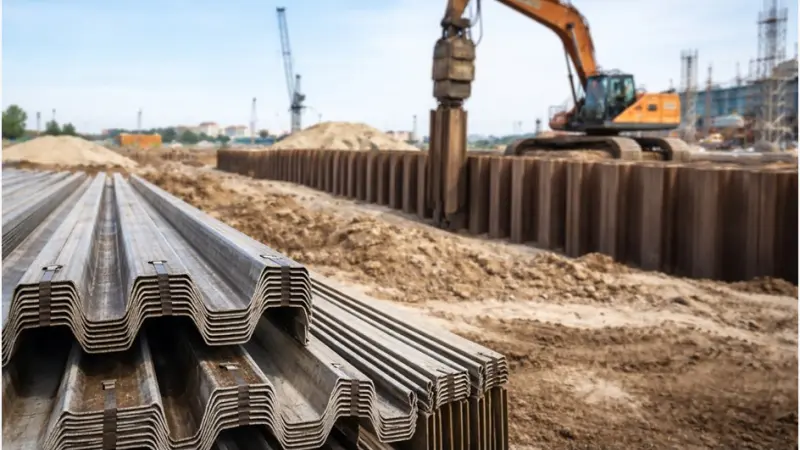
A wrong choice costs you twice. I have seen contractors buy heavy sections for a wall they pulled out after six months. Start with design life, not price.
Temporary projects need piles that drive fast, seal enough, and come out clean. Permanent projects need sections that survive the full design life with proper corrosion protection. I always start with one question: will this wall ever be pulled out?
Below, I break this choice into four parts. I will show you what really separates a temporary wall from a permanent one, how design life changes the steel you order, what extraction and reuse do to your budget, and the short checklist I use before I quote any project. I supply steel sheet piles from our factory base in Liaocheng, Shandong, to contractors and distributors in Iraq, the UAE, Saudi Arabia, Australia, and Africa. Most of my customers ask this exact question at the enquiry stage, sometimes before they even have the drawings. I want this article to answer it the way I answer it on the phone: directly, with numbers, and without pushing you toward the most expensive option I have.
What Actually Separates a Temporary Sheet Pile Wall from a Permanent One?
Many buyers think the only difference is time. In my experience, the real difference sits in what happens to the wall at the end of the job.
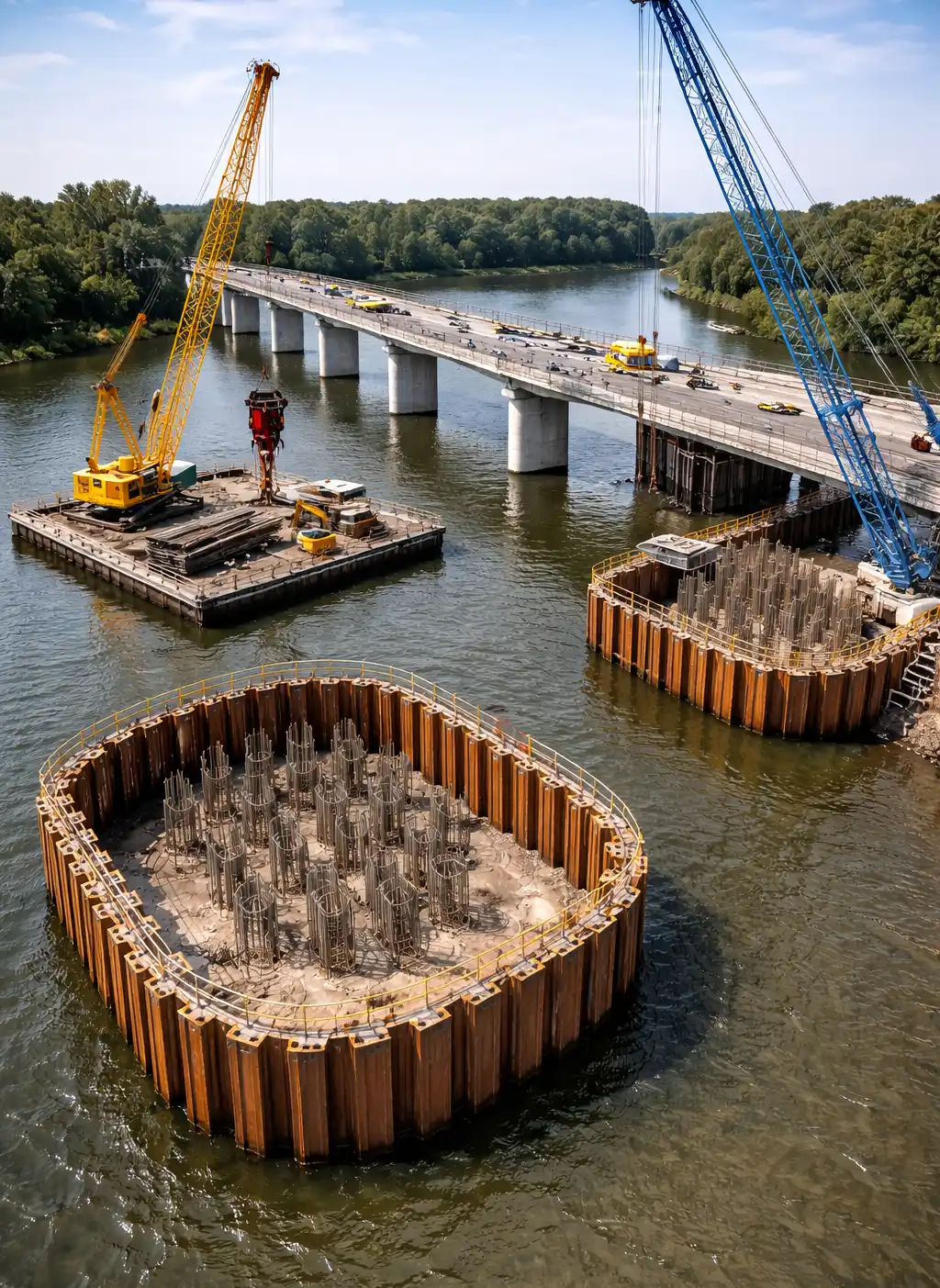
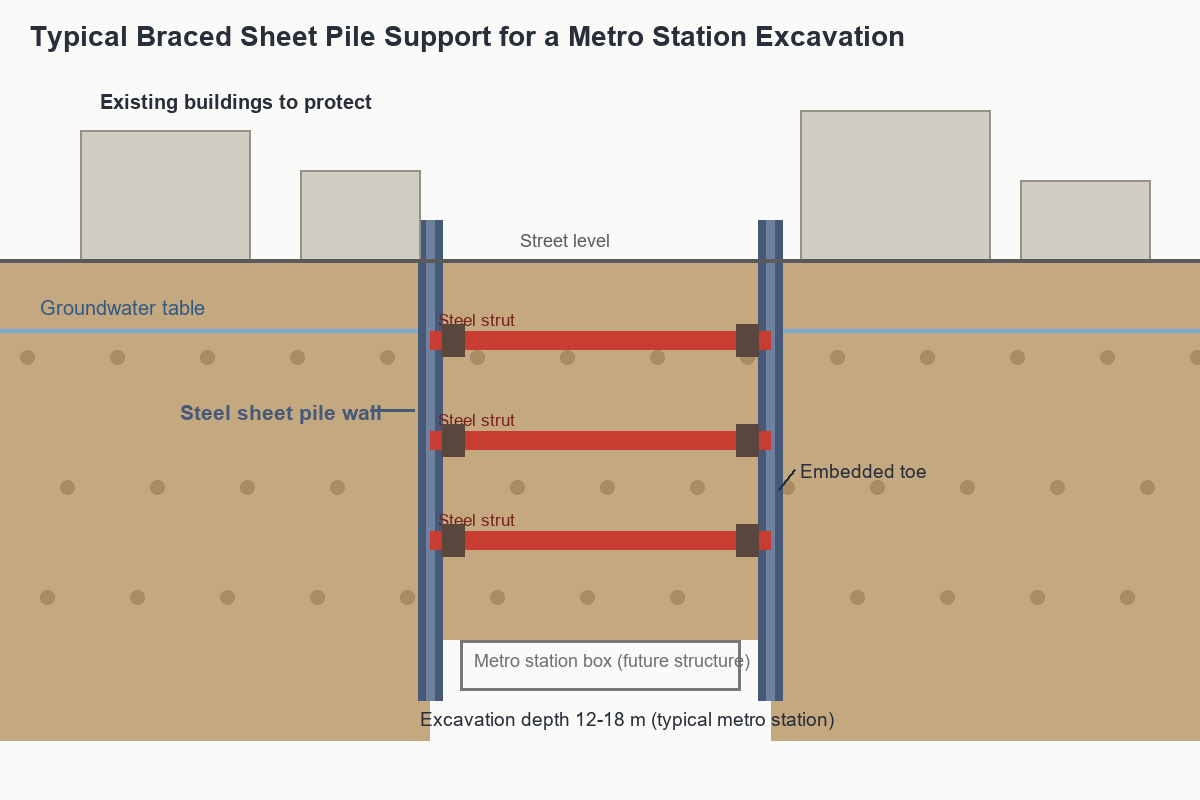
A temporary wall is a working tool. It holds soil or water for a season, then it must come out without damaging the site. A permanent wall is part of the structure itself. It must last its full design life, hidden and unwatched.
The end of the wall defines almost every decision
Once you know the wall will be extracted, everything upstream gets simpler and cheaper. Temporary walls usually carry their full load for a short window, so fatigue and long-term corrosion growth are not design drivers. In most specifications they count as temporary works, not as part of the finished structure. The interlocks only need a drive fit, maybe a light sealant if water control matters for a few months. Nobody specifies a coating system for a wall that comes out in twenty weeks, because the paint would cost more than the value it protects.
Permanent walls flip every one of those choices. The section must carry load for fifty years or more, so I add corrosion allowance to the section or specify a protection system, sometimes both. Interlocks below the water table get welded or fitted with proper seals, because a slow leak inside a basement is a maintenance problem for the owner, not for me. My article on the waterproof performance of interlocked steel sheet piles covers which sealing level fits which water condition. And the wall gets buried behind concrete or soil, so nobody can inspect it again. It has to be right the day it is driven.
I covered the structural side of this in my earlier article on temporary and permanent steel sheet pile retaining walls, so here I want to focus on the buying consequences. The table below is how I summarise it for distributors who resell to both markets.
| Aspect | Temporary wall | Permanent wall |
|---|---|---|
| Typical design life | 1 to 10 years | 50 years or more |
| Corrosion allowance | Usually ignored | Added to section or replaced by coating |
| Interlocks | Drive fit, optional sealant | Welded or sealed below water level |
| Coatings | Rare | Epoxy, galvanizing, or corrosion grade steel |
| End of life | Extract, refurbish, reuse | Stays in the ground permanently |
| Driving tolerance | Looser, speed matters | Tighter, verified line and level |
One warning from my own orders. Some buyers specify “temporary” on paper to avoid the cost of a permanent specification, then quietly expect the wall to stay in place when the project ends. If there is any chance the wall becomes permanent, tell me at the enquiry stage. I can quote a section that works for both cases. Retrofitting corrosion protection into a wall that is already in the ground is impossible.
How Does Design Life Change the Section and the Steel You Order?
Design life sounds like a paperwork number. It is not. It decides the steel grade, the section depth, and the protection system you pay for.
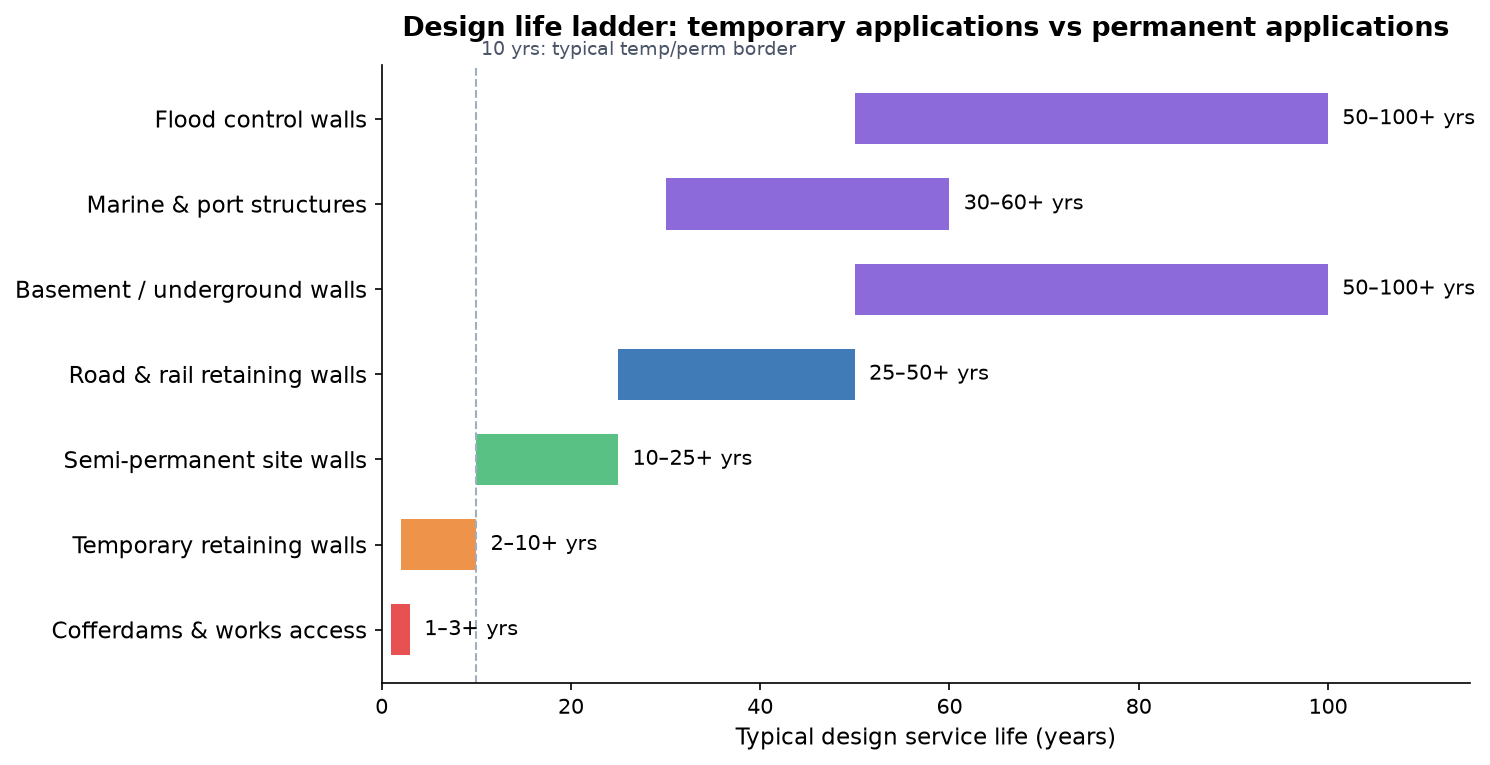
For short design lives, I quote standard hot rolled sections in S355 with no extra allowance. For permanent walls, I add corrosion allowance or a coating system, and sometimes move to a heavier section. Marine permanent work almost always needs both.
Why a few millimetres of steel decide the whole budget
Steel in soil and water corrodes at a predictable rate, and standards publish design values you can plan around. Buried in neutral soil, a sheet pile loses steel slowly, often in the range of 0.01 to 0.03 millimetres per side per year. In a marine splash zone, the same wall can lose several times that, which is why seawater work has its own steel grade. ASTM A690 was developed exactly for that splash zone environment, and I recommend it regularly for port and wharf projects in the Gulf.
Now do the arithmetic over a real design life. Half a millimetre of loss per side over fifty years is nothing structurally, but two millimetres per side starts to eat into the section modulus you paid for. So for a permanent wall I either start from a thicker section, or I protect the steel, or I accept a defined loss and oversize at the start. On permanent basements and flood walls, I often specify hot-dip galvanizing for the buried zones combined with a coating on the exposed face. The treatment costs a fraction of jumping two section sizes. If you want the full methodology, I wrote a separate article on the service life and durability of steel sheet piling systems, and a practical one on corrosion resistance solutions for steel sheet piles.
For temporary work, the arithmetic almost always says “don’t bother”. A two-year design life at even the worst corrosion rate loses a fraction of a millimetre. The steel grade still matters for drivability and strength, and I explain grade choices in my article on common sheet pile steel grades like Q235, Q355 and S355. But the protection system is dead weight in the budget.
| Environment | Typical loss, mm per side per year | What I do for permanent work |
|---|---|---|
| Neutral buried soil | 0.01 to 0.02 | Small corrosion allowance |
| Urban or industrial soil | 0.02 to 0.03 | Allowance, check water table |
| Fresh water | 0.02 to 0.04 | Allowance plus coating |
| Marine splash zone | 0.08 to 0.15 | A690 grade, coating, larger allowance |
There is one more subtlety. Temporary does not always mean short. A dam emergency repair might be “temporary” for ten years. A city basements wall is permanent from day one. So I never apply the label blindly. I ask the customer for the actual number of years, then I size everything from that number. It takes one email and it prevents both over-payment and under-protection.
Should You Extract and Reuse the Piles or Leave Them in Place?
Extraction looks like free money. Sometimes it is. Sometimes the cost of pulling piles out eats the saving, and the wall stays buried anyway.
Reuse pays when the wall is accessible, the soil allows clean extraction, and you have a second project lined up. If any of those conditions fail, leaving the piles in place is often the cheaper and safer ending.
The hidden costs that kill a reuse plan
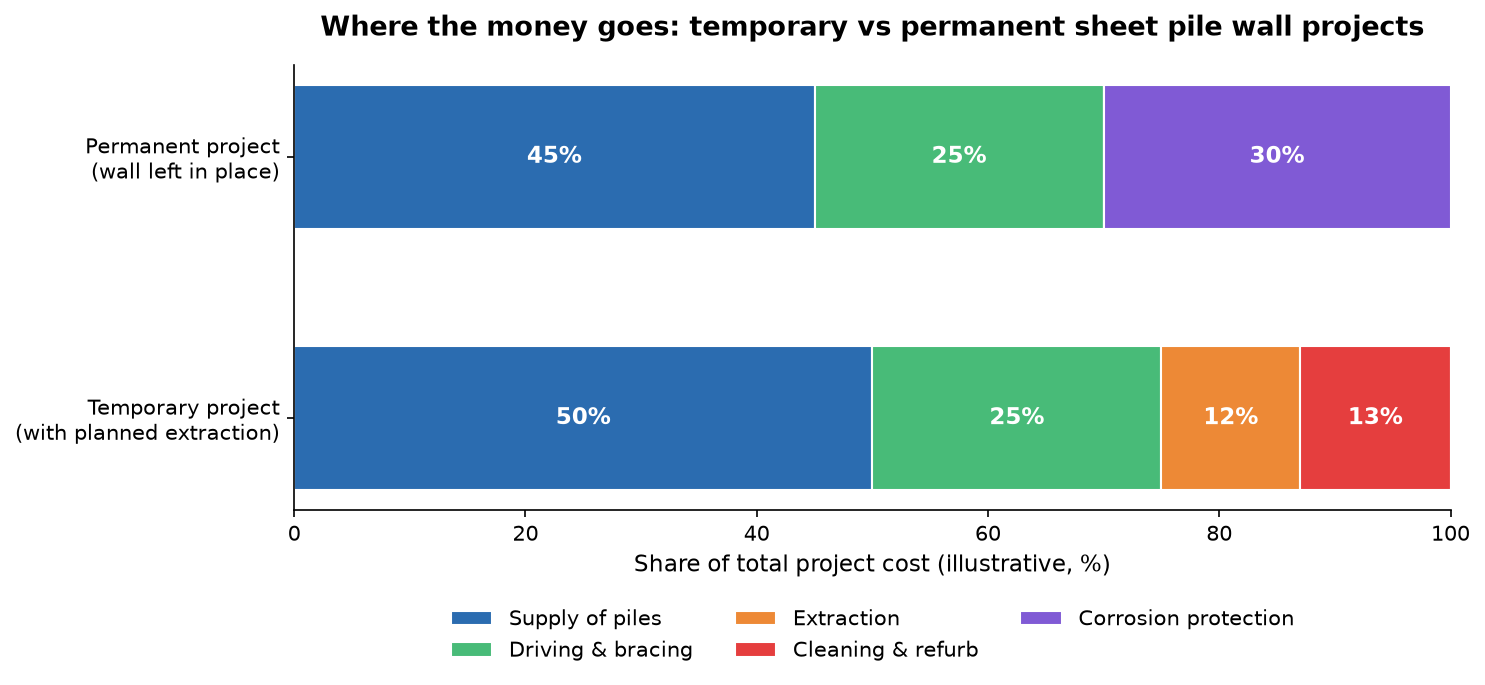
Pulling a sheet pile wall is a real construction operation, not a formality. You need an extraction machine or a heavy vibratory hammer, crane time, and a crew that knows how to break the wall into manageable panels. In dense sand or stiff clay, extraction forces go up sharply, and piles come out with soil packed in the interlocks. The pulling rig also works at the edge of an open dig, so the crew has to plan the operation around normal excavation safety practice, the way HSE guidance sets out for work in excavations. Then comes cleaning, straightening, inspecting, and re-coating before the next drive. In my experience the handling and refurbishment side of a reused wall can quietly consume a third of the money you thought you were saving. I also warn customers that five to ten percent of piles in a difficult extraction will bend or tear, and those are written off.
Compare that with the permanent ending. The wall stays in the ground, you backfill against it, and you move the crane to the next task. No pulling, no cleaning, no transport. That is why the cost structures of the two projects look so different in the chart above. A temporary project carries extraction and refurbishment on top of supply and driving. A permanent project carries protection instead. Neither one is automatically cheaper. The total depends on how many times the steel actually works for you.
The third option sits between the two, and I sell it often. Design the wall so it can stay in place, even if the plan says extract. If the extraction goes badly, the wall is already good enough to abandon permanently. This costs a slightly heavier section and a basic coating on the outside face, and it removes the worst case from your risk list. Contractors on tight urban sites love this option, because they cannot guarantee clean access for an extraction rig anyway.
| Ending option | Best when | Watch out for |
|---|---|---|
| Extract and reuse | Access is easy, soil is soft to medium, next job is ready | Damage, cleaning cost, logistics |
| Extract and sell | You have no follow-up project | Second-hand price is far below new |
| Leave in place | Hard soils, obstruction risk, no budget for pulling | Must meet permanent specification |
| Design for both | Urban sites, uncertain ground | Slightly higher upfront cost |
If reuse is central to your business, read my article on the environmental advantages of reusable steel sheet piles. Reuse is not only a cost story. It is also the reason many tenders now score sheet piling above concrete walls on sustainability.
What Does My Selection Checklist Look Like Before You Order?
After years of quoting export orders, I have reduced this decision to a short checklist. It takes ten minutes and it prevents most of the expensive surprises.
Check five things: design life, ground and water, extraction plan, protection budget, and the end of the wall. If you answer these clearly, the right temporary or permanent specification falls out almost by itself.
The five questions I ask every customer
The checklist works because each question eliminates half of the options. Design life splits the product range immediately. Ground and water conditions decide the section and the drivability, and I go deeper into that in my article on selecting sheet piles based on soil conditions. The extraction plan decides whether you buy or lease mentality applies, and whether I quote a section that tolerates a second and third drive. The protection budget only matters on the permanent side, but it needs to be settled before we fix the section, not after. And the end of the wall, as I said earlier, is the question that starts everything.
| Question | Temporary answer sounds like | Permanent answer sounds like |
|---|---|---|
| Design life? | “Eighteen months, then out” | “Fifty years, municipal basement” |
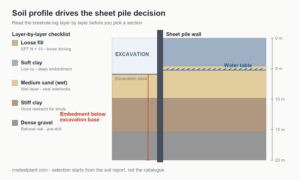
| Ground and water? | “Medium sand, dewatering allowed” | “Soft clay, high water table” |
| Extraction plan? | “Same rig stays for removal” | “No extraction, ever” |
| Protection budget? | “None” | “Coating plus allowance” |
| End of the wall? | “Clean site for handover” | “Load bearing forever” |
Two practical notes from the export side. First, send me the checklist answers with your enquiry, not after. When I know the wall is temporary with planned reuse, I quote from stock grades and standard lengths, and I can be far more aggressive on price because I know the piles will come back to the market. When I know the wall is permanent in seawater, the quote includes the protection system from the start, and nobody is surprised later. Second, if your project sits on a border between the two cases, order a small allowance anyway. The upgrade from a bare temporary section to a “leave-in-place capable” section is usually a few percent of the total, and it buys you the option to change your mind. Walk through my earlier key considerations before installing steel sheet piles with your site team, then close the temporary or permanent question in the same meeting. My customers in Jordan and Pakistan use this trick on every phase of their land reclamation work, and it has saved at least two of them from a forced permanent conversion with an undersized wall.
My View From the Yard in Liaocheng
Here is my honest opinion after years of watching these orders. Most buyers get this decision backwards in both directions. On temporary work, they over-specify, because fear makes them order the heaviest section on the data sheet for a wall that comes out in a year. On permanent work, they under-specify, because the wall disappears behind concrete and nobody wants to pay for steel they will never see. Both mistakes come from the same root: nobody sat down and answered the design life question honestly before the enquiry went out.
So my advice is simple. Tell your supplier the truth about the wall’s future. If it is temporary, say so, and push for a section that extracts cleanly instead of a section that impresses on paper. If it is permanent, spend the money on protection, not on one extra centimetre of depth that corrosion will ignore anyway. And if you are not sure, buy the option to change your mind. In my yard, the most profitable projects for my customers are always the ones where the specification matched reality. That match costs nothing except an honest conversation at the start.
Conclusion
Decide the end of the wall first. Temporary work needs clean extraction. Permanent work needs corrosion allowance and protection. Answer those two points honestly and every other choice follows.