What Factors Drive the Cost of Steel Sheet Pile Projects?
A steel sheet pile quote can swing by 30 % or more before you change a single profile, and most buyers do not know why.
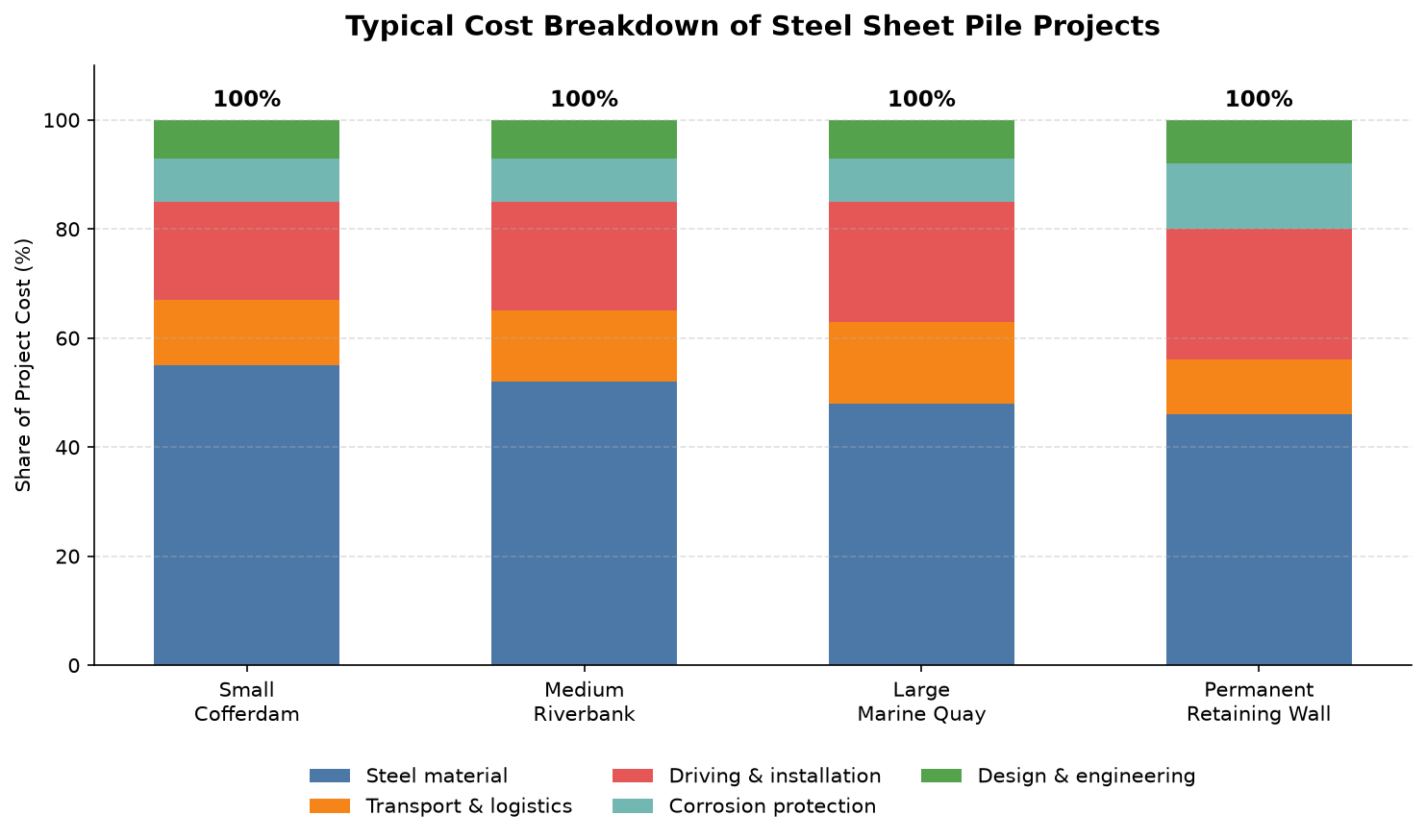
The price of a steel sheet pile project is driven by five main factors: steel grade and section modulus, transport distance and logistics, driving method and equipment, corrosion protection level, and design complexity. Controlling these factors early can cut the total installed cost by 15 % to 25 %.
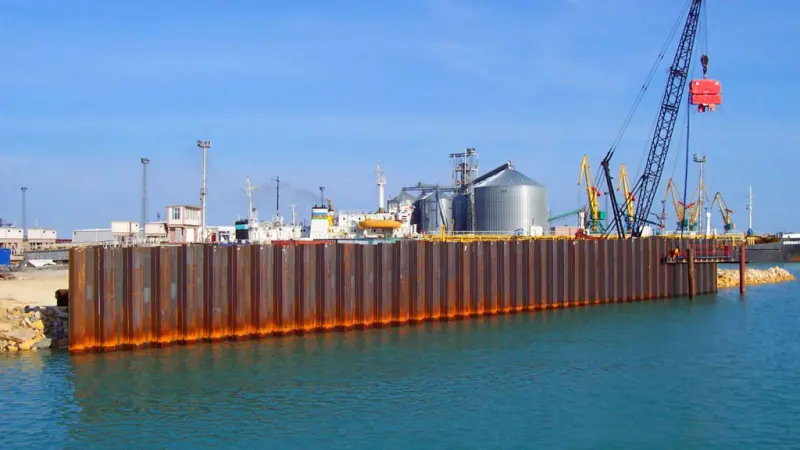
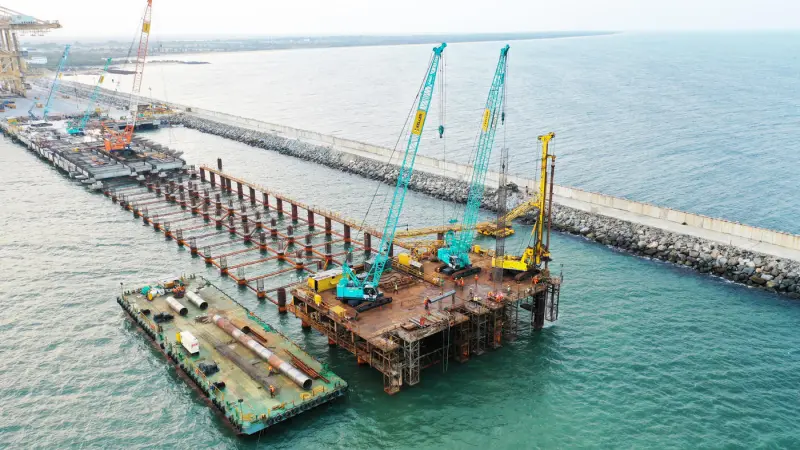
When I review a new inquiry from a contractor in the Middle East or Australia, the first thing I look at is not the pile length. It is the full bill of quantities. A budget that only counts the steel tonnage will miss half the story. Over the years, our factory in Shandong has shipped U-type, Z-type, and straight-web sheet piles to cofferdams, riverbanks, and port quays across Iraq, Pakistan, Saudi Arabia, and beyond. Every time, the same cost drivers show up. In this article, I will break them down so you can plan your next project with fewer surprises.
How Does Steel Grade and Section Modulus Affect the Price?
Thicker steel always costs more, but the real question is whether you are paying for performance you do not need.
Higher steel grades like S355GP or ASTM A572 raise the material price per ton, yet they can reduce the total tonnage because a smaller section modulus still handles the same load. The right grade often lowers the overall project cost.
Matching Grade to Load, Not Habit
I have seen engineers specify S355 sheet piles for a 6-meter temporary cofferdam simply because that is what the last project used. In that case, Q235B or S235JR would have done the job at a lower cost per meter. The steel grade decision should come from the design moment, the retained height, and the water table, not from habit.
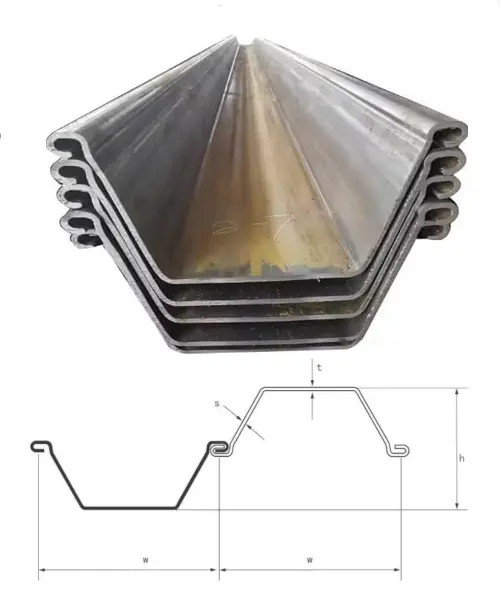
When you compare grades, look at the section modulus per meter of wall, not just the wall thickness. A Z-type profile with a high section modulus can carry more load with less steel than a U-type profile of the same grade. That is why marine quay walls and deep excavations often favor Z-type or combined wall systems.
| Factor | Low-Cost Choice | Higher-Cost Choice | When the Upgrade Pays Off |
|---|---|---|---|
| Steel grade | Q235B / S235JR | S355GP / A572 Gr 50 | High lateral load or long design life |
| Profile | U-type Larssen | Z-type or Omega | Deep excavation or marine exposure |
| Section modulus | Standard section | High modulus section | Limited wall length or strict deflection limit |
| Source | Domestic mill | Import with mill certs | Project requires EN 10204 3.1 or ASTM certs |
The price gap between Q235B and S355GP is usually 8 % to 12 % per ton, but the tonnage savings on a high-modulus design can offset that. If the design calls for 80 tons of Q235B U-piles but only 65 tons of S355 Z-piles, the higher-grade option may end up cheaper once installation is included. I always ask our clients to send the design sheet before they lock the grade.
Another detail that buyers miss is the impact of length. Standard 12-meter and 18-meter lengths are easier to source and cheaper per ton than odd lengths like 14.5 meters or 23 meters. Mills charge for non-standard rolling, and odd lengths can reduce container loading efficiency. If your design allows it, stick to common lengths.
Mill certificates also affect the price. A basic mill test report costs nothing extra, but third-party inspection by SGS or equivalent, EN 10204 3.2 certification, or ultrasonic testing of the interlock adds cost. For public infrastructure in the Middle East or Australia, these certificates are often mandatory. I always ask clients to share the specification up front so we quote the right certification package from the start.
Why Is Transportation Such a Large Slice of the Budget?
Steel is heavy, and heavy things become expensive the farther they travel from the mill.
Transport can make up 10 % to 20 % of the total project cost for inland sites, and even more for landlocked countries. Container loading efficiency, port handling, and final-mile trucking all add up.
Loading and Shipping Tricks That Save Money
Our mill is in Liaocheng, Shandong, with direct road and rail links to Qingdao port. From there, a 20-foot container holds roughly 25 to 28 tons of sheet piles depending on the profile width. A 40-foot open-top container may hold 50 tons or more if the lengths fit. The key is to maximize weight per container without exceeding axle limits at the destination.
I usually recommend bundling the order into full container loads. LCL, or less-than-container-load, shipments cost more per ton and expose the steel to more handling damage. For projects in the Middle East, a single bulk vessel shipment to Jebel Ali or Umm Qasr can be cheaper than multiple container lots when the volume is above 500 tons.
| Route Type | Typical Cost Driver | Savings Tip |
|---|---|---|
| Domestic China | Road tolls and weight limits | Use rail-flatbed combination |
| Asia-Pacific | Container utilization | Match pile length to container |
| Middle East | Port congestion and customs | Pre-clear certs and CO before arrival |
| Africa | Final-mile trucking | Plan staging yard near site |
| Americas | Ocean freight and duties | Combine with other steel orders |
One mistake I see often is forgetting the cost of unloading at site. If the site has no crane, the contractor must rent one for several days. That daily rental can exceed the freight savings from choosing a cheaper mill. When I quote a project, I ask whether the client has unloading equipment. If not, I suggest delivering in smaller lots that match the site crane capacity, even if the freight per ton is slightly higher.
What Does Installation Really Cost?
The pile itself is only part of the bill. Driving it into the ground is where budgets rise or fall.
Installation cost depends on the driving method, soil conditions, access, and production rate. Vibratory driving is usually fastest in sand, while impact driving or pressing is needed in stiff clay or near sensitive structures.
Production Rate Drives the Daily Burn
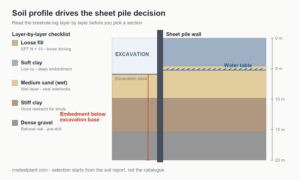
A vibratory hammer on loose sand can install 20 to 30 piles per day. The same rig in dense gravel may drop to 8 to 12 piles per day. When the daily cost of the crew and equipment is fixed, a slower production rate directly raises the cost per meter of wall. That is why soil investigation should always come before the installation budget.
I remember a cofferdam project in Southeast Asia where the contractor initially planned for a small excavator-mounted vibrator. The soil was stiff clay with occasional boulders. After the first day, they moved to a larger crane-mounted impact hammer and finished on schedule. The equipment switch added rental cost but saved two weeks of labor, so the total installation cost was lower.
| Driving Method | Best Soil | Typical Daily Output | Cost Risk |
|---|---|---|---|
| Vibratory hammer | Sand, silt, loose fill | High | Noise and vibration limits near buildings |
| Impact hammer | Dense clay, gravel, boulders | Medium | Slower in hard layers, higher fuel |
| Hydraulic press | Soft ground, sensitive areas | Low to medium | Very low vibration but slow |
| Excavator-mounted | Small jobs, tight access | Low | Limited power for long piles |
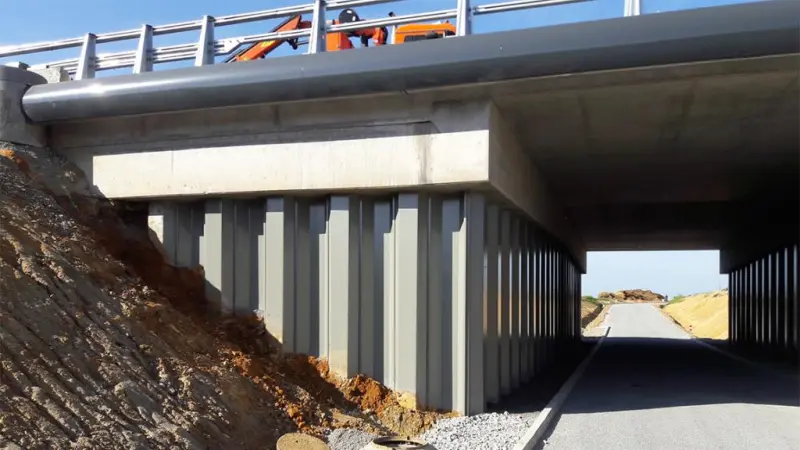
Access is another hidden cost driver. A port quay with a wide working platform is cheap to drive. A narrow urban excavation support site may require a crawler crane on a temporary platform, adding both time and money. Before I finalize any quote, I look at site photos or a Google Earth view to judge access.
How Do Corrosion Protection and Design Life Change the Cost?
A sheet pile wall can last 20 years or 100 years, and the difference is mostly in the protection system.
Corrosion protection adds 5 % to 15 % to the initial cost but can extend service life by decades. The cheapest option is not always the one with the lowest first price.
Three Protection Levels
For temporary works, bare steel with a small corrosion allowance is usually enough. The piles will be extracted and reused, so heavy protection is wasted money. For permanent marine walls, a coating system plus cathodic protection is standard. The splash zone is the most aggressive, so designs often increase the section thickness in that zone rather than relying only on paint.
Our corrosion resistance guide explains the typical zones: atmospheric, splash, tidal, immersed, and buried. Each zone has a different corrosion rate. For a quay wall in the Persian Gulf, we often see design metal loss of 3 to 4 millimeters per side over 50 years in the splash zone. That means the wall must start thicker or be protected.
| Design Life | Typical Protection | Relative Initial Cost | Best For |
|---|---|---|---|
| 5 to 10 years | Bare steel + 1 mm allowance | 100 % baseline | Temporary cofferdams |
| 20 to 30 years | Epoxy coating + sacrificial thickness | 110 % to 120 % | Riverbank and flood walls |
| 50+ years | Coating + cathodic protection | 130 % to 150 % | Permanent marine structures |
I also remind clients that cathodic protection needs inspection and maintenance. If the project owner does not have a maintenance plan, a thicker corrosion allowance may be a better long-term choice. This is where the service life analysis becomes important. A small increase in steel tonnage today can avoid a costly wall replacement later.
Can Reuse and Standardization Lower Project Cost?
The most underused cost-saving tool in sheet piling is planning for reuse.
Reusable temporary sheet piles can spread the steel cost across several projects. After extraction and inspection, piles can be redriven at 40 % to 60 % of the cost of new material.
Design for Extraction From Day One
A wall designed for extraction needs a gentler interlock, a manageable embedment depth, and a driving sequence that avoids jamming. If the interlock is damaged during driving, the pile may not seal well when reused. That is why contractors often use a sacrificial top section or a driving shoe on the first project.
Standardization also helps. A contractor who uses the same U-type section on many jobs can keep a stockpile and move piles between sites. This reduces ordering lead time and lets them negotiate better mill prices for larger annual volumes. Our factory supports this by offering flexible MOQ and keeping common sections in stock.
| Strategy | Upfront Cost | Long-Term Saving | Best Fit |
|---|---|---|---|
| Buy and reuse | Higher initial buy | 40 % to 60 % on next projects | Contractors with repeat work |
| Rent locally | Lower capital | Higher per-meter cost | One-off projects far from base |
| Buy new, sell after | Full steel cost | Recover 30 % to 50 % resale | Projects with clean extraction |
| Standard profile | Easier sourcing | Better mill pricing | Multi-project contractors |
The environmental side is worth mentioning too. Reusing steel sheet piles cuts the embodied carbon of each project. We covered this in our article on the environmental advantages of reusable steel sheet piles. In some markets, that lower carbon footprint can help win public-sector bids.
My Take: Cost Control Starts Before the Purchase Order
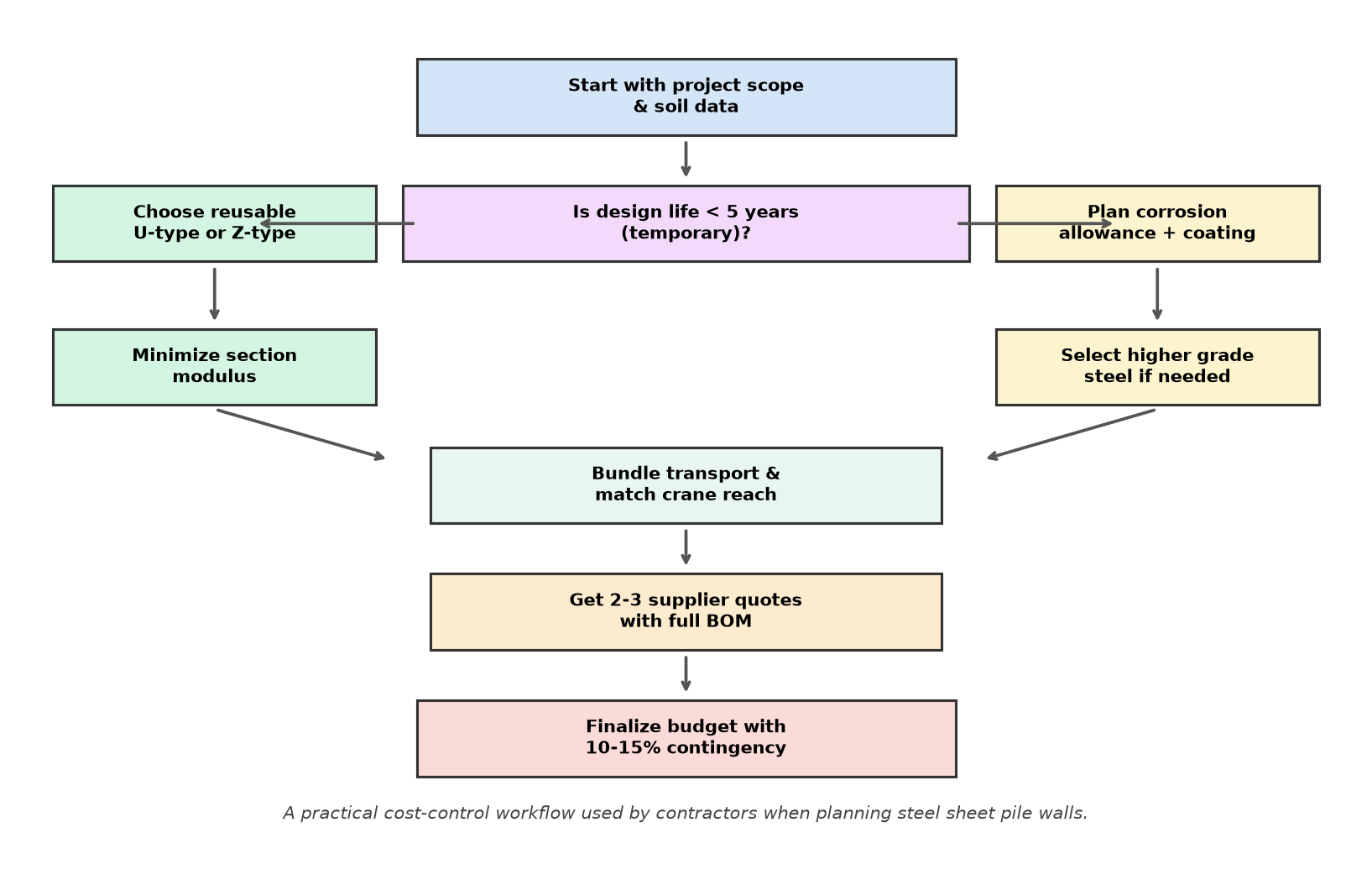
After quoting hundreds of projects, my view is simple: the biggest cost mistake is treating steel sheet piles as a commodity purchase. Yes, the tonnage price matters. But the real savings come from matching the grade, profile, and protection level to the actual job. A contractor who sends me the geotechnical report, the design life, and the site access plan will get a better solution than one who only asks for a price per ton.
I also believe in bundling scope. When a client orders the piles, the corner sections, the tie rods, and the waling beams from one supplier, the logistics become cleaner and the interfaces become our problem, not theirs. Our team in Liaocheng can pre-bundle these accessories and ship them in the same containers as the piles. That single move has saved clients both freight and site handling cost on jobs from Jordan to Chile.
Finally, do not ignore timing. Steel prices move with raw material markets, and ocean freight rates can swing by 20 % in a quarter. If a project is six months away, locking a price with a small deposit can protect the budget. We offer flexible booking for clients who want to secure mill capacity without taking immediate delivery.
Conclusion
Steel sheet pile project cost is the result of material, transport, installation, protection, and design choices made early. Plan these factors together, and you will keep the budget under control.
Tags: steel sheet pile cost, sheet pile budget, steel sheet pile pricing, project cost factors, steel sheet pile procurement