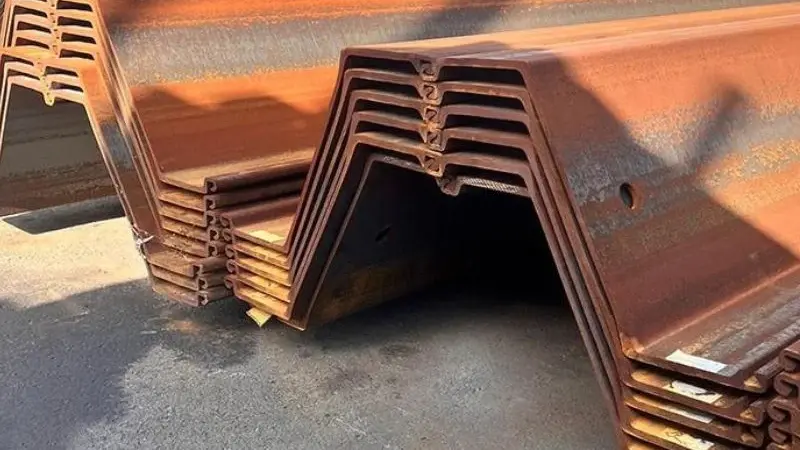
Choosing the wrong steel grade for marine or coastal projects can lead to severe corrosion, costly repairs, and shorter service life. The right material makes all the difference.
ASTM A690 is a high-strength, corrosion-resistant steel designed for marine and splash-zone applications. It offers better atmospheric corrosion resistance than conventional carbon steels, making it an excellent choice for steel sheet piles, port structures, seawalls, and waterfront infrastructure.
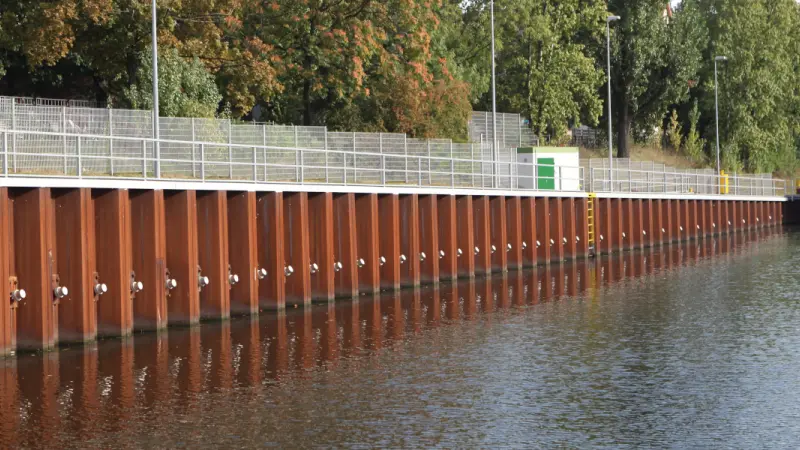
When customers contact me about steel sheet piles for ports, seawalls, or riverbank protection, many of them ask whether ASTM A690 is worth the higher price. My answer is usually yes, but only when the project environment requires it. Material selection should never depend on price alone. It should depend on corrosion risk, service life, maintenance costs, and engineering requirements. In this guide, I will explain ASTM A690 in simple language and help you understand when it is the right choice for your project.
What is ASTM A6 specification?
Many buyers confuse ASTM A6 with ASTM A690. They sound similar, but they serve completely different purposes. Understanding the difference helps prevent costly purchasing mistakes.
ASTM A6 is a general specification that defines the manufacturing, dimensions, tolerances, testing, and delivery requirements for rolled structural steel products. It does not specify a steel grade. Instead, it establishes common requirements that work together with material standards such as ASTM A36, ASTM A572, and ASTM A690.
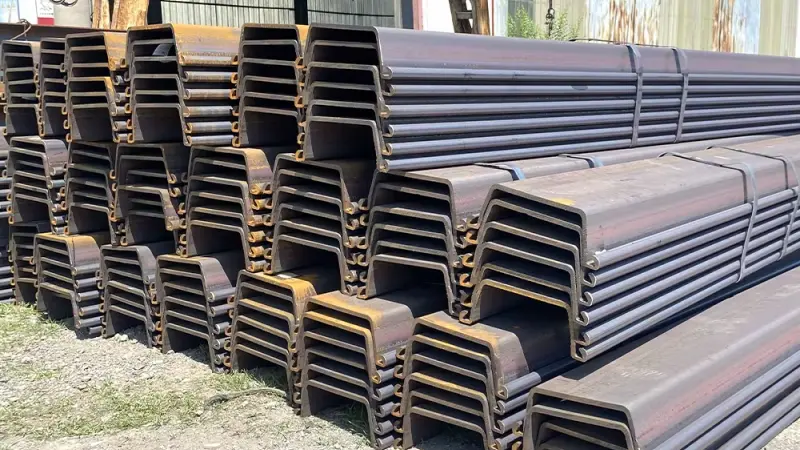
Why ASTM A6 is important
When I receive an inquiry for steel sheet piles, many customers only mention the steel grade. They may request ASTM A690 or ASTM A572 without considering the manufacturing specification behind the material.
This is where ASTM A6 becomes important.
ASTM A6 provides the common technical requirements that manufacturers follow during production. It covers dimensional tolerances, workmanship, inspection, repair, testing, marking, and delivery conditions. Think of ASTM A6 as the foundation that supports many structural steel standards.
Without ASTM A6, different manufacturers could produce structural steel with inconsistent dimensions or inspection methods. That would make international engineering projects much more difficult.
What does ASTM A6 cover?
ASTM A6 applies to many rolled structural steel products.[web:1]
| Item | Covered by ASTM A6 |
|---|---|
| Dimensional tolerances | ✔ |
| Shape tolerances | ✔ |
| Surface quality | ✔ |
| Inspection requirements | ✔ |
| Testing procedures | ✔ |
| Product marking | ✔ |
| Packaging requirements | ✔ |
| Chemical composition | ✘ |
| Mechanical properties | ✘ |
One important point is that ASTM A6 does not define the chemical composition or mechanical properties of a steel grade. Those requirements come from the individual material specification.[web:1]
For example:
| Material Standard | Main Purpose |
|---|---|
| ASTM A36 | Carbon structural steel[web:3] |
| ASTM A572 | High-strength low-alloy steel[web:3] |
| ASTM A690 | Marine corrosion-resistant structural steel[web:3] |
| ASTM A588 | Weathering steel[web:3] |
| ASTM A6 | General requirements for rolled structural steel[web:1] |
This difference is often misunderstood by new buyers.
How ASTM A6 relates to steel sheet piles
Although ASTM A6 is widely known for structural shapes such as beams and channels, many of its manufacturing principles also influence products used in heavy civil engineering.[web:1]
When I discuss sheet pile projects with contractors, they usually focus on:
- Steel grade
- Section modulus
- Yield strength
- Corrosion resistance
These are certainly important. However, dimensional accuracy is equally critical.
Steel sheet piles rely on precision interlocks. Even small dimensional deviations can create installation problems.
Poor dimensional control may result in:
- Difficult driving
- Loose interlocks
- Water leakage
- Reduced wall alignment
- Higher installation costs
That is why experienced buyers never evaluate a supplier based only on price.
ASTM A6 vs ASTM A690
Many customers ask me whether ASTM A6 is better than ASTM A690.
The answer is simple.
They cannot be compared because they serve different purposes.
| ASTM A6 | ASTM A690 |
|---|---|
| General manufacturing specification | Steel material specification |
| Covers production requirements | Covers chemical and mechanical properties |
| Applies to many steel grades | Applies only to corrosion-resistant structural steel |
| Defines tolerances and inspection | Defines material performance |
One standard controls how the product is manufactured.
The other controls what material the product is made from.
My opinion
From my experience supplying steel sheet piles for international infrastructure projects, I believe many purchasing problems begin with incomplete specifications.
Some buyers only request "ASTM steel sheet piles" without identifying the actual material grade. Others specify ASTM A690 but ignore inspection requirements or dimensional tolerances.
I always recommend confirming three things before production starts:
- The required steel grade.
- The applicable manufacturing standard.
- The inspection and testing requirements.
This simple process avoids misunderstandings and helps both the supplier and the contractor work more efficiently.
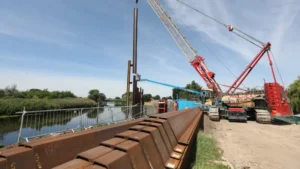
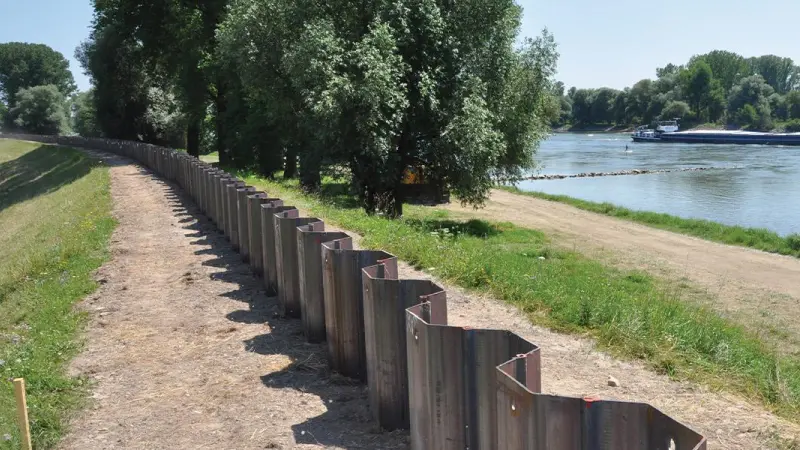
For one riverbank protection project in Southeast Asia, the engineering team clearly defined both the material requirements and manufacturing specifications before production. The hot rolled U type steel sheet piles arrived with excellent dimensional consistency. The interlocks connected smoothly during vibratory driving, allowing the contractor to stay on schedule.
That project reminded me that successful engineering depends on more than choosing a strong steel grade. Quality standards, manufacturing precision, and reliable suppliers are just as important as material strength.
What are the 4 types of steel?
Many buyers think all steel is the same because it looks similar. In reality, different steel types have very different mechanical properties, corrosion resistance, and applications. Choosing the wrong material can increase maintenance costs and shorten the service life of a project.[web:20]
The four main types of steel are carbon steel, alloy steel, stainless steel, and tool steel. Each type is designed for different engineering applications. Steel sheet piles are usually manufactured from carbon steel or high-strength low-alloy steel because they provide an excellent balance of strength, weldability, and cost.
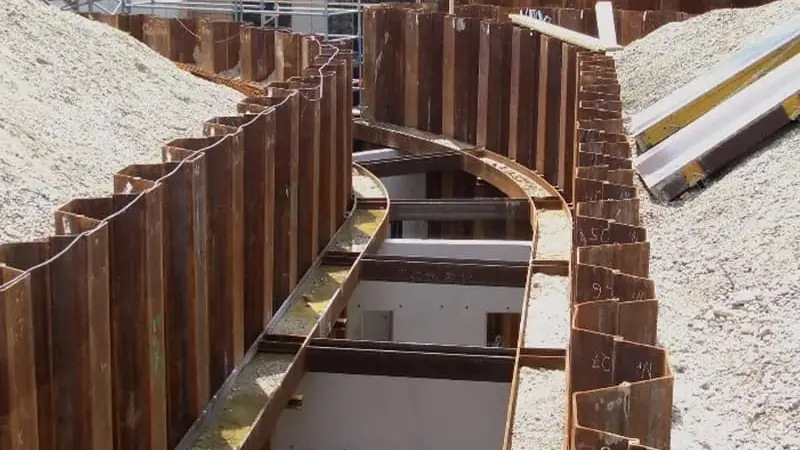
Understanding the four major steel categories
When customers ask me which steel is best for sheet piles, I never answer immediately. Instead, I ask about the project environment, service life, and budget. Different projects require different materials.
The steel industry generally divides steel into four major categories.[web:21]
| Steel Type | Main Characteristics | Common Applications |
|---|---|---|
| Carbon Steel | Strong, economical, easy to process | Sheet piles, structural beams, bridges |
| Alloy Steel | Improved strength and toughness | Heavy machinery, pressure vessels |
| Stainless Steel | Excellent corrosion resistance | Chemical plants, food processing, decoration |
| Tool Steel | High hardness and wear resistance | Cutting tools, molds, industrial equipment |
Each type has advantages. None of them is suitable for every project.
Carbon steel
Carbon steel is the most common material used in construction.
It contains iron and carbon with relatively small amounts of alloying elements. Because of its reasonable price and reliable mechanical properties, carbon steel is widely used in civil engineering.[web:22]
Common grades include:
- ASTM A36
- ASTM A572
- Q235
- Q345
- S275
- S355
Most standard steel sheet piles belong to this category.[web:24]
For retaining walls, bridge foundations, and excavation support systems, carbon steel provides an excellent balance between strength and cost.[web:22]
I recommend carbon steel for projects where corrosion exposure is moderate and proper protective coatings can be applied.[web:25]
Alloy steel
Alloy steel contains additional elements such as chromium, nickel, molybdenum, vanadium, or manganese.
These alloying elements improve mechanical performance.
Benefits include:
- Higher strength
- Better toughness
- Improved fatigue resistance
- Better high-temperature performance
However, alloy steel normally costs more than ordinary carbon steel.[web:20]
For heavy industrial structures or special engineering projects, alloy steel can provide long-term value.[web:22]
Stainless steel
Many new buyers ask whether stainless steel sheet piles are always the best solution.[web:23]
I usually explain that stainless steel offers outstanding corrosion resistance, but it is much more expensive than carbon steel.
Stainless steel contains significant chromium content, which forms a protective oxide layer on the surface.
Common grades include:
| Stainless Grade | Typical Application |
|---|---|
| 304 | General corrosion resistance |
| 316 | Marine environments |
| Duplex Stainless | Offshore structures |
Although stainless steel performs well in aggressive environments, it is rarely selected for ordinary sheet pile projects because the cost is considerably higher.[web:23]
For many marine structures, ASTM A690 steel offers a more economical solution while still providing excellent corrosion resistance.
Tool steel
Tool steel is designed for manufacturing tools rather than construction structures.[web:19][web:26]
It offers:
- Very high hardness
- Excellent wear resistance
- High strength after heat treatment
Typical applications include:
- Cutting tools
- Dies
- Molds
- Industrial machinery
Tool steel is almost never used for steel sheet piles because it is unnecessary for retaining wall applications.[web:20]
Which steel type is best for steel sheet piles?
From my experience, most successful sheet pile projects use either high-quality carbon steel or corrosion-resistant low-alloy steel.
The selection depends on the service environment.[web:24]
| Project Environment | Recommended Material |
|---|---|
| Temporary excavation | Carbon steel |
| Bridge foundation | High-strength carbon steel |
| Riverbank protection | ASTM A572 or ASTM A690 |
| Port construction | ASTM A690 |
| Seawall | ASTM A690 |
| Inland retaining wall | Carbon steel |
Marine projects usually require stronger corrosion resistance because seawater contains chlorides that accelerate corrosion.
ASTM A690 was specifically developed to improve atmospheric corrosion resistance in marine splash zones.
That is why I frequently recommend ASTM A690 for customers building:
- Ports
- Harbors
- Seawalls
- Offshore platforms
- Coastal retaining walls
Why ASTM A690 matters
Many people focus only on the initial purchase price.
I prefer to evaluate the total project cost over the entire service life.
A cheaper steel grade may require:
- More maintenance
- Earlier replacement
- Additional protective coatings
- Higher repair costs
ASTM A690 usually costs more at the beginning.
However, for coastal projects, the lower maintenance requirements often reduce the total ownership cost over many years.[web:12]
This is one reason many port authorities and engineering companies choose ASTM A690.[web:13]
My opinion
After supplying steel sheet piles to customers across the Middle East, Southeast Asia, and other international markets, I have learned one important lesson.
There is no "best steel."
There is only the most suitable steel for a specific project.
For example, one contractor initially requested standard carbon steel sheet piles for a riverbank protection project. After reviewing the environmental conditions, the engineering team found that seasonal flooding and continuous moisture would increase corrosion.
The contractor finally selected hot rolled ASTM A690 U type sheet piles.
The initial investment increased slightly.
The expected maintenance cost over the next several decades decreased significantly.
That decision improved the long-term value of the project.
Whenever I help customers choose sheet piles, I recommend looking beyond the purchase price.
I encourage them to consider:
- Service life
- Corrosion environment
- Maintenance cost
- Engineering safety
- Future replacement expenses
In my opinion, choosing the correct steel type at the beginning is one of the smartest investments any infrastructure project can make.
What is the difference between hot rolled and cold rolled sheet piles?
Many buyers assume hot rolled and cold rolled sheet piles are interchangeable. They may look similar at first glance, but their manufacturing processes, mechanical properties, and project performance are very different. Selecting the wrong type can affect installation, structural capacity, and long-term durability.
Hot rolled sheet piles are produced directly from heated steel billets and offer stronger interlocks, higher section modulus, and better structural performance. Cold rolled sheet piles are formed at room temperature from steel coils and are often more economical for lighter-duty applications.
How are hot rolled sheet piles manufactured?
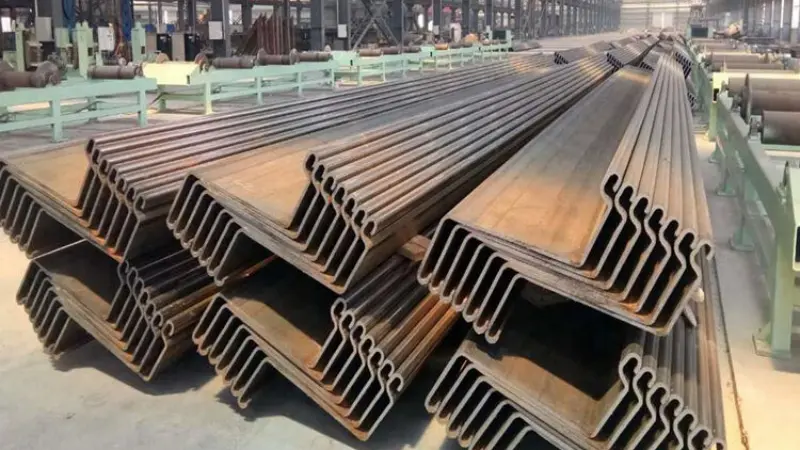
Hot rolled sheet piles begin as steel billets heated to extremely high temperatures. The heated steel passes through multiple rolling mills until it reaches the required profile.[web:29][web:33]
Because the steel is formed while it is hot, manufacturers can create complex cross-sections with excellent dimensional stability.[web:33]
The interlocks are rolled as part of the production process rather than being mechanically formed afterward.
This manufacturing method provides several important advantages:
- Better interlock precision
- Higher structural strength
- Larger section modulus
- Greater bending resistance
- Excellent fatigue performance
These advantages explain why hot rolled sheet piles are commonly used in permanent infrastructure projects.
How are cold rolled sheet piles manufactured?
Cold rolled sheet piles are produced differently.
Manufacturers first produce steel coils. The coils then pass through forming machines at room temperature to create the sheet pile profile.
This process requires less energy and usually costs less.
Cold rolled sheet piles are often selected for:
- Temporary retaining walls
- Small excavation projects
- Residential construction
- Light industrial applications
Although modern cold formed products perform well in many situations, they generally have lower section modulus than equivalent hot rolled sections.
Main differences between hot rolled and cold rolled sheet piles
The production process influences both structural performance and project suitability.
| Feature | Hot Rolled Sheet Piles | Cold Rolled Sheet Piles |
|---|---|---|
| Manufacturing | Rolled from heated billets | Formed from steel coils |
| Interlock quality | Excellent (Larssen / ball-and-socket) | Good (hook-and-grip, bent-plate) |
| Section modulus | Higher | Lower (for equivalent weight) |
| Bending resistance | Excellent | Moderate |
| Water tightness | Better | Good, may need sealing |
| Initial cost | Higher | Lower |
| Permanent projects | Highly recommended | Suitable for selected applications |
| Heavy marine structures | Excellent choice | Limited use |
The table shows why many large infrastructure projects specify hot rolled products.
Structural performance comparison
When engineers design retaining walls, they usually evaluate:
- Bending moment
- Shear resistance
- Section modulus
- Deflection
- Service life
Hot rolled sheet piles perform especially well because they can resist higher loads without requiring excessive material.
For bridge foundations, ports, and flood control systems, this additional strength provides greater safety.
Cold rolled sheet piles remain a practical solution for many temporary works where the structural demands are lower.
Water resistance and interlock performance
One of the biggest differences appears in the interlocking system.
Hot rolled sheet piles usually have stronger and tighter interlocks because they are formed during the rolling process.
This improves:
- Wall alignment
- Installation efficiency
- Water resistance
- Structural continuity
For projects involving rivers, ports, seawalls, or groundwater control, these advantages become very important.
Cold rolled sheet piles can also provide effective retaining walls, but additional sealing methods may sometimes be required when strict water control is necessary.
Cost versus long-term value
Many buyers initially compare only the purchase price.
I encourage customers to compare the total life-cycle cost instead.[web:31][web:36]
| Evaluation Factor | Hot Rolled | Cold Rolled |
|---|---|---|
| Material price | Higher | Lower |
| Structural capacity | Higher | Moderate |
| Expected service life | Longer | Project dependent |
| Maintenance | Lower | May require more attention |
| Heavy-duty engineering | Excellent | Limited |
For a short-term excavation lasting several months, cold rolled sheet piles may provide very good value.
For a permanent marine retaining wall designed to remain in service for decades, hot rolled sheet piles often become the more economical choice over the project’s entire lifespan.
Why I usually recommend hot rolled sheet piles for marine projects
Many of my customers work on:
- Port construction
- Riverbank protection
- Flood control systems
- Bridge foundations
- Coastal retaining walls
These projects normally involve:
- High earth pressure
- Water pressure
- Corrosive environments
- Long design life
Under these conditions, I usually recommend hot rolled sheet piles manufactured from ASTM A690 or other suitable high-strength grades.[web:33][web:37]
The stronger interlocks and larger section modulus provide greater confidence during both installation and long-term service.[web:28][web:31]
My opinion
One project that clearly demonstrated this difference was a riverbank protection project in Southeast Asia.
The contractor originally considered several sheet pile options. After reviewing the hydraulic conditions and expected service life, the engineering team selected hot rolled U type steel sheet piles.
The installation proceeded smoothly using vibratory piling equipment.
The accurately rolled interlocks connected tightly, creating a continuous retaining wall that effectively controlled soil erosion and improved riverbank stability.
Although the initial material investment was higher than some cold rolled alternatives, the contractor gained several important benefits:
- Faster installation
- Better wall alignment
- Improved water control
- Higher structural reliability
- Lower long-term maintenance expectations
From my experience, there is no universal answer to whether hot rolled or cold rolled sheet piles are better.
The correct choice always depends on the project requirements.
If the project demands maximum strength, excellent interlock performance, long service life, and reliable durability, I believe hot rolled sheet piles remain the preferred solution for most heavy civil engineering and marine infrastructure projects.
What does the A stand for in A36 steel?
Many buyers assume the letter "A" in ASTM A36 refers to a steel grade or strength level. This is a common misunderstanding. Knowing the meaning behind the designation helps buyers read ASTM standards correctly and avoid specification errors.[web:44]
The "A" in ASTM A36 stands for ferrous materials in the ASTM classification system. ASTM uses the letter "A" for iron and steel standards, while the number "36" identifies the specific material specification rather than its yield strength.[web:42][web:44]
How does the ASTM naming system work?
When I discuss steel sheet pile specifications with customers, many notice names such as ASTM A36, ASTM A572, or ASTM A690. They often ask whether the letter "A" indicates a quality level.
The answer is no.
ASTM International organizes standards into different categories. The letter at the beginning identifies the material family.[web:44]
For structural steel products, the letter A represents ferrous metals, including carbon steel, alloy steel, and stainless steel.[web:44]
The following table shows several common ASTM categories.
| ASTM Prefix | Material Category | Examples |
|---|---|---|
| A | Iron and Steel | A36, A572, A690 |
| B | Nonferrous Metals | Copper, Aluminum, Nickel Alloys |
| C | Cement and Concrete | Concrete Testing Standards |
| D | Miscellaneous Materials | Plastics, Rubber, Petroleum Products |
| E | Testing Methods | Mechanical and Laboratory Testing |
Understanding this system makes ASTM standards much easier to read.[web:44]
What does A36 actually mean?
ASTM A36 is one of the world’s most widely used structural carbon steels.
It provides:
- Good weldability
- Good machinability
- Reliable strength
- Competitive cost
- Wide availability
Typical applications include:
- Structural beams
- Building frames
- Bridges
- Industrial platforms
- General fabrication
Although A36 is an excellent structural steel, it is not always suitable for aggressive marine environments.[web:45]
For projects exposed to seawater or tidal splash zones, I usually recommend higher-performance materials such as ASTM A690 because they provide significantly better corrosion resistance.
Comparing A36 with ASTM A690
Many customers ask whether A36 can replace ASTM A690.
| The answer depends on the project environment. | Property | ASTM A36 | ASTM A690 |
|---|---|---|---|
| Main application | General structural steel | Marine structural steel | |
| Corrosion resistance | Standard | Excellent in marine atmosphere | |
| Cost | Lower | Higher | |
| Typical environment | Inland construction | Ports, seawalls, coastal projects | |
| Expected maintenance | Higher in marine environments | Lower in marine environments |
For inland retaining walls or temporary construction, ASTM A36 is often a practical and economical choice.
For permanent waterfront structures, ASTM A690 usually offers much better long-term value.
Choosing the correct steel grade
Whenever customers request quotations, I encourage them to focus on project requirements instead of simply selecting the lowest-cost steel.
Before recommending a material, I usually ask several questions.
| Question | Why It Matters |
|---|---|
| Is the project temporary or permanent? | Determines required service life |
| Is the structure near seawater? | Influences corrosion resistance requirements |
| What is the design life? | Helps determine material selection |
| Will the piles remain exposed? | Affects coating and steel grade decisions |
| What are the engineering specifications? | Ensures compliance with project requirements |
These questions often lead to a better material selection than simply comparing steel prices.
My opinion
After working with contractors, civil engineering companies, and steel distributors from the Middle East, Southeast Asia, Australia, Africa, and South America, I have realized that successful projects rarely depend on one factor alone.
The steel grade is important.
The manufacturing quality is important.
Installation is important.
Engineering design is important.
However, the biggest difference usually comes from choosing the right material for the right environment.
One of my most memorable projects involved riverbank protection in Southeast Asia. The customer required a retaining wall capable of resisting soil erosion, seasonal flooding, and continuous moisture exposure.
After evaluating the project conditions, we supplied hot rolled U type steel sheet piles manufactured to meet demanding engineering requirements. The accurate interlocks ensured smooth installation with vibratory piling equipment. The contractor completed the work on schedule, and the retaining wall delivered excellent structural stability and water control.
Experiences like this reinforce my belief that engineering decisions should never be based only on the purchase price.
For marine and waterfront projects, ASTM A690 often becomes the better investment because its superior atmospheric corrosion resistance helps reduce maintenance, extend service life, and improve long-term project reliability.
As a steel sheet pile supplier, my goal is not simply to provide steel. My goal is to help customers choose the most suitable solution for their engineering challenges, whether they need U-shaped, Z-shaped, Ω-shaped, straight web, or other customized steel sheet piles. When material selection, manufacturing quality, and engineering design work together, projects become safer, more economical, and more durable.
Conclusion
ASTM A690 matters because it combines strength, durability, and superior marine corrosion resistance. Choosing the right steel grade helps reduce maintenance costs, improve structural reliability, and extend the service life of steel sheet pile projects.