Choosing the wrong steel sheet pile thickness can reduce structural safety and increase project costs. Many buyers focus on price but ignore engineering performance.
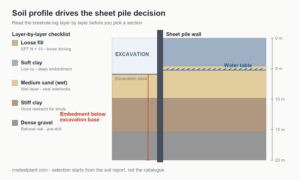
Steel sheet pile dimensions, thickness, and section modulus directly affect bending resistance, load capacity, and service life. Engineers select these values according to soil conditions, wall height, and project requirements.
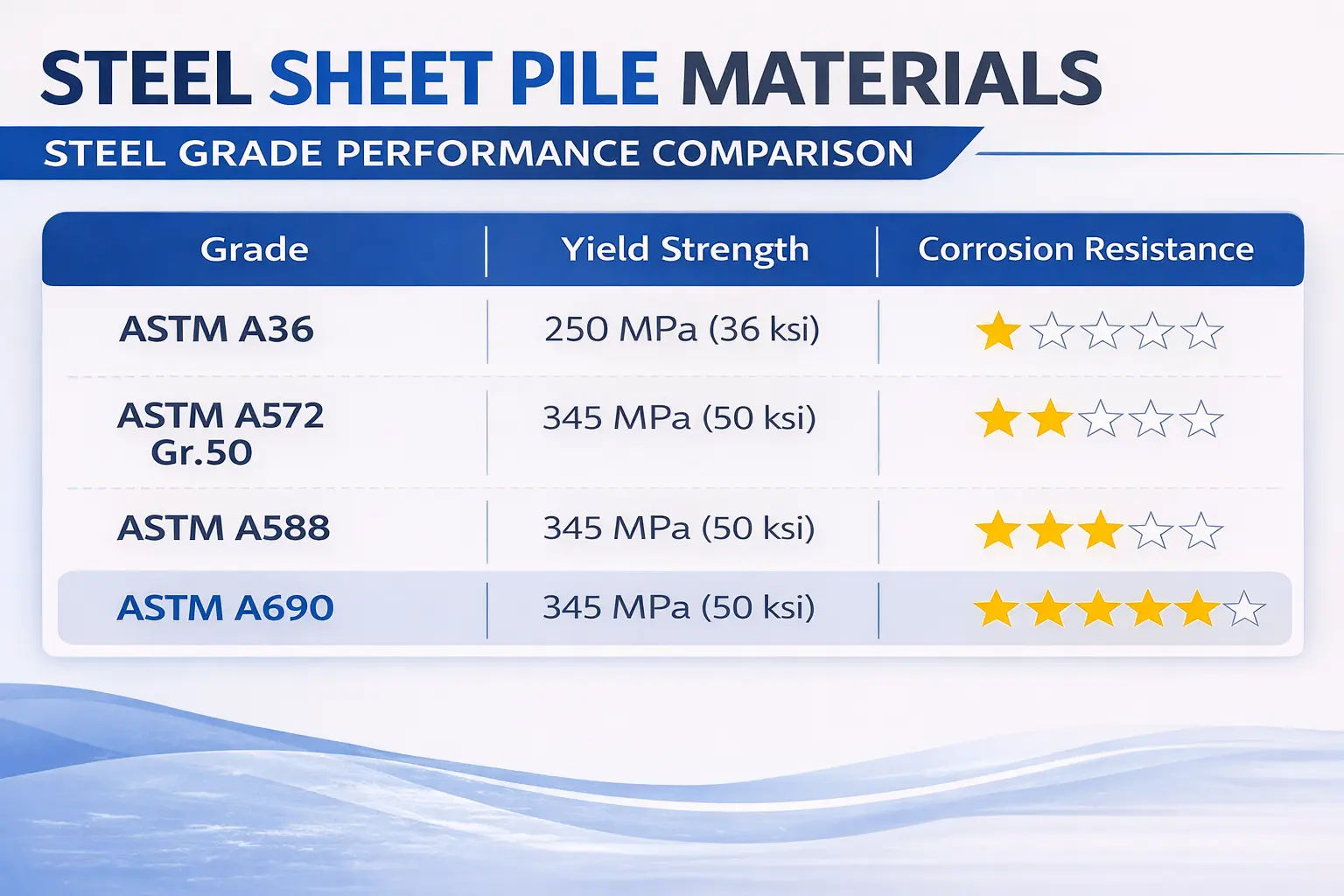
I have worked with many international contractors, civil engineering companies, and steel distributors who purchase steel sheet piles for foundation and retaining projects. One of the most common questions I receive is about how to choose the correct thickness and strength level.
Many customers understand that thicker steel usually means stronger performance. However, thickness is only one part of the design. The profile shape, section modulus, steel grade, installation method, and project environment also influence the final performance.
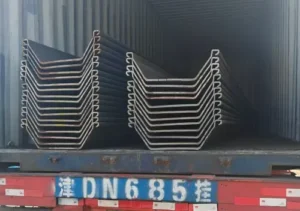
My company supplies different types of steel sheet piles, including U-type, Z-type, Ω-shaped, flat plate type, disc type, cap type, and straight flange type sheet piles. We cooperate with certified mills and provide OEM production, SGS inspection support, and flexible MOQ solutions for global buyers.
In my opinion, selecting steel sheet piles should not start from the lowest price. A suitable product should balance strength, cost, installation efficiency, and long-term reliability.
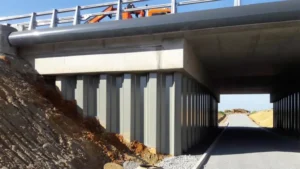
Steel sheet piles are widely used in retaining walls, deep excavation support, bridge foundations, marine construction, and river protection projects. Each application creates different structural requirements.
For example, a riverbank protection project needs strong resistance against soil movement and water pressure. A temporary excavation project may require a different thickness because the service time and loading conditions are different.
Understanding dimensions, thickness, and section modulus helps buyers make better decisions before purchasing.
What is the recommended thickness for sheet piles?
The recommended thickness for steel sheet piles depends on the project application, soil pressure, excavation depth, water conditions, and expected service life. Common steel sheet pile thickness ranges from about 6 mm to more than 20 mm.
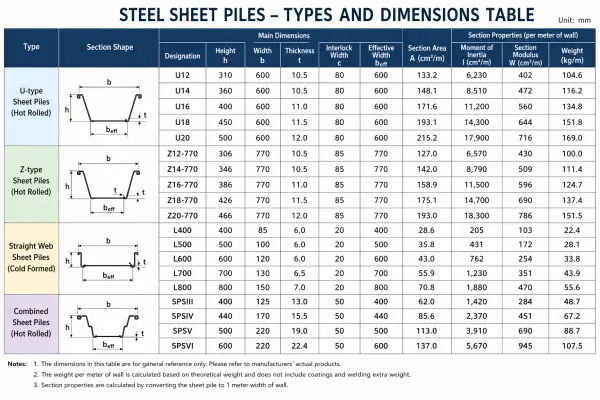
When customers ask me about the recommended thickness, I usually explain that there is no single thickness suitable for every project.
A thicker sheet pile does not always mean a better solution. The correct thickness should match the actual engineering requirements.
Engineers usually consider several factors:
- Wall height
- Soil pressure
- Water pressure
- Bending moment
- Required service life
- Installation conditions
The thickness affects the ability of the sheet pile to resist deformation. A thicker profile usually provides higher strength and better durability.
However, increasing thickness also increases material weight, transportation costs, and installation requirements.
According to structural steel design principles, engineers need to evaluate loads and material properties before selecting structural components.
Common Steel Sheet Pile Thickness Range
| Application | Recommended Thickness Range | Typical Use |
|---|---|---|
| Temporary Excavation | 6 mm – 10 mm | Short-term retaining walls |
| Small Retaining Walls | 8 mm – 12 mm | Soil protection projects |
| Riverbank Protection | 10 mm – 16 mm | Flood control and erosion prevention |
| Deep Excavation | 12 mm – 20 mm | Heavy soil pressure |
| Marine Construction | 16 mm – 25 mm | Ports and seawalls |
Temporary projects usually require lower thickness because the structure does not need to operate for many years.
Permanent projects often require thicker sheet piles because they must resist continuous environmental forces.
For marine applications, thickness selection becomes more important. Saltwater environments can accelerate corrosion, so engineers may select thicker piles to maintain structural performance over time.
How Does Thickness Affect Steel Sheet Pile Performance?
Thickness directly affects the mechanical behavior of steel sheet piles.
A thicker sheet pile can provide:
| Performance Factor | Effect of Increased Thickness |
|---|---|
| Strength | Improves resistance against external forces |
| Durability | Provides longer service capability |
| Corrosion Allowance | Offers additional protection |
| Weight | Increases transportation and handling needs |
The relationship between thickness and performance is not linear.
A small increase in thickness may improve strength, but the overall performance still depends on the entire profile design.
For example, a Z-type sheet pile with efficient geometry may provide higher bending resistance than a thicker but less efficient profile.
This is why engineers also evaluate section modulus when selecting sheet piles.
The section modulus represents the ability of a structural section to resist bending. A higher value usually means better bending performance.
Thickness Selection for Different Applications
Different projects require different thickness levels.
Riverbank Protection Projects
Riverbank protection projects usually require stable retaining systems because they face soil erosion and water pressure.
In our Southeast Asia riverbank protection project, the contractor selected hot rolled U type steel sheet piles.
The project goal was to create a continuous retaining wall along the riverbank. The sheet piles needed to prevent soil loss and improve flood control.
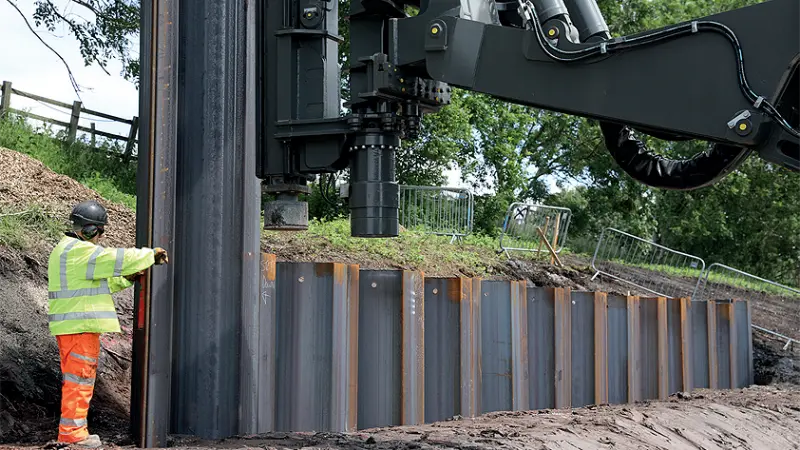
The contractor used vibratory piling equipment for installation. The interlocking system connected each sheet pile section and created a stable barrier.
For this type of application, engineers usually select medium to heavy thickness depending on river conditions.
The project showed me that proper thickness selection can directly influence construction success.
Marine Construction Projects
Marine structures usually require stronger sheet piles because they face:
- Water pressure
- Wave impact
- Corrosion risk
- Long-term loading
| Marine Application | Typical Thickness Consideration |
|---|---|
| Small Coastal Wall | Medium thickness |
| Port Structure | Heavy thickness |
| Permanent Seawall | Higher thickness with corrosion protection |
Marine projects often use Z-type sheet piles because their profile provides efficient bending performance.
Deep Excavation Support
Deep excavation projects create high lateral soil pressure.
The deeper the excavation, the greater the force acting on the retaining wall.
Engineers usually consider:
- Excavation depth
- Nearby building loads
- Soil characteristics
- Groundwater conditions
A stronger sheet pile profile with suitable thickness helps maintain excavation stability.
How Do I Recommend Sheet Pile Thickness to Customers?
When customers contact me, I usually ask for project information before recommending thickness.
I normally check:
| Information Needed | Reason |
|---|---|
| Project Location | Understand environmental conditions |
| Application | Select suitable product type |
| Soil Report | Estimate pressure requirements |
| Wall Height | Determine structural demand |
| Installation Method | Confirm equipment compatibility |
I believe communication is very important in steel supply.
A customer may only provide a required length or quantity, but the application details help me provide a better solution.
My role is not only to supply steel sheet piles. I also help customers understand which specification can provide better project value.
The correct thickness can reduce risks, improve installation efficiency, and support long-term structural stability.
What is the plastic section modulus ratio of hot rolled steel sheet pile PZ22 to PZ40?
The plastic section modulus ratio of hot rolled steel sheet pile PZ22 to PZ40 shows the difference in their bending capacity. PZ40 has a much higher plastic section modulus than PZ22, which means it can resist greater bending forces and is suitable for heavier engineering applications.
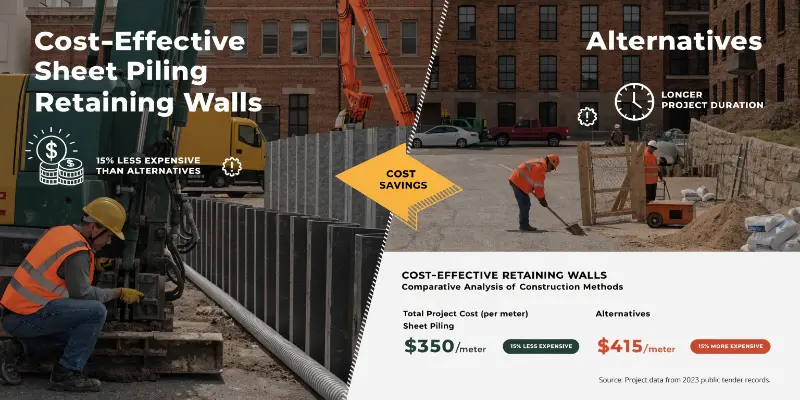
When customers ask me about PZ22 and PZ40 sheet piles, I usually explain that the difference is not only about size. The most important difference is structural performance.
Many buyers compare sheet piles by thickness and weight. However, engineers usually focus on technical values such as plastic section modulus, elastic section modulus, and moment of inertia.
These values show how the sheet pile performs when it receives bending forces.
A retaining wall works under pressure from soil and water. The sheet pile needs enough strength to prevent excessive deformation.
The plastic section modulus represents the bending capacity of a structural section when the material reaches the plastic stage. It is an important value in structural design because it shows the maximum bending resistance before failure.
PZ22 and PZ40 belong to different strength levels of Z-type steel sheet piles.
PZ22 is commonly used for medium-load applications. PZ40 is designed for more demanding projects where higher structural performance is required.
Basic Comparison Between PZ22 and PZ40 Sheet Piles
| Parameter | PZ22 Sheet Pile | PZ40 Sheet Pile |
|---|---|---|
| Profile Type | Z-Type | Z-Type |
| Structural Level | Medium | Heavy Duty |
| Plastic Section Modulus | Lower | Higher |
| Bending Resistance | Moderate | High |
| Typical Application | General retaining walls | Marine and deep excavation projects |
The exact plastic section modulus values depend on the manufacturer and steel standard.
However, PZ40 generally provides a much higher value than PZ22 because it has a larger profile and stronger structural design.
How Does Plastic Section Modulus Affect Sheet Pile Performance?
The plastic section modulus directly influences how much bending moment a sheet pile can resist.
A higher plastic section modulus means the sheet pile can handle stronger forces before reaching its limit.
| Structural Value | Meaning |
|---|---|
| Plastic Section Modulus | Bending capacity at plastic condition |
| Elastic Section Modulus | Bending capacity before yielding |
| Moment of Inertia | Resistance against deformation |
When I explain this to customers, I often use a retaining wall example.
The soil behind a retaining wall creates horizontal pressure. The sheet pile acts like a vertical beam that resists this force.
If the bending resistance is too low, the sheet pile may deform.
If the bending resistance is sufficient, the wall can maintain stability.
This is why large infrastructure projects usually select profiles with higher section modulus values.
Approximate Plastic Section Modulus Comparison
The exact values vary according to standards and manufacturers, but a general comparison can be shown below.
| Sheet Pile Type | Approximate Structural Capacity |
|---|---|
| PZ22 | Medium bending resistance |
| PZ27 | Higher than PZ22 |
| PZ35 | High bending resistance |
| PZ40 | Very high bending resistance |
The ratio between PZ22 and PZ40 plastic section modulus is usually greater than 1:1 because PZ40 has a larger and stronger profile.
In practical engineering applications, PZ40 can provide significantly higher bending performance than PZ22.
Why Do Engineers Choose PZ40 Over PZ22?
Engineers choose PZ40 when project conditions create higher structural demands.
Typical applications include:
| Application | Reason for Choosing PZ40 |
|---|---|
| Deep Excavation | Higher soil pressure resistance |
| Port Construction | Handles water and wave forces |
| Permanent Retaining Walls | Provides long-term stability |
| Heavy Infrastructure | Supports large loads |
For example, a port construction project usually requires stronger sheet piles because the structure faces continuous environmental forces.
Water pressure, wave impact, and soil movement can create large loads on the retaining wall.
A stronger profile helps reduce deformation and improve service life.
However, I do not recommend PZ40 for every project.
A larger profile also means higher material costs and heavier transportation requirements.
If a project only needs medium strength, PZ22 may provide enough performance and better cost efficiency.
PZ22 Applications and Advantages
PZ22 sheet piles are commonly selected for projects with moderate structural requirements.
| Advantage | Description |
|---|---|
| Lower Weight | Easier handling |
| Lower Cost | Better budget control |
| Good Performance | Suitable for normal applications |
PZ22 can be a practical choice for:
- Temporary retaining walls
- Small excavation projects
- River protection projects
- Construction support systems
Many contractors prefer PZ22 because it provides a balance between performance and cost.
I often tell customers that the strongest product is not always the most economical solution.
The best product is the one that matches the project requirements.
PZ40 Applications and Advantages
PZ40 sheet piles are designed for more challenging conditions.
The larger profile provides better structural efficiency.
| Advantage | Description |
|---|---|
| High Section Modulus | Better bending resistance |
| Strong Profile | Suitable for heavy loads |
| Long Service Life | Good for permanent projects |
PZ40 is often used in:
- Large marine structures
- Deep excavation support
- Bridge foundation projects
- Heavy retaining walls
My company supplies different steel sheet pile profiles for international customers. Some customers need medium-strength solutions, while others require heavy-duty products.
I help customers compare technical data before making purchasing decisions.
How Should Buyers Compare PZ22 and PZ40?
I usually recommend comparing several factors instead of only looking at the profile name.
| Factor | Question |
|---|---|
| Load Requirement | How much pressure will the wall receive? |
| Project Duration | Is it temporary or permanent? |
| Environment | Is it land, river, or marine application? |
| Budget | What is the balance between cost and performance? |
The selection process should combine engineering requirements and economic considerations.
A suitable sheet pile can improve construction efficiency and reduce unnecessary expenses.
From my experience, customers achieve better results when they provide detailed project information before ordering.
The right technical selection at the beginning can prevent problems during installation and operation.
My Experience with Section Modulus Selection
Through my work with global steel buyers, I have learned that technical parameters are very important for professional projects.
Many customers initially focus on price, but experienced contractors usually ask about section modulus, thickness, and bending resistance.
These values help them understand whether the product can perform under real conditions.
My company works with certified mills and supports customers with different project requirements.
Whether customers need U-type sheet piles for river protection or Z-type sheet piles for marine construction, I help them select suitable specifications.
I believe technical communication creates better long-term cooperation.
A steel sheet pile is not just a piece of steel. It is an important part of a complete engineering system.
What are the key differences between Type 2 and Type 4 sheet piles?
Type 2 and Type 4 sheet piles are two common specifications used in construction and foundation engineering. The main differences are their profile dimensions, weight, strength capacity, and suitable applications.
Type 4 sheet piles usually provide higher structural performance compared with Type 2 sheet piles because they have larger dimensions and higher section properties.

When I communicate with customers, I often find that many buyers are confused about the meaning of Type 2 and Type 4.
Some customers think Type 4 is simply a better version of Type 2. However, the real difference is related to engineering design.
Different sheet pile types are designed for different loading conditions.
A Type 2 sheet pile may work well for a temporary excavation project, while a Type 4 sheet pile may be required for a deep excavation or permanent retaining structure.
The correct selection depends on soil pressure, water conditions, excavation depth, and required service life.
Basic Comparison Between Type 2 and Type 4 Sheet Piles
| Item | Type 2 Sheet Pile | Type 4 Sheet Pile |
|---|---|---|
| Profile Size | Smaller profile | Larger profile |
| Weight | Lower weight | Higher weight |
| Section Properties | Moderate | Higher |
| Bending Resistance | Medium | Strong |
| Installation Requirement | Easier | Requires stronger equipment |
| Cost | More economical | Higher investment |
Type 2 sheet piles are often selected when the project requires a practical and economical retaining solution.
Type 4 sheet piles are selected when engineers need higher resistance against external forces.
The difference becomes more important when the wall height increases.
A taller retaining wall creates greater pressure on the sheet pile system. In this situation, the engineer usually needs a profile with higher structural capacity.
Structural Difference Between Type 2 and Type 4 Sheet Piles
The most important difference between Type 2 and Type 4 sheet piles is the structural performance.
The performance of a steel sheet pile depends on several technical values:
| Technical Parameter | Importance |
|---|---|
| Section Modulus | Determines bending resistance |
| Moment of Inertia | Shows resistance to deformation |
| Steel Grade | Determines material strength |
| Profile Shape | Influences load distribution |
The moment of inertia affects how much a sheet pile can resist bending deformation.
A larger profile usually has a higher moment of inertia, which improves structural stability.
For retaining walls, engineers calculate expected loads and select a sheet pile that can resist those forces.
If the sheet pile strength is too low, excessive movement may happen.
If the sheet pile strength is much higher than required, the project may have unnecessary material costs.
I always recommend customers select based on engineering requirements instead of selecting the largest available product.
Type 2 Sheet Pile Applications
Type 2 sheet piles are commonly used in projects where the loading condition is moderate.
They provide reliable performance while maintaining good cost efficiency.
| Application | Reason |
|---|---|
| Temporary Excavation | Suitable for short-term support |
| Small Retaining Wall | Provides enough strength |
| Riverbank Protection | Works well under moderate conditions |
| Construction Support | Easy installation |
Many contractors choose Type 2 sheet piles because they provide a good balance between performance and budget.
For example, a temporary construction excavation does not always require the strongest sheet pile.
The contractor needs a product that can support the soil safely during construction.
A lighter profile can also reduce transportation and installation costs.
Type 4 Sheet Pile Applications
Type 4 sheet piles are designed for more demanding engineering conditions.
They are often used in projects where the retaining wall needs to resist high loads.
| Application | Reason |
|---|---|
| Deep Excavation | Handles stronger soil pressure |
| Marine Construction | Resists water forces |
| Bridge Foundation | Supports complex conditions |
| Permanent Retaining Wall | Provides long-term stability |
Marine construction is one of the common applications for stronger sheet piles.
Ports, seawalls, and coastal structures face continuous pressure from water and soil.
The sheet pile system must maintain stability for many years.
Type 4 sheet piles can provide higher structural reliability in these situations.
Difference in Installation Requirements
The installation process can also be different between Type 2 and Type 4 sheet piles.
| Installation Factor | Type 2 | Type 4 |
|---|---|---|
| Weight Handling | Easier | More demanding |
| Equipment Requirement | Standard piling equipment | Higher capacity equipment |
| Driving Resistance | Lower | Higher |
A heavier sheet pile profile usually requires stronger equipment.
The contractor needs to consider available machinery before selecting the product.
In our Southeast Asia riverbank protection project, the contractor used vibratory piling equipment for hot rolled U-type sheet piles.
The equipment matched the product requirements, so the installation process was completed efficiently.
This experience showed me that product selection and installation planning should always be considered together.
How Do I Help Customers Choose Between Type 2 and Type 4?
When customers ask me which type they should choose, I usually check several project details.
| Question | Purpose |
|---|---|
| What is the project application? | Understand the structural purpose |
| How deep is the excavation? | Estimate soil pressure |
| Is water involved? | Evaluate environmental forces |
| Is the structure temporary or permanent? | Select suitable strength level |
I do not simply recommend the stronger product.
A professional supplier should help customers find the most suitable solution.
The right product should provide enough safety while controlling project costs.
What are the different types of steel sheet pile profiles?
Steel sheet piles are available in different profiles because every project has different requirements.
The most common profiles include:
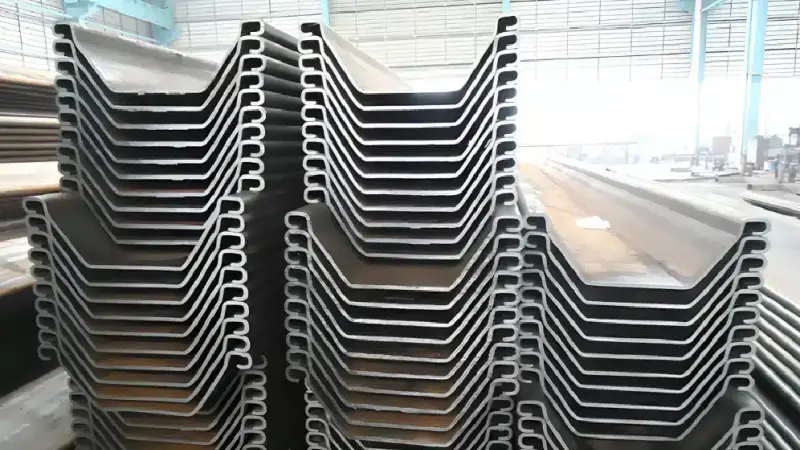
- U-type steel sheet piles
- Z-type steel sheet piles
- Straight web sheet piles
- Omega-shaped sheet piles
- Flat plate sheet piles
- Special flange profiles
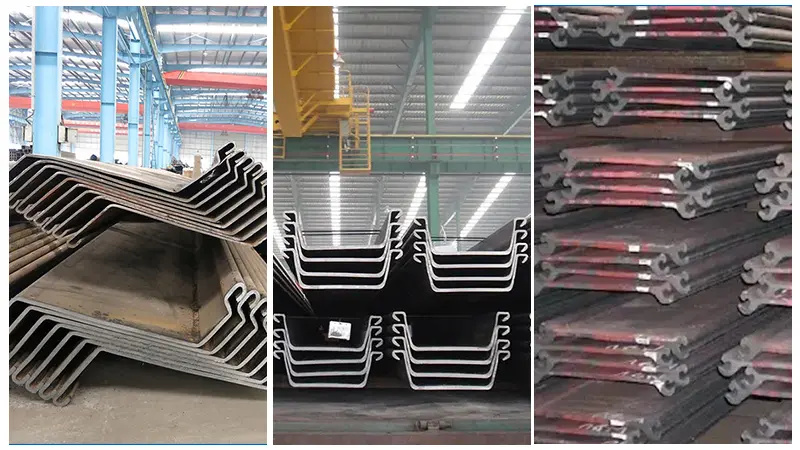
Each profile has different advantages.
Common Steel Sheet Pile Profile Comparison
| Profile Type | Main Advantage | Typical Application |
|---|---|---|
| U-Type | Easy installation and balanced performance | Retaining walls, flood control |
| Z-Type | High bending resistance | Ports and deep excavation |
| Straight Web | Strong tensile connection | Cofferdams |
| Omega Type | Special design flexibility | Customized projects |
U-type sheet piles are widely used because they provide reliable performance and good installation efficiency.
Z-type sheet piles are preferred for projects that require higher bending resistance.
Straight web sheet piles are mainly used for special structures where connection strength is important.
My company supplies different steel sheet pile profiles according to customer project requirements.
I work with contractors, engineering companies, and steel distributors who need stable quality and reliable delivery.
I believe profile selection is one of the most important steps before purchasing steel sheet piles.
The correct profile can improve construction safety, reduce installation problems, and provide better long-term performance.
What is the elastic section modulus of a PZ-27 sheet pile?
The elastic section modulus of a PZ-27 sheet pile represents its ability to resist bending stress before the steel reaches the yield point. The exact value depends on the manufacturer and standard, but PZ-27 sheet piles generally provide medium to high bending resistance for retaining walls and foundation projects.
When customers ask me about PZ-27 sheet piles, I usually explain that the elastic section modulus is one of the most important technical values for structural evaluation.
Many buyers only check the sheet pile thickness or weight. However, engineers need more detailed information to understand how the product performs under load.
The elastic section modulus shows the relationship between the bending moment and the stress level before the steel starts permanent deformation.
In simple words, it helps engineers understand how much bending force the sheet pile can handle while still returning to its original shape after the load is removed.
According to steel structural engineering principles, section properties are important factors when engineers design structures that experience bending forces.
For steel sheet piles, the elastic section modulus works together with other values, including steel grade, thickness, profile shape, and installation conditions.
Understanding Elastic Section Modulus
The elastic section modulus is calculated based on the shape and dimensions of a structural section.
It is commonly represented by the symbol Wel.
The basic relationship is:
| Parameter | Meaning |
|---|---|
| Wel | Elastic section modulus |
| M | Bending moment |
| σ | Bending stress |
The bending stress can be calculated by:
σ = M / Wel
A higher elastic section modulus means the section can resist a higher bending moment before reaching the allowable stress limit.
For steel sheet piles, a higher value usually indicates better structural performance.
Approximate PZ-27 Sheet Pile Properties
The exact specifications may vary depending on the steel standard and manufacturer. A typical PZ-27 sheet pile has the following characteristics:
| Parameter | Typical Value Range |
|---|---|
| Profile Type | Z-Type Sheet Pile |
| Weight | Around 80-100 kg/m² |
| Thickness | Around 10-12 mm |
| Section Modulus | Medium to high |
| Application | Retaining walls and excavation support |
The elastic section modulus of PZ-27 makes it suitable for many medium and heavy construction applications.
It can provide better performance than lighter profiles while maintaining reasonable material efficiency.
Why Is Elastic Section Modulus Important for Sheet Piles?
Steel sheet piles work as structural walls.
They receive pressure from soil, groundwater, and external loads.
The sheet pile must transfer these forces safely into the ground.
| Load Source | Effect on Sheet Pile |
|---|---|
| Soil Pressure | Creates bending force |
| Water Pressure | Increases lateral load |
| Construction Load | Adds external stress |
| Traffic Load | Creates additional pressure |
If the elastic section modulus is not enough, the sheet pile may experience excessive bending.
This can cause:
- Wall deformation
- Reduced stability
- Installation problems
- Higher maintenance requirements
For this reason, engineers check section properties before selecting sheet piles.
Comparison Between Different Z-Type Sheet Piles
Different Z-type sheet piles provide different structural performance.
| Profile | General Performance |
|---|---|
| PZ-22 | Medium strength |
| PZ-27 | Medium-high strength |
| PZ-35 | High strength |
| PZ-40 | Very high strength |
PZ-27 is often selected when engineers need more capacity than smaller profiles but do not require the largest available section.
This makes it a practical choice for many retaining wall and foundation applications.
PZ-27 Applications
PZ-27 sheet piles are commonly used in:
| Application | Reason |
|---|---|
| Retaining Walls | Provides stable soil support |
| Deep Excavation | Handles moderate to high pressure |
| Bridge Foundation | Supports construction requirements |
| River Protection | Provides erosion control |
For riverbank protection projects, engineers need sheet piles that can resist soil movement and water pressure.
For excavation projects, the sheet pile needs to maintain stability while nearby structures are protected.
PZ-27 can provide a good balance between structural capacity and installation efficiency.
How Do I Recommend PZ-27 Sheet Piles to Customers?
When customers ask me whether PZ-27 is suitable, I usually check several points.
| Information | Purpose |
|---|---|
| Excavation Depth | Evaluate load requirements |
| Soil Condition | Estimate lateral pressure |
| Water Level | Check additional forces |
| Project Duration | Select suitable material |
| Installation Equipment | Confirm construction method |
I believe technical information should always connect with real project conditions.
A section modulus value alone cannot decide the final product selection.
Engineers also need to consider the complete project environment.
My company supplies steel sheet piles for international customers who work on foundation, marine, and retaining projects.
I provide product information, technical support, and inspection coordination to help customers select suitable solutions.
My Insight: Why Steel Sheet Pile Parameters Matter Before Purchase
After working with many international buyers, I have found that some customers focus too much on price before understanding technical requirements.
Price is important, but the correct specification is more important.
Steel sheet piles are structural products. They directly affect project safety and construction efficiency.
I believe buyers should check several key parameters before purchasing:
- Thickness
- Section modulus
- Profile type
- Steel grade
- Length
- Installation requirements
A cheaper sheet pile may create higher costs later if it cannot meet project requirements.
For example, using a profile with insufficient bending resistance may increase installation difficulties or require additional reinforcement.
My company helps customers from different countries choose suitable steel sheet pile solutions.
We provide U-type, Z-type, and other customized sheet pile profiles according to project needs.
We also support OEM production, SGS inspection, and flexible order quantities.
From my experience, successful projects usually start with correct product selection.
A good steel supplier should not only provide materials. The supplier should also help customers understand how the product works in real engineering conditions.
Conclusion
Steel sheet pile dimensions, thickness, and section modulus determine structural performance. Choosing the correct specification improves safety, efficiency, and project value.