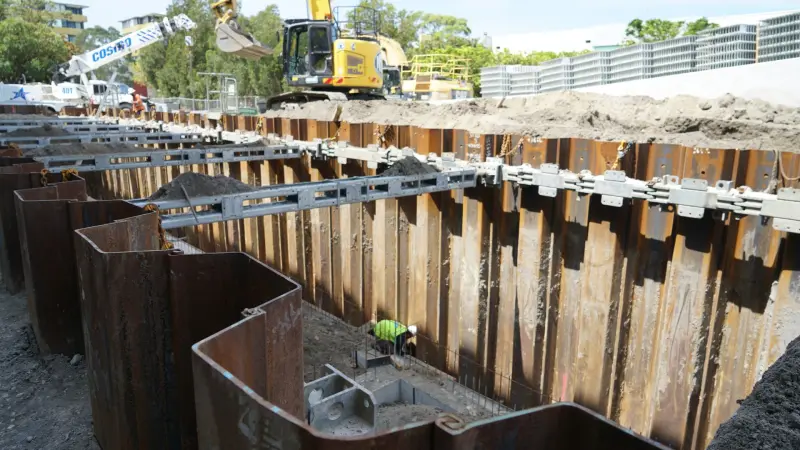
Four quotes arrive. The cheapest is 21 USD per tonne lower. Sign it, and you may pay 24 USD more for each square metre of wall.
Compare steel sheet pile quotations on cost per square metre of finished wall, not price per tonne. Normalise the section, steel grade, pile length, coating and delivery terms first. Then score lead time, certification and payment terms. The lowest tonnage price often carries the highest installed cost.

I have sat on both sides of this table. I have priced walls as a supplier. I have also helped contractors unpick awards that went wrong. In almost every bad case, the buyer compared the one number that was easy to compare. The rest of the quotation stayed in the footnotes. So here is the method I use now, and the numbers I ask for before I trust a price.
Why Is Price per Tonne a Poor Basis for Comparing Quotations?
A tonne measures weight. A wall is measured in area. The two only line up when the section, the grade and the length are the same.
Price per tonne ignores section modulus, grade, length tolerance and waste. Two quotes at the same tonnage rate can differ by 15 percent in cost per square metre of wall.
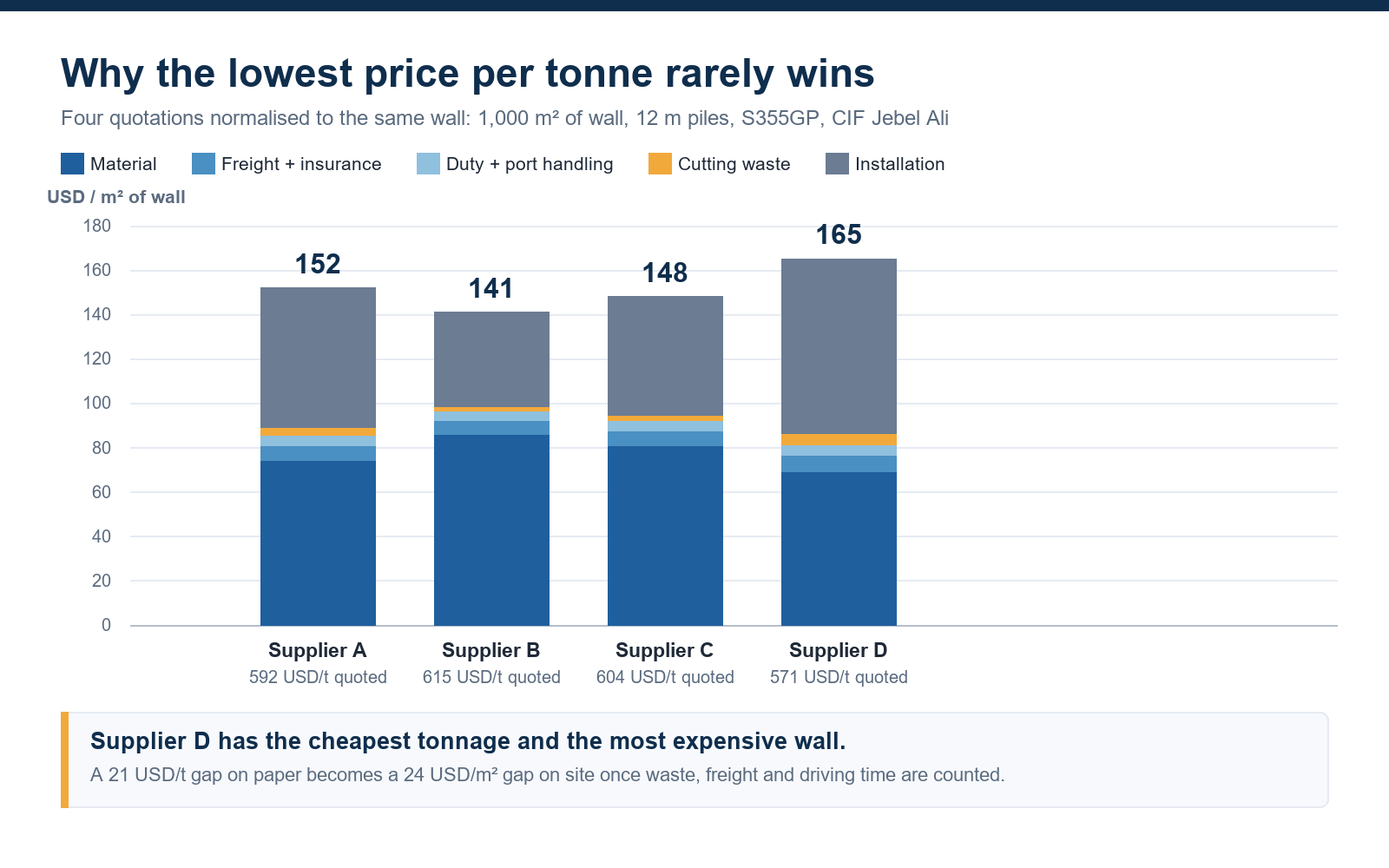
The first thing I do with a set of quotes is throw the tonnage rate into a side column. It stays there as a reference, not as a ranking. Then I rebuild each offer into a cost per square metre of retained face.
Where the weight-based comparison breaks down
Take a wall that needs a section modulus of 1,200 cm³ per metre. One supplier quotes a heavy U-type at 615 USD per tonne. Another quotes a light U-type at 571 USD per tonne. On paper the second offer saves 44 USD per tonne, about 7 percent.
The point is easy to miss. Steel sheet piles are a structural element, not a commodity sold by weight. You are paying for bending capacity per metre of wall, and weight is only one way to deliver it.
Now look at what each section needs to stand up. The light pile has a lower section modulus, so it needs a closer support spacing, an extra row of anchors, or a deeper toe. On a 1,000 m² wall, the extra anchors and the slower driving cycle can add 30 to 40 USD per m². The steel saving is gone.
I have seen this exact trade on a riverbank scheme in Southeast Asia. The thinner section won the tender. The contractor then spent six weeks adding walers and anchors that were never in the original budget.
| Cost item | Often left out of a tonnage rate | Typical share of installed cost |
|---|---|---|
| Ocean freight and cargo insurance | Yes, on EXW or FOB terms | 4 to 7 percent |
| Port handling and inland haulage | Yes, almost always | 1 to 3 percent |
| Import duty and clearance | Yes, unless DDP is quoted | 0 to 10 percent |
| Cutting waste from stock lengths | Yes, hidden in the quantity | 2 to 5 percent |
| Coating repair at cut ends and welds | Yes | 1 to 2 percent |
| Piling plant, labour and supervision | Yes | 25 to 45 percent |
| Third-party inspection and testing | Sometimes | Under 1 percent |
So the tonnage rate is a starting point. It is not a decision. When buyers ask me what actually moves sheet pile prices, I tell them the mill rate is only the first of seven lines.
How Do You Normalise Every Quote to the Same Wall Area?
You need one written basis of comparison. Every supplier prices the same schedule, in the same units, with the same exclusions.
Normalise by fixing retained height, wall length, design section modulus, steel grade, pile length, coating and toe level. Then ask every supplier to price that one schedule and report cost per square metre.
The one-page basis I send with every enquiry
I write this page before I send anything out. It takes twenty minutes and it saves weeks. The page has six blocks: geometry, design, material, protection, delivery and documentation.
Without it, each supplier answers a different question. One prices 12 m stock lengths. Another prices 14 m mill lengths. A third prices 12 m plus a welded extension. All three call it “the same wall”.
| Field | What to state | Why it matters |
|---|---|---|
| Retained height and wall length | Clear dimensions, including corners | Sets the wall area used for every comparison |
| Design section modulus | Minimum value per metre of wall | Stops light sections entering as equals |
| Steel grade | S355GP, S430GP, ASTM A328 or A690 | Changes both yield strength) and price |
| Pile length and toe level | One length, or a stated cut-off rule | Controls waste and driving time |
| Coating or protection | None, paint system, or extra thickness | Often 5 to 12 percent of material cost |
| Delivery point and Incoterm | Named port or site, named term | Makes freight lines comparable |
If you want the full document list, I keep it in this guide to a complete RFQ package. The short version is that the enquiry must be boring. Boring enquiries produce comparable quotes.
Converting to cost per square metre
The arithmetic is simple. Multiply the unit weight by the price per tonne to get material cost per metre of pile. Divide by the effective wall width to get material cost per m². Then add freight, duty, waste, protection and installation.
For a U-type pile at 60 kg per metre and 615 USD per tonne, material is 36.9 USD per metre. With a 400 mm module, that is about 92 USD per m² of wall. A Z-type at 1,000 mm module spreads the same steel over more face, so the cost per m² drops even at the same tonnage rate. This is why profile choice matters as much as price. My section modulus and thickness guide has the formulas, and the standard weight table gives you the unit weights to plug in.
When I do this on a live tender, I put the result in one column and the tonnage rate in another. If the ranking flips, I know the cheap quote was cheap for a reason.
What Do Commercial Terms Hide Inside a Quotation?
Two suppliers can quote the same FOB price and still land 12 percent apart. The difference sits in terms, not in steel.
Incoterms, payment method, price validity and weight tolerance decide who pays for what. A quote without a named Incoterm is not a price. It is an opening position.
The four clauses that change the landing cost
The first is the Incoterm. FOB puts loading and ocean freight on you. CIF includes freight and insurance, but the risk still passes at the load port. DAP or DDP moves more cost to the supplier, and that cost is always inside the unit rate. None is better. They are just different bundles. The Incoterms rules define each split precisely, and I always ask suppliers to state the edition year.
The second is payment. A letter of credit adds bank charges and takes time. A 30 percent deposit with the balance against a copy of the bill of lading is cheaper, but it asks you to trust the supplier. That trust has a price too.
The third is price validity. Steel moves. A quote valid for seven days is a different product from one valid for sixty days. If the mill rate rises 3 percent while your approval loop runs, the cheap quote quietly becomes the expensive one.
The fourth is weight tolerance. Coils and plates vary. A supplier who ships at plus 5 percent against the theoretical weight is giving you more steel and a larger invoice. A supplier at minus 3 percent may leave you short on the last run of piles.
| Term | Who pays freight | Who carries risk in transit | Effect on quoted rate |
|---|---|---|---|
| EXW | Buyer | Buyer from the mill gate | Lowest, but you arrange everything |
| FOB | Buyer | Buyer once loaded on vessel | Common for export comparisons |
| CIF | Seller | Buyer, risk passes at load port | Freight and insurance inside the rate |
| DAP | Seller | Seller to the named place | Highest, but fewest surprises |
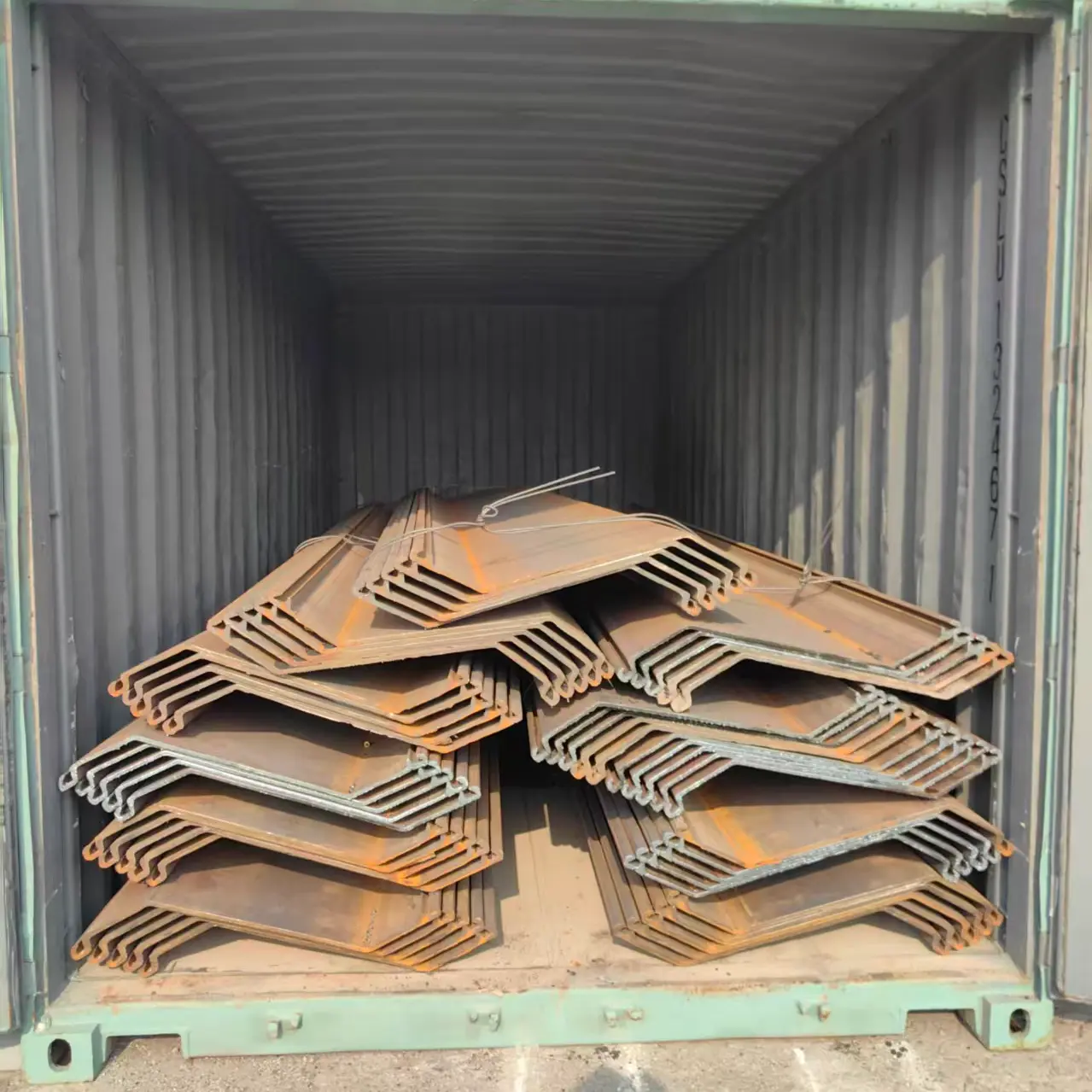
I also read the packaging clause. Bundles that are strapped and tagged to a shipping mark save hours at site. Loose piles cost crane time and cause arguments about shortages. There is a practical summary in my notes on packaging and loading practice.
One last thing on terms. The quotation covers the steel, but it never covers your site. Crane standing time, access roads and storage space are project cost factors that decide whether a cheap delivery is actually cheap.
How Should You Score Technical and Delivery Differences?
Some differences do not convert into dollars cleanly. Delivery risk is the obvious one. So is certification. Score them, and set the weights before you open the quotes.
Score each supplier on price per m², compliance, delivery, certification, payment terms and references. Set the weights before opening the quotes, then rank on the weighted total rather than on the lowest rate.
Why the scorecard beats the spreadsheet sort
A pure price sort assumes every other variable is equal. It never is. One supplier has the section in stock. Another has to wait for a rolling slot. One sends a full mill test certificate with heat numbers. Another sends a certificate of origin and calls it quality assurance.
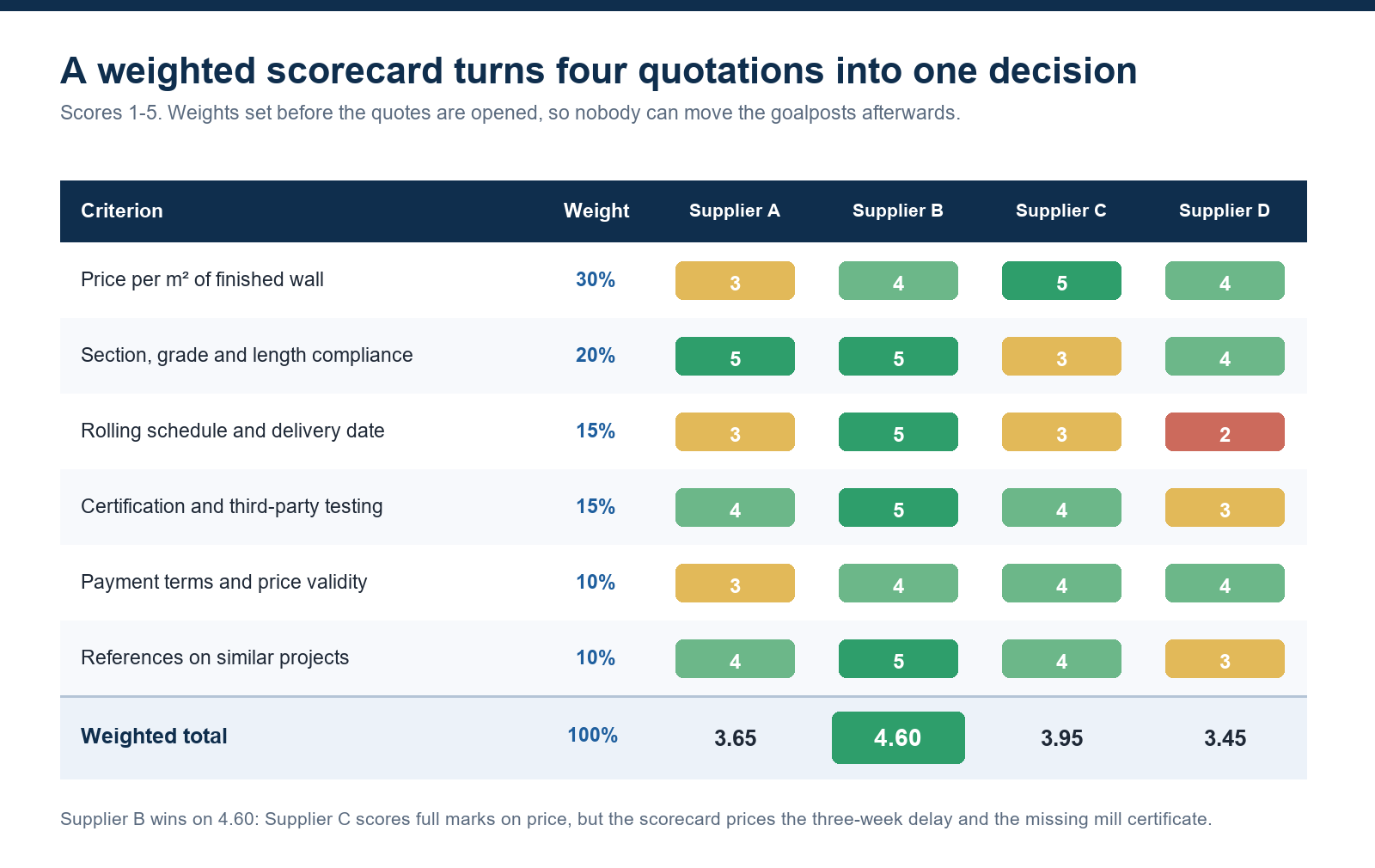
I weight price at 30 percent, not 60. That surprises some buyers. But price is the one variable I can still negotiate after the shortlist. Delivery date and certificate quality are fixed once the contract is signed.
| Criterion | Suggested weight | What a top score looks like |
|---|---|---|
| Cost per m² of finished wall | 30 percent | Lowest normalised total, all adders included |
| Section, grade and length compliance | 20 percent | Exact match, no substituted profile |
| Rolling schedule and delivery date | 15 percent | Confirmed slot, not “subject to mill order” |
| Certification and third-party testing | 15 percent | Mill certificates with heat numbers, SGS on request |
| Payment terms and price validity | 10 percent | Workable terms, validity beyond your approval cycle |
| References on similar projects | 10 percent | Comparable soil, comparable wall height |
On the technical side, I check the certificate before I check the brochure. A mill test certificate should show heat number, chemical composition, yield and tensile results, and the standard it was tested against. For sheet piles that is usually EN 10248 or ASTM A328. If the certificate is generic, the steel is generic. My notes on quality standards and inspection list the checks in order.
Delivery deserves its own line because it is the most common hidden failure. A supplier with stock ships in two weeks. A supplier without stock waits for the next rolling campaign, which may be five weeks out. If your cofferdam starts in three weeks, the cheaper quote is not a quote. It is a delay.
If you want the formal version of this check, my notes on supplier evaluation cover the factory audit, the reference calls and the documents I ask to see.
What Belongs on a Comparison Sheet Before You Award?
One page. One row per supplier. One column per cost line, plus the scores. If it does not fit on a page, you are hiding something from yourself.
A fair comparison sheet shows normalised cost per m², every adder, the delivery date, the certificate type and the payment terms side by side. Anything not on the sheet cannot be weighed.
The columns I refuse to drop
The sheet starts with the technical basis: section, grade, length, coating. Then the money: material per m², freight, duty, waste, installation. Then the terms: Incoterm, validity, payment, lead time. Then the risk: certificate type, inspection rights, penalty for late delivery.
Red flags I look for in the same pass:
| Red flag | What it usually means |
|---|---|
| Rate quoted per tonne only | No normalised cost, so no real comparison |
| No named Incoterm | Freight and risk will be argued later |
| Section substituted without notice | Design assumptions may no longer hold |
| Price valid for 7 days | The number is a placeholder, not an offer |
| Certificate described as “available” | It does not exist yet for this heat |
| Delivery “subject to mill confirmation” | No rolling slot has been booked |
I keep the sheet live during negotiation. When a supplier improves a term, I change one cell and the ranking updates. That is the whole point. You are not buying steel by the tonne. You are buying a finished wall, on a date, with evidence that it meets the specification.
My Take: The Three Questions I Ask Before I Trust a Low Price
When two quotes sit within 3 percent of each other, I stop looking at the number. I ask three questions instead.
The first is: which heat, and when was it rolled? A supplier who can name the heat range and the rolling week has the material or has a firm slot. A supplier who cannot is hoping. I have watched a “two-week delivery” turn into seven weeks because nobody asked this question at award stage.
The second is: what happens at the cut? Piles are often rolled in stock lengths and cut on site. Every cut leaves an unprotected edge, and every cut length that cannot be reused is waste. I want the cut plan before I accept the price, not after.
The third is: who signs the inspection report? If the answer is the supplier’s own QC department, that is fine for a warehouse order. For a permanent retaining wall in a marine environment, I want a third party I can name in the contract.
My own view is simple. A quote is a promise with numbers attached. The cheap quote is often the one where the fewest promises have been made. I would rather pay 4 percent more to a mill that has rolled the section before, packaged it properly and put a real date on the delivery, than save that 4 percent and spend it twice on site. Buyers who compare only the tonnage rate are not comparing suppliers. They are comparing how much risk each supplier has agreed to carry silently.
Conclusion
Compare the finished wall, not the tonnage. Normalise the basis, price every adder, then score delivery and certification. The cheapest quote is only cheap until it reaches site.