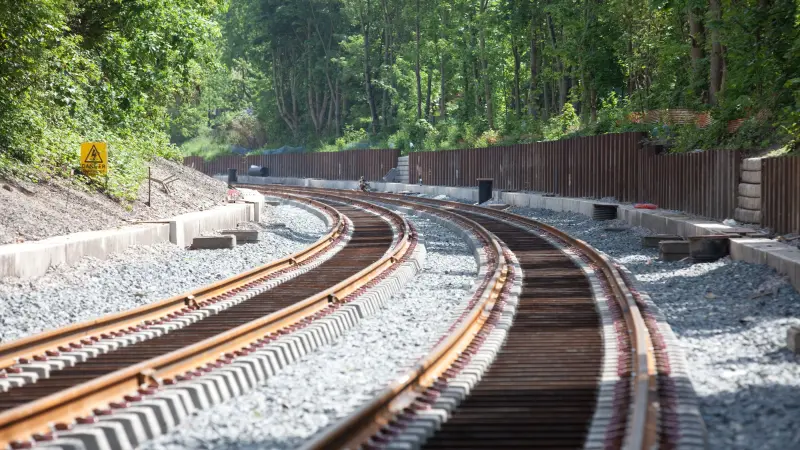
Weak ground and deep excavations can delay railway construction. I rely on steel sheet piles to improve safety, speed up installation, and protect railway infrastructure.
Steel sheet piles are widely used in railway projects for retaining walls, bridge abutments, embankment support, drainage systems, and deep excavations. They provide high strength, fast installation, and reliable ground stabilization for both temporary and permanent structures.
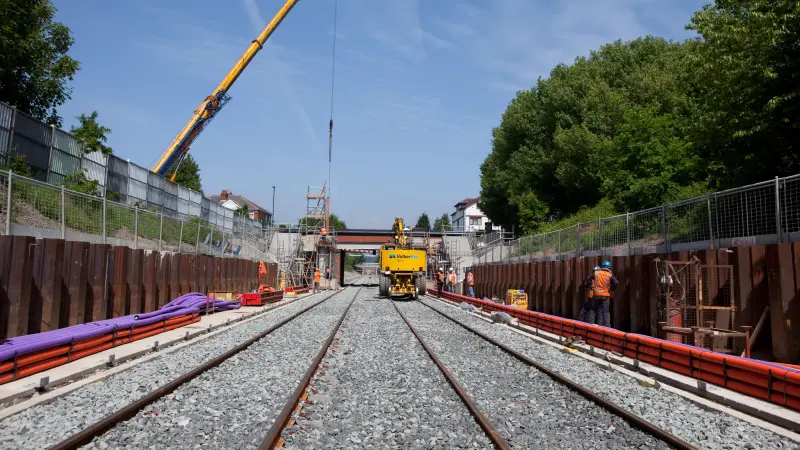
Railway construction demands precision, long service life, and strict safety standards. I have worked with contractors building railways in different countries, and I have learned that choosing the right steel sheet pile system can reduce construction risks while improving project efficiency. In this article, I will explain why steel sheet piles are widely used in railway engineering and how to select the right solution for different railway applications.
Why are steel sheet piles used in railway projects?
Difficult soil conditions and limited construction space create challenges for railway contractors. I often recommend steel sheet piles because they provide fast and dependable ground support.
Steel sheet piles are used in railway projects because they stabilize excavations, retain soil, control groundwater, support bridge foundations, and shorten construction schedules while maintaining high structural safety.
Supporting critical railway infrastructure
Railway projects include much more than laying tracks. Contractors also build bridges, culverts, tunnels, drainage channels, retaining walls, maintenance roads, and underground utility corridors. Many of these structures require deep excavation or temporary earth retention before permanent concrete structures can be completed.
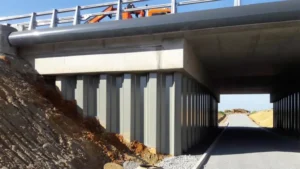
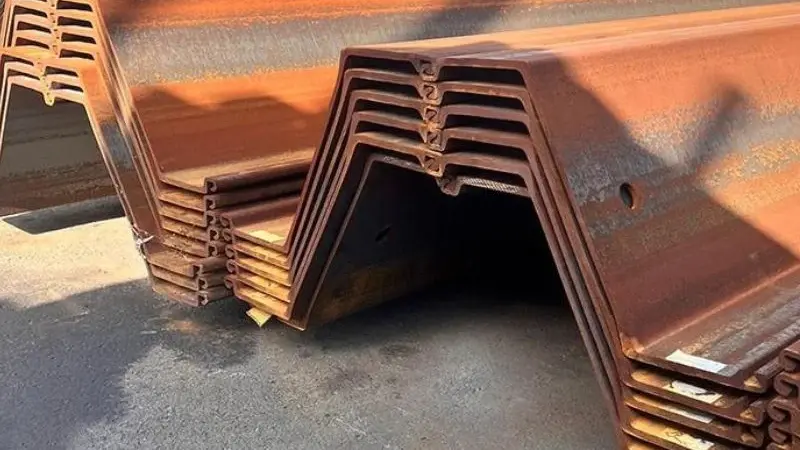
Steel sheet piles create a continuous retaining wall by connecting individual piles through strong interlocks. This system prevents soil movement and reduces groundwater infiltration during excavation. I often recommend hot rolled U-shaped sheet piles because they provide excellent bending strength and reliable interlocking performance.
Typical railway applications include:
| Railway Structure | Purpose of Steel Sheet Piles |
|---|---|
| Railway retaining walls | Soil stabilization |
| Bridge abutments | Foundation support |
| Culvert construction | Excavation retention |
| Drainage channels | Water control |
| Underground cable trenches | Temporary excavation support |
| Station foundations | Deep excavation protection |
Fast installation keeps projects on schedule
Railway construction usually follows a strict timeline. Delays increase labor costs and interrupt transportation planning. Steel sheet piles help contractors maintain progress because installation is much faster than many traditional retaining systems.
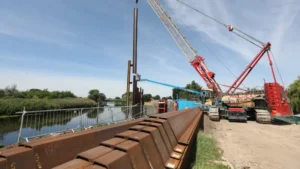
Modern vibratory hammers allow hundreds of meters of sheet piles to be installed within a short period. When temporary support is no longer required, the piles can often be extracted and reused on another project. This reduces material waste and improves the overall project budget.
Modern vibratory hammers allow hundreds of meters of sheet piles to be installed within a short period.
Better performance in difficult ground
Railway lines often cross soft clay, loose sand, rivers, wetlands, and flood-prone areas. These ground conditions make excavation difficult.
Steel sheet piles perform well because they:
- Resist lateral earth pressure.
- Reduce soil collapse.
- Control groundwater seepage.
- Improve excavation safety.
- Maintain wall stability during construction.
For projects near rivers or coastal railways, corrosion-resistant coatings or thicker steel sections provide additional durability.
Environmental advantages
Many governments require contractors to reduce environmental impact during railway construction.
Steel sheet piles support these goals because they:
- Generate less excavation waste.
- Require smaller construction areas.
- Can be reused several times.
- Produce less concrete waste.
- Reduce construction duration.
These benefits become especially valuable for railway upgrades where active train operations continue nearby.
My project experience
One contractor contacted me during a railway drainage improvement project. The original design used cast-in-place concrete retaining walls. After reviewing the project schedule, we proposed hot rolled U-shaped steel sheet piles instead.
Installation finished much faster than expected. The contractor completed the drainage excavation ahead of schedule and reopened the construction area sooner. The reusable sheet piles also reduced equipment costs on the next phase of the project.
My insight
Many buyers compare only the purchase price of steel sheet piles. I believe the better comparison is the total project value. Faster installation, reusable materials, and reduced labor often create much larger savings than the difference in steel price alone. That is why I always recommend evaluating the complete construction process before choosing a retaining system.
How deep should steel sheet piles be installed for railway construction?
Many customers ask me for a standard installation depth. My answer is always the same: the correct depth depends on engineering calculations, not a fixed number.
Steel sheet piles for railway construction are typically installed between 6 and 25 meters deep. The required depth depends on excavation depth, soil conditions, groundwater level, train loads, and safety requirements.
Factors that determine installation depth
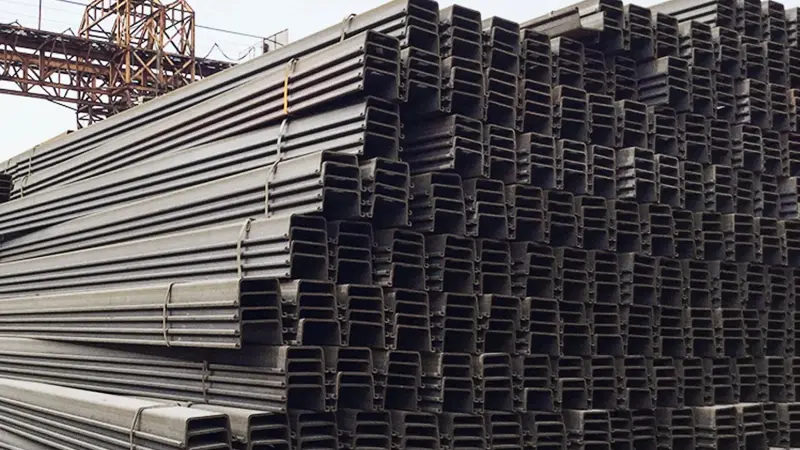
The visible section above ground represents only part of the structure. The embedded section provides passive soil resistance and prevents wall movement.
Engineers calculate the required embedment based on several factors.
The most important factors include:
- Soil strength.
- Groundwater conditions.
- Excavation depth.
- Railway embankment height.
- Dynamic train loading.
- Bridge foundation loads.
- Nearby structures.
- Required safety factor.
Soft clay usually requires deeper embedment because passive resistance is relatively low. Dense sand or gravel can often provide sufficient resistance with shorter embedment depths.
- Dynamic train loading.
- Required safety factor.
Typical installation depth for railway projects
| Railway Application | Typical Sheet Pile Depth |
|---|---|
| Cable trench | 6–8 m |
| Drainage system | 8–12 m |
| Railway retaining wall | 10–16 m |
| Bridge approach | 15–20 m |
| Bridge foundation support | 18–30 m |
| River crossing | 20–35 m |
These values are only general references. Every project should be verified through geotechnical analysis and structural design.
Typical sheet pile depths for railway projects are only general references. Every project should be verified through geotechnical analysis and structural design.
Why deeper is not always better
Some contractors assume that installing longer sheet piles automatically increases safety. I do not recommend this approach.
Longer piles increase:
- Material consumption.
- Transportation costs.
- Crane capacity requirements.
- Installation time.
- Fuel usage.
- Equipment wear.
Good engineering focuses on achieving the required safety with the most efficient pile length.
Engineering design before production
Before recommending a pile profile, I usually ask customers for:
| Required Information | Why It Matters |
|---|---|
| Soil investigation report | Determines soil resistance |
| Excavation depth | Calculates embedment |
| Groundwater level | Evaluates hydrostatic pressure |
| Design drawings | Confirms structural loads |
| Service life | Determines corrosion allowance |
| Construction method | Selects suitable pile profile |
With this information, engineers can select the correct U-shaped, Z-shaped, or Ω-shaped steel sheet pile instead of simply choosing the longest available product.
|Soil investigation report | Determines soil resistance |
My project experience
A railway contractor once requested 24-meter sheet piles because another supplier believed that longer piles would provide additional safety. After reviewing the soil report, our engineering team calculated that 18-meter hot rolled U-shaped sheet piles met all structural requirements.
The shorter piles reduced steel consumption, transportation costs, installation time, and crane operating hours without compromising safety. The contractor appreciated the savings and later used the same engineering approach on another railway project.
My insight
One lesson I have learned from supplying railway contractors is that successful projects start with engineering rather than product selection. I always encourage my customers to share their soil reports and construction drawings first. This allows me to recommend the most economical and reliable sheet pile solution based on actual project conditions instead of assumptions.
What type of steel sheet piles are best for railway projects?
Choosing the wrong sheet pile profile can increase costs and slow construction. I always match the pile type to the soil conditions, loading requirements, and project life.
Hot rolled U-shaped and Z-shaped steel sheet piles are the best choices for most railway projects. They offer high bending strength, strong interlocks, excellent water resistance, and reliable performance for both temporary and permanent railway structures.
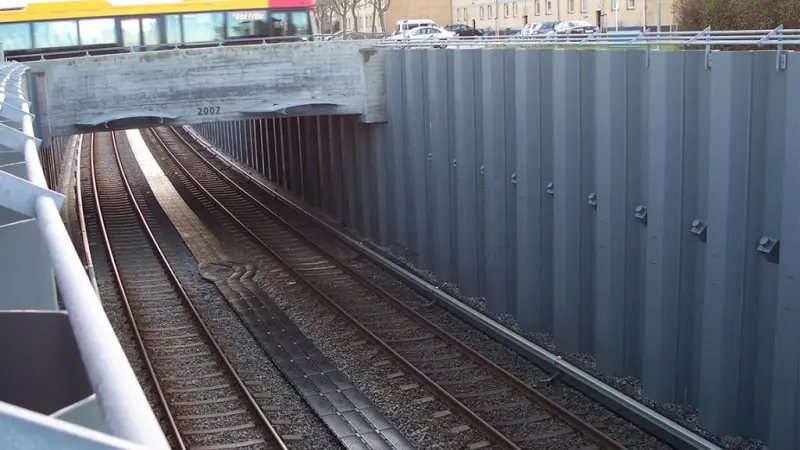
Different railway projects require different sheet pile profiles
There is no universal sheet pile for every railway project. Every application has different structural requirements.
For example, a railway bridge foundation carries much higher loads than a drainage trench. Likewise, a retaining wall beside a railway station requires different structural properties than a temporary excavation support system.
I normally evaluate several factors before recommending a profile:
- Soil type
- Excavation depth
- Groundwater conditions
- Service life
- Structural loading
- Installation equipment
- Corrosion environment
Only after understanding these conditions do I recommend the appropriate sheet pile section.
Common steel sheet pile types
| Sheet Pile Type | Railway Application | Main Advantage |
|---|---|---|
| U Type | Retaining walls | High stiffness and easy installation |
| Z Type | Bridge foundations | High section modulus |
| Ω Type | Temporary excavation | Good installation efficiency |
| Straight Web Type | Cellular structures | High tensile capacity |
| Flat Sheet Pile | River control | Continuous wall construction |
| Hat Type | Lightweight retaining systems | Wide effective width |
Why hot rolled sheet piles are my first recommendation
For most railway infrastructure, I recommend hot rolled steel sheet piles.
Hot rolled piles provide:
- Better interlock accuracy
- Higher bending resistance
- Better water tightness
- Longer service life
- Easier installation
- Lower installation risk
These advantages become even more important when contractors work beside active railway lines where construction time is limited.
U Type or Z Type?
Many customers ask me which profile is better.
The answer depends on the project.
U-shaped sheet piles distribute loads evenly because the interlocks remain close to the centerline. They are widely used for retaining walls, culverts, drainage systems, and general railway construction.
Z-shaped sheet piles place the interlocks farther from the neutral axis. This creates a higher section modulus with less steel weight. They are ideal for bridge foundations, high retaining walls, and deep excavations. [web:26]
| Comparison | U Type | Z Type |
|---|---|---|
| Installation | Easy | Easy |
| Bending Capacity | High | Very High |
| Water Tightness | Excellent | Excellent |
| Material Efficiency | Good | Excellent |
| Railway Retaining Walls | Excellent | Excellent |
| Deep Excavation | Good | Excellent |
My project experience
One contractor planned to use cold formed sheet piles for a railway bridge approach because the initial quotation appeared lower.
After reviewing the structural drawings, I recommended hot rolled Z-shaped sheet piles instead. Although the material price per ton was higher, the improved section modulus reduced the total quantity of steel required.
The contractor finally purchased fewer piles, completed installation faster, and reduced the overall project cost.
My insight
I believe the best sheet pile is not simply the strongest or the cheapest. The best solution is the one that delivers the required structural performance with the lowest total construction cost. That is why I always review project drawings before preparing a quotation.
What are the advantages of steel sheet piles in railway infrastructure?
Railway projects demand speed, safety, and durability. I continue recommending steel sheet piles because they perform well in all three areas.
Steel sheet piles provide fast installation, excellent structural strength, groundwater control, reusable materials, and long service life. These advantages make them one of the most efficient retaining systems for modern railway infrastructure.
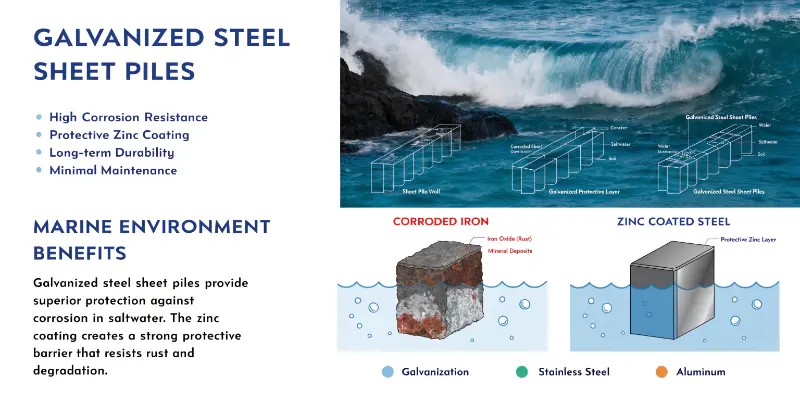
Faster construction
Time is one of the biggest costs in railway construction.
Steel sheet piles can be installed rapidly using vibratory hammers or hydraulic press-in machines. Contractors can complete retaining systems much faster than traditional cast concrete walls.
Fast installation reduces:
- Labor costs
- Equipment rental
- Construction risks
- Project delays
This is especially important when work must be completed during short railway maintenance windows.
你可以在这里给“vibratory hammers”加一个技术介绍链接,例如:
Steel sheet piles can be installed rapidly using vibratory hammers or hydraulic press-in machines.Excellent structural performance
Steel has high strength compared with many traditional retaining materials.
Steel sheet piles resist:
- Earth pressure
- Groundwater pressure
- Dynamic train loads
- Construction equipment loads
- Temporary surcharge loads
The interlocking system forms a continuous retaining wall that improves structural stability.
- Dynamic train loads
Better groundwater control
Groundwater is one of the biggest challenges in railway construction.
Steel sheet pile interlocks create a nearly continuous barrier that greatly reduces water seepage.
Where higher water tightness is required, contractors may also use:
- Interlock sealants
- Bituminous compounds
- Welding
- Grouting
These additional measures improve performance in difficult groundwater conditions.
- Interlock sealants
- Bituminous compounds
Reusable materials
One advantage I always mention is reusability.
Temporary sheet piles can often be extracted after construction and used again.
This reduces:
- Material waste
- Project costs
- Environmental impact
Many contractors recover a significant portion of their investment through reuse.
Temporary sheet piles can often be extracted after construction and used again, as described in our temporary sheet piling reuse guide.
Long service life
Permanent railway structures require decades of reliable performance.
With suitable corrosion protection, steel sheet piles can remain in service for more than 50 years.
Common protection systems include:
| Protection Method | Suitable Environment |
|---|---|
| Hot-dip galvanizing | Mild corrosion |
| [Epoxy coating | Industrial environments |
| Coal tar epoxy](https://yourdomain.com/corrosion-protection/coal-tar-epoxy-sheet-piles) | Marine exposure |
| Cathodic protection | Coastal and seawater |
| Corrosion allowance | Long-term structures |
Environmental benefits
Many railway authorities now emphasize sustainable construction.
Steel sheet piles support environmental goals because they:
- Can be recycled.
- Produce less excavation waste.
- Require less concrete.
- Reduce transportation volume.
- Shorten construction schedules.
Steel sheet piles support environmental goals, as detailed in our sustainable railway construction guide.
My project experience
One of our Southeast Asian customers selected hot rolled U Type steel sheet piles for a riverbank protection project located beside an important transportation corridor.
The interlocking system created a continuous retaining wall that stabilized the riverbank and controlled erosion. Installation using vibratory equipment finished ahead of schedule, allowing the contractor to protect nearby infrastructure before the rainy season.
Although the project focused on flood control, the engineering approach is very similar to railway embankment protection. Strong interlocks, reliable structural capacity, and efficient installation remain the key factors for long-term performance.
My insight
After working with contractors from the Middle East, Southeast Asia, Africa, and South America, I have found that successful railway projects begin with good engineering rather than low prices. I always encourage customers to provide soil reports, design drawings, and project specifications before selecting a sheet pile profile. When I understand the complete project, I can recommend the most efficient solution that balances safety, construction speed, and long-term value.
Conclusion
Steel sheet piles provide safe, efficient, and durable support for railway infrastructure when the correct profile, depth, and corrosion protection are selected.