Building an airport leaves no room for weak foundations. I always choose steel sheet piles when I need fast installation, reliable support, and long-term safety.
Steel sheet piles are widely used in airport construction for excavation support, retaining walls, drainage systems, and foundation protection. They can serve as temporary or permanent structures depending on the project design, corrosion protection, and expected service life.
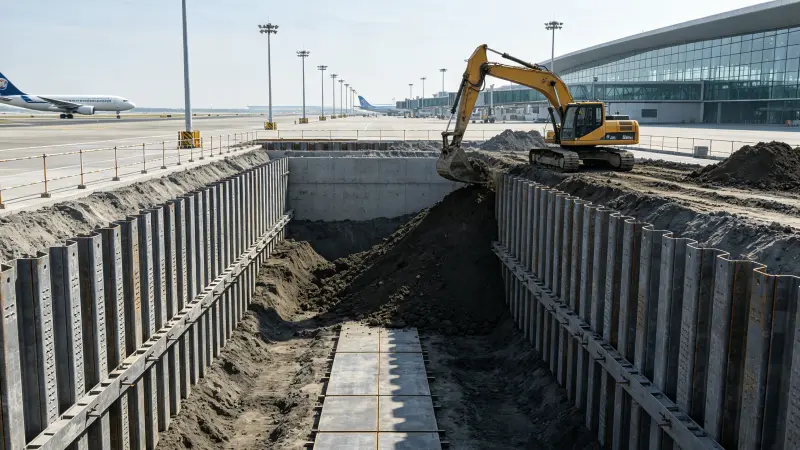
Every airport project has tight schedules, high safety standards, and strict quality control. I have worked with contractors who needed sheet piles for terminal foundations, underground utility tunnels, drainage channels, and retaining structures. I found that selecting the right pile profile, steel grade, and installation depth makes a major difference in project cost and construction speed.
Are sheet piles temporary or permanent?
Airport projects demand stable excavation support. I always explain that steel sheet piles can serve both temporary and permanent purposes.
Steel sheet piles can be temporary or permanent. Temporary piles support excavations during construction. Permanent piles remain in place as retaining walls or foundation structures after proper corrosion protection and engineering design.
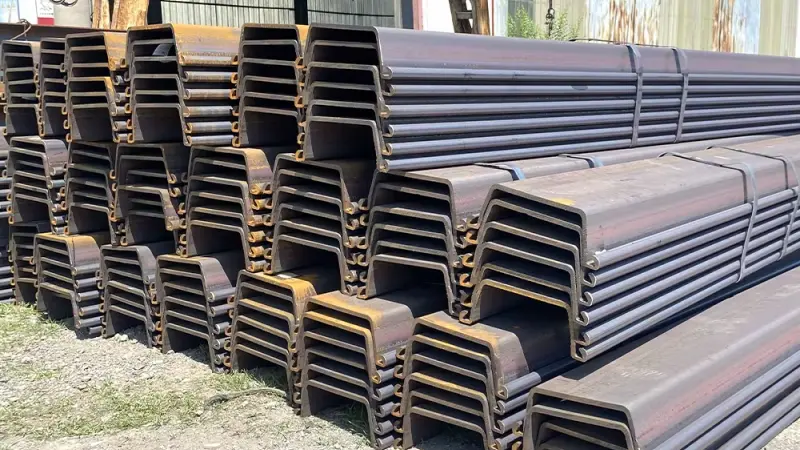
Why temporary sheet piles are common in airport construction
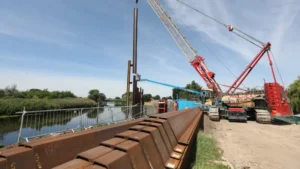
Many airport projects include deep excavations for terminals, underground pipelines, fuel systems, drainage tanks, and electrical rooms. Contractors often need a retaining system that can be installed quickly and removed after concrete work is complete.
I often recommend temporary steel sheet piles because they shorten construction time. Vibratory hammers can install and extract them efficiently. Contractors can even reuse the piles on another project. This reduces the overall investment.[web:13]
Temporary applications include:
| Application | Purpose |
|---|---|
| Utility trenches | Soil retention |
| Drainage systems | Water control |
| Pump stations | Excavation support |
| Fuel pipeline installation | Safe excavation |
| Underground cable tunnels | Temporary retaining wall |
The biggest advantage is flexibility. Contractors do not have to leave expensive materials underground after construction ends.
When permanent sheet piles make more sense
Some airport facilities require retaining structures that remain in service for decades.
These include:
- Flood protection walls
- Retaining walls
- Riverbank stabilization
- Drainage canals
- Service roads
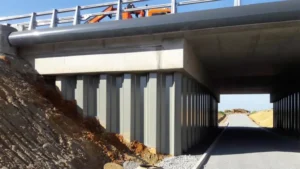
- Bridge abutments
- Underground structures
Permanent sheet piles receive additional corrosion protection. Engineers may specify thicker steel, protective coatings, galvanized surfaces, or cathodic protection systems.[web:6]
My experience supplying permanent projects
I have supplied steel sheet piles for contractors working near rivers and coastal airports. One customer wanted a retaining wall that would last over 50 years.
Instead of choosing the lowest-cost pile, we selected hot rolled U Type sheet piles with a larger section modulus and higher corrosion allowance.[web:26] The initial cost increased slightly, but the maintenance cost dropped significantly over the project life.
That decision helped the customer avoid expensive repairs years later.
Temporary vs Permanent Sheet Piles
| Item | Temporary | Permanent |
|---|---|---|
| Service life | Months | 50-100 years |
| Installation | Fast | Fast |
| Removal | Yes | No |
| Reuse | Yes | No |
| Corrosion protection | Basic | Advanced |
| Initial investment | Lower | Higher |
| Long-term maintenance | Low | Designed into project |
My opinion
From my experience, many buyers focus only on the purchase price. I think they should compare the total project cost instead. Permanent sheet piles often save much more money over their service life because they reduce maintenance and replacement work. That is one lesson I have learned after working with contractors from many countries.
How much does steel sheet piling cost?
Many buyers ask me for a price before discussing the project. I always explain that sheet pile pricing depends on much more than steel weight.
Steel sheet piling costs depend on pile type, steel grade, dimensions, coating, project quantity, transportation, and installation. Material prices usually represent only one part of the total project cost.
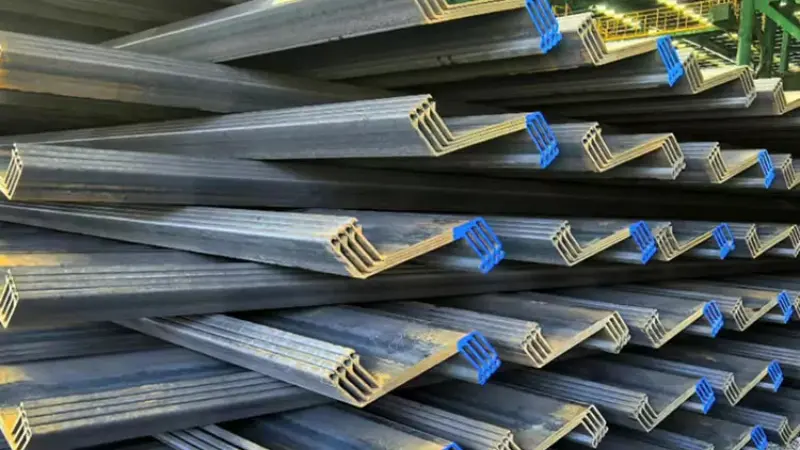
What affects steel sheet pile prices?
Many factors influence the final quotation.
The most important factors include:
| Factor | Impact on Cost |
|---|---|
| Steel grade | Medium |
| Pile profile | High |
| Length | High |
| Section modulus | High |
| Quantity | High |
| Surface coating | Medium |
| Freight | High |
| Delivery schedule | Medium |
One project may require lightweight cold formed piles, while another airport foundation may require heavy hot rolled Z piles. The difference in steel consumption alone can change the total cost significantly.
Material cost is only part of the budget
Many contractors compare only the steel price.
I think this approach often creates problems later.
The total project cost normally includes:
- Material
- Transportation
- Customs clearance
- Installation equipment
- Vibratory hammer rental
- Welding
- Capping beam
- Corrosion protection
- Engineering design
- Labor
Sometimes a slightly more expensive sheet pile reduces installation time by several days. The contractor actually spends less money overall.
Why hot rolled sheet piles often provide better value
Hot rolled sheet piles usually have:
- Better interlocks
- Higher bending resistance
- Better water tightness
- Longer service life
- Easier installation
- Lower installation risk
The purchase price may be higher than cold formed piles, but contractors often save money through faster installation and reduced maintenance.
Why hot rolled sheet piles often provide better value
My project experience
One airport infrastructure contractor contacted me because another supplier offered a lower price.
After reviewing the drawings, I found that the lower-priced pile had a much smaller section modulus. The contractor would need many more piles to achieve the required structural performance.
After recalculating the total material quantity, our recommended solution actually reduced the total project cost.
That experience reminded me that comparing price per ton is rarely enough. Engineers should always compare structural efficiency, installation speed, transportation cost, and service life together.
My advice for international buyers
I usually ask several questions before giving a quotation.
- What soil conditions does the site have?
- Is the structure temporary or permanent?
- What is the required excavation depth?
- What steel grade is specified?
- Is corrosion protection required?
- Which installation equipment will be used?
These answers allow me to recommend the most economical solution instead of simply quoting the cheapest product.
From my experience, this approach helps contractors avoid expensive design changes after construction begins.
What are the disadvantages of using sheet piles?
Many buyers only focus on the advantages of steel sheet piles. I always explain both the strengths and the limits before recommending a solution.
Steel sheet piles offer excellent structural support, but they also have disadvantages such as driving noise, vibration, corrosion risk, installation challenges in hard ground, and higher costs for heavy-duty applications. Proper design can reduce most of these issues.
Every construction method has limitations
I have supplied steel sheet piles for contractors working on airports, ports, bridges, flood control projects, and underground structures. None of these projects used the exact same solution because every construction site presented different challenges.
The first issue is noise and vibration. Traditional impact hammers generate high levels of both. This can become a problem near active airport terminals, control towers, or nearby communities. Fortunately, many contractors now use vibratory hammers or silent pressing machines. These methods reduce noise and vibration significantly.
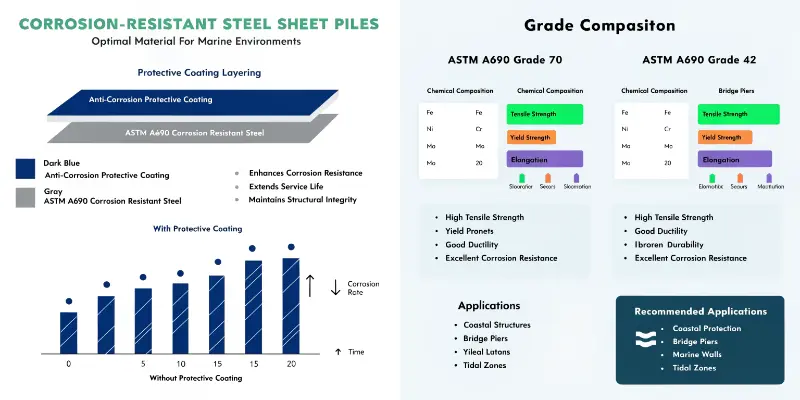
The second issue is corrosion. Steel naturally corrodes when exposed to moisture, chemicals, or saltwater. This does not mean sheet piles are unsuitable. It simply means corrosion protection must be considered during design.
Common protection methods include:
- Hot-dip galvanizing
- Epoxy coating
- Coal tar epoxy systems
- Cathodic protection
- Increased corrosion allowance
- Higher-grade steel selection
Another challenge is hard soil or rock layers. Dense gravel, boulders, or bedrock may slow installation. In these situations, contractors may pre-drill pilot holes or choose stronger hot rolled sheet piles with higher driving resistance.
Common disadvantages and practical solutions
| Challenge | Possible Impact | Practical Solution |
|---|---|---|
| Driving noise | Environmental complaints | Vibratory or silent piling |
| Ground vibration | Sensitive structures nearby | Press-in installation |
| Corrosion | Reduced service life | Protective coating |
| Hard ground | Difficult driving | Pre-drilling |
| Transportation | Heavy materials | Optimize pile length |
| High initial investment | Larger budget | Life-cycle cost analysis |
Why I still recommend steel sheet piles
Although these disadvantages exist, I still recommend steel sheet piles for many airport projects because the benefits usually outweigh the limitations.
For example, sheet piles can be installed much faster than cast-in-place retaining walls. Fast installation reduces labor costs and shortens the construction schedule. Airport projects often have strict deadlines, so this advantage becomes very important.
Steel sheet piles also require less excavation. Less excavation means less soil disposal and fewer truck movements inside the construction site. This improves safety and reduces environmental impact.
My own experience
One contractor from the Middle East planned to build a drainage system beside an airport runway. The original design specified reinforced concrete retaining walls.
After reviewing the schedule, we proposed hot rolled U-shaped steel sheet piles instead.
The contractor worried about corrosion because groundwater remained high throughout the year.
We recommended a corrosion protection system and selected thicker sheet piles with additional corrosion allowance. The project finished several weeks earlier than expected, and the contractor reduced equipment rental costs significantly.
That project reminded me that no construction material is perfect. The key is choosing the right engineering solution instead of focusing only on individual disadvantages.
My opinion
Many people ask me whether sheet piles have disadvantages. My answer is always yes. Every engineering material has limits. I believe experienced suppliers should explain those limits honestly. When proper design, installation methods, and corrosion protection are included from the beginning, steel sheet piles remain one of the most reliable solutions for airport construction.
How deep can sheet piles be driven?
Many customers ask me for a standard driving depth. I always explain that there is no single answer because soil conditions control the final installation depth.
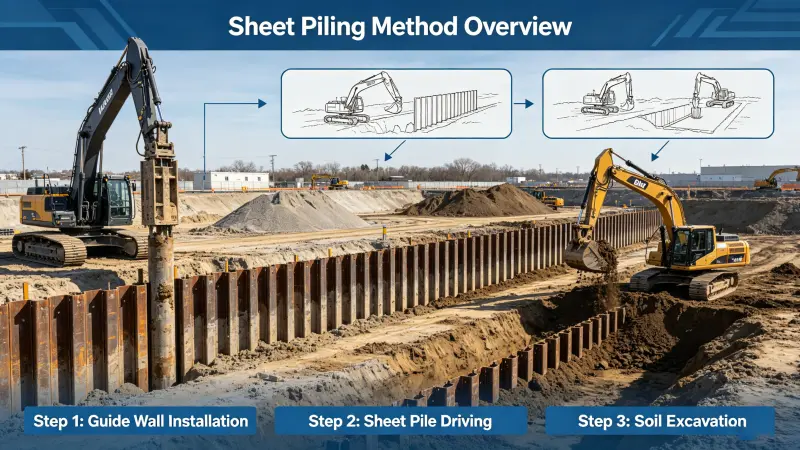
Steel sheet piles can be driven from a few meters to more than 30 meters. The required depth depends on excavation depth, soil conditions, groundwater, design loads, and structural safety requirements.
What determines driving depth?
The visible height above ground tells only part of the story.
The buried section provides passive soil resistance and prevents wall movement. Engineers calculate the required embedment based on earth pressure, groundwater pressure, surcharge loads, and safety factors.
Typical influencing factors include:
- Soil type
- Groundwater level
- Excavation depth
- Retaining wall height
- Adjacent buildings
- Aircraft loading
- Wind and seismic loads
- Permanent or temporary use
Soft clay usually requires deeper embedment than dense sand because it provides lower passive resistance.
Typical installation depths
| Project Type | Typical Depth |
|---|---|
| Utility trench | 4–8 m |
| Drainage system | 6–10 m |
| Airport retaining wall | 10–18 m |
| Underground terminal | 15–25 m |
| Bridge foundation | 20–35 m |
| Marine structure | 25–40 m |
These values are only general references. Every project requires engineering calculations.
Case study from my experience
One contractor requested 24-meter sheet piles for an airport drainage project because another supplier recommended that length.
After reviewing the geotechnical report, our engineering team found that 18-meter piles met all structural requirements.
The shorter piles reduced:
- Steel consumption
- Ocean freight
- Installation time
- Fuel consumption
- Crane operating hours
The contractor achieved substantial savings without sacrificing safety.
My insight
One lesson I have learned over many years is that successful projects begin with good engineering, not simply larger products. I always encourage my customers to share soil reports, drawings, and loading requirements before selecting steel sheet piles. When I understand the complete project, I can recommend the most economical and reliable solution instead of simply selling the heaviest section.
Conclusion
Steel sheet piles provide fast, safe, and reliable support for airport construction when engineers select the correct profile, depth, and corrosion protection.