Industrial construction cannot afford unstable foundations or excavation failures. I have seen projects lose both time and money because the retaining system was not selected correctly.
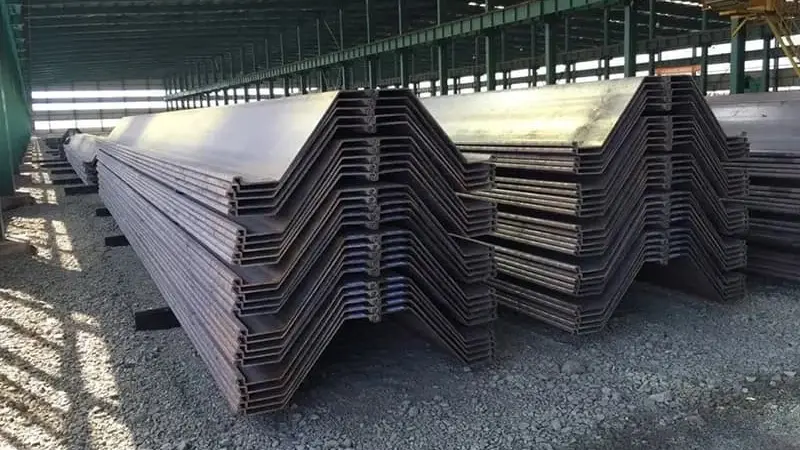
Steel sheet piles are widely used in industrial projects because they provide strong earth retention, fast installation, reliable groundwater control, and long service life. They are suitable for factories, warehouses, power plants, ports, and heavy industrial facilities.
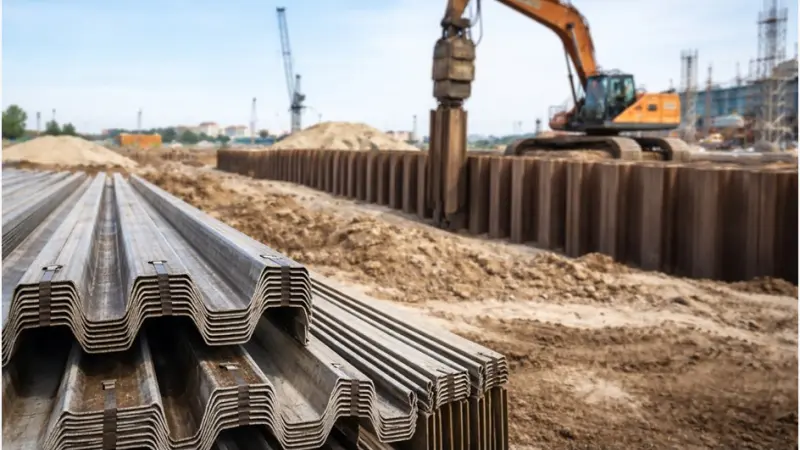
Industrial projects often involve deep excavations, heavy equipment, and demanding soil conditions. I work with contractors, civil engineering companies, and steel distributors who need dependable retaining systems for these challenging environments. From my experience, steel sheet piles offer an excellent balance between structural strength, construction efficiency, and long-term value. In this article, I will explain why steel sheet piles are used in industrial projects, how to choose the right profile, and what factors should be considered before purchasing.
Why are steel sheet piles used in industrial projects?
Weak soil and groundwater can delay industrial construction. I always recommend choosing a retaining system that improves both safety and efficiency.
Steel sheet piles are used in industrial projects because they stabilize excavations, resist soil pressure, control groundwater, and support heavy construction loads while allowing fast installation and lower overall project costs.
Why industrial projects need steel sheet piles
Industrial construction sites are very different from residential projects. They often require deeper excavations, larger foundations, and heavier machinery. These conditions create much higher demands on retaining systems.
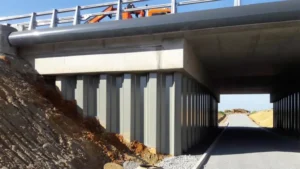
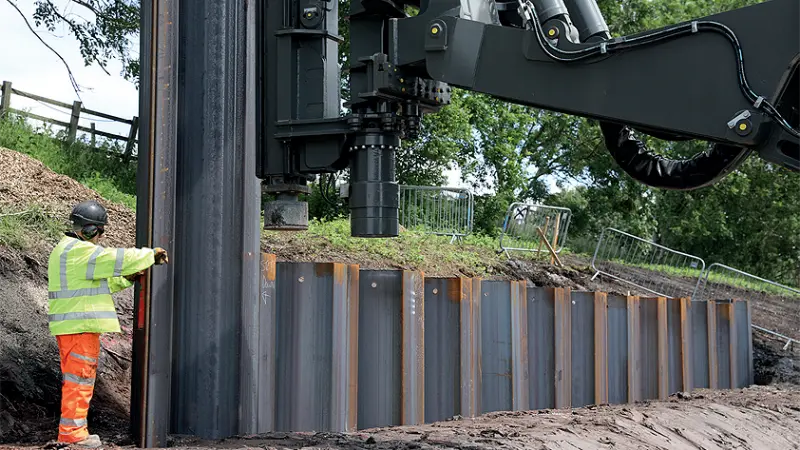
Steel sheet piles create a continuous wall by connecting each pile through interlocking joints. This wall resists both earth pressure and water pressure, making excavation much safer.
Many engineers choose steel sheet piles because they perform well under difficult site conditions.
Common industrial applications
Steel sheet piles are used across many industries.
| Application | Purpose |
|---|---|
| Manufacturing plants | Excavation support |
| Power plants | Foundation protection |
| Oil and gas facilities | Ground retention |
| Logistics centers | Basement construction |
| Wastewater treatment plants | Water control |
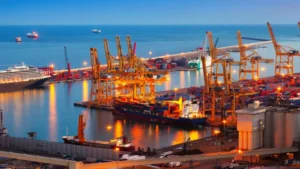
| Port terminals | Retaining structures |
| Heavy equipment factories | Deep foundation support |
Each project has different structural requirements, but the basic advantages remain the same.
Main engineering benefits
From my experience, industrial contractors usually focus on several key advantages.
- High structural strength
- Excellent bending resistance
- Reliable interlocking performance
- Fast installation
- Good groundwater control
- Reduced construction time
- Reusable materials for temporary works
- Suitable for permanent retaining walls
These benefits help reduce project risks while improving construction efficiency.
Why engineers prefer steel sheet piles
Industrial projects usually operate under strict schedules.
Concrete retaining walls often require excavation, reinforcement, formwork, pouring, and curing.
Steel sheet piles eliminate many of these steps.
After installation, excavation can begin almost immediately.
This saves valuable construction time.
Many contractors also appreciate the flexibility of removable sheet piles for temporary works.
Soil conditions
Different industrial sites require different retaining solutions.
Steel sheet piles perform well in:
- Soft clay
- Sand
- Silt
- Mixed soil
- Riverbank deposits
- Reclaimed land
Even difficult ground conditions can often be managed by selecting the correct pile profile.
My opinion
Customers sometimes ask me whether steel sheet piles are necessary for industrial projects.
I usually answer with another question.
"What happens if the excavation fails?"
For many industrial facilities, foundation movement can stop an entire project.
That is why I believe investing in a reliable retaining system is much cheaper than solving structural problems later.
Our company supplies U-shaped, Z-shaped, Ω-shaped, flat plate, straight flange, cap type, and disc type steel sheet piles through long-term cooperation with certified mills. We provide OEM production, SGS inspection, flexible MOQ, and fast delivery from Liaocheng, Shandong. Our customers include contractors and distributors across the Middle East, Australia, Africa, Europe, North America, and South America.
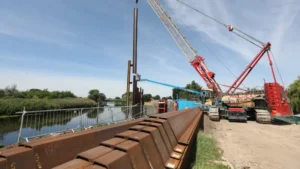
One project that demonstrates the value of steel sheet piles is our riverbank protection project in Southeast Asia. Although the application was flood control, the engineering principle is the same. Hot rolled U-type steel sheet piles created a stable retaining wall with strong interlocking performance. The contractor completed installation efficiently while maintaining excellent structural stability. This experience reinforces my belief that selecting quality sheet piles at the beginning of a project saves both time and money throughout construction.
What type of steel sheet piles are best for industrial construction?
Choosing the wrong sheet pile section can increase material costs and reduce structural performance. I always encourage buyers to match the profile to the project requirements.
The best steel sheet pile for industrial construction depends on soil conditions, excavation depth, and structural loads. U-type sheet piles are ideal for general projects, while Z-type sheet piles offer higher section modulus for deep excavations and heavy-duty applications.
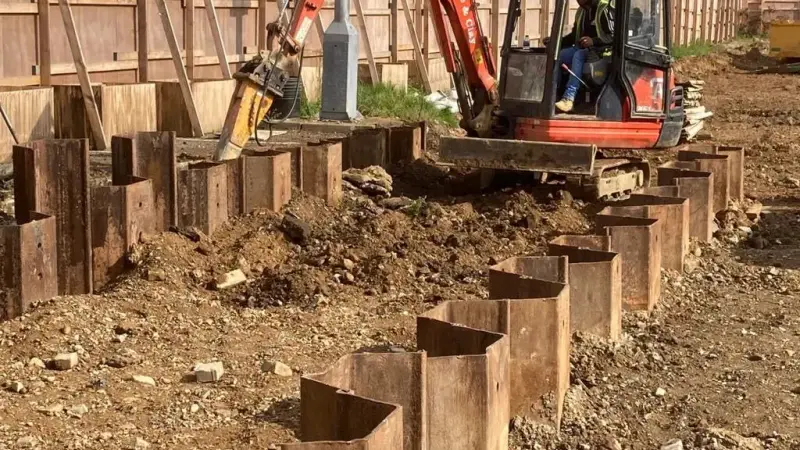
Different profiles serve different purposes
Many people believe one sheet pile fits every project.
That is not true.
Each profile has unique mechanical properties.
Engineers select different sections according to the design requirements.
The most common industrial profiles include:
Every section offers different structural advantages.
Comparison of common sheet pile types
| Sheet Pile Type | Main Advantage | Typical Industrial Application |
|---|---|---|
| U-Type | Balanced strength and cost | General retaining walls |
| Z-Type | High section modulus | Deep excavations |
| Ω-Type | Good interlocking | Special retaining systems |
| Straight Flange | High stiffness | Cellular structures |
| Flat Plate | Space-saving design | Circular structures |
| Cap Type | Special engineering | Marine and industrial projects |
Selecting the correct profile improves both safety and cost efficiency.
Factors that influence selection
I usually discuss several engineering factors with customers before recommending a section.
- Excavation depth
- Soil pressure
- Groundwater level
- Equipment loads
- Service life
- Corrosion environment
- Installation equipment
- Budget
No single profile is best for every project.
The correct answer depends on the engineering design.
U-Type versus Z-Type
This is one of the questions I receive most often.
U-Type sheet piles are widely used because they provide an excellent balance between strength and economy.
Z-Type sheet piles provide higher section modulus.
This allows them to resist larger bending moments during deep excavations.
For very demanding industrial projects, engineers often select Z-Type sections.
For medium-depth excavations, U-Type piles usually provide outstanding value.
Corrosion considerations
Industrial facilities may expose steel to chemicals, groundwater, or marine environments.
Engineers should consider:
- Protective coatings
- Corrosion allowance
- Cathodic protection
- Steel grade
- Design service life
These measures help extend structural durability.
My opinion
I never recommend a sheet pile based only on its price.
Instead, I first ask about the project.
How deep is the excavation?
What is the soil condition?
Will the sheet piles remain permanently?
Can they be reused?
These questions always lead to a better solution.
Our long-term cooperation with certified steel mills allows us to provide a complete range of sheet pile sections for industrial construction. We support OEM production, SGS inspection, and flexible MOQ for contractors and distributors worldwide.
From my experience, many buyers initially request U-Type sheet piles because they are familiar with them. After reviewing the engineering drawings, some projects actually require Z-Type sections to achieve the required bending resistance. Careful technical evaluation always creates better long-term value than simply selecting the lowest-cost option.From my experience, many buyers initially request U-Type sheet piles because they are familiar with them. After reviewing the engineering drawings, some projects actually require Z-Type sections to achieve the required bending resistance. Careful technical evaluation always creates better long-term value than simply selecting the lowest-cost option.
How deep should steel sheet piles be installed for industrial foundations?
Many buyers think deeper is always better. I do not agree. The correct installation depth depends on engineering calculations, soil conditions, groundwater, and the loads acting on the retaining wall.
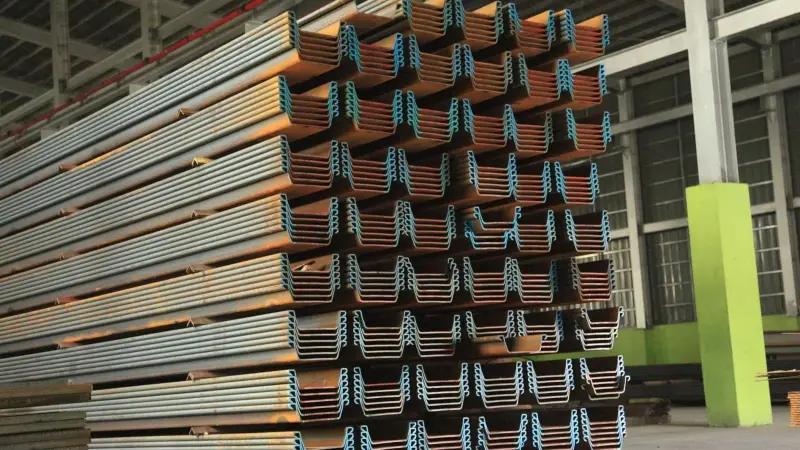
Steel sheet piles for industrial foundations are typically driven 6–25 meters deep, although some heavy industrial or marine projects may require embedment depths exceeding 30 meters. The final depth should always be determined through geotechnical investigation and structural design.
Why installation depth matters
The depth of a sheet pile determines its ability to resist overturning, sliding, and excessive deflection.
If the pile is too shallow, the retaining wall may rotate or fail under soil pressure.
If the pile is unnecessarily deep, the project cost increases without adding meaningful benefits.
For this reason, engineers perform detailed geotechnical investigation before deciding the final embedment depth.
Factors affecting pile depth
Every industrial site is different.
I always recommend evaluating the following factors before selecting the sheet pile length.
- Soil strength
- Groundwater level
- Excavation depth
- Surcharge loads
- Nearby structures
- Seismic requirements
- Safety factors
- Permanent or temporary application
These factors work together and directly influence the design.
Typical installation depths
The following ranges are common in industrial construction.
| Industrial Application | Typical Installation Depth |
|---|---|
| Utility trenches | 6–10 m |
| Factory foundations | 8–15 m |
| Warehouse construction | 10–18 m |
| Pump stations | 12–20 m |
| Heavy industrial plants | 15–25 m |
| Marine industrial facilities | 20–35 m |
These values are general references only.
Actual projects require engineering calculations.
Soil conditions influence depth
Different soils provide different resistance.
For example:
- Dense sand provides strong passive resistance.
- Soft clay requires deeper embedment.
- Loose fill often needs additional stabilization.
- Rock layers may require pre-drilling.
Ignoring soil conditions can create serious construction risks.
Temporary versus permanent structures
Temporary industrial excavations often require shorter embedment because they only remain in service for a limited time.
Permanent retaining walls normally require:
- Larger safety factors
- Greater corrosion allowance
- Longer design life
- Additional structural verification
This usually results in deeper installation.
My opinion
Many customers ask me for a "standard" sheet pile length.
I always explain that there is no universal answer.
A 12-meter pile may be perfect for one factory and completely unsuitable for another project.
I prefer reviewing the soil report and construction drawings before recommending a section.
Our engineering team frequently works with contractors to match the correct U-Type, Z-Type, Ω-Type, and straight flange sheet piles to each project. This approach helps customers avoid unnecessary material costs while maintaining structural safety.
From my experience, selecting the correct installation depth at the design stage is one of the easiest ways to improve both project safety and construction efficiency.
What are the advantages of steel sheet piles in industrial projects?
Industrial construction demands reliable performance, fast schedules, and controlled costs. I believe steel sheet piles continue to outperform many traditional retaining systems in these areas.
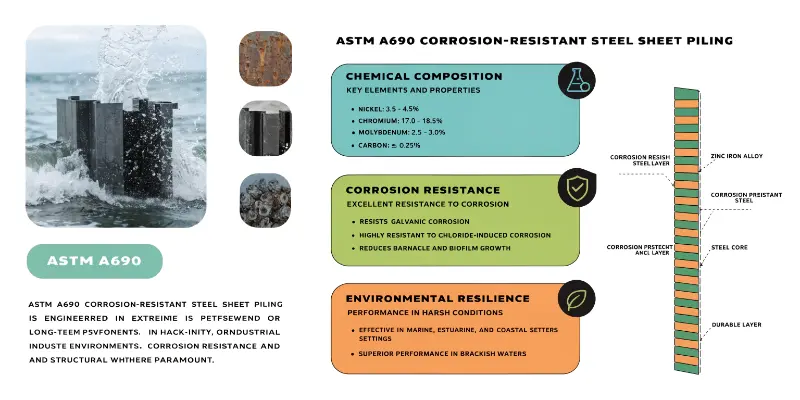
Steel sheet piles provide high structural strength, rapid installation, excellent groundwater control, reusable materials, and long service life. These advantages make them one of the most economical retaining solutions for industrial construction.
Fast construction
Time is one of the biggest concerns for industrial investors.
Steel sheet piles can be driven into the ground immediately after site preparation.
Unlike concrete retaining walls, they do not require:
- Formwork
- Reinforcement installation
- Concrete curing
- Long waiting periods
This allows excavation work to begin much sooner.
Excellent structural performance
Industrial facilities often generate heavy loads.
Steel sheet piles provide:
- High bending resistance
- Excellent interlocking performance
- Strong lateral load capacity
- Reliable soil retention
- Stable groundwater control
These properties improve overall construction safety.
Lower life-cycle cost
The purchase price is only one part of the total project cost.
Steel sheet piles often reduce expenses through:
- Faster installation
- Lower labor costs
- Reusability
- Reduced maintenance
- Shorter project schedules
Many contractors recover their investment by using the same piles on multiple projects.
Adaptability
Steel sheet piles perform well in many environments.
Typical applications include:
- Industrial plants
- Logistics centers
- Ports
- Wastewater treatment facilities
- Power stations
- Petrochemical plants
- Manufacturing facilities
Few retaining systems offer this level of flexibility.
Comparison with traditional retaining walls
| Feature | Steel Sheet Piles | Concrete Retaining Walls |
|---|---|---|
| Installation speed | Very fast | Slow |
| Reusable | Yes | No |
| Water control | Excellent | Good |
| Construction flexibility | High | Moderate |
| Removal | Easy | Difficult |
| Temporary projects | Excellent | Poor |
This comparison explains why many industrial contractors continue to choose steel sheet piles.
Long service life
Permanent industrial retaining structures can remain in service for several decades.
Engineers improve durability by using:
- Protective coatings
- Corrosion allowance
- Cathodic protection
- Regular inspections
- Proper drainage
These measures significantly extend the design life.
My opinion
I believe the biggest advantage of steel sheet piles is flexibility.
The same product can serve temporary excavation support today and permanent infrastructure tomorrow.
That flexibility creates real value for contractors.
Our company works closely with certified steel mills to manufacture U-Type, Z-Type, Ω-Type, flat plate, straight flange, cap type, and disc type steel sheet piles. We provide OEM services, SGS inspection, flexible MOQ, and fast delivery from Liaocheng, Shandong. Our products have been supplied to contractors, distributors, and civil engineering companies across the Middle East, Australia, Africa, Europe, North America, and South America.
I often remember our Southeast Asia riverbank protection project because it clearly demonstrated the long-term value of high-quality sheet piles. The hot rolled U-Type sheet piles formed a continuous retaining wall with excellent interlocking performance. The contractor completed installation efficiently, stabilized the riverbank, and achieved reliable flood control. Although that project focused on river protection, the same engineering principles apply to industrial retaining structures.
From my experience, the best investment is not always the cheapest product. It is the solution that delivers reliable performance, lower maintenance, and long-term value throughout the life of the project.
Conclusion
I believe steel sheet piles remain one of the smartest solutions for industrial projects because they combine strength, efficiency, flexibility, and long-term economic value.