Tubular combined walls consist of tubular piles (king piles), sheet pile interlocks (clutch bars), and intermediate sheet piles (typically Z-type such as AZ profiles). The system forms a high-capacity retaining structure capable of resisting both horizontal earth pressure and vertical foundation loads.
👉 Essential structure: A combined wall system of pipe piles for main load-bearing and sheet piles for force transmission
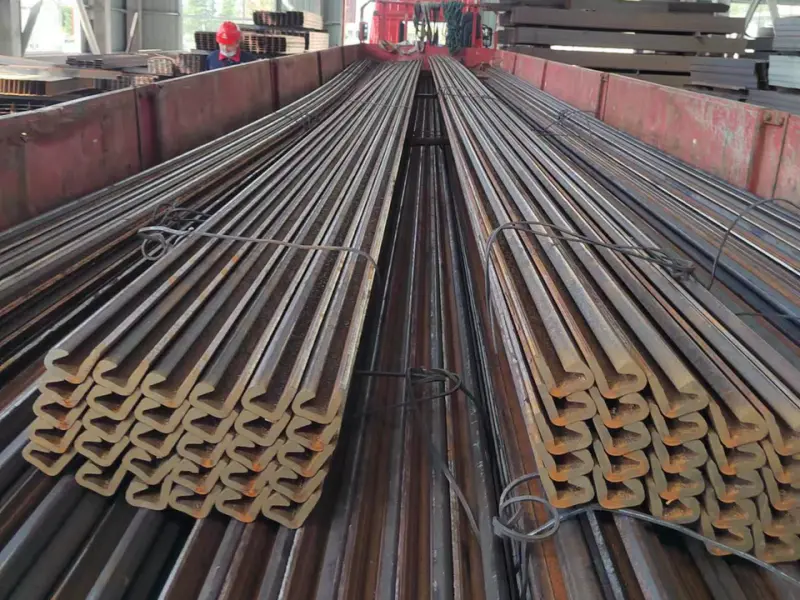
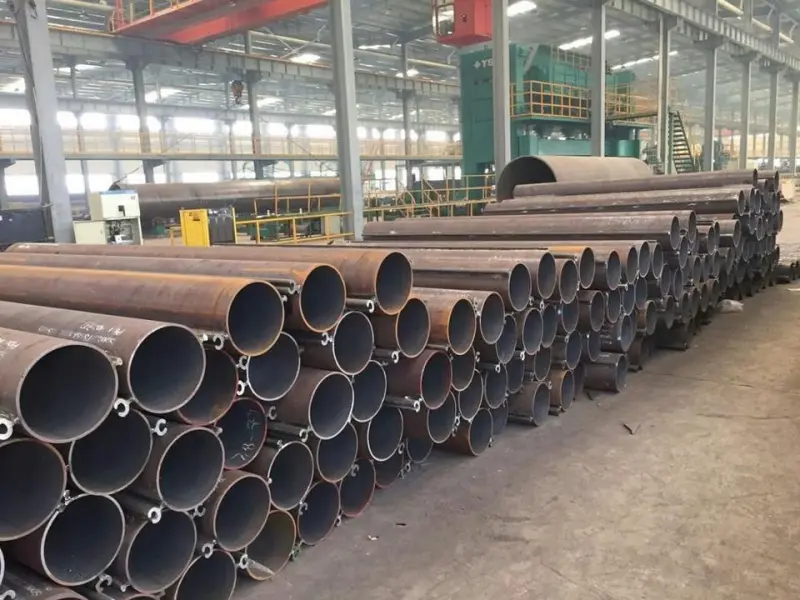
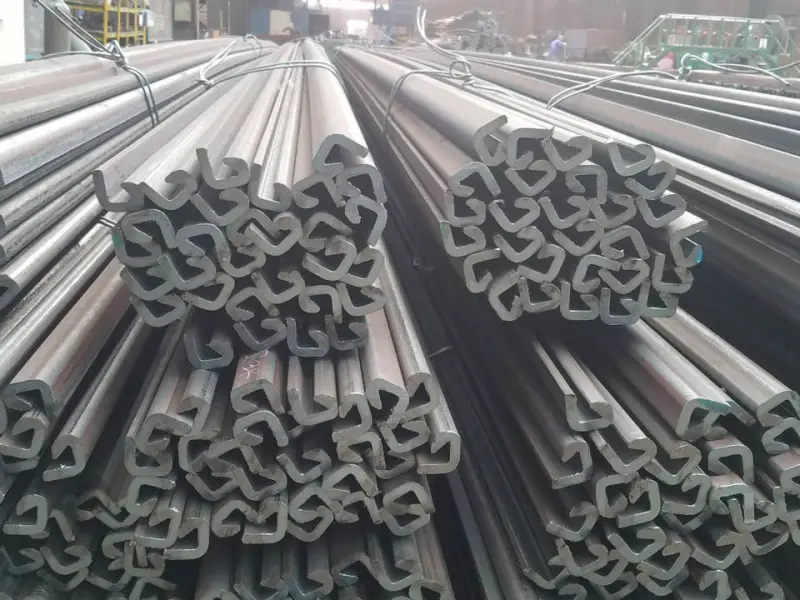
System Composition
A typical tubular combined wall includes three key components:
Tubular piles (king piles) – primary load-bearing elements,Sheet pile connectors / clutches – welded onto tubular piles,Intermediate sheet piles (OZ / AZ type) – transfer loads between piles.
Tubular piles can be manufactured as:
Spiral welded pipes (SSAW),Longitudinal welded pipes (LSAW),(Rarely) ERW or seamless pipes.
👉 Structural core: pipe pile + lock joint + intermediate sheet pile
Structural Working Principle
The tubular combined wall system works through load sharing:
Tubular piles resist vertical loads (foundation loads),Tubular piles also resist major horizontal loads,Intermediate sheet piles (OZ/AZ) transfer lateral forces to tubular piles.
👉 OZ sheet piles can be shorter than tubular piles, acting mainly as: Earth retaining elements,Load transfer components.
👉 Force-bearing logic: Pipe piles bear the load + Slab piles transfer the force
Connection System
Sheet pile connectors (clutches) are welded along the tubular piles:Full-length welding or partial welding ,Ensure structural continuity ,Transfer loads effectively .
Common interlock types include:C9,C14
These are the most traditional and widely used connection systems.
👉 Connection core: Welded lock joints (C9 / C14) achieve overall force-bearing
Technical Specification Table
| Pipe Ø (mm) | Thickness (mm) | System Type | Wall Width (mm) | Weight (kg/m²) | Inertia (cm⁴/m) | Section Modulus (cm³/m) |
|---|
| 711 | 10 | Double AZ18 | 2171 | 150 | 86698 | 2439 |
| 711 | 10 | Triple PU18 | 2571 | 157 | 77612 | 2183 |
| 813 | 12 | Double AZ18 | 2273 | 172 | 129852 | 3194 |
| 813 | 12 | Triple PU18 | 2673 | 175 | 114656 | 2821 |
| 914 | 12 | Double AZ18 | 2374 | 177 | 167991 | 3676 |
| 914 | 12 | Triple PU18 | 2774 | 176 | 134848 | 3235 |
| 1016 | 14 | Double AZ18 | 2476 | 202 | 244795 | 4819 |
| 1016 | 14 | Triple PU18 | 2876 | 201 | 214684 | 4226 |
| 1219 | 16 | Double AZ18 | 2679 | 234 | 428149 | 7025 |
| 1219 | 16 | Triple PU18 | 3079 | 229 | 376204 | 6172 |
| 1600 | 20 | Double AZ18 | 3060 | 305 | 1029827 | 12873 |
| 1600 | 20 | Triple PU18 | 3460 | 292 | 914044 | 11426 |
| 2000 | 22 | Double AZ18 | 3460 | 354 | 1947882 | 19479 |
| 2000 | 22 | Triple PU18 | 3860 | 338 | 1748961 | 17490 |
| 2500 | 25 | Double AZ18 | 3960 | 424 | 3772384 | 30179 |
| 2500 | 25 | Triple PU18 | 4360 | 403 | 3428890 | 27431 |
👉 :Double AZ systems provide higher stiffness and structural efficiency, while Triple PU systems offer wider wall coverage and are more suitable for soft soil conditions.
Engineering Advantages
- Combines retaining + bearing functions in one system
- High structural efficiency for heavy-duty projects
- Suitable for deep foundations and marine structures
- Flexible design with different pipe and sheet pile combinations
- Reduced material usage compared to full sheet pile walls
- 👉 Advantage essence: high load-bearing capacity + high efficiency + optimal solution of combined structure