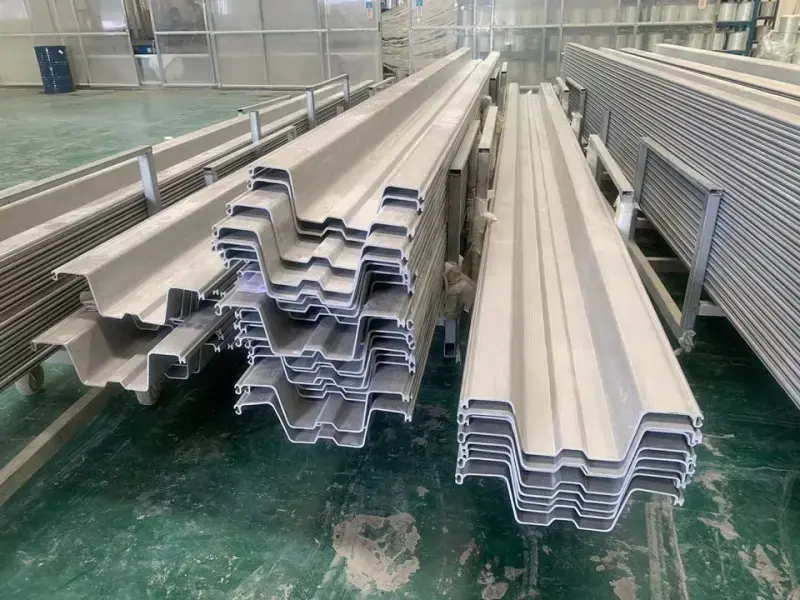
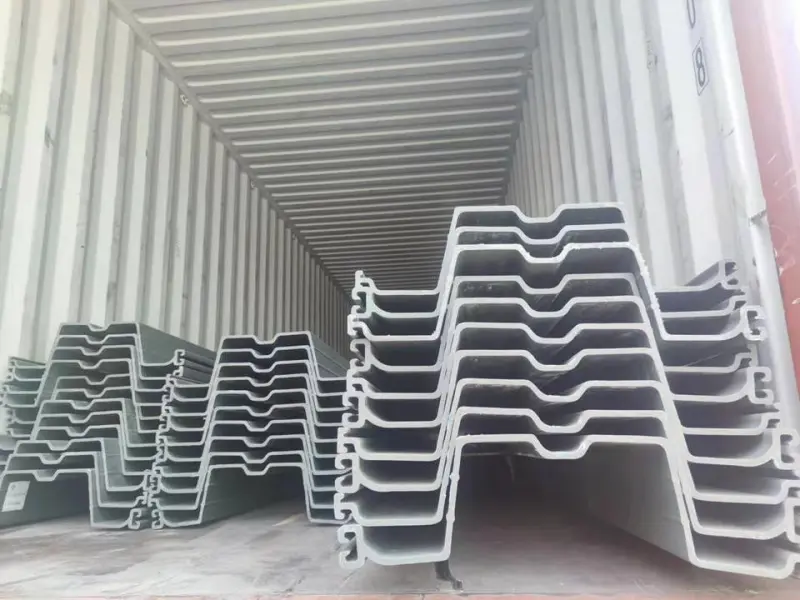
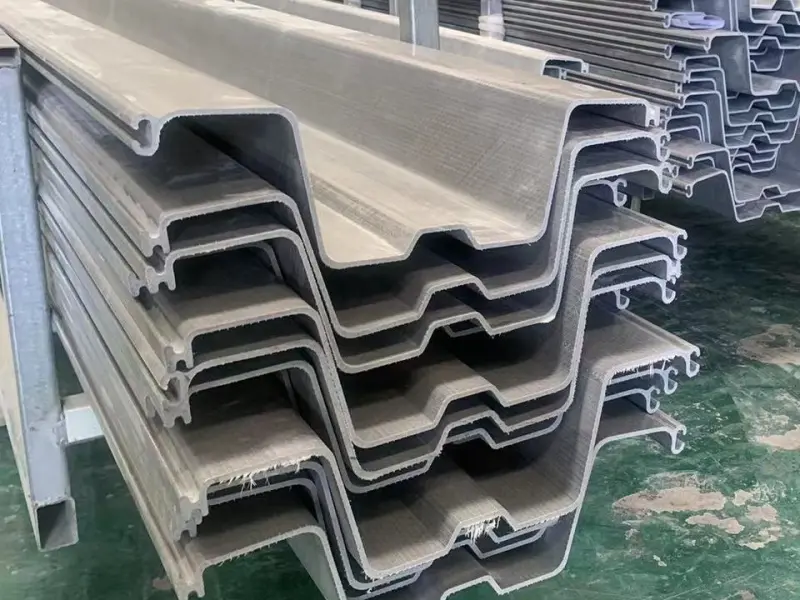
FRP (Fiber Reinforced Polymer) sheet piles are lightweight, corrosion-resistant composite piling systems designed for long-term performance in aggressive environments. Unlike traditional steel sheet piles, FRP piles do not rust or degrade in seawater, chemicals, or wastewater conditions.
They are widely used in riverbank protection, seawalls, flood control, and environmental containment projects where durability and low maintenance are critical.
Key Advantages
- ✔ Excellent Corrosion Resistance – No rust in seawater, chemicals, or wastewater
- ✔ Lightweight & Easy Installation – Lower transport and installation cost
- ✔ Long Service Life – Minimal maintenance over 25–50 years
- ✔ Environmental Friendly – Non-toxic, suitable for ecological projects
- ✔ High Strength-to-Weight Ratio – Efficient structural performance
- ✔ Electrical & Chemical Resistance – Ideal for industrial environments
👉 Especially suitable for projects where steel sheet piles would corrode quickly.
Typical Specification Table
| Model | Width (mm) | Height (mm) | Thickness (mm) | Weight (kg/m²) | Section Modulus (cm³/m) | Material |
|---|
| FRP-400 | 400 | 200 | 6–8 | 20–25 | 400–600 | Glass Fiber + Resin |
| FRP-500 | 500 | 220 | 7–10 | 25–32 | 600–800 | Composite FRP |
| FRP-600 | 600 | 250 | 8–12 | 30–40 | 800–1100 | Composite FRP |
| FRP-700 | 700 | 300 | 10–14 | 40–50 | 1100–1500 | Reinforced FRP |
| FRP-800 | 800 | 320 | 12–16 | 50–65 | 1500–2000 | High Strength FRP |
👉 All dimensions and profiles can be customized based on project requirements.