What Should Buyers Know About Steel Sheet Pile Procurement for Middle East Construction Projects?
Procurement mistakes in the Gulf cost more than money. Intense heat, salty ground, and strict project rules turn small sourcing errors into months of delay.
Steel sheet pile procurement for Middle East construction projects means matching sections to hot, saline ground, demanding EN 10248 or ASTM mill certificates, booking third-party inspection before shipment, and planning freight around Gulf ports. Buy from mills that document every heat number.
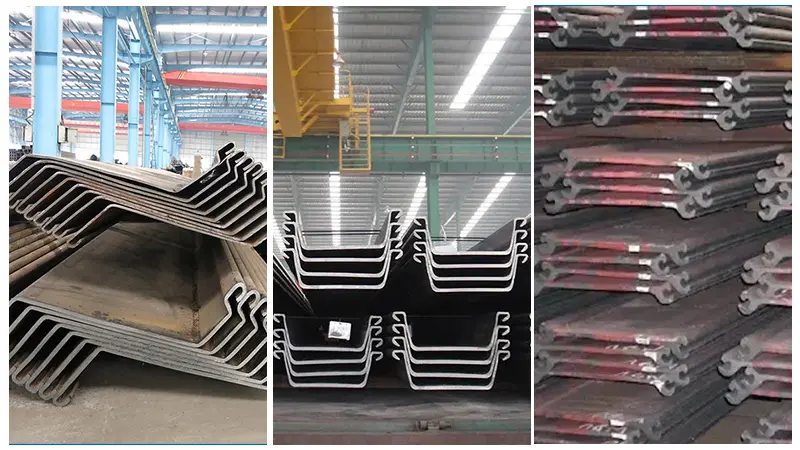
I have sold steel sheet piles to buyers in Iraq, the UAE, Saudi Arabia, and Jordan for years. I have seen what goes right and what goes wrong. The buyers who plan well get their piles on site on time. The buyers who skip steps pay for it twice. In this guide, I will walk you through the whole process the way I explain it to my own customers. We will cover what makes this region different, which papers you must demand, how to pick the right section, and how to structure payment and shipping so nothing gets stuck at the port.
What Makes Middle East Steel Sheet Pile Procurement Different From Other Markets?
Gulf projects punish shortcuts. The climate is extreme, the ground is often aggressive, and the paperwork rules are stricter than most buyers expect.
Middle East procurement differs in three ways: saline groundwater and high temperatures demand higher corrosion allowance, projects mix British, American, and local standards, and most orders flow through EPC contractors who audit every document you provide.
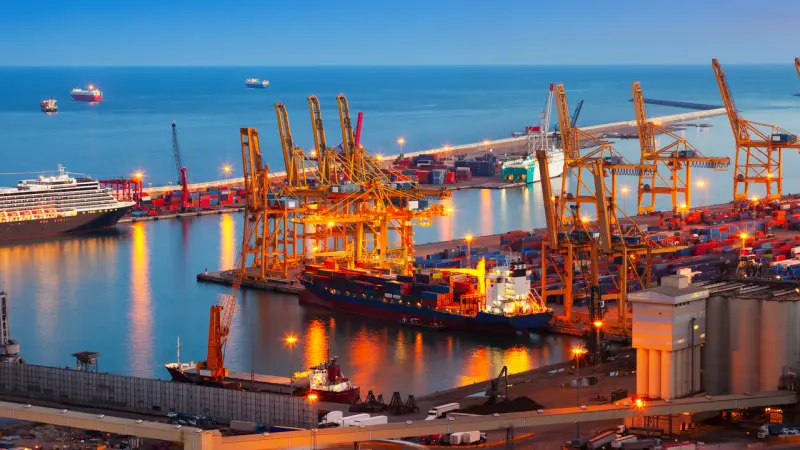
Heat, salt, and ground conditions set the rules
Let me start with the physical side. Much of the Gulf sits on sandy and silty soils with a high water table. That groundwater is often saline, and in coastal zones it can be very aggressive to buried steel. Summer air temperatures pass 50 degrees Celsius in Iraq and Saudi Arabia. Steel itself does not care about air temperature much, but coatings, cathodic protection systems, and handling crews all feel it. Sabkha flats along the coast carry salt crusts that attack steel faster than normal seawater splash zones.
When I quote for a Gulf project, I always ask for the geotechnical report first. I look at chlorides, sulfates, and resistivity. If the report shows aggressive ground, I add corrosion allowance to the section proposal. I may suggest a coating or a heavier wall. This is where many importers go wrong. They order the same section they used in a temperate market, and ten years later the wall is thin in the splash zone.
The second difference is standards. A UAE project may call for EN 10248 steel. The next tender in Saudi Arabia may reference ASTM. Iraqi port projects often follow a mix of both plus client-specific specs. You need a mill that can certify to both systems.
The third difference is who buys. Most Gulf orders come from EPC contractors working for government or quasi-government owners. These buyers audit documents line by line. A missing heat number on a mill certificate can hold an entire shipment at customs.
| Factor | What it means for your order | What I recommend |
|---|---|---|
| Saline groundwater and sabkha soils | Faster corrosion, especially at the splash zone | Add corrosion allowance; consider coatings or cathodic protection for marine works |
| Summer heat above 50 degrees C | Paint and coating systems cure differently; crews work short shifts | Choose coatings rated for high temperature; plan realistic installation windows |
| Mixed EN and ASTM specifications | One mill certificate may not satisfy the engineer | Buy from mills that certify to both EN 10248 and ASTM grades |
| EPC-driven procurement | Every document gets audited before and after arrival | Prepare the full certificate pack before the vessel sails |
| Long inland legs after the port | Moves need permits, escorts, and strong packing | Plan transport with the same care as the sea freight |
If you want a broader view of how export projects come together, I covered the wider supply chain in my article on steel sheet pile export solutions for global infrastructure projects. The Gulf adds its own twists on top of that baseline. Also, many site problems I hear about later could have been avoided before the order, so I keep a checklist from common challenges in steel sheet pile construction and solutions close at hand during tender review.
Which Certificates and Standards Should You Demand Before You Confirm an Order?
Paper wins arguments on Gulf sites. If your certificate pack is complete, inspection and customs move fast. If it is not, your piles sit in the sun at the port.
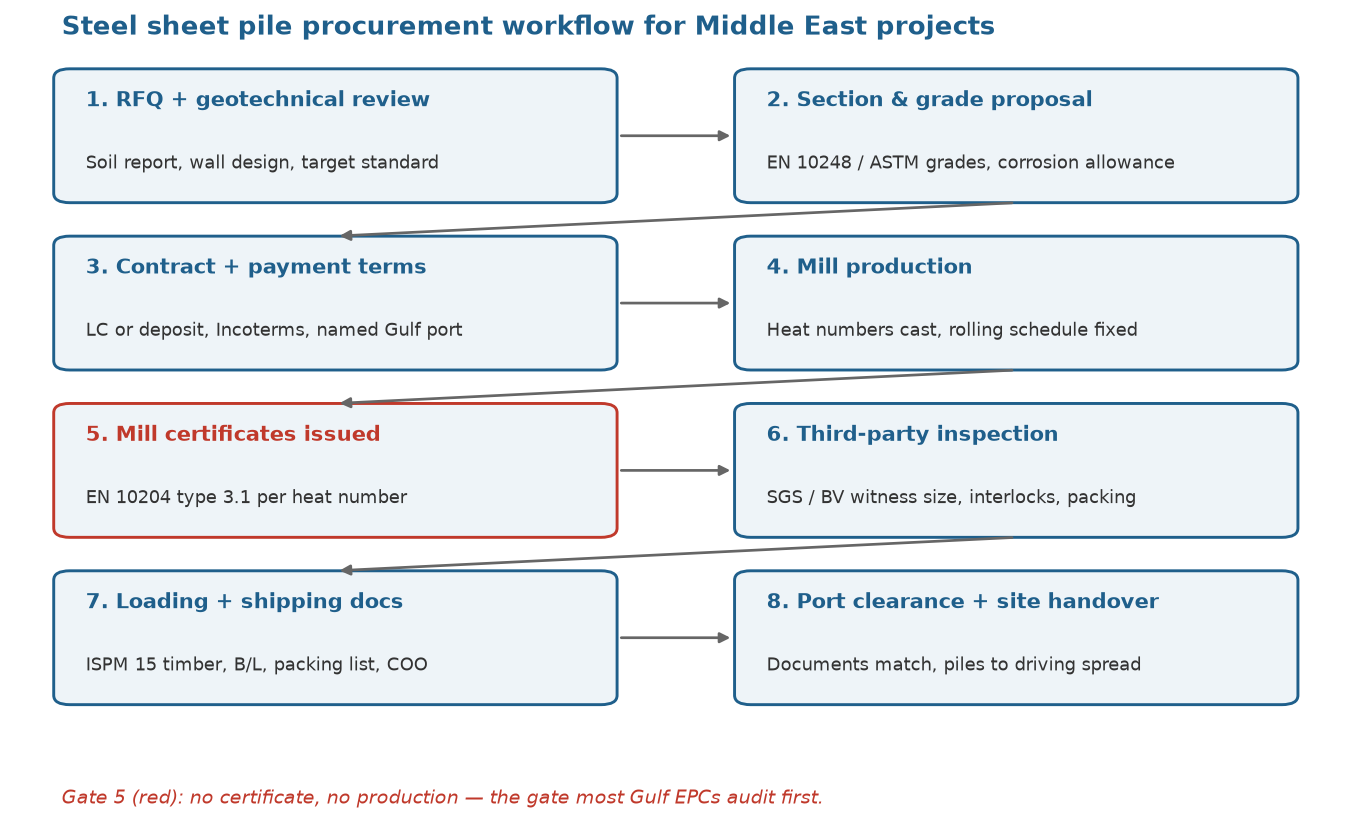
Demand a mill test certificate to EN 10204 type 3.1 for every heat number, confirm the steel grade against EN 10248 or ASTM A572 or A690, book SGS or similar third-party inspection before loading, and collect packing lists and bills of lading that match the certificates exactly.
Paper first: the certificate stack Gulf EPCs expect
Here is the pack I prepare for every Middle East order. The mill test certificate comes first. It lists the heat number, chemical composition, yield strength, and tensile results. The engineer on site will match each certificate to the piles delivered. I always tell buyers to check that heat numbers on the certificates match the stencils painted on the piles. It sounds basic, but mismatches happen when trading companies mix stock from several mills.
The second layer is the standard itself. EN 10248 covers hot rolled sheet piling in grades like S240GP through S430GP. ASTM covers grades such as A572 and the marine grade A690. I explain the differences in my article on certifications for steel sheet pile export projects. The key point is that your contract should name one standard per item, and the mill certificate must reference that same standard.
The third layer is third-party inspection. Most Gulf EPCs want SGS, Bureau Veritas, or TUV to witness loading. The inspector checks dimensions, interlock condition, straightness, marking, and packing. They issue a report that the buyer banks can use for letter of credit payment. I build inspection into my delivery schedule from day one, because the inspector needs about a week at the mill.
| Document | What it proves | When you should receive it |
|---|---|---|
| Mill test certificate EN 10204 type 3.1 | Chemistry and mechanical results per heat number | Before shipment, with the production samples |
| Grade compliance sheet EN 10248 or ASTM | The steel grade meets the contract standard | With the mill certificate |
| Third-party inspection report SGS or similar | Dimensions, interlocks, marking, and packing checked | After loading, before the vessel sails |
| Packing list and shipping marks | What is in each bundle and container | With the shipping documents |
| Bill of lading and commercial invoice | Clean title for bank presentation and customs | Within days of sailing |
| Certificate of origin | Legal origin for customs duty treatment | With the shipping documents |
My rule is simple. No certificate, no production. I have walked away from orders where the buyer wanted a cheaper mill with weaker documents. On Gulf projects that saving never survives the engineer’s review. If you want the full quality framework, my article on quality standards and inspection for steel sheet piles breaks down the inspection gates step by step. And when you are unsure about the factory behind the quote, the checks in my guide on how to evaluate a reliable steel sheet pile supplier apply double in this region, because document quality matters as much as price.
How Do You Choose the Right Section for Gulf Ground and Water Conditions?
The section is the heart of the order. Pick the wrong one and you either overpay for steel you do not need or under-design a wall that will fight aggressive ground for decades.
For Gulf projects, choose the section from soil strength, water pressure, wall height, and corrosion allowance together. U-type piles suit interleaved wall flexibility in softer soils, Z-type piles give higher strength per kilogram, and hot, saline conditions push designers toward heavier walls or added protection.
U-type, Z-type, and the corrosion allowance question
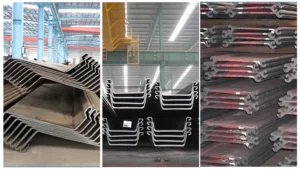
Let me make this practical. Most Gulf deep excavation and cofferdam work happens in sandy soils. The soil pushes on the wall, and the water adds pressure behind it. For medium walls in these conditions, I often propose U-type piles. They drive well in sand, the interlocks sit at the neutral axis, and they handle moderate bending. When the wall gets taller or the loads get heavier, Z-type piles earn their keep. Their interlocks sit on the flanges, so the section works at full strength, and you get more section modulus per ton of steel.
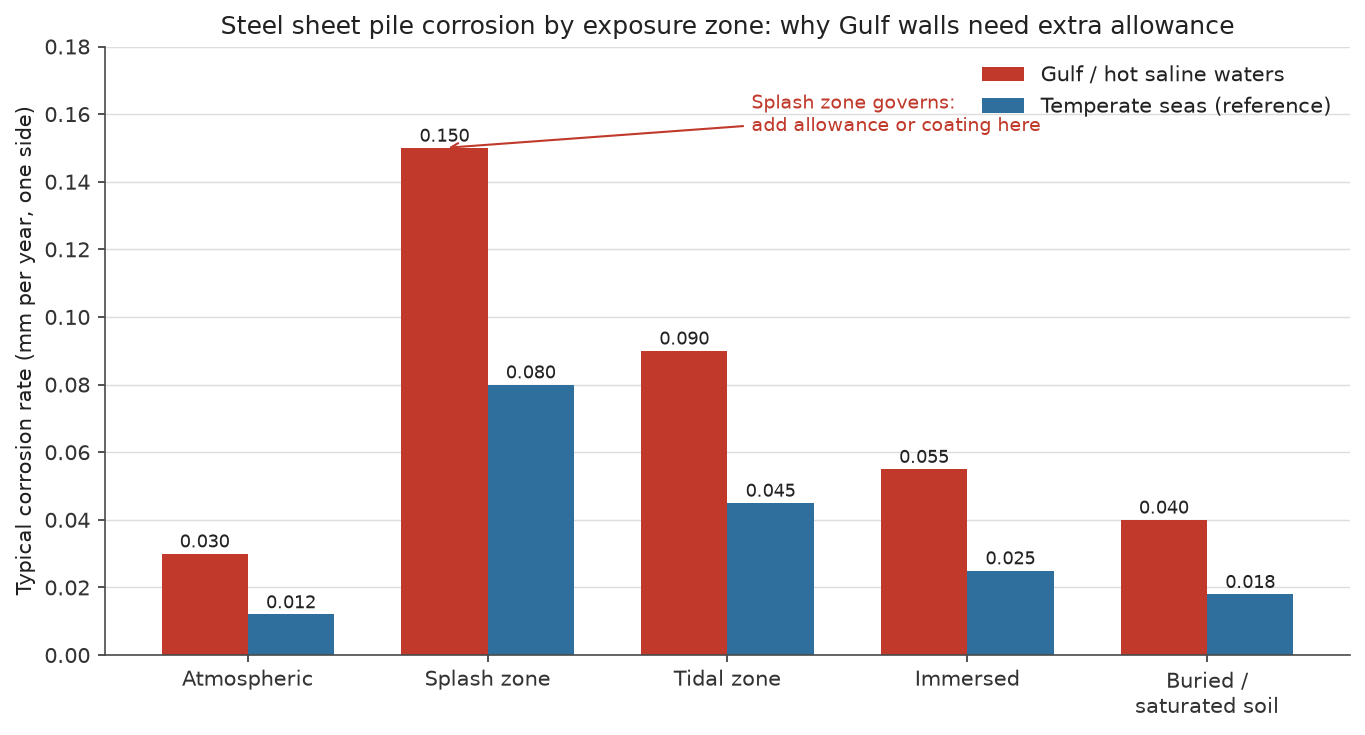
Corrosion changes the decision. Seawater and saline groundwater attack steel at different rates depending on the zone. The splash zone is worst. Immersed zones usually corrode slower because oxygen supply is low. In the Gulf, warm water and high salinity push rates above what you would see in northern Europe, so I apply a bigger allowance or specify a coating. For permanent marine walls, I also discuss cathodic protection with the designer. The chart above shows the zones I use when I talk this through with customers.
Quantity planning matters here too. The section you choose sets the weight per square meter of wall, and that drives cost, freight, and driving time. I wrote a separate guide on how to calculate steel sheet pile quantity from project drawings, because getting the tonnage right is half the procurement battle.
| Condition | Better fit | Why |
|---|---|---|
| Medium excavation walls in sandy soil | U-type hot rolled | Easy driving, flexible layout, good availability |
| Tall walls, heavy loads, port structures | Z-type hot rolled | Higher section modulus per ton, interlocks on flanges |
| Circular or arc cofferdams | U-type | Interlock placement suits ring tension |
| Combined walls with tie rods | Z-type with anchor systems | Stiff sections pair well with anchored design |
| Aggressive splash and tidal zones | Heavier wall, coating, or cathodic protection | Corrosion allowance controls long-term loss |
Driving conditions deserve a check before you finalize the section. Dense sand layers or coral lenses can refuse lighter sections, and then you need impact equipment. I keep a comparison of steel sheet pile driving equipment and machinery ready for these conversations, because the hammer choice follows the section, not the other way around. If the wall must hold back water for years rather than months, the sealing side of the interlocks matters just as much, which I cover in my article on waterproof performance of interlocked steel sheet piles.
How Should You Structure Payment, Shipping, and Delivery for Gulf Projects?
Money and freight decide whether a good order ends well. Gulf buyers work with letters of credit, long inland legs, and ports that get congested at the worst times.
Structure Middle East orders around a letter of credit or 30 percent deposit with balance against shipping documents, agree FOB or CIF Incoterms explicitly, book vessel space early, and align delivery batches with the site’s driving sequence so piles do not sit at the port for weeks.
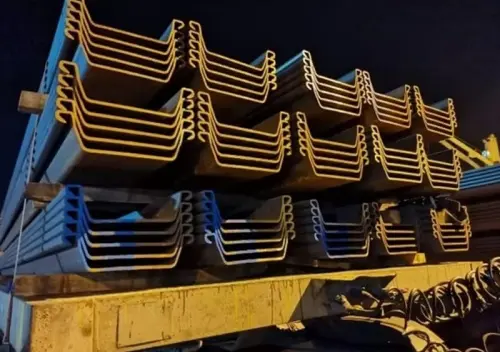
Incoterms, letters of credit, and port realities
Payment usually follows one of two patterns. Government-linked EPCs open a letter of credit, often at sight, through a local bank. Private contractors often pay a deposit and the balance against a copy of the bill of lading. Both work. What matters is that the documents you present match the credit exactly. A letter of credit with a typo in the port name or a missing inspection clause will bounce, and every presentation day costs money. I review the credit text with the buyer before we open it, not after.
Incoterms come next. The Incoterms rules decide where your risk and cost transfer, so choose with care. FOB works when the buyer has a freight forwarder they trust at a Chinese port. CIF works when they want us to handle the sea leg. Either way, name the port precisely. Jebel Ali, Dammam, Hamad, Shuwaikh, and Umm Qasr each have different handling quirks and free storage windows. Umm Qasr in Iraq needs patient planning, because feeder schedules and customs pace set the rhythm. I explain the cost side of these choices in my article on the cost factors influencing steel sheet pile projects.
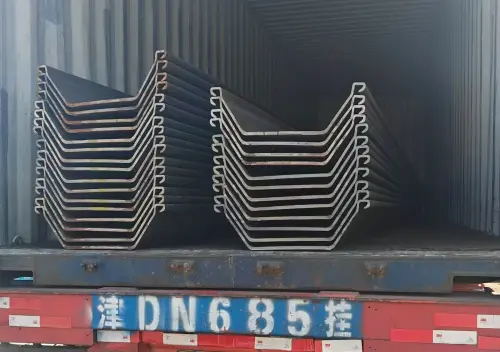
Packing and documentation for shipping also follow regional rules. Bundles go onto timber that complies with ISPM 15, and every bundle gets shipping marks that match the packing list. When a project phases its construction, I recommend split deliveries instead of one bulk consignment. That approach frees working capital and keeps the site moving, which I describe in detail in my guide on how to plan split shipments for multi-phase construction projects.
| Term | Risk transfer point | Best fit |
|---|---|---|
| FOB Chinese port | Shipper loads, buyer controls freight | Buyers with a trusted Gulf forwarder |
| CIF Gulf port | Seller arranges freight and insurance | Buyers who want one accountable seller |
| CFR Gulf port | Seller ships, buyer insures | Buyers with local insurance contracts |
| DAP site or port | Seller delivers to the named place | Turnkey orders with experienced sellers |
Lead time closes the loop. Production for a typical wholesale order takes three to six weeks depending on the mill schedule, then sailing adds two to five weeks depending on the route. Add third-party inspection week and customs clearance. When I quote, I give the buyer the full chain, not just the factory part. That honesty costs me nothing and saves the site planner from surprises. Buyers who need volume certainty should also review my notes on evaluating supplier production capacity for large infrastructure orders before they commit a schedule to one mill.
My Take
After all these years, my view is simple. Middle East procurement rewards preparation, not bargaining. I see buyers spend three emails arguing over two dollars a ton and then sign a contract without naming the inspection body. That is backwards. The two dollars will disappear in the first invoice. A missing inspection clause can cost a month.
I also believe the Gulf is where document quality separates real mills from middlemen. When an EPC engineer in Abu Dhabi asks for heat number traceability, only a genuine production source answers within a day. We run SGS inspection on demand, we certify to EN and ASTM both, and we keep the certificate pack ready before the customer asks. That is why our wholesale clients in Iraq and the Emirates come back.
My last piece of advice: plan the inland leg. The piles arrive at the port fine and then wait three weeks for trailers. Ask about storage fees, escorts, and night driving bans before the vessel sails. Procurement does not end at the ship’s rail.
Conclusion
Buy for the climate, demand complete certificates, choose sections with corrosion in mind, and structure payment and shipping early. Preparation is what makes Middle East steel sheet pile procurement succeed.