How to Evaluate Supplier Production Capacity for Large Infrastructure Orders
Large orders fail at the factory, not at the port. If your supplier cannot roll 5,000 tons on time, your whole project schedule slips.
To evaluate supplier production capacity, ask for rolling mill records, monthly output proof, the current order book, and third-party inspection reports. A real manufacturer shows rolling schedules and heat numbers. A trader hides behind low prices. Verify capacity before you sign, not after the first shipment slips.
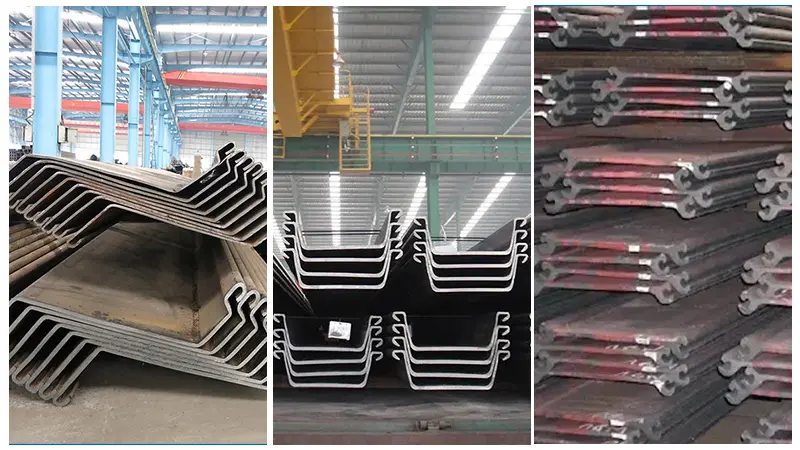
I run export sales for a steel sheet pile factory group based in Liaocheng, Shandong. Every month I talk to contractors who need 2,000 to 10,000 tons of steel sheet piles for ports, metro stations, and flood control projects. Most of them ask about price first. Few of them ask about capacity, and that is the mistake that costs them months. In this article I will show you exactly how I check a supplier’s production capacity before I let a client sign with anyone, including us.
What Production Capacity Numbers Should a Supplier Actually Prove?
Most suppliers quote a big monthly number. Very few can prove it with documents. And when a large order slips, the delay costs far more than the hidden costs most budgets forget.
Ask a supplier to prove four numbers: monthly rolling output, available tonnage for your window, current committed orders, and section-specific tooling. A genuine mill backs each number with production records. A trader only repeats figures from a brochure and cannot name the mill.
Dive deeper: the four numbers and the documents behind them
When I quote a large order, I expect the buyer to check me the same way I check my own mills. The first number is monthly rolling output. For a serious hot-rolled sheet pile line, this is usually 8,000 to 20,000 tons per month, and the supplier should be able to show rolling records by shift. The second number is free capacity inside your delivery window. A mill may produce 15,000 tons a month but already be sold out for nine weeks. The third number is the order book. If a supplier says your 6,000 tons will ship in six weeks, but the mill is full, that promise is fiction. The fourth number is section-specific tooling. U-type, Z-type, and straight web sections need different rolls. If the supplier does not hold the rolls for your profile, lead time doubles.
Here is how I match claims to documents. Before you even send the inquiry, it helps to start from a complete RFQ for a large steel sheet pile project, because a clear tonnage and profile list makes capacity checks much easier.
| Capacity claim | Document to request | Red flag |
|---|---|---|
| Monthly output 15,000 t | Shift rolling records for the last 3 months | Only a brochure or a website screenshot |
| Free capacity in your window | Rolling schedule with your week marked | Refuses to show schedule “for confidentiality” |
| Committed orders in production | Order book summary or partial packing lists | No committed orders shown but promises fast delivery |
| Tooling for your section | Roll set list or photos of rolls for your profile | Says “all sections available” with no roll list |
A trader can still be a useful partner, but then the trader must name the mill and let you verify the mill directly. If they refuse, treat every capacity promise as unverified.
How Do You Verify the Mill Behind the Quotation?
A quotation without a named mill is just a price. The mill is where your risk lives.
Ask for the mill’s full legal name, its rolling license, and recent mill test certificates with heat numbers. Then confirm the mill exists, holds the rolls for your section, and currently runs sheet pile orders. One video call through the rolling line tells you more than ten emails.
Dive deeper: the paper trail that connects quotation to rolling line
The paper trail is simple, but buyers skip it. First, get the mill name and check it against the business license and any certification body database. Second, ask for three recent mill test certificates from the same section you are buying. The heat numbers on those certificates should match the rolling records. Third, ask when your section was last rolled. I once had a buyer in the Middle East who was promised AZ sections “in stock”. When he asked when they were rolled, the answer changed three times. The truth was that the roll set had been out of service for two years. Fourth, ask for a live video walk of the rolling line, or visit. If you buy 8,000 tons, a flight to Shandong is cheap insurance. I always offer this visit to clients, and I respect the suppliers who offer it too. A rolling mill that runs sheet piles regularly will show you reheating furnaces, roll stands, and cooling beds full of U and Z sections. An empty yard with a few bundles and a rented office tells a different story.
One more check: ask which ASTM A328/A328M or EN 10248 heats were rolled in the last quarter for export customers. If the mill cannot show recent export heats in your standard, your order becomes a special campaign, and special campaigns slip. The same mill-level detail drives the whole steel sheet pile manufacturing process, from reheating to finishing, so it is worth understanding before you audit anyone.
What Do Certifications and Third-Party Inspections Really Tell You?
Certificates do not pour steel. But they tell you who checks the mill, and how often.
An ISO 9001 certificate proves a quality system exists, not that capacity exists. Combine it with SGS pre-shipment inspection, heat-number traceability, and dimensional reports per steel sheet piles shipment. Documents plus a factory audit give you the real picture.
Dive deeper: building a document package that protects an 8,000-ton order
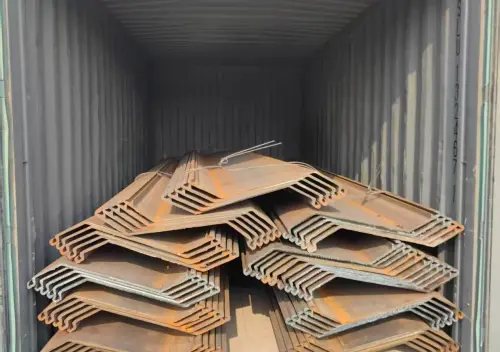
For a large infrastructure order, I recommend a four-layer document package. Layer one is the mill certificate for every heat, mapped to the packing list. Layer two is third-party inspection before shipment. For government and EPC projects in Iraq, Saudi Arabia, and Australia, buyers appoint SGS or a similar body to check chemical composition, tensile tests, dimensions, and interlock fit. Layer three is a factory audit report, either done by the buyer’s engineer or by a third party. It covers equipment list, monthly capacity, labor, and the order book. Layer four is a production progress report during manufacturing, with photos and rolling dates per heat.
| Layer | Document | What it protects |
|---|---|---|
| 1 | Mill test certificates per heat | Material quality and traceability |
| 2 | Third-party pre-shipment inspection | Dimensional and mechanical compliance |
| 3 | Factory capacity audit | Real output and order book |
| 4 | Progress reports during production | Schedule visibility and early warnings |
The key point is that these layers answer different questions. Certificates answer “is the steel correct”. Inspection answers “is this shipment correct”. The audit answers “can this factory deliver 8,000 tons on schedule”. Many buyers collect layer one and two and skip layer three, which is exactly the layer that answers the capacity question. Our checklist on quality standards and inspection for steel sheet piles explains what inspectors actually measure, so you can brief them properly. On our own orders above 3,000 tons, I send a weekly rolling report with heat numbers and photos. Buyers who receive it catch delays weeks earlier, when there is still time to react.
How Should You Stress-Test Delivery Schedules Before Signing?
A schedule on paper is a promise. A stress test shows whether the promise survives contact with the mill.
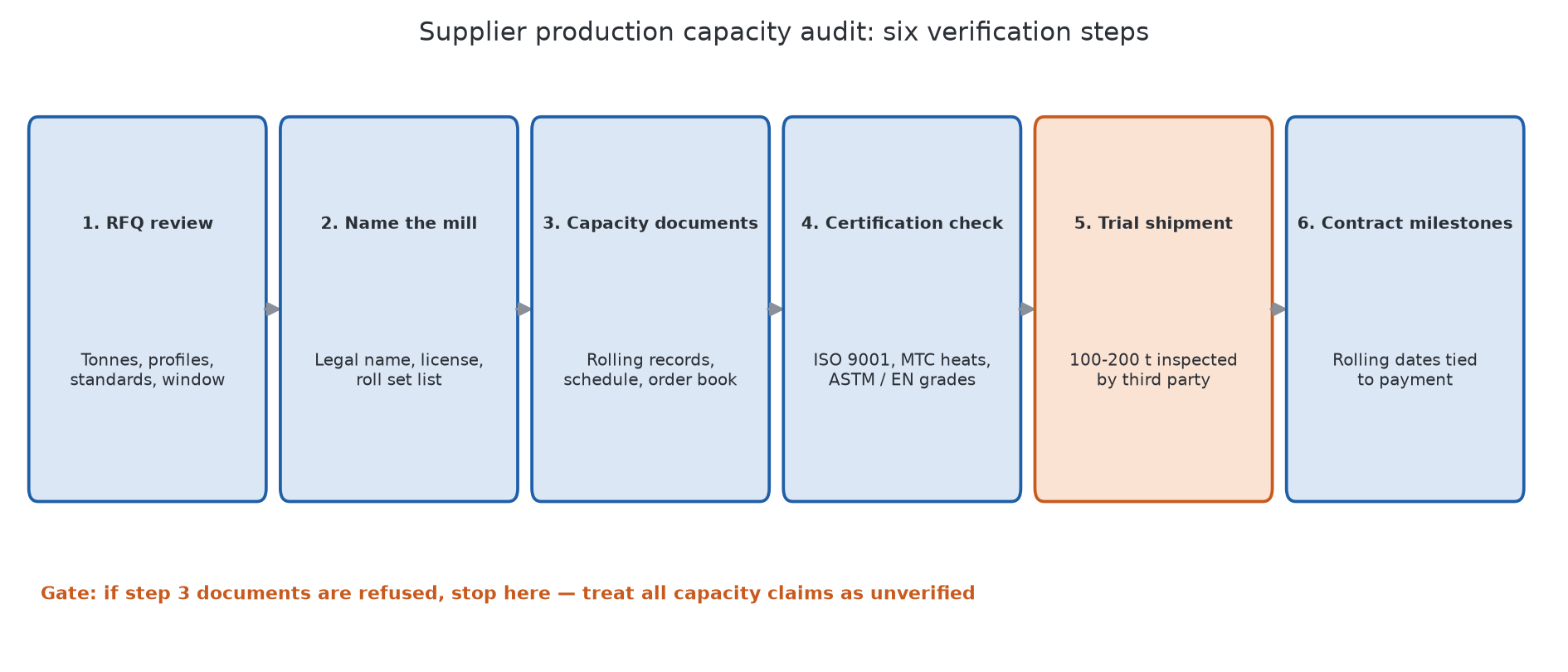
Split the order into phases and ask the supplier to schedule each phase against the rolling calendar. Add a trial shipment, tie payment milestones to rolling dates, and check production planning logic. If every phase is “one week apart”, the schedule was never real.
Dive deeper: the split-shipment stress test I use on large orders
For a multi-phase infrastructure project, I build the schedule backward from the contractor’s piling start date. Then I apply three stress tests. Test one is the trial shipment: 100 to 200 tons first, so the buyer can inspect interlocks, straightness, and coating before the main campaign. Test two is the phase overlap: your second phase should start rolling while the first phase ships. If the supplier schedules phases strictly one after another with no overlap, either the capacity is small or the plan ignores shipping time. Test three is the recovery plan: ask what happens if a roll breaks or a heat fails. A real plan has buffer weeks and a second mill option.
| Stress test | What to ask | Healthy answer |
|---|---|---|
| Trial shipment | Ship 100-200 t for inspection first | Agrees, and adjusts inspection window |
| Phase overlap | Phase 2 rolls while phase 1 ships | Shows overlapping windows on calendar |
| Recovery plan | Roll break or failed heat during campaign | Names buffer time or alternate mill |
| Shipping legs | Vessel space and port cut-off per phase | Lists vessel names and cut-off dates |
For split deliveries to remote sites, I also check the logistics chain early. Bundles for flat rack, container options, and port handling all affect how fast each phase can land, which I cover in more detail in our guide on packaging, loading, and transportation of steel sheet piles. Accurate tonnage per phase matters here too, and our article on calculating steel sheet pile quantity from project drawings shows how to size each shipment before you lock the schedule.
Which Red Flags Should You Never Ignore?
Most failed large orders showed warning signs in week one. Buyers just did not read them.
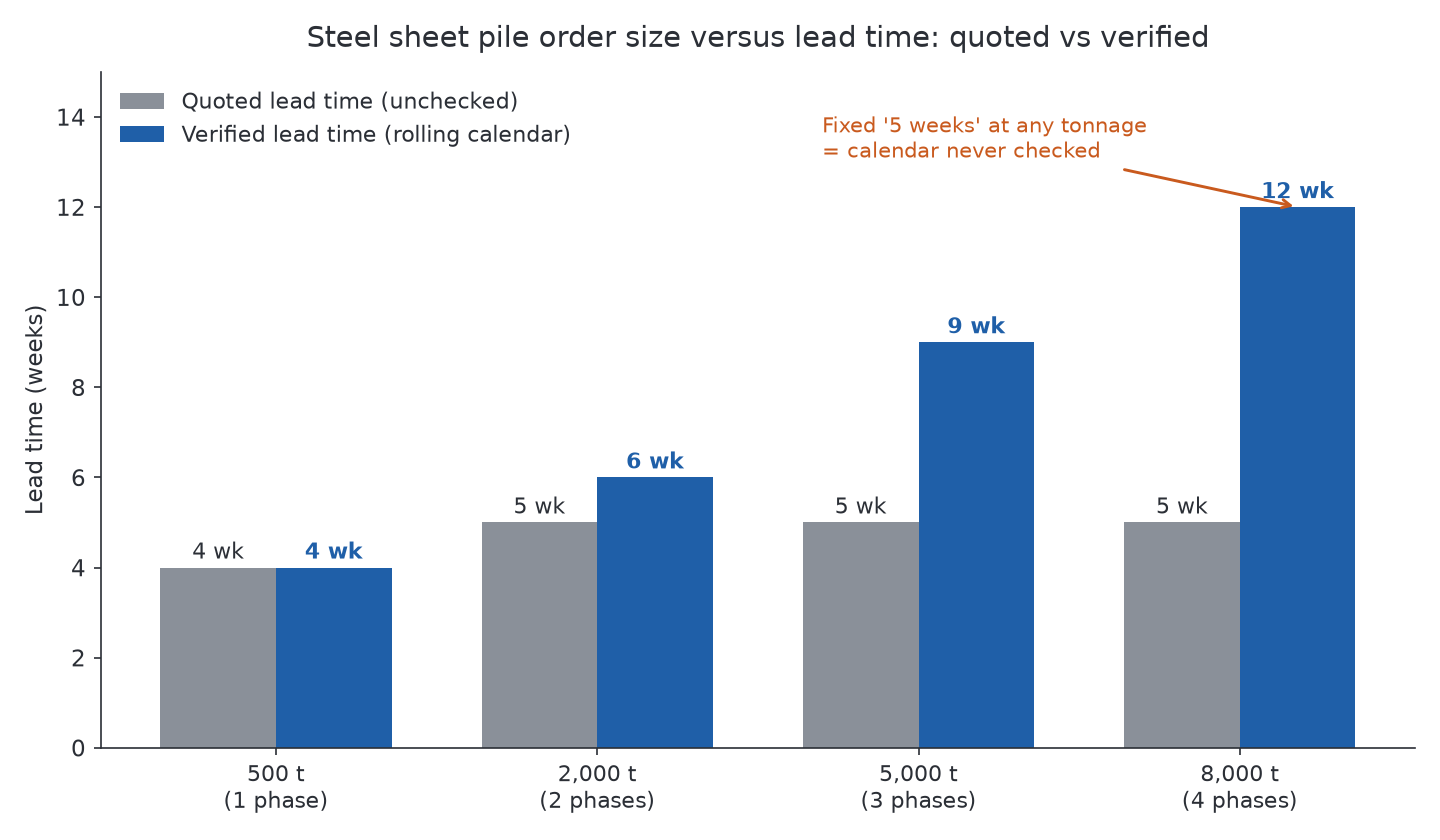
The worst red flags are: price far below every other quote, refusal to name the mill, no heat-number traceability, no trial shipment offer, and lead time that never changes no matter how the order grows. Two or more together mean walk away, whatever the discount.
Dive deeper: the five red flags and what they really mean
Red flags cluster, and each one has a root cause. Price far below the market band usually means restocked mixed sections, non-prime material, or a mill that is desperate. Refusing to name the mill usually means there is no mill, only a desk and a phone. No heat-number traceability means you cannot prove anything to your client’s consultant later, which kills approval on EPC projects. No trial shipment means the supplier is afraid of inspection before the money is committed. And a lead time that stays “five weeks” whether you order 500 tons or 8,000 tons means nobody has actually checked the rolling calendar.
| Red flag | What it usually means | Risk level |
|---|---|---|
| Price 20%+ below all other quotes | Mixed stock, non-prime material | High |
| Mill not named in writing | Trader with no production control | High |
| No heat-number traceability | Fails EPC material approval later | High |
| No trial shipment option | Fear of early inspection | Medium |
| Fixed lead time at any tonnage | Rolling calendar never checked | High |
I also warn buyers about the opposite trap: a supplier who agrees to everything instantly. Real factories push back on impossible dates because their planners know the line speed. When I quote a metro project in Amman, I sometimes tell the client his target date is not realistic and show him the calendar to prove it. That honesty is uncomfortable, but it is what a supplier with real capacity sounds like. If you are still shortlisting factories, our complete guide to buying steel sheet piles from China walks through the full supplier selection process step by step.
My Take: Capacity Is a System, Not a Number
After years of exporting sheet piles to the Middle East, Africa, and Australia, I have stopped trusting single numbers. Capacity is a system: rolls, furnaces, planners, inspectors, and shipping desks that work together every week. A mill can own a big line and still miss your project because its planner oversold the quarter. My advice is simple. Spend one week verifying the system before you wire the deposit. Ask for rolling records, name the mill, book the inspection, ship a trial batch, and put rolling dates into the contract. Buyers who do this almost never face a collapsed schedule. Buyers who skip it bet their project on a brochure.
Conclusion
Verify capacity with documents, visit the mill, test the schedule in phases, and watch for red flags. A cheap promise on paper becomes an expensive delay on site.