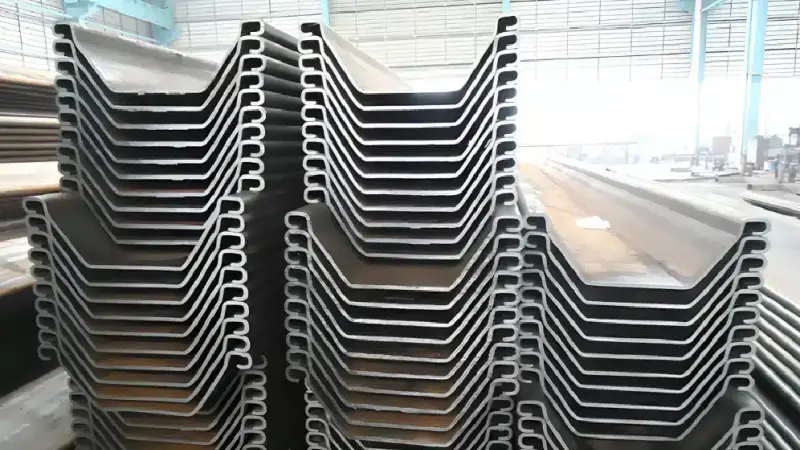
Choosing steel sheet piles without considering their lifespan can increase maintenance costs and shorten the service life of an entire project. The right material and design make a lasting difference.
Steel sheet piles typically last between 50 and 100 years, depending on the steel grade, environmental conditions, corrosion protection, installation quality, and maintenance. In marine environments, high-performance grades such as ASTM A690 can significantly extend service life.
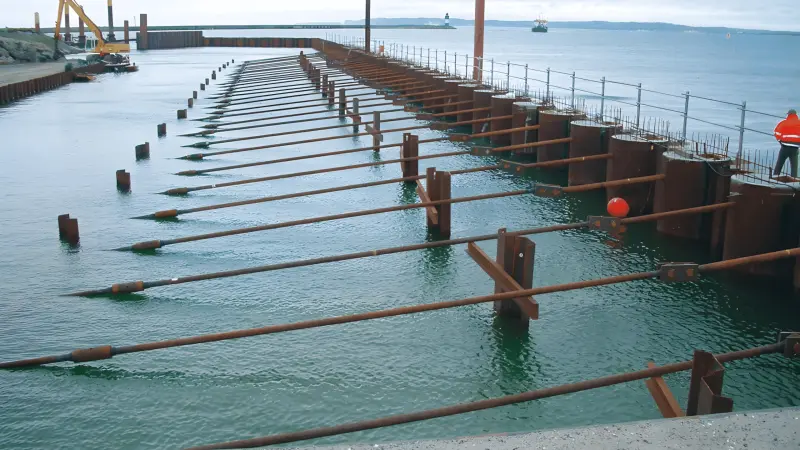
Many customers ask me whether steel sheet piles are a long-term investment or only suitable for temporary structures. My answer depends on the project environment rather than the product alone. I have supplied steel sheet piles for ports, riverbanks, bridge foundations, and deep excavations. Some projects require only a few months of service, while others are designed to last for decades. In this article, I will explain what determines the lifespan of steel sheet piles and how you can maximize their long-term value.
How long do steel sheet piles last?
Many project owners focus on the purchase price but overlook the total service life. A lower initial cost can become expensive if corrosion or structural damage requires early replacement.
Steel sheet piles generally last 50 to 100 years. Temporary sheet piles may only remain in place for months or a few years, while permanent retaining structures with proper corrosion protection can exceed 100 years under favorable conditions.
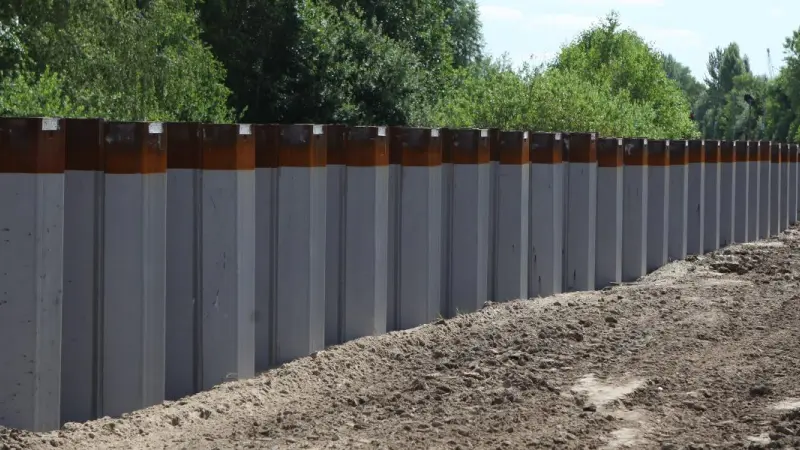
Typical service life of steel sheet piles
The expected lifespan varies according to the application and environment.
| Project Type | Expected Service Life |
|---|---|
| Temporary excavation support | 6 months – 5 years |
| Building foundation support | 50–75 years |
| Riverbank protection | 75–100 years |
| Port and harbor structures | 75–100+ years |
| Seawalls with corrosion protection | 100+ years |
These values are general engineering estimates. The actual lifespan depends on many factors.
What affects the lifespan?
From my experience, no single factor determines how long steel sheet piles will last.
Several elements work together.
Steel grade
The steel grade is one of the biggest factors.
Standard carbon steel performs well in ordinary environments.[web:55]
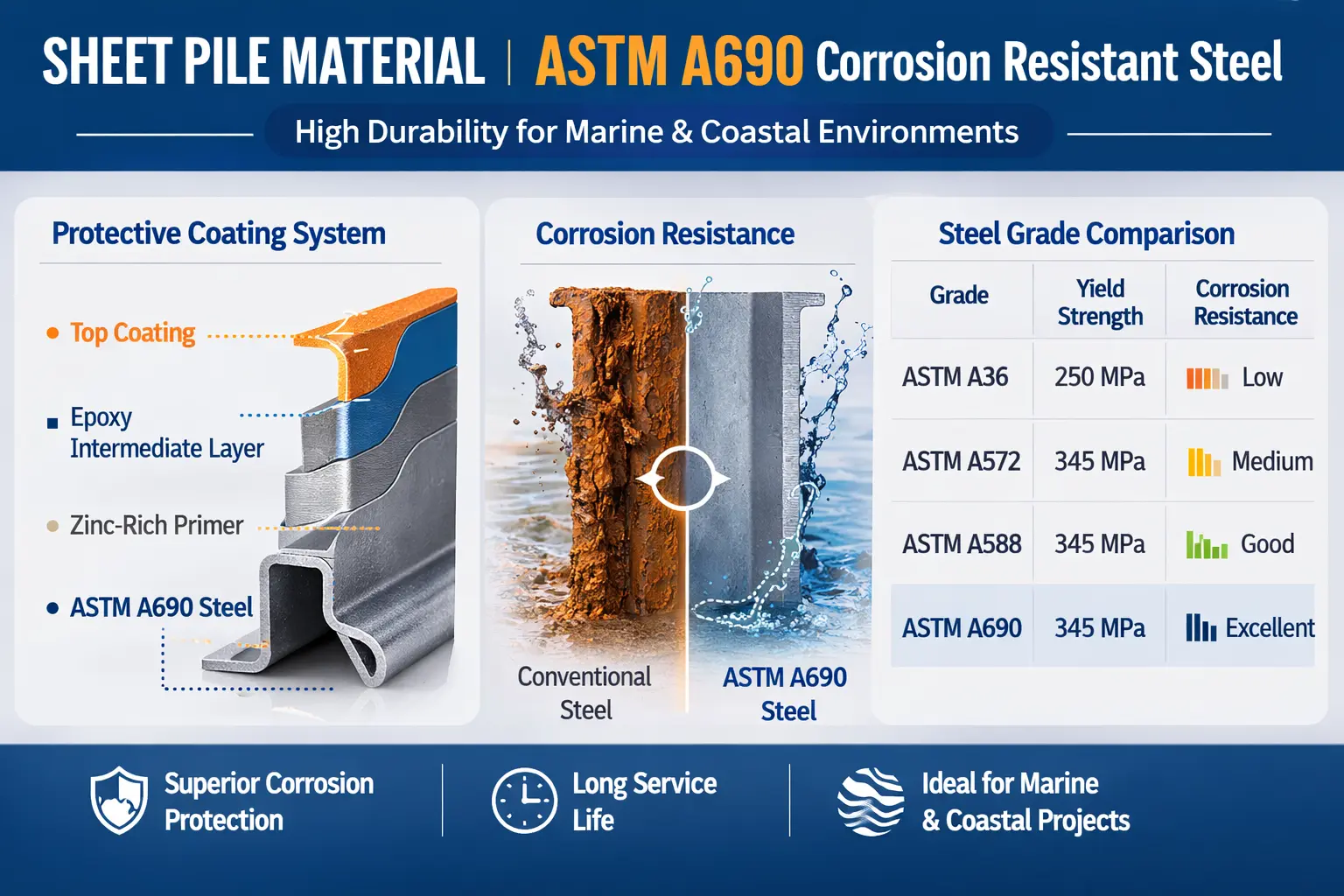
Marine projects usually benefit from corrosion-resistant grades such as ASTM A690 because they resist atmospheric corrosion much better than conventional structural steel.
Corrosion environment
Environmental exposure directly influences corrosion speed.
| Environment | Corrosion Risk |
|---|---|
| Dry inland areas | Low |
| Freshwater rivers | Moderate |
| Industrial atmosphere | Moderate to High |
| Coastal regions | High |
| Splash zone | Very High |
| Seawater immersion | High |
Projects located near seawater usually experience faster corrosion because chlorides continuously attack the steel surface.
This is why marine engineers often specify thicker steel sections or corrosion-resistant materials.
Protective coatings
Protective coatings greatly improve durability.
Common protection methods include:
- Coal tar epoxy
- Zinc-rich coatings
- Hot-dip galvanizing
- Epoxy paint systems
- Polyurethane coatings
For very aggressive environments, engineers may combine coatings with cathodic protection.
Structural design also matters
Many buyers believe thicker steel automatically lasts longer.
That is only part of the answer.
A good structural design distributes loads correctly and minimizes unnecessary stress.
Engineers usually evaluate:
- Section modulus
- Bending moment
- Earth pressure
- Water pressure
- Safety factors
- Corrosion allowance
A properly designed retaining wall often performs much better than an oversized wall with poor engineering.[web:51]
Installation quality influences durability
Even the highest-quality steel sheet pile can perform poorly if installation is incorrect.
Good installation provides:
- Proper wall alignment
- Tight interlocking
- Uniform load transfer
- Better water resistance
- Reduced structural stress
Common installation methods include:[web:48]
| Installation Method | Typical Application |
|---|---|
| Vibratory hammer | General construction |
| Impact hammer | Dense soil |
| Hydraulic press-in | Urban projects |
| Silent piling | Sensitive environments |
Choosing the appropriate installation method helps reduce damage during driving.
Maintenance extends service life
Maintenance is often overlooked after construction.
Regular inspection allows engineers to identify corrosion before serious structural damage develops.
Typical maintenance activities include:
- Surface inspection
- Coating repair
- Corrosion monitoring
- Interlock inspection
- Structural assessment
These relatively small investments can significantly increase the service life of permanent sheet pile structures.
My experience with riverbank protection projects
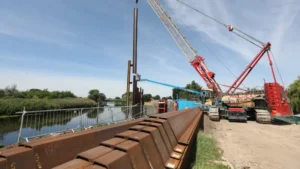
One project that clearly demonstrated the importance of durability was a riverbank protection project in Southeast Asia.
The contractor needed a retaining wall capable of resisting seasonal flooding, soil erosion, and continuous exposure to moisture.
After reviewing the project requirements, the engineering team selected hot rolled U type steel sheet piles.
The piles were installed using vibratory piling equipment.
The precision interlocks created a continuous wall that stabilized the riverbank while reducing water infiltration.
The contractor also selected an appropriate corrosion protection system because the retaining wall was expected to remain in service for many decades.
The project finished on schedule and provided a durable flood-control solution.
My opinion
Many customers ask me how long steel sheet piles really last.
I believe the better question is:
How long should your project last?
If the project is temporary, a standard carbon steel sheet pile may provide excellent value.
If the project is designed for ports, seawalls, riverbank protection, or other permanent infrastructure, investing in higher-quality steel grades, proper corrosion protection, and professional installation usually produces much lower life-cycle costs.
In my experience, the purchase price is only a small part of the total investment.
The true value comes from choosing a solution that remains safe, reliable, and economical throughout its entire service life.
When I recommend steel sheet piles to customers, I always encourage them to think beyond today’s budget and consider the next fifty or even one hundred years.
What are the disadvantages of sheet piles?
Many buyers hear about the strength and versatility of steel sheet piles but rarely discuss their limitations. Every engineering solution has advantages and disadvantages. Understanding both helps engineers select the most suitable retaining system.
The main disadvantages of steel sheet piles include corrosion in aggressive environments, installation noise and vibration, limited performance in very hard ground, potential water leakage through interlocks, and higher initial costs for permanent projects. Most of these issues can be minimized through proper design, material selection, and installation methods.
Every retaining system has limitations
After working with contractors and civil engineering companies for many years, I have learned that no retaining wall system is perfect.
Concrete walls, bored piles, diaphragm walls, and steel sheet piles all have strengths and weaknesses.
The key is matching the solution to the project.
Steel sheet piles remain one of the most efficient retaining systems available, but buyers should understand their limitations before making a purchasing decision.
Corrosion is the biggest long-term challenge
Steel naturally corrodes when exposed to moisture and oxygen.
Marine environments accelerate corrosion because seawater contains chlorides that attack the steel surface.
The corrosion rate depends on several factors.
| Environment | Corrosion Level |
|---|---|
| Dry inland area | Low |
| Freshwater | Moderate |
| Industrial atmosphere | Moderate |
| Coastal atmosphere | High |
| Splash zone | Very High |
| Seawater immersion | High |
For permanent waterfront structures, I usually recommend corrosion-resistant materials such as ASTM A690 or additional protective systems including epoxy coatings and cathodic protection.
Although these solutions increase the initial investment, they greatly reduce long-term maintenance costs.
Installation can create noise and vibration
Traditional sheet pile installation uses vibratory or impact hammers.
These methods are highly efficient but may produce:
- Ground vibration
- Construction noise
- Temporary disturbance to nearby buildings
- Restrictions in urban areas
This issue becomes important when projects are located near:
- Hospitals
- Schools
- Historic buildings
- Residential communities
- Railway lines
Fortunately, modern hydraulic press-in systems and silent piling equipment have reduced these problems significantly.[web:62]
Although these methods usually increase installation costs, they provide safer construction in sensitive locations.[web:61]
Hard ground may reduce installation efficiency
Steel sheet piles perform best in soft soil, sand, clay, and many mixed ground conditions.
Very dense gravel or rock can make installation much more difficult.
Possible challenges include:
- Slow penetration
- Higher equipment wear
- Increased fuel consumption
- Longer construction time
- Higher installation costs
Engineers normally perform geotechnical investigations before selecting the retaining system.
When hard rock is encountered, pre-drilling or alternative foundation methods may become necessary.
Water leakage through interlocks
Many people believe steel sheet pile walls are completely waterproof.
That is not entirely correct.
Standard sheet pile interlocks reduce water flow, but they are not automatically watertight.[web:60]
The level of water resistance depends on:
- Interlock precision
- Installation quality
- Soil conditions
- Water pressure
- Sealant systems
Where strict water control is required, engineers may apply:
| Waterproofing Method | Purpose |
|---|---|
| Interlock sealant | Reduce seepage |
| Bituminous compound | Improve water tightness |
| Welded joints | Permanent sealing |
| Grouting | Additional seepage control |
Proper installation usually has as much influence as the sealing material itself.
Initial investment can be higher
Some buyers compare only the purchase price of steel sheet piles with concrete retaining walls.
This comparison can be misleading.[web:62]
Steel sheet piles may require a higher initial investment, especially for:
- Hot rolled sections
- ASTM A690 material
- Large section modulus
- Marine-grade coatings
However, the total life-cycle cost often tells a different story.
Steel sheet piles provide several financial advantages:
| Benefit | Long-Term Value |
|---|---|
| Faster installation | Lower labor cost |
| Reusable sections | Reduced material waste |
| Smaller construction footprint | Lower site preparation cost |
| Easier removal | Greater project flexibility |
| Lower maintenance with proper protection | Reduced operating cost |
For many infrastructure projects, these advantages offset the higher purchase price.
Design mistakes create unnecessary problems
From my experience, many so-called disadvantages actually result from poor engineering decisions rather than the sheet piles themselves.
Common mistakes include:
- Selecting the wrong steel grade
- Using insufficient embedment depth
- Ignoring soil investigation results
- Choosing an undersized section
- Inadequate corrosion protection
A properly engineered retaining wall usually avoids these problems.
This is why experienced contractors always work closely with structural engineers before finalizing material selection.
My experience from a riverbank protection project
One of my customers in Southeast Asia planned a long-term riverbank stabilization project.
Initially, the contractor worried about corrosion because the retaining wall would remain exposed to water throughout the year.
After evaluating the environmental conditions, the engineering team selected hot rolled U type steel sheet piles with an appropriate corrosion protection system.
The installation used vibratory piling equipment.
The accurately manufactured interlocks created a continuous retaining wall with excellent alignment and reliable water control.
Although the initial investment was higher than some alternative retaining systems, the project achieved:
- Faster construction
- Reduced excavation time
- Excellent structural stability
- Long expected service life
- Lower future maintenance requirements
This project reminded me that disadvantages should always be evaluated together with long-term benefits.
My opinion
Many articles focus only on the weaknesses of steel sheet piles.
I prefer to evaluate them from an engineering perspective.
Every retaining system has limitations.
Concrete walls require larger excavation areas.
Diaphragm walls are expensive.
Bored pile walls often require more construction time.
Steel sheet piles also have disadvantages, but most of them can be controlled through good engineering.
From my experience, selecting the correct steel grade, designing adequate embedment depth, applying suitable corrosion protection, and choosing the right installation method eliminate many of the common concerns.
For permanent retaining structures, bridge foundations, flood control systems, ports, and riverbank protection, steel sheet piles continue to provide one of the most efficient and reliable foundation solutions available today.
What is the difference between Type 2 and Type 4 sheet piles?
Many customers ask me about the difference between Type 2 and Type 4 sheet piles because these names are commonly used in international projects. However, the difference is not only the number. It represents different sheet pile profiles, structural capacities, and applications.
Type 2 sheet piles are lighter sections mainly used for general retaining walls and temporary works, while Type 4 sheet piles are heavier sections with higher strength and bending capacity for deeper excavations, marine structures, and projects requiring stronger support.[web:67][web:70][web:71]
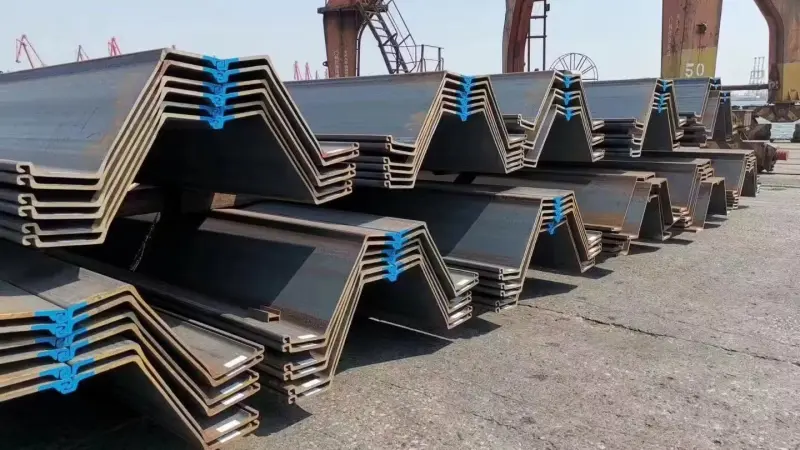
Understanding sheet pile types
When I receive inquiries from contractors, they often mention Type 2, Type 3, or Type 4 sheet piles without providing complete specifications.
This can create confusion because different countries and manufacturers may use different naming systems.
In many European and international projects, Type 2 and Type 4 usually refer to traditional U-shaped steel sheet pile sections based on their dimensions and structural properties.
The main difference is:
- Type 2 has a lighter cross-section.
- Type 4 has a heavier cross-section.
- Type 4 provides higher bending resistance.
- Type 4 is suitable for more demanding applications.
The correct selection depends on engineering requirements rather than simply choosing the largest section.
Basic comparison between Type 2 and Type 4 sheet piles
| Feature | Type 2 Sheet Piles | Type 4 Sheet Piles |
|---|---|---|
| Section weight | Lower | Higher |
| Steel consumption | Less | More |
| Bending capacity | Moderate | Higher |
| Section modulus | Lower | Higher |
| Installation difficulty | Easier | Requires stronger equipment |
| Material cost | Lower | Higher |
| Typical use | Temporary and medium-duty walls | Heavy-duty permanent structures |
The choice between these two types should always consider soil pressure, water pressure, wall height, and design life.
Structural performance difference
The most important difference between Type 2 and Type 4 sheet piles is their structural capacity.
A retaining wall must resist several forces:
- Soil pressure
- Water pressure
- External loads
- Wind or wave forces
- Construction loads
A heavier sheet pile section can resist greater bending moments.
The section modulus is one of the most important values engineers check.
| Parameter | Importance |
|---|---|
| Section modulus | Determines bending resistance |
| Moment of inertia | Determines stiffness |
| Yield strength | Determines load capacity |
| Thickness | Influences corrosion allowance |
Type 4 sheet piles normally have a larger section modulus, which means they can support higher loads before excessive deformation occurs.
Applications of Type 2 sheet piles
Type 2 sheet piles are often selected for projects where structural demands are moderate.
Common applications include:
| Application | Reason |
|---|---|
| Temporary excavation support | Cost-effective solution |
| Small retaining walls | Suitable strength |
| Construction pits | Easy installation |
| Temporary waterfront works | Reusable option |
For short-term projects, Type 2 sheet piles often provide excellent economic value.
Many contractors choose them because they can be extracted after construction and reused in future projects.
Applications of Type 4 sheet piles
Type 4 sheet piles are designed for more challenging conditions.
They are commonly used for:
- Ports
- Harbors
- Flood protection systems
- Deep excavation projects
- Bridge foundations
- Permanent retaining walls
These projects usually require:
- Higher load resistance
- Longer service life
- Better structural reliability
For example, a port construction project must withstand water pressure, ship impact loads, and long-term corrosion exposure.
In this situation, Type 4 sheet piles usually provide better performance.
Installation differences
The installation process can also be different.
Because Type 4 sheet piles are heavier, they may require:
- Higher capacity vibratory hammers
- Stronger lifting equipment
- More experienced operators
Type 2 sheet piles are lighter and easier to handle.
However, the easier installation does not always mean lower total project cost.
A lighter pile may require:
- Greater embedment depth
- Additional reinforcement
- More support systems
A heavier pile may increase material cost but reduce engineering complexity.
How do I choose between Type 2 and Type 4 sheet piles?
When customers ask me which type they should purchase, I usually ask several questions first.
| Question | Why It Matters |
|---|---|
| How deep is the retaining wall? | Determines required strength |
| Is water pressure involved? | Affects section selection |
| Is the project temporary or permanent? | Influences material choice |
| What soil conditions exist? | Determines stability requirements |
| What is the design life? | Determines corrosion protection |
The correct choice should come from engineering calculations.
The cheapest option is not always the most economical solution.
Type 2 vs Type 4 in marine projects
Marine projects create additional challenges because structures must resist both soil and water forces.
Examples include:
- Riverbank protection
- Seawalls
- Port expansion
- Coastal infrastructure
For these projects, I usually recommend heavier sections because failure can create serious consequences.
A stronger sheet pile wall can provide:
- Better stability
- Reduced deflection
- Longer service life
- Improved safety
This is especially important when the structure will remain in place for many decades.
My experience with international sheet pile projects
I worked with a contractor on a riverbank protection project in Southeast Asia.
The original design considered several sheet pile options. The contractor wanted to control costs, so they initially looked at lighter sheet pile sections.
After reviewing the flood conditions and expected service life, the engineering team selected hot rolled U type sheet piles with stronger structural performance.
The final solution provided:
- Better resistance against river pressure
- Faster installation
- Improved wall stability
- Reliable long-term protection
The contractor completed the project successfully and avoided future reinforcement work.
This experience showed me that material selection should always follow engineering requirements.
My opinion
In my view, Type 2 and Type 4 sheet piles are not competitors.
They are solutions for different project conditions.
Type 2 sheet piles are suitable when the project requires an economical and efficient retaining solution.
Type 4 sheet piles are better when the project requires higher strength, deeper installation, and longer service life.
I always advise customers to consider the entire project instead of only the initial material price.
A slightly higher investment in the correct sheet pile section can prevent much higher costs caused by deformation, repairs, or reconstruction.
For important infrastructure projects, choosing the correct sheet pile type is one of the most important decisions for safety, performance, and long-term value.
How much does steel sheet piling cost?
Many customers ask me about the price of steel sheet piles before they provide project details. They usually want a simple number, but the real cost depends on many factors, including steel grade, sheet pile type, project size, transportation distance, and installation requirements.
Steel sheet piling usually costs between $50 and $200+ per square meter for materials, while the total project cost can be much higher after adding transportation, installation, equipment, and engineering expenses. The final price depends on project conditions and selected specifications.[web:79][web:80][web:84]
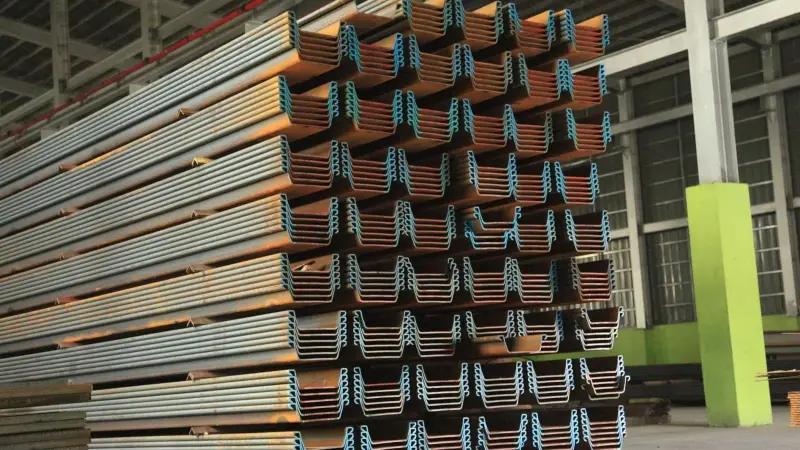
Material cost is only one part of the total cost
When I provide quotations for steel sheet piles, I always explain that the material price is only the beginning.
A complete sheet pile project includes several cost elements.[web:78][web:83][web:84]
| Cost Factor | Description |
|---|---|
| Steel sheet pile price | Cost of the steel product |
| Steel grade | Different grades have different prices |
| Section type | U type, Z type, and other profiles affect cost |
| Pile length | Longer piles require more material |
| Transportation | Depends on shipping distance and destination |
| Installation | Equipment and labor costs |
| Engineering | Design support and technical services |
| Protection system | Coatings or corrosion protection |
A buyer who compares only the steel price may not get the most economical solution.
Factors that affect steel sheet pile price
Steel grade
The steel grade has a direct influence on the price.
Common sheet pile materials include:
| Steel Grade | Application |
|---|---|
| Q235 | General construction |
| Q345 | Higher strength applications |
| ASTM A572 | Structural engineering projects |
| ASTM A690 | Marine and coastal projects |
ASTM A690 sheet piles usually cost more than standard carbon steel because they provide better atmospheric corrosion resistance.[web:80]
However, for ports and coastal structures, the additional investment can reduce future maintenance expenses.
Sheet pile profile
Different profiles have different production costs.
Common types include:
- U-shaped sheet piles
- Z-shaped sheet piles
- Omega sheet piles
- Flat plate sheet piles
- Straight web sheet piles
The section weight directly affects the material cost.
A heavier sheet pile provides higher structural capacity but requires more steel.
Length and quantity
The order volume also affects the final price.
Large projects usually receive better pricing because:
- Production efficiency improves
- Transportation can be optimized
- Fixed costs are distributed across more tons
For example, a port project requiring thousands of tons will usually have a different price structure compared with a small excavation project requiring only several hundred tons.
Installation cost
Installation is one of the largest parts of the total project budget.
The cost depends on:
- Soil conditions
- Pile length
- Installation method
- Equipment availability
- Working environment
Common installation methods include:
| Method | Application |
|---|---|
| Vibratory hammer | Standard installation |
| Impact hammer | Hard soil conditions |
| Hydraulic press-in | Urban and sensitive areas |
| Crane-assisted installation | Limited access projects |
A project with easy soil conditions may have a lower installation cost.
A project with hard ground or restricted access may require more time and specialized equipment.
Transportation cost
Steel sheet piles are heavy products, so logistics can significantly influence the final project cost.
For international customers, transportation includes:
- Factory transportation
- Port handling
- Ocean freight
- Destination charges
- Local delivery
My company supplies steel sheet piles from Liaocheng, Shandong, China. We work with experienced logistics partners to help customers arrange efficient international shipment.
Many contractors from the Middle East, Southeast Asia, Africa, and South America choose Chinese suppliers because direct factory supply can provide competitive pricing and flexible production options.
Are steel sheet piles expensive?
This is one of the most common questions I receive.
My answer is:
Steel sheet piles are not necessarily expensive. They provide strong value when the complete project cost is considered.
Steel sheet piles offer several advantages:
| Advantage | Cost Benefit |
|---|---|
| Fast installation | Lower labor expenses |
| Reusable materials | Reduced waste |
| Small construction footprint | Lower site preparation cost |
| Strong structural performance | Less reinforcement |
| Long service life | Lower maintenance |
For temporary works, sheet piles can often be extracted and reused.
For permanent structures, properly selected steel grades can provide decades of reliable performance.
How I calculate sheet pile project cost
When I prepare a project quotation, I usually follow several steps.
Step 1: Confirm technical requirements
I first confirm:
- Sheet pile type
- Steel grade
- Length
- Quantity
- Project application
Step 2: Calculate material weight
The formula is:
Total Weight = Unit Weight × Total Length
For example:
- Sheet pile unit weight: 80 kg/m²
- Wall area: 5,000 m²
The total steel requirement can then be calculated based on the selected profile.
Step 3: Add additional project costs
The final estimate includes:
- Material
- Shipping
- Installation
- Equipment
- Labor
- Inspection
This approach provides a more accurate project budget.
My experience with a riverbank protection project
One of my customers in Southeast Asia needed a reliable flood control solution.
The project required a retaining wall system along a riverbank because seasonal flooding caused soil erosion and threatened nearby infrastructure.
The contractor selected hot rolled U type steel sheet piles.
The project team considered several factors before making the final decision:
- Soil condition
- Water pressure
- Expected service life
- Installation efficiency
- Long-term maintenance
The sheet piles were installed using vibratory piling equipment.
The strong interlocking system created a continuous barrier that improved riverbank stability and controlled water movement.
Although the customer compared several suppliers based on price, the final decision focused on overall project value.
The selected sheet piles provided:
- Stable structural performance
- Efficient installation
- Reliable water control
- Long-term durability
This project helped me understand that customers should not only ask:
"How much does the steel cost?"
They should ask:
"How much value can the solution provide throughout the project life?"
My opinion
From my experience, the cheapest steel sheet pile is rarely the best choice.
A good project decision considers:
- Initial investment
- Construction efficiency
- Structural safety
- Service life
- Future maintenance
Steel sheet piles are an important investment for infrastructure projects.
When customers choose the correct profile, suitable steel grade, and reliable manufacturer, they can achieve better performance and lower long-term costs.
As a steel sheet pile supplier, I always focus on providing solutions rather than only selling products. I believe the best result comes from combining quality materials, professional engineering support, and efficient project planning.
Conclusion
Steel sheet pile lifespan depends on material quality, environment, design, and installation. Choosing the right solution improves durability, safety, and long-term project value.