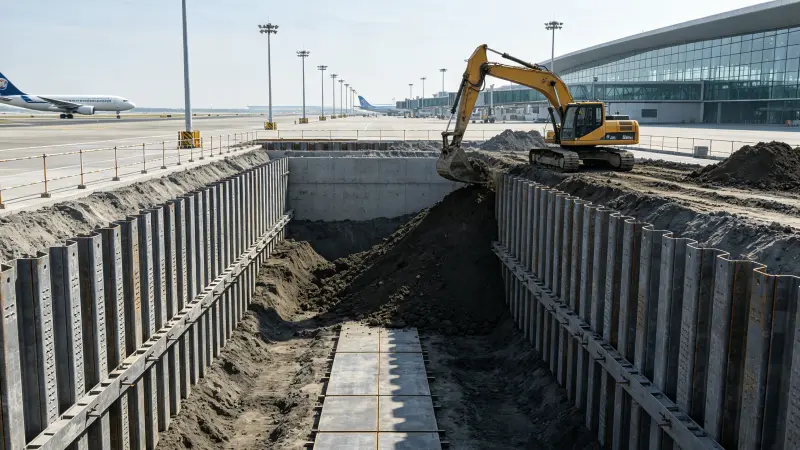
Steel sheet piles are widely used in construction projects, but many buyers are confused when they see different standards, grades, and classifications. Choosing the wrong standard can increase project risks and long-term costs.[web:88]
EN 10248 is a European standard that defines the technical requirements for hot rolled steel sheet piles, including steel grades, mechanical properties, dimensions, tolerances, and testing requirements.[web:86][web:90][web:92][web:95]
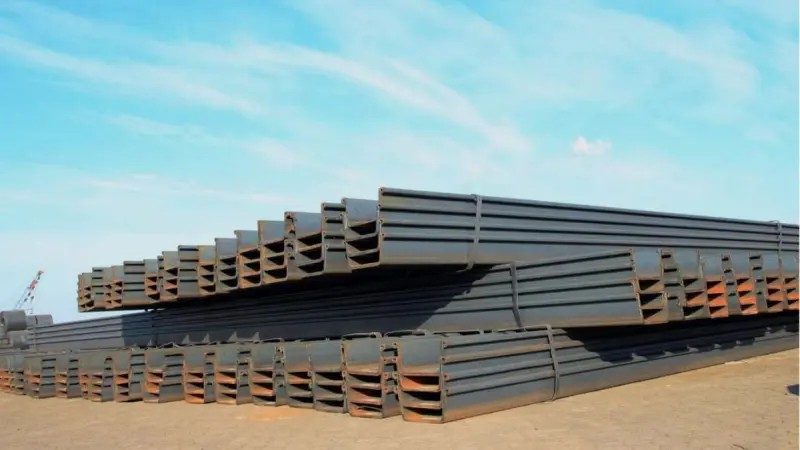
When I communicate with international contractors and steel distributors, I often find that many customers focus only on the sheet pile shape and price. However, the manufacturing standard is also very important. A reliable standard helps buyers confirm product quality, structural performance, and compatibility with engineering requirements.[web:88][web:95]
EN 10248 is one of the most common standards used for hot rolled steel sheet piles in Europe and many international projects. It provides clear requirements for manufacturers and buyers.[web:88][web:90][web:92][web:95] In my experience, understanding this standard helps customers select the right sheet pile products for retaining walls, flood control systems, ports, and deep excavation projects.
Steel sheet piles are not only steel products. They are structural components that need stable performance under soil pressure, water pressure, and external loads. This is why standards like EN 10248 play an important role in project safety.[web:88][web:93]
What is the lifespan of a steel sheet pile?
Many customers ask me how long steel sheet piles can remain in service. They want to know whether sheet piles are suitable for temporary projects or permanent infrastructure.
A steel sheet pile can usually last 50 to 100 years or more depending on steel grade, environmental conditions, corrosion protection, installation quality, and maintenance methods.[web:48][web:52][web:55]
[web:52]
Factors that influence steel sheet pile lifespan
The service life of a steel sheet pile depends on many factors. The steel itself is strong, but the surrounding environment has a major influence on durability.[web:48][web:52][web:55]
The main factors include:
| Factor | Influence on Lifespan |
|---|---|
| Steel grade | Determines basic strength and corrosion resistance |
| Soil condition | Affects external pressure and corrosion exposure |
| Water environment | Influences corrosion speed |
| Coating protection | Reduces surface corrosion |
| Installation quality | Prevents damage and deformation |
| Maintenance | Extends service life |
When I recommend sheet piles to customers, I always ask about the project environment first. A sheet pile used in a dry inland construction site faces very different conditions compared with a coastal seawall project.[web:48][web:52]
Steel grade and corrosion resistance
The steel grade has a direct relationship with service life.
Standard structural steel grades such as S355GP are widely used in EN 10248 sheet piles.[web:95] These grades provide good mechanical strength for many construction applications.
For projects near seawater or industrial environments, engineers often consider additional corrosion protection because chloride and chemical exposure can accelerate steel deterioration.[web:48][web:53][web:56]
Common protection methods include:
| Protection Method | Application |
|---|---|
| Epoxy coating | Marine and industrial projects |
| Hot-dip galvanizing | Corrosion-sensitive environments |
| Increased steel thickness | Permanent structures |
| Cathodic protection | Offshore and marine structures |
I believe corrosion protection should be considered during the design stage instead of after installation. Early planning usually reduces future repair costs.[web:48][web:56]
Temporary and permanent applications
Steel sheet piles are used in both temporary and permanent projects.[web:48][web:52][web:55]
Temporary applications include:
- Excavation support
- Underground construction
- Temporary cofferdams
Permanent applications include:
- Riverbank protection
- Flood control walls
- Ports
- Bridge foundations
- Coastal structures
The expected lifespan can be very different.
| Application | Typical Lifespan |
|---|---|
| Temporary excavation | Months to several years |
| Building foundation support | 50+ years |
| River protection system | 50–100 years |
| Marine structures | 75–100+ years |
The design life determines the material selection and protection requirements.[web:48][web:52]
Installation quality affects durability
Many people think only the steel quality determines lifespan. However, installation quality is also very important.[web:48][web:79]
Incorrect installation may cause:
- Damaged interlocks
- Wall deformation
- Reduced water resistance
- Uneven load distribution
Professional installation helps the sheet pile wall perform according to the original design.
Common installation methods include:
| Method | Suitable Application |
|---|---|
| Vibratory hammer | General construction |
| Impact hammer | Hard soil conditions |
| Hydraulic press-in | Urban projects |
The correct installation method reduces stress on the sheet piles and improves overall performance.[web:48][web:79]
My experience with sheet pile projects
In my previous riverbank protection projects, I noticed that customers who considered only the initial purchase price often faced more questions later about maintenance and durability.
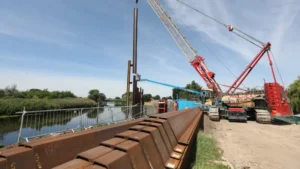
For a Southeast Asia flood control project, the contractor selected hot rolled U type steel sheet piles. The project required a stable retaining system because the riverbank experienced seasonal water level changes.
The final solution focused on proper sheet pile selection, reliable interlocking performance, and efficient installation.
The project achieved stable riverbank protection and provided long-term structural safety.
My insight
From my experience, the lifespan of steel sheet piles depends on the complete project solution, not only the steel material. Choosing the correct grade, design, and protection method can significantly improve long-term performance.[web:48][web:52][web:55]
What is the difference between Type 2 and Type 4 sheet piles?
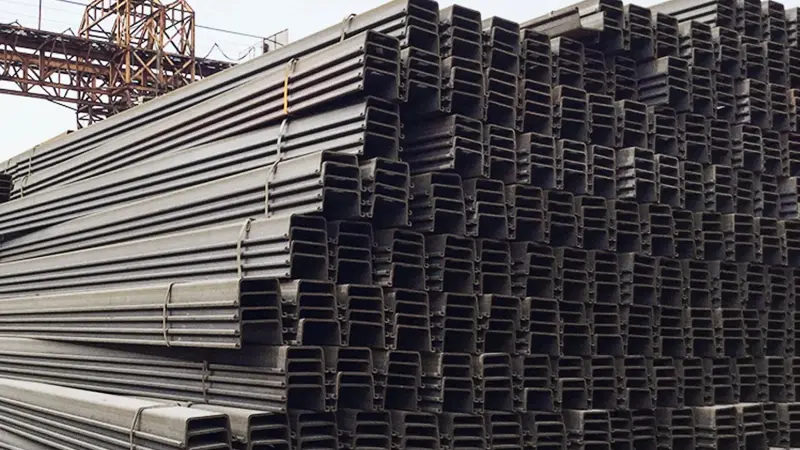
Many customers ask me about the difference between Type 2 and Type 4 sheet piles because these two names are often used in international construction projects. The main confusion comes from the fact that different markets may use different naming systems.[web:71][web:99]
Type 2 sheet piles are lighter sections with moderate strength, while Type 4 sheet piles are heavier sections with higher bending resistance and are usually used for deeper excavations, permanent retaining walls, and marine construction projects.[web:67][web:97][web:99]
Understanding the meaning of Type 2 and Type 4
When I receive inquiries from contractors, I usually ask them to provide detailed drawings or technical specifications before recommending products.
The reason is simple.
The name "Type 2" or "Type 4" alone does not describe the complete performance of a sheet pile. Engineers need to check parameters such as:
- Section modulus
- Moment of inertia
- Thickness
- Weight per square meter
- Steel grade
- Required embedment depth
These values determine whether the sheet pile can safely support the project loads.[web:67][web:99]
In general, Type 2 sheet piles are designed for medium-load applications. Type 4 sheet piles have a stronger cross-section and can resist higher bending forces.[web:67][web:97][web:99]
Basic comparison between Type 2 and Type 4 sheet piles
| Feature | Type 2 Sheet Piles | Type 4 Sheet Piles |
|---|---|---|
| Section weight | Lower | Higher |
| Steel consumption | Less | More |
| Structural strength | Medium | High |
| Bending resistance | Lower | Higher |
| Installation equipment | Standard equipment | Higher capacity equipment |
| Material cost | Lower | Higher |
| Common applications | Temporary works, small retaining walls | Ports, flood control, deep excavations |
The correct choice depends on the engineering requirements.
A heavier sheet pile is not always the best choice. A lighter sheet pile is not always the most economical choice.[web:67][web:99]
Structural performance difference
The biggest difference between Type 2 and Type 4 sheet piles is the structural capacity.
A sheet pile wall needs to resist different loads, including:
- Soil pressure
- Water pressure
- Traffic loads
- Construction loads
- Wave forces
- Environmental pressure
Type 4 sheet piles usually have a larger section modulus.
The section modulus is an important value because it represents the ability of the steel section to resist bending.[web:67][web:98][web:99]
| Parameter | Importance |
|---|---|
| Section modulus | Determines bending strength |
| Thickness | Improves corrosion allowance |
| Steel grade | Determines yield strength |
| Weight | Influences structural capacity |
For projects with high lateral pressure, engineers usually prefer stronger sections because they provide better stability.[web:67][web:72][web:99]
Applications of Type 2 sheet piles
Type 2 sheet piles are commonly selected for projects where the load requirement is moderate.
Typical applications include:
| Application | Reason |
|---|---|
| Temporary excavation support | Cost-effective solution |
| Small retaining walls | Suitable structural capacity |
| Temporary cofferdams | Easy installation and removal |
| Construction support | Flexible usage |
Many contractors choose Type 2 sheet piles because they are easier to transport and install.
For temporary projects, this option can provide excellent economic value.
The contractor can install the sheet piles quickly and remove them after the project is completed.[web:67][web:71][web:98]
Applications of Type 4 sheet piles
Type 4 sheet piles are usually selected for projects with higher structural requirements.
Typical applications include:
- Deep excavation support
- Riverbank protection
- Flood control systems
- Port construction
- Harbor structures
- Bridge foundation projects
These applications require reliable performance for many years.
For example, flood control systems must resist continuous water pressure and soil movement. A stronger sheet pile section can provide better stability and reduce the risk of deformation.[web:67][web:72][web:97]
Difference in installation requirements
The installation process can also be different.
Because Type 4 sheet piles are heavier, contractors may need:
- Larger lifting equipment
- Higher power vibratory hammers
- More experienced operators
Type 2 sheet piles are easier to handle because they have lower weight.[web:71][web:98]
However, easier installation does not always mean lower total project cost.
A lighter sheet pile may require:
- More supporting structures
- Greater installation depth
- Additional reinforcement
A stronger sheet pile may have a higher material cost but provide better long-term performance.[web:67][web:72]
How do I select the correct sheet pile type?
When customers ask me which sheet pile type they should choose, I usually check several project conditions.
| Project Factor | Why It Matters |
|---|---|
| Wall height | Determines required strength |
| Soil condition | Influences lateral pressure |
| Water level | Affects stability requirements |
| Service life | Determines material selection |
| Construction method | Affects installation feasibility |
Engineers normally use structural calculations to determine the required sheet pile section.
The final decision should balance:
- Safety
- Performance
- Cost
- Installation efficiency.[web:72][web:99]
Relationship between EN 10248 and sheet pile types
EN 10248 does not define Type 2 and Type 4 as simple quality levels.
Instead, EN 10248 provides requirements for hot rolled sheet piles, including:
- Chemical composition
- Mechanical properties
- Dimensions
- Testing requirements.[web:89][web:100]
The types of steel sheet piles covered by EN 10248 include Z-shaped, U-shaped, straight web, H-shaped and flat sheet piles with their interlocks.[web:89][web:100]
The actual sheet pile type depends on the product profile and manufacturer specifications.
This is why buyers should always check the technical datasheet before purchasing.[web:68][web:97][web:99]
My experience with international projects
In one riverbank protection project in Southeast Asia, the contractor needed a sheet pile system that could handle seasonal flooding.
The project team compared different sheet pile options.
The contractor initially considered lighter sections because they wanted to reduce material costs.
After reviewing the soil pressure and water conditions, the engineering team selected a stronger hot rolled U type sheet pile solution.
The final system provided:
- Better stability
- Reliable interlocking performance
- Faster installation
- Long-term protection
This project showed me that choosing the correct sheet pile type is more important than simply choosing the lowest price.
My insight
From my experience, Type 2 and Type 4 sheet piles are designed for different project needs. I recommend customers choose according to load requirements, soil conditions, and service life instead of only comparing purchase prices.[web:67][web:72][web:99]
What grade of steel is used in sheet piles?
Many customers ask me what steel grade is suitable for sheet piles because the steel grade directly affects strength, durability, and project safety. Different projects have different requirements, so choosing the correct grade is important.[web:107]
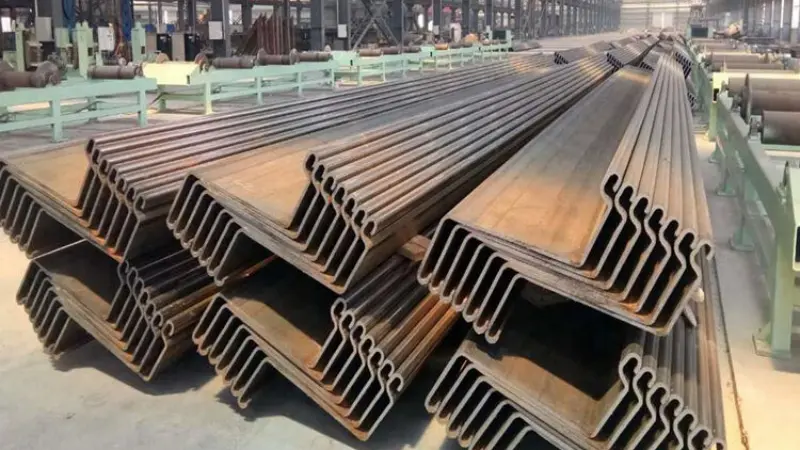
Steel sheet piles are commonly manufactured using structural steel grades such as S235GP, S275GP, S355GP, and S430GP according to EN 10248. These grades provide different levels of strength and are selected based on load requirements, soil conditions, and project applications.[web:101][web:102][web:103][web:104][web:107][web:109]
Understanding steel grades in EN 10248
When I communicate with international buyers, I often explain that the steel grade is not just a product name. It represents the mechanical performance of the sheet pile.
EN 10248[web:86] mainly covers hot rolled steel sheet piles and specifies requirements for steel quality, chemical composition, and mechanical properties.[web:103][web:104][web:109]
The most common grades include:
| Steel Grade | Yield Strength | Common Application |
|---|---|---|
| S235GP | 235 MPa | General retaining walls |
| S275GP | 275 MPa | Medium-load structures |
| S355GP | 355 MPa | Heavy-duty construction |
| S430GP | 430 MPa | High-strength applications |
The higher the yield strength, the greater the load resistance of the steel.
However, a higher grade is not always necessary.
Engineers need to select the grade based on actual project conditions.[web:102][web:103][web:107]
S235GP steel sheet piles
S235GP is one of the commonly used grades for general construction projects.[web:102][web:103][web:107]
It provides reliable strength for many standard applications.
Typical uses include:
- Temporary retaining walls
- Small excavation support
- Construction barriers
- General foundation works
The advantages of S235GP include:
| Advantage | Description |
|---|---|
| Good weldability | Easy fabrication |
| Lower material cost | Economical solution |
| Good availability | Widely produced |
| Suitable strength | Meets general requirements |
For projects with moderate loads, S235GP can provide a practical and cost-effective solution.[web:103][web:107]
S275GP steel sheet piles
S275GP provides higher strength compared with S235GP.[web:102][web:103][web:107]
It is often selected when projects require better structural performance.
Common applications include:
- Medium-depth excavations
- Retaining walls
- Infrastructure projects
- River protection systems
The higher yield strength allows engineers to design stronger structures without always increasing the sheet pile size.[web:103][web:107]
S355GP steel sheet piles
S355GP is one of the most popular grades used in international sheet pile projects.
I receive many inquiries from contractors looking for S355GP sheet piles because this grade provides a good balance between strength, cost, and availability.[web:101][web:103][web:107]
Typical applications include:
| Application | Reason for Selection |
|---|---|
| Deep excavation | Higher bending resistance |
| Bridge foundations | Strong structural support |
| Ports | Suitable for heavy loads |
| Flood protection | Reliable long-term performance |
S355GP is especially suitable for permanent structures where safety and durability are important.[web:103][web:107][web:108]
S430GP high-strength sheet piles
S430GP is a higher-strength steel grade used for demanding projects.[web:102][web:103][web:104][web:107]
This grade allows engineers to achieve higher structural capacity while reducing steel consumption in some designs.
Typical applications include:
- Large retaining structures
- Deep foundation projects
- Heavy marine structures
- Large-scale infrastructure
The advantages include:
- Higher yield strength
- Better load resistance
- Potential material savings
However, higher-strength steel may require more careful design and fabrication control.[web:103][web:104]
Comparison of common sheet pile steel grades
| Grade | Strength Level | Best Application |
|---|---|---|
| S235GP | Basic | Temporary and light projects |
| S275GP | Medium | General infrastructure |
| S355GP | High | Permanent retaining structures |
| S430GP | Very High | Heavy-duty engineering projects |
The final selection depends on engineering calculations.[web:103][web:107]
Does steel grade affect corrosion resistance?
Many customers believe stronger steel grades automatically resist corrosion better.
This is not completely correct.
Steel strength and corrosion resistance are different properties.[web:105][web:108]
A higher-strength steel grade can support higher loads, but it does not always provide better corrosion resistance.
Corrosion resistance depends more on:
- Chemical composition
- Environmental exposure
- Protective coating
- Maintenance system
For example, a coastal project may require additional protection even when using a strong steel grade.[web:105][web:108]
Steel grades for marine applications
Marine environments create special challenges.
Steel sheet piles used in ports, seawalls, and flood protection systems face:
- Saltwater exposure
- Wave impact
- Tidal changes
- Oxygen and chloride attack
For these applications, engineers may consider:
- Higher steel grades
- Corrosion allowance
- Protective coatings
- Special marine-grade steels[web:105][web:108]
Some projects may use ASTM A690 steel because it provides improved atmospheric corrosion resistance in the splash zone of marine structures.[web:105][web:108] The selection depends on the design life and environmental conditions.
How I help customers choose steel grades
When customers contact me, I do not recommend a steel grade only based on price.
I usually ask:
| Question | Purpose |
|---|---|
| What is the project application? | Understand structural requirements |
| Is it temporary or permanent? | Determine service life needs |
| What is the soil condition? | Estimate loading |
| Is water exposure involved? | Consider corrosion protection |
| What length and profile are required? | Match product specifications |
This approach helps customers avoid choosing unsuitable materials.[web:102][web:103][web:107]
My insight
In my experience, the best steel grade is not always the strongest one. The correct grade is the one that matches the project requirements, environment, and budget. Proper selection helps customers achieve better safety and lower total costs.[web:103][web:107]
What are the classification of sheet piles?
Many customers know that steel sheet piles come in different shapes, but they are not always familiar with how sheet piles are classified. Understanding the classification helps buyers select the correct product for different construction conditions.[web:37][web:111]
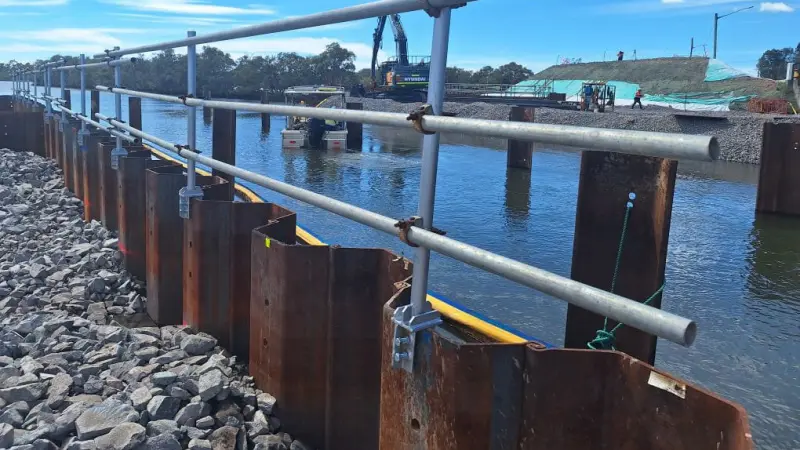
Steel sheet piles are mainly classified by shape, connection system, manufacturing method, and application. The most common types include U-shaped sheet piles, Z-shaped sheet piles, straight web sheet piles, and special profile sheet piles.[web:74][web:111][web:113][web:114]
Classification by sheet pile shape
The shape of a steel sheet pile determines its structural performance, installation method, and suitable application.[web:111][web:113][web:114]
The most common profiles include:
| Sheet Pile Type | Main Feature | Common Application |
|---|---|---|
| U-shaped sheet piles | Symmetrical shape, easy connection | Retaining walls, flood control |
| Z-shaped sheet piles | High section modulus | Deep excavation, marine structures |
| Straight web sheet piles | Flat profile, strong tension resistance | Circular structures and special walls |
| Omega sheet piles | Special curved profile | Specific engineering applications |
| Flat plate sheet piles | Flat surface design | Cofferdams and special projects |
Each profile has different advantages.
When I recommend sheet piles to customers, I first check the engineering requirements because the shape affects the wall performance.[web:111][web:113]
U-shaped steel sheet piles
U-shaped sheet piles are one of the most widely used products in international markets.[web:111][web:113][web:114]
The interlocks are located near the neutral axis, which creates a balanced structure.
The main advantages include:
- Easy transportation
- Simple installation
- Good availability
- Flexible project application
U-shaped sheet piles are commonly used for:
- Riverbank protection
- Flood control projects
- Temporary retaining walls
- Foundation excavation
Many contractors choose U-shaped sheet piles because they provide a good balance between performance and cost.[web:113][web:114]
For example, in the Southeast Asia riverbank protection project that I supported, the contractor selected hot rolled U type steel sheet piles because the project required stable water control and soil protection.
The sheet piles formed a continuous retaining wall system. The strong interlocking connection improved the overall stability of the riverbank.
Z-shaped steel sheet piles
Z-shaped sheet piles are designed for higher structural efficiency.
The interlocks are located at the outer edges of the profile. This design increases the section modulus and improves bending resistance.[web:74][web:111][web:113]
The main advantages include:
| Advantage | Description |
|---|---|
| Higher strength | Suitable for heavy loads |
| Efficient steel usage | Provides strong performance with optimized weight |
| Good wall stiffness | Reduces deformation |
| Suitable for deep applications | Handles higher soil pressure |
Z-shaped sheet piles are often used in:
- Ports
- Harbors
- Deep excavation projects
- Large retaining structures
For large infrastructure projects, Z-shaped sheet piles can provide excellent structural performance.[web:74][web:111][web:113][web:114]
Classification by manufacturing method
Steel sheet piles can also be classified by manufacturing method.[web:74][web:111][web:112]
The two main production methods are:
| Manufacturing Method | Features |
|---|---|
| Hot rolled sheet piles | Strong interlock, excellent structural performance |
| Cold formed sheet piles | Lightweight, flexible production |
Hot rolled steel sheet piles
Hot rolled sheet piles are produced through high-temperature rolling processes.
This method creates strong and reliable interlocks.[web:74][web:112][web:114]
The main benefits include:
- High connection strength
- Better driving performance
- Stable dimensions
- Suitable for permanent structures
Hot rolled sheet piles are commonly selected for demanding projects such as:
- Ports
- Flood protection systems
- Bridge foundations
- Marine structures
I often recommend hot rolled sheet piles for projects where long-term reliability is important.[web:74][web:111][web:112]
Cold formed steel sheet piles
Cold formed sheet piles are produced by bending steel plates at room temperature.
They usually have lighter weight and flexible production options.[web:74][web:111]
Their advantages include:
- Lower material consumption
- Flexible sizes
- Faster production for customized requirements
They are often used for:
- Temporary construction
- Light retaining walls
- Small-scale projects
However, engineers need to check whether the connection strength meets project requirements.[web:74][web:111][web:114]
Classification by application
Another important classification method is based on project usage.[web:111][web:113][web:114]
| Application | Recommended Sheet Pile Type |
|---|---|
| River protection | U-shaped or Z-shaped |
| Flood control | Heavy-duty U or Z profiles |
| Deep excavation | High-strength Z profiles |
| Port construction | Marine-grade hot rolled piles |
| Temporary excavation | Lightweight sheet piles |
The project environment determines the best solution.
A sheet pile used in a river project has different requirements from a sheet pile used in an underground excavation.
Classification by interlock design
The interlock is one of the most important parts of a sheet pile.[web:110][web:112][web:114]
A strong interlock provides:
- Better wall continuity
- Improved water resistance
- Higher structural stability
Common interlock designs include:
| Interlock Type | Feature |
|---|---|
| Larssen interlock | Widely used worldwide |
| Ball and socket connection | Flexible connection |
| Hook connection | Suitable for specific profiles |
The interlock design affects installation performance and final wall quality.[web:110][web:112]
How EN 10248 relates to sheet pile classification
EN 10248[web:100] mainly focuses on hot rolled steel sheet piles and their technical requirements.
It covers:
- Dimensions
- Tolerances
- Mechanical properties
- Chemical composition
- Testing requirements
The standard helps buyers confirm that products meet required quality levels.[web:86][web:100][web:112]
However, EN 10248 does not mean every sheet pile has the same design.
Different profiles still have different structural properties.
Buyers should review:
- Profile drawings
- Section properties
- Steel grade
- Project requirements
before making a final decision.[web:110][web:112][web:114]
Common sheet pile selection mistakes
From my communication with international customers, I have found that some buyers focus too much on price.
They compare only the cost per ton.
However, sheet pile selection should consider the whole project.[web:111][web:113]
Common mistakes include:
| Mistake | Possible Result |
|---|---|
| Choosing the cheapest profile | Higher deformation risk |
| Ignoring soil conditions | Poor structural performance |
| Selecting wrong length | Insufficient stability |
| Ignoring corrosion | Reduced service life |
A correct selection process can reduce project risks.[web:111][web:114]
My insight
In my opinion, sheet pile classification is not only about different shapes. Each type has its own application range. I recommend customers focus on project conditions, structural requirements, and long-term performance before choosing a sheet pile product.[web:111][web:113][web:114]
Conclusion
EN 10248 defines important requirements for hot rolled sheet piles. I believe correct standards, steel grades, and profiles help customers build safer and more durable structures.[web:86][web:100][web:112]