I have seen many project managers worry about whether their sheet pile wall will hold. They ask me if the design is safe. The answer is not simple. It comes down to a number called the factor of safety.
The factor of safety (FoS) in sheet pile design is a number that provides a safety margin. It accounts for uncertainties in soil conditions, loads, and material properties. A typical value is between 1.5 and 2.0. The designer applies it to the passive soil pressure or to the required penetration depth to ensure stability.
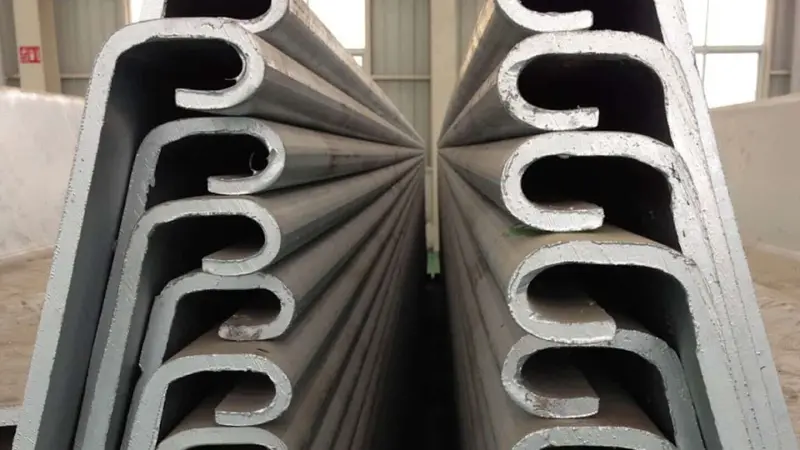
I have worked with steel sheet piles for years. I have supplied them for riverbank projects, port construction, and deep excavation supports. One of the biggest concerns my clients have is safety. They want to know if the wall will stand up to the pressure. Let me walk you through what the factor of safety means and how it is applied.
What is the factor of safety of sheet pile wall?
I get this question from many contractors. They are looking at design calculations and see this number. They are not always sure what it means or what a good number is.
The factor of safety for a sheet pile wall is typically between 1.5 and 2.0. It is a multiplier applied to the design to account for uncertainties in soil properties, loads, and calculation methods. The exact value depends on the design code, the type of project, and the designer’s judgment.
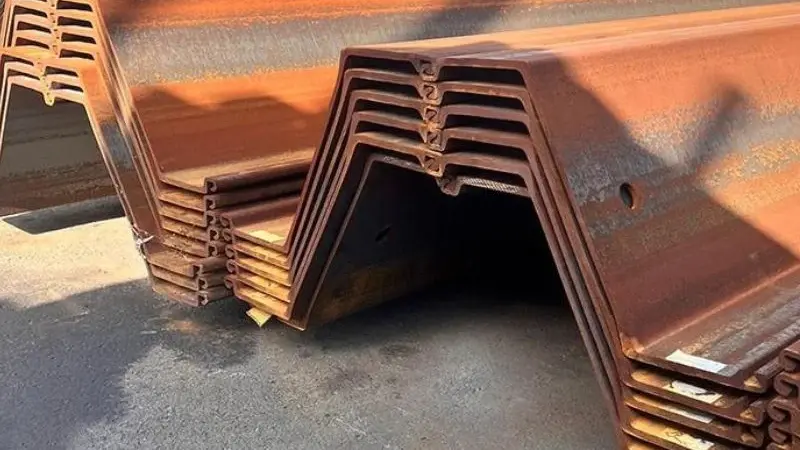
How the Factor of Safety Works
The factor of safety is a simple concept. But it has a big impact on the design. Let me explain how it works in practice.
The Balance of Forces
A sheet pile wall works by balancing two forces:
- Active Pressure: The soil behind the wall pushes the wall forward.
- Passive Pressure: The soil in front of the wall resists the movement.
The wall stays standing when the passive pressure is greater than the active pressure. The factor of safety is the ratio of the resisting force to the driving force.
Where the Factor of Safety Is Applied
There are two common ways to apply the factor of safety:
- Apply It to Passive Pressure: The designer divides the passive pressure by the factor of safety. This reduces the resisting force. The wall must be driven deeper to compensate.
- Apply It to Penetration Depth: The designer calculates the theoretical depth first. Then they multiply it by the factor of safety to get the actual depth.
Typical Values
The most common range for the factor of safety is 1.5 to 2.0. The exact number depends on:
- The design code you are using.
- The level of uncertainty in the soil conditions.
- The consequences of failure.
- Whether it is a temporary or permanent structure.
The Danish Method
The Danish Bulkhead Regulations, which have a long history in sheet pile design, used a scaling factor of √2 (about 1.41). This effectively increased the passive pressure by a factor of 2. This shows that factors of safety around 1.4 to 2.0 have been used for a long time.
A Real-World Example
In a design example for a cantilever sheet pile wall, the calculation used a factor of safety of 1.5. The designer reduced the passive pressure coefficient by dividing it by 1.5. This resulted in a penetration depth of 3.86 meters. Without the factor of safety, the wall would have been much shallower.
What are the factors of safety for pile design?
This is a broader question. People often think about sheet piles and driven piles in the same way. But the factors of safety can be different. The principles are the same, but the numbers can vary.
The factors of safety for pile design range from 1.5 to over 3.0. The value depends on the type of pile, the method of design, and the level of uncertainty. For working stress design, a global factor of safety is applied. For limit state design, partial factors are applied to different components.
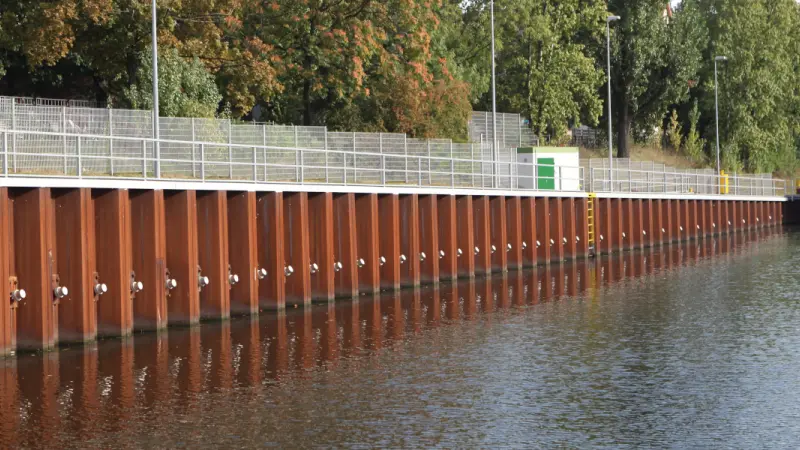
The Two Approaches to Safety Factors
There are two main ways to apply safety factors in pile design. Understanding both will help you read design documents.
1. Global Factor of Safety (Working Stress Design)
This is the traditional method. The designer uses a single factor of safety. It is applied to the overall design capacity. This method is simple and easy to understand. But it does not separate the different types of uncertainty. A typical global factor of safety is between 2.0 and 3.0 for driven piles.
2. Partial Factors of Safety (Limit State Design)
This is a newer method. It is used in codes like Eurocode 7. The designer applies separate factors to different parts of the design. For example:
- A factor on the soil strength.
- A factor on the applied loads.
- A factor on the pile material strength.
This method is more complex. But it gives a more consistent level of safety across different projects.
Factors That Influence the Safety Factor
The choice of the safety factor depends on many things. These are the main factors I consider.
Level of Site Investigation
If the site has been well investigated with many soil tests, the uncertainty is lower. A lower safety factor can be used. If the site investigation is limited, a higher factor is needed.
Type of Pile
Driven piles have a different safety factor than bored piles. Driven piles are installed in a more controlled way. Bored piles have more uncertainty about the soil conditions at the bottom.
Consequences of Failure
The safety factor is higher for a structure that will cause serious damage if it fails. For a port crane foundation, the factor will be higher than for a temporary excavation support.
Design Code Requirements
Many design codes specify minimum safety factors. You need to meet these requirements. For example, AS4678 in Australia results in an overall factor of safety between 1.7 and 2.3 for walls in cohesionless soil.
What does a 1.5 safety factor mean?
I often hear buyers ask this. They see "1.5" on a drawing and want to know what it means in simple terms. The answer is straightforward.
A 1.5 safety factor means the structure is designed to be 50% stronger than the theoretical requirement. If the calculated load is 100 units, the structure is designed to resist 150 units. This provides a margin for unexpected loads, material variations, and construction inaccuracies.
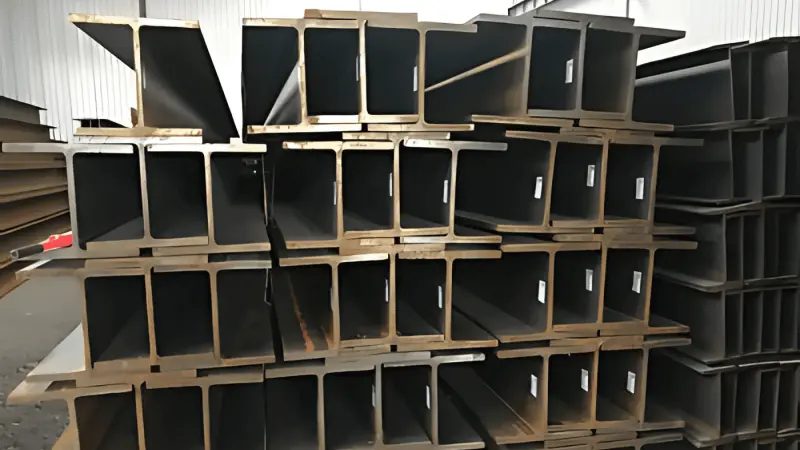
Interpreting the 1.5 Value
A safety factor of 1.5 is very common. It is the minimum in many design codes. For example, the FAA requires a factor of safety of 1.5 for normal, utility, and acrobatic category aircraft.
What It Really Means
- The design is 50% stronger than the minimum required.
- It provides a buffer against errors.
- It is a common standard for many engineering applications.
Is 1.5 Always Safe?
Not always. For sheet pile design, some situations need a higher factor of safety. A 1.5 factor is often the minimum. For marine applications or high water table conditions, you might need a higher factor.
How the Factor Is Applied in Practice
In sheet pile design, a 1.5 factor of safety is often applied to the passive pressure coefficient. The designer divides Kp by 1.5 to get a reduced value. This lower value is used in the design calculations. It effectively forces the designer to make the wall deeper and stronger.
A Simple Calculation Example
Imagine a cantilever sheet pile wall. The theoretical calculation says a 2-meter penetration is enough. But the designer applies a factor of safety of 1.5 to the passive pressure. The reduced passive pressure means the actual required penetration is 3 meters. The wall is now 50% deeper and stronger.
My Perspective
In my experience, a 1.5 factor of safety is a good starting point. But I always advise my clients to check the specific requirements of their project. If the soil is weak or the loads are high, a higher factor is a wise choice. I have seen projects where a 1.5 factor was enough and others where a 2.0 factor was needed. It always depends on the site conditions and the project’s risk level.
What is the factor of safety in design?
This is the most general question. It is about the concept itself. The factor of safety is a fundamental idea in engineering. It is about managing risk.
The factor of safety in design is a multiplier applied to the theoretical capacity of a structure. It is a margin for safety. It accounts for uncertainties in material strength, loads, calculations, and construction. It ensures that a structure will not fail even if things are not perfect.
Why Do We Need a Factor of Safety?
No design is perfect. There are always uncertainties. The factor of safety is how engineers deal with them. Let me break down the types of uncertainty.
1. Material Uncertainties
- The actual strength of the steel or soil can vary from the design values.
- Material properties from a lab test may not match the conditions on site.
2. Load Uncertainties
- The actual loads on the structure may be different from the design loads.
- There can be unexpected loads, like floods, earthquakes, or vehicle impacts.
3. Calculation Uncertainties
- The design models are simplifications of reality.
- The earth pressure theories we use are not perfectly accurate.
4. Construction Uncertainties
- The construction may not be exactly as specified.
- There can be defects in the materials or workmanship.
5. The "Forgotten" Factor
- The structure may need to handle future changes.
- It might need to support a heavier load than originally planned.
How the Factor of Safety Is Chosen
The choice of the factor of safety is not random. It is a balance between safety and cost. A higher factor of safety means a stronger, heavier, and more expensive structure. A lower factor means a cheaper structure but a higher risk of failure.
The Judgment Call
The designer uses their experience. They look at the code requirements. They assess the site conditions. They consider the consequences of failure. They then choose a factor of safety that is appropriate. It is a judgment call.
A Simple Summary
The factor of safety is the gap between what we design for and what could actually happen. It is the allowance for the unexpected. It is the reason that a sheet pile wall does not fail when the soil is a bit softer than expected.
Conclusion
The factor of safety in sheet pile design provides a crucial margin against uncertainties. It typically ranges from 1.5 to 2.0, ensuring walls remain stable under unexpected conditions and variations in soil properties.