Noise complaints, limited access, and difficult soil can slow down a project. If I choose the wrong installation method, costs increase and schedules slip.
The main sheet piling methods are press-in piling, vibratory driving, impact hammer driving, and water jetting. Each method suits different soil conditions, project environments, and construction requirements.
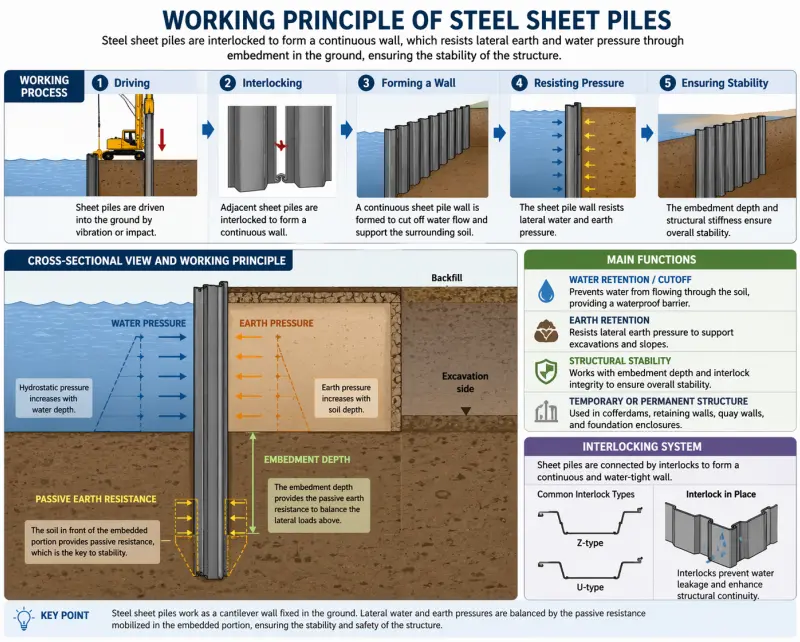
Common Sheet Pile Installation Methods
When I discuss sheet pile installation with contractors, I always start with site conditions. No single method works for every project. Soil type, nearby structures, groundwater level, and project timeline all affect the choice.
Press-In Piling Method
The press-in method uses hydraulic force to push sheet piles into the ground. The machine grips previously installed piles and uses reaction force to install the next pile.
Advantages:
- Very low noise
- Very low vibration
- Suitable for urban projects
- Minimal disturbance to nearby buildings
Limitations:
- Slower installation speed
- Higher equipment cost
- Requires reaction piles
Vibratory Hammer Method
This is one of the most common methods for steel sheet pile installation. A vibratory hammer creates high-frequency vibrations that reduce soil resistance.
Advantages:
- Fast installation
- Cost-effective
- Good for sand and loose soils
- Easy pile extraction
Limitations:
- Generates vibration
- Not ideal near sensitive structures
- Less effective in dense soils
Impact Hammer Method
Impact hammers repeatedly strike the pile head to drive sheet piles into the ground.
Advantages:
- Effective in dense soils
- Suitable for deep penetration
- High driving force
Limitations:
- High noise level
- Significant vibration
- Environmental restrictions in urban areas
Water Jetting Method
Water is injected around the pile tip to loosen soil and reduce penetration resistance.
Advantages:
- Helps in dense sand
- Reduces driving resistance
- Improves installation speed
Limitations:
- Requires water management
- May affect soil stability
- Often used with other methods
Comparison of Sheet Pile Installation Methods
| Method | Noise Level | Vibration Level | Installation Speed | Urban Suitability |
|---|---|---|---|---|
| Press-In | Very Low | Very Low | Medium | Excellent |
| Vibratory | Medium | Medium | Fast | Moderate |
| Impact Hammer | High | High | Medium | Limited |
| Water Jetting | Low | Low | Fast | Good |
My Practical View
In my experience, contractors often focus only on equipment cost. I think that approach can create problems later. A cheaper installation method may lead to complaints, delays, or damage claims if the site is in a busy city.
For urban excavation projects, I usually recommend press-in piling. For riverbank protection and temporary retaining walls in open areas, vibratory driving often provides the best balance between speed and cost.
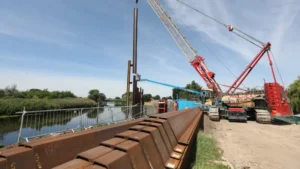
For example, in our Southeast Asia riverbank protection project, the contractor used vibratory equipment with hot rolled U type sheet piles. The installation was completed efficiently and the retaining wall achieved the required stability and water control performance.
I always tell clients that selecting the right installation method is just as important as selecting the right sheet pile profile.
What Are the Three Types of Piling?
Many buyers confuse piling methods with pile types. This confusion can lead to incorrect specifications and costly redesigns.
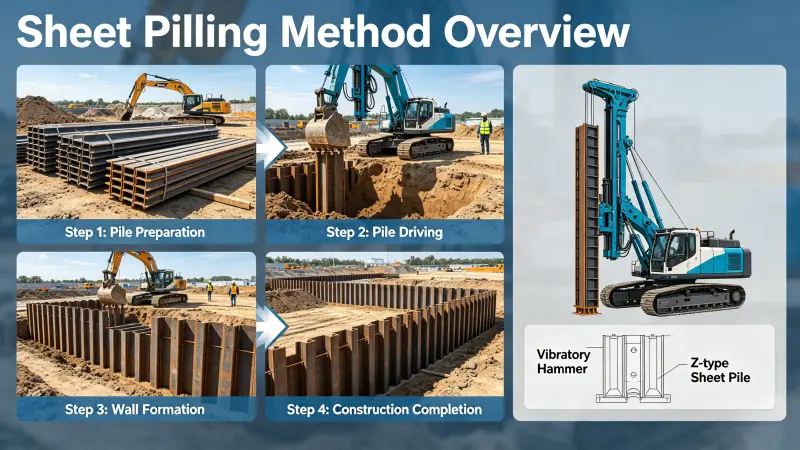
The three main categories of piling are driven piles, bored piles, and sheet piles. Each serves different structural and geotechnical purposes.
Driven Piles
Driven piles are installed by force. Equipment drives them into the ground using impact hammers, vibratory hammers, or hydraulic systems.
Common materials include:
- Steel piles
- Concrete piles
- Timber piles
Typical Applications
| Application | Suitability |
|---|---|
| Bridges | Excellent |
| Ports | Excellent |
| High-rise buildings | Good |
| Industrial plants | Excellent |
Bored Piles
Bored piles are created by drilling a hole and filling it with reinforced concrete.
Advantages
- Low vibration
- Large load capacity
- Flexible diameters
Applications
- Skyscrapers
- Hospitals
- Urban developments
- Sensitive sites
Sheet Piles
Sheet piles differ from traditional bearing piles. Their main purpose is soil retention and water control rather than vertical load support.
Common Uses
- Excavation support
- Riverbank protection
- Flood defense systems
- Seawalls
- Cofferdams
- Port structures
Comparison Table
| Pile Type | Main Function | Installation Method | Typical Material |
|---|---|---|---|
| Driven Pile | Load Bearing | Driving | Steel/Concrete |
| Bored Pile | Load Bearing | Drilling | Reinforced Concrete |
| Sheet Pile | Retaining Structure | Driving or Pressing | Steel |
My Practical View
I often see contractors compare sheet piles with bored piles. I believe this comparison can be misleading because the structures serve different purposes.
If the goal is ground retention, excavation support, or water cut-off, sheet piles are usually the better solution. They install faster and often reduce project costs.
If the goal is transferring heavy structural loads into deeper soil layers, bored piles or driven bearing piles are usually required.
That is why I always ask clients one question first: "Are you supporting soil, supporting a structure, or both?" The answer determines the piling system.
What Are the Different Types of Sheet Piles?
Many buyers focus only on pile length and ignore profile design. This can result in overdesign or insufficient structural capacity.
The most common sheet pile types are U-shaped, Z-shaped, straight web, flat sheet piles, and special cold-formed profiles. Each profile offers different strength, stiffness, and installation advantages.
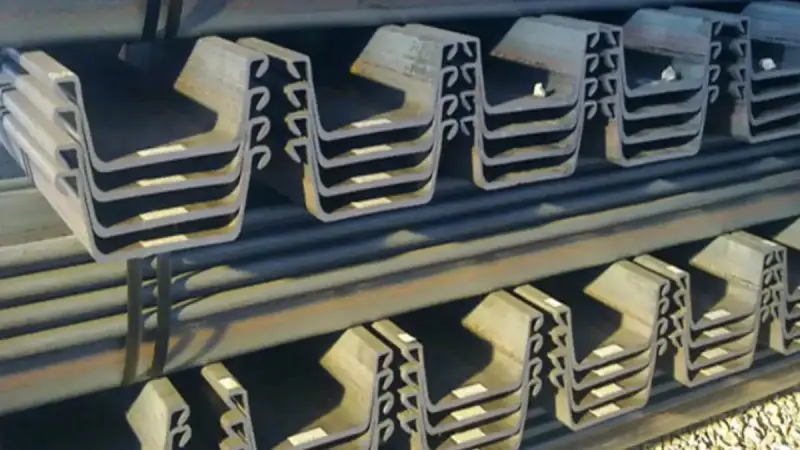
U-Shaped Sheet Piles
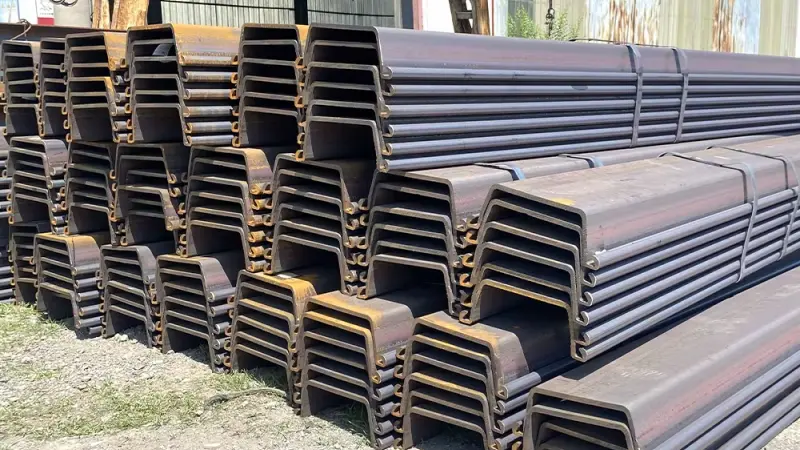
U-type sheet piles are among the most widely used products worldwide.
Key Features
- Strong interlock connection
- Easy installation
- High availability
- Cost-effective
Applications
- Temporary excavations
- Flood control
- Riverbank protection
- Foundation support
Z-Shaped Sheet Piles
Z profiles place interlocks on the outer edges. This creates a larger effective width and higher section modulus.
Advantages
- High bending resistance
- Efficient steel usage
- Ideal for deep walls
Applications
- Ports
- Seawalls
- Marine structures
- High retaining walls
Flat Sheet Piles
Flat sheet piles create circular or enclosed structures.
Typical Uses
- Cellular cofferdams
- Circular retaining walls
- Harbor structures
Straight Web Sheet Piles
Straight web profiles are mainly used in cellular construction.
Benefits
- High tensile resistance
- Suitable for large marine projects
Comparison Table
| Profile Type | Strength | Cost Efficiency | Common Application |
|---|---|---|---|
| U Type | High | Excellent | Riverbanks |
| Z Type | Very High | Excellent | Ports |
| Flat Type | Medium | Moderate | Cofferdams |
| Straight Web | High | Moderate | Marine Structures |
My Practical View
I supply U-shaped, Z-shaped, Ω-shaped, flat plate, disc type, cap type, and straight flange steel sheet piles to contractors in the Middle East, Africa, and Asia.
From what I see, U-type sheet piles remain the most popular option because they balance cost and performance very well.
For deep excavations and high-load marine projects, I usually suggest Z-type profiles because they provide higher section modulus and better bending performance.
I believe the best profile is not always the strongest profile. The best profile is the one that meets project requirements without wasting steel or increasing costs unnecessarily.