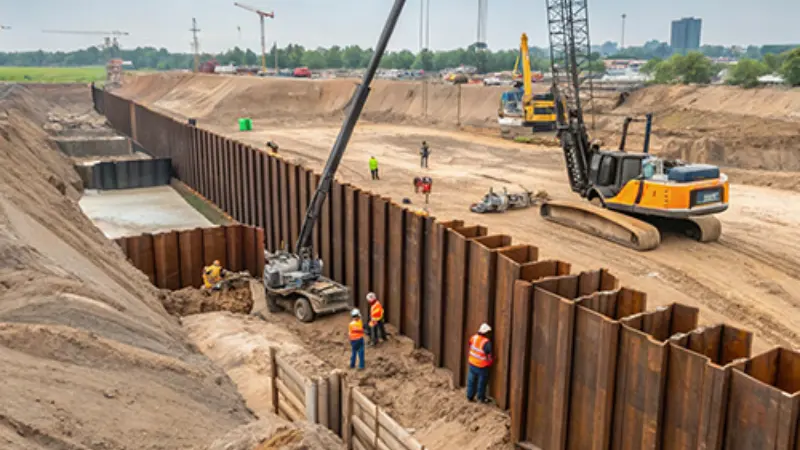
Construction delays often happen when the wrong piling hammer is selected for soil conditions and project requirements.
Vibratory hammers use rapid vibration to reduce soil resistance and speed up installation, while impact hammers use repeated high-force blows to drive piles into dense or hard ground. The "better" choice depends on soil type, noise limits, and project depth requirements.
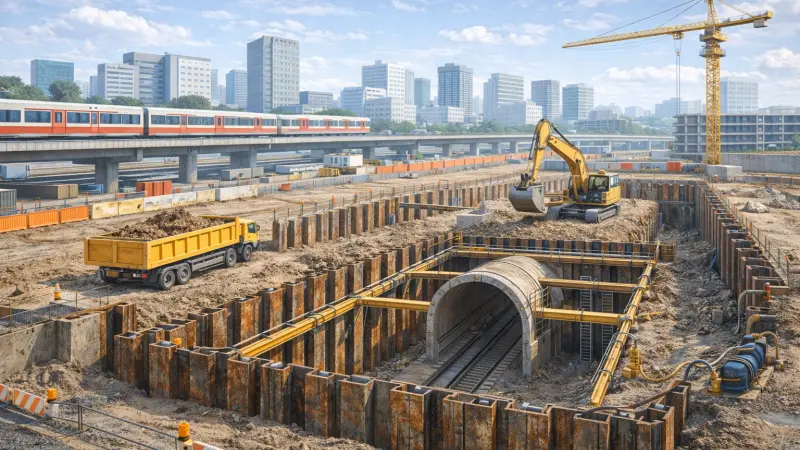
I often see teams argue about which hammer is stronger. This is not the right question. Strength is not the only factor. Soil condition and control matter more. In this article, I explain both systems from real construction use and my field experience.
For equipment selection and installation methods, see the Steel Piling Group pile driving methods page and the Sheet Piling Equipment Guide.
What is the strongest type of hammer?
Many people assume the strongest hammer is always the best choice. This is not correct in piling work.
The strongest type of hammer is generally the impact hammer, because it delivers high-energy blows that can penetrate dense soil, gravel layers, and hard ground conditions where vibration methods are not effective.
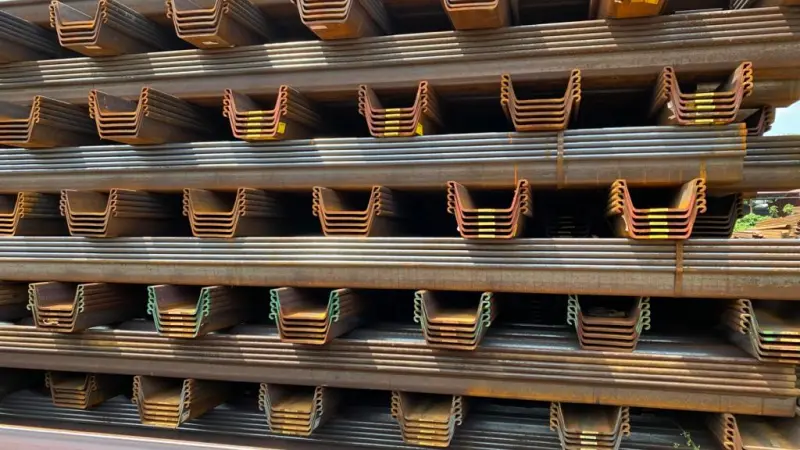
Understanding Strength in Piling
Strength in piling does not only mean force. It means controlled energy transfer.
An impact hammer works by:
- Dropping or striking a ram
- Transferring high energy into pile head
- Overcoming soil resistance layer by layer
A vibratory hammer works differently:
- Uses high-frequency vibration
- Reduces friction between soil particles
- Allows pile to sink under reduced resistance
When Strength Matters
Impact hammers are used when:
- Soil is very dense
- Gravel layers are present
- Deep penetration is required
- Vibratory systems fail to work
My Field Experience
I often see contractors choose vibratory systems first because they are faster.
But in hard soil projects, speed does not matter if the pile does not move.
In one port project I worked on, only impact hammers could reach final depth. Vibratory tools failed completely.
So I always say this. Strongest does not mean best. It means suitable for resistance level.
For impact hammer performance and selection, see the Steel Piling Group impact piling hammers page and the Ivor King vibratory driving solutions page.
What is an impact hammer for vibration?
Many people confuse impact hammers with vibratory systems. They are very different tools.
An impact hammer for vibration is a piling tool that uses repeated high-force impacts to drive piles into the ground, rather than continuous vibration, making it suitable for hard or compact soil layers.
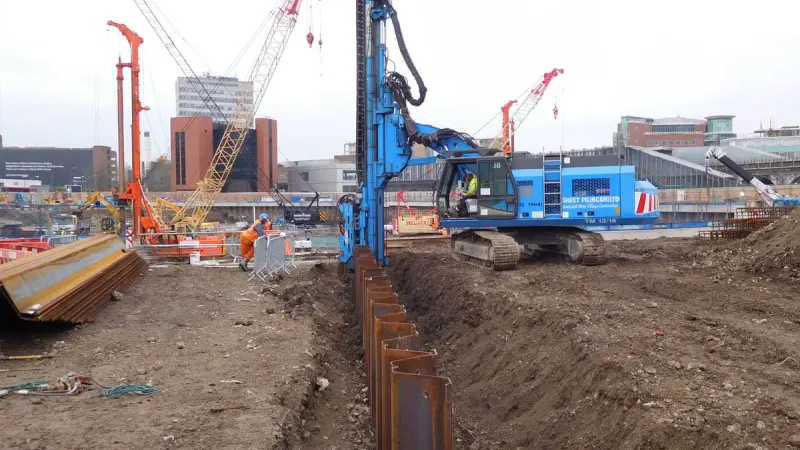
How It Works
Impact hammers work through:
- Repeated vertical strikes
- Direct force transfer
- Controlled energy release
Each strike pushes the pile deeper.
Difference From Vibratory Systems
| Feature | Impact Hammer | Vibratory Hammer |
|---|---|---|
| Force Type | Shock impact | Continuous vibration |
| Speed | Slower | Faster |
| Soil Type | Hard soil | Soft soil |
| Noise | High | Medium |
When It Is Used
Impact hammers are common in:
- Bridge foundations
- Dense urban ground
- Rocky soil layers
- Marine structures
My Practical View
I often choose impact hammers when I see unpredictable soil conditions.
Vibration systems can lose efficiency when soil changes suddenly.
Impact systems are more stable in performance.
For equipment comparison and driving methods, see the The Rothen Group pile driving equipment page and the Steel Piling Group installation plant overview.
What are impact hammers used for?
Many beginners think impact hammers are only for sheet piles. This is not true.
Impact hammers are used to drive different types of piles into the ground, including steel sheet piles, concrete piles, and timber piles, especially in dense or hard soil conditions where vibration is not effective.
Main Applications
Impact hammers are used for:
- Steel sheet pile driving
- Concrete pile foundations
- Bridge support structures
- Marine construction works
Why They Are Used
They are chosen when:
- Soil resistance is high
- Depth requirement is large
- Precision penetration is needed
Advantages
- High driving force
- Works in difficult soil
- Reliable penetration control
Limitations
- High noise level
- High vibration impact on surroundings
- Slower installation speed
My Field Experience
I often see impact hammers used in port construction.
In one river protection project, they were needed because soil had mixed clay and gravel layers.
Vibratory systems failed to maintain consistent penetration.
So we switched to impact hammers and achieved stable installation.
Which type of hammer is more commonly used?
This question depends on project type and soil condition.
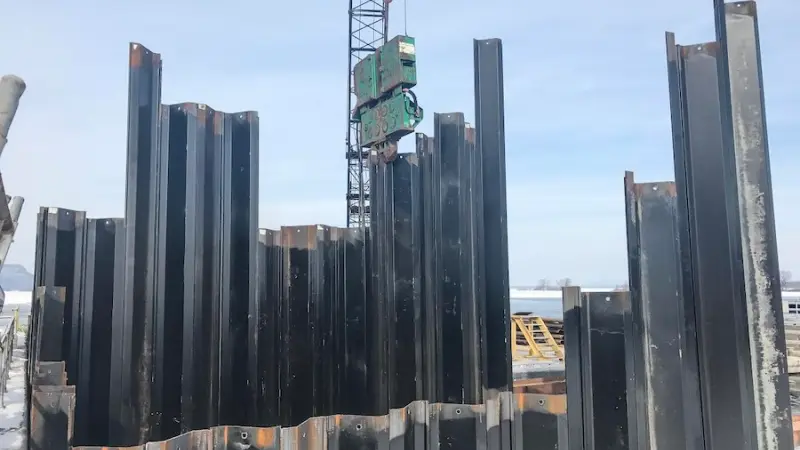
Vibratory hammers are more commonly used in modern sheet piling projects because they are faster, quieter, and more efficient in soft to medium soil conditions.
Why Vibratory Hammers Are Common
They are widely used because:
- Fast installation speed
- Lower noise compared to impact systems
- Efficient in sandy and soft soils
- Lower operational cost
Where They Are Used Most
- Urban excavation works
- Riverbank protection
- Temporary retaining walls
- Coastal construction
When Impact Hammers Dominate
Impact systems are still common in:
- Heavy foundation works
- Hard rock conditions
- Deep structural piling
My Observation
I see vibratory hammers used in about 70% of sheet pile installations globally.
But this does not mean they are always better.
They are simply more flexible in normal soil conditions.
For vibratory hammer applications and soil suitability, see the Ivor King vibratory driving solutions page and the Sheet pile with vibratory hammers guidance.
What hammer do most carpenters use?
This question is often misunderstood because it refers to general construction tools, not piling systems.
Most carpenters use claw hammers because they are versatile, lightweight, and suitable for driving nails and removing them during wood construction work.
Common Carpenter Hammer Types
- Claw hammer
- Ball peen hammer
- Framing hammer
Why Claw Hammers Are Most Common
They allow:
- Nail driving
- Nail removal
- Simple repair work
Difference From Piling Hammers
| Tool Type | Use Case | Scale |
|---|---|---|
| Carpenter hammer | Woodwork | Small |
| Vibratory hammer | Sheet piles | Large |
| Impact hammer | Deep foundations | Large |
My Clarification
I include this question often because people confuse industrial hammers with hand tools.
They are completely different systems.
One is for precision manual work. One is for ground engineering.
Which type of hammer is best?
This is the most important question, but also the most misunderstood.
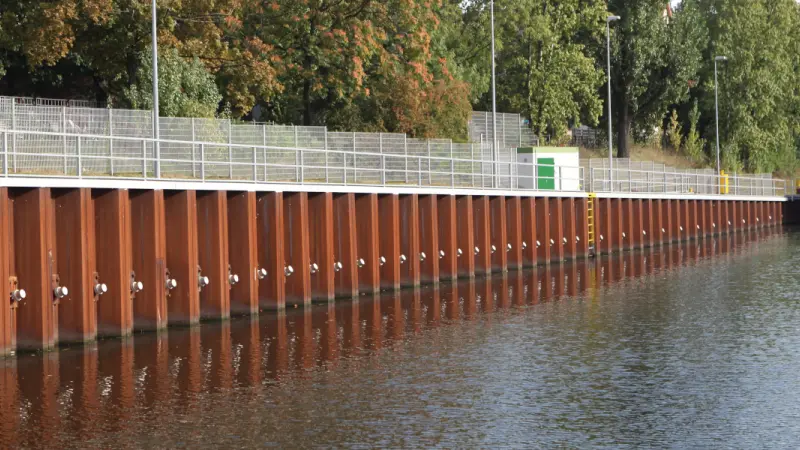
There is no single best hammer type. Vibratory hammers are best for speed and soft soils, while impact hammers are best for hard ground and deep penetration requirements.
Selection Factors
The correct choice depends on:
- Soil type
- Project depth
- Noise restrictions
- Speed requirements
- Equipment availability
Comparison Summary
| Factor | Vibratory Hammer | Impact Hammer |
|---|---|---|
| Speed | High | Medium |
| Strength | Medium | High |
| Noise | Lower | Higher |
| Soil Range | Soft to medium | Medium to hard |
My Field Experience
I never choose equipment based on "best."
I choose based on "fit."
In one urban project, vibration limits forced us to use silent press-in systems instead of both hammer types.
So real selection always depends on site constraints.
For method selection and project guidance, see the Steel Piling Group pile driving methods page and the ArcelorMittal Sheet Piling homepage.
Conclusion
Vibratory and impact hammers both play important roles in sheet piling installation, and the best choice always depends on soil conditions and project requirements.