Many construction sites face soil collapse, water leakage, and unstable excavation walls when protection is not installed early enough.
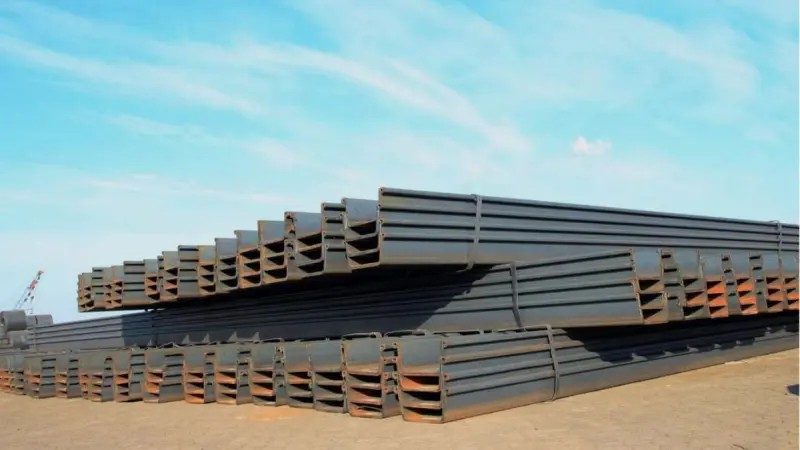
The sheet piling method is a construction technique where interlocking steel sheet piles are driven into the ground to form a continuous retaining wall that holds soil and controls groundwater. It works by creating a rigid barrier that resists lateral earth pressure.
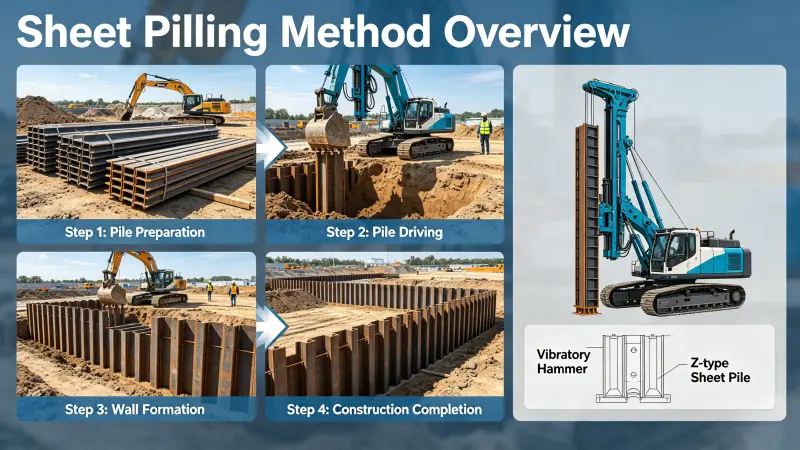
I often see contractors underestimate how important this method is in early-stage excavation planning. Sheet piling is not just steel installation. It is a full ground support system. In this article, I explain how the method works and how I evaluate real project conditions before recommending it.
For method overview and design context, see the ArcelorMittal installation page and the Steel Piling Group design guidance.
How does sheet piling work?
Many people think sheet piles only act as simple steel walls. This is not correct. The system works through soil resistance and interlock connection.
Sheet piling works by driving interlocking steel sections into the ground, forming a continuous wall that resists soil pressure and water movement through structural strength and embedded depth.
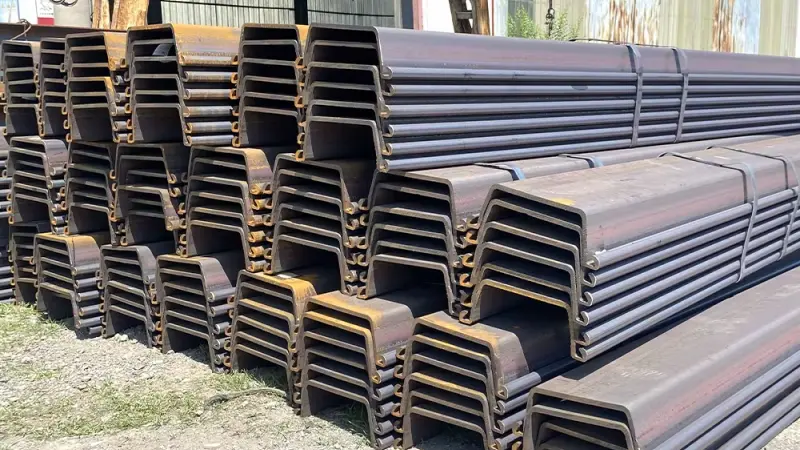
Basic Working Principle
The system depends on three key forces:
- Passive soil resistance in front of the wall
- Active earth pressure behind the wall
- Embedment depth below excavation level
When sheet piles are driven into the ground, they lock together. This creates a continuous barrier.
Installation Process
The working process usually follows:
- Position the first pile
- Align guide frame
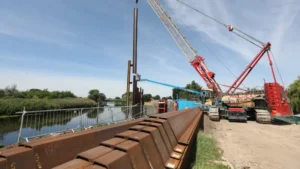
- Drive pile into soil
- Connect next pile through interlock
- Continue until full wall is formed
Structural Behavior
The wall behaves like a vertical beam.
It resists:
- Lateral soil pressure
- Groundwater pressure
- Temporary construction loads
My Field Experience
I often see people think deeper driving automatically means stronger walls. This is not always true.
In one riverbank project in Southeast Asia, stability improved not by deeper piles, but by better alignment and correct interlock connection.
My view is simple. Sheet piling works only when geometry, depth, and soil conditions work together.
For installation methodology and execution guidance, see the ArcelorMittal installation manual and the Steel Piling Group guidance notes.
How long do sheet piles last?
Many buyers worry about durability. This is a common question in coastal and river projects.
Steel sheet piles can last 40 to 100 years depending on soil condition, corrosion protection, water exposure, and maintenance strategy.
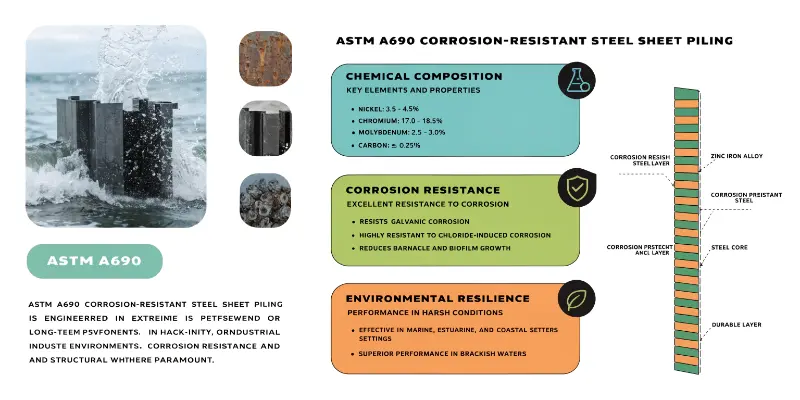
Main Factors That Affect Lifespan
The service life depends on:
- Corrosion rate
- Soil chemistry
- Water salinity
- Protective coatings
- Structural load cycles
Corrosion Environments
Different environments affect steel differently:
| Environment | Expected Life |
|---|---|
| Dry soil | 80–100 years |
| Freshwater | 50–80 years |
| Marine zone | 40–70 years |
| Industrial soil | 30–60 years |
Protection Methods
Common solutions include:
- Epoxy coatings
- Galvanization
- Cathodic protection
- Increased steel thickness
My Practical View
I always tell clients that sheet piles are not short-term materials.
In many permanent structures, they perform like long-life infrastructure components.
In my experience, corrosion protection is more important than steel grade selection in many coastal projects.
For durability and protection references, see the Steel Piling Group durability guidance and the ArcelorMittal installation manual.
How much does sheet piling cost per Metre UK?
Cost is one of the first questions in every project discussion.
In the UK, sheet piling typically costs between £250 and £1,000+ per metre depending on pile type, soil conditions, excavation depth, and installation difficulty.
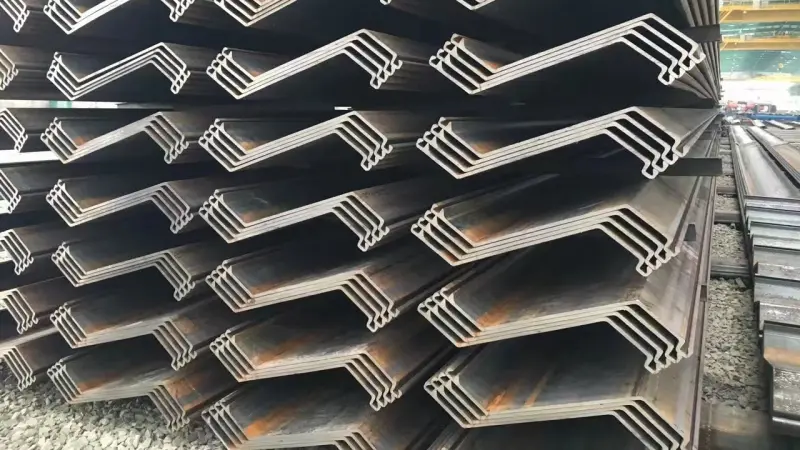
Cost Breakdown
The total cost includes:
- Material cost
- Installation cost
- Equipment mobilization
- Design and engineering
- Site constraints
Price Variation Factors
Costs change based on:
- Urban or rural site
- Groundwater level
- Soil hardness
- Wall height
- Access conditions
Example Cost Structure
| Item | Share of Cost |
|---|---|
| Steel piles | 40–60% |
| Installation | 20–35% |
| Equipment | 5–15% |
| Engineering | 5–10% |
My Observation
I often see buyers focus only on steel price.
But installation can become the largest cost factor in UK urban projects.
Traffic control, noise limits, and restricted access can double installation time.
My opinion is simple. Real cost is always project cost, not material cost.
For UK cost and specification context, see the Steel Piling Group specifiers’ guide and the Sheet Piling (UK) cost guidance.
What are the pros and cons of sheet piles?
Every construction method has strengths and limits. Sheet piling is no exception.
The main advantages are fast installation, strong soil retention, and good water control. The main disadvantages are noise, vibration, corrosion risk, and limited performance in very hard ground.
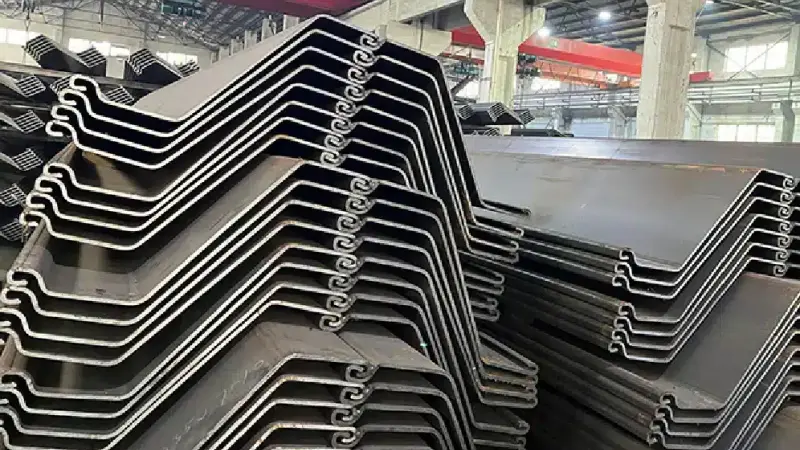
Advantages
Sheet piles provide:
- Fast construction speed
- Immediate structural support
- Good water sealing ability
- Reusable steel sections in temporary works
Disadvantages
Main limitations include:
- High noise during driving
- Vibration in urban areas
- Corrosion in marine zones
- Difficulty in rock layers
Comparison Table
| Factor | Advantage | Disadvantage |
|---|---|---|
| Speed | Very fast | None |
| Environment | Flexible | Noise issue |
| Soil range | Wide | Rock limitation |
| Durability | High | Needs protection |
My Field Insight
I think many disadvantages come from wrong method selection, not the system itself.
For example, vibration issues can be reduced by press-in methods.
So I always match installation method with site condition before deciding anything.
For temporary works and low-noise options, see the HSE Temporary Works guidance and the Keller sheet piles page.
How deep do sheet piles need to go?
Depth is one of the most important design elements in sheet piling systems.
Sheet piles typically need to be embedded 50% to 70% of the retained height, but final depth depends on soil strength, water pressure, and structural stability requirements.
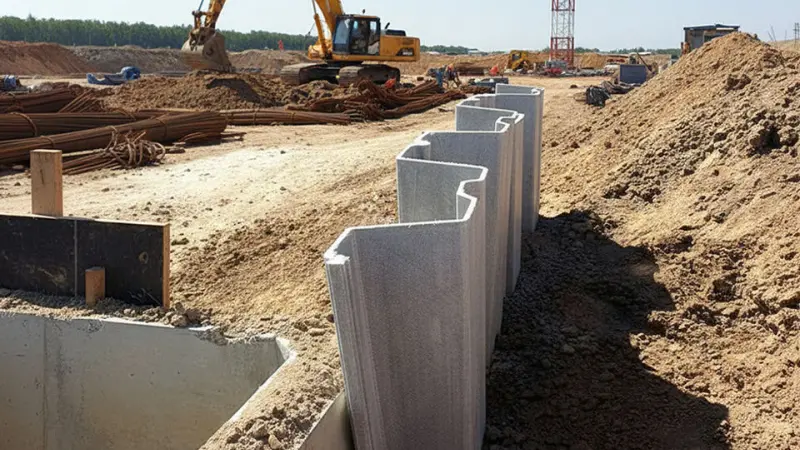
Why Depth Matters
The embedded part provides:
- Resistance against sliding
- Resistance against rotation
- Support against water pressure
Without enough depth, failure can happen even if the wall looks stable above ground.
Rule of Thumb
| Retained Height | Embedment Depth |
|---|---|
| 3 m | 1.5–2.1 m |
| 5 m | 2.5–3.5 m |
| 8 m | 4–5.6 m |
| 10 m | 5–7 m |
Soil Impact
Different soils change requirements:
- Clay needs deeper embedment
- Sand provides better friction
- Rock limits penetration depth
My Experience
I always avoid using rule-of-thumb alone.
I once saw a project where shallow embedment caused wall movement after heavy rain.
After redesign, deeper piles fixed the problem completely.
So I always trust soil data more than assumptions.
For embedment and design methodology, see the ArcelorMittal installation manual and the Steel Piling Group design guidance.
Do sheet piles need a capping beam?
Many beginners think sheet piles can stand alone. In most permanent works, this is not true.
A capping beam is often required to connect sheet piles, distribute loads evenly, and improve overall structural stability and alignment.
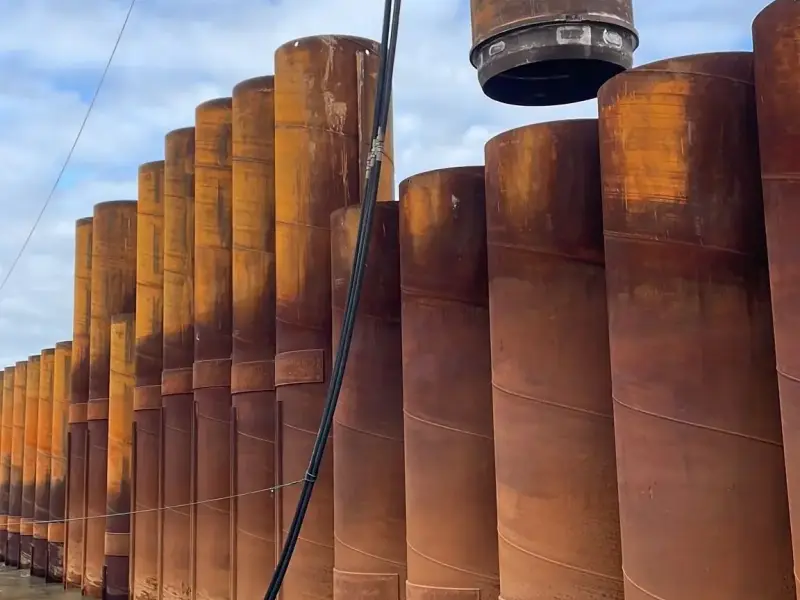
Function of Capping Beam
It provides:
- Structural connection between piles
- Load distribution
- Alignment control
- Protection of pile heads
Materials Used
Common materials include:
- Reinforced concrete
- Steel beams
When It Is Required
Capping beams are used in:
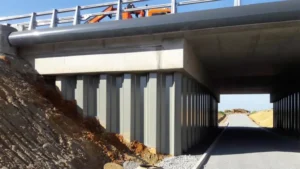
- Permanent retaining walls
- Marine structures
- High load environments
When It May Not Be Needed
- Temporary excavation support
- Short-term construction works
- Low height retaining systems
My Practical View
I usually recommend capping beams for long-term infrastructure.
In coastal projects, wave force creates uneven pressure on pile heads.
A capping beam keeps the system stable over time.
For capping beam detailing and structural context, see the Designing Buildings capping beam page and the Sheet Piling (UK) capping beam detail PDF.
Step-by-Step Sheet Piling Method Summary
The sheet piling method follows a clear sequence:
1. Site Preparation
Ground is cleared and leveled.
2. Setting Out
Alignment lines are marked.
3. Guide Frame Installation
A guide frame ensures vertical accuracy.
4. First Pile Installation
The first pile defines wall direction.
5. Driving Process
Piles are driven using vibratory or impact hammers.
6. Interlock Connection
Each pile connects to the next through interlocks.
7. Depth Control
Engineers check penetration during installation.
8. Finishing Works
Cutting and capping are completed if needed.
My Final View
I always see sheet piling as a system, not a material.
Success depends on planning, soil understanding, and correct installation control.
Good execution always matters more than equipment alone.
Conclusion
The sheet piling method is a reliable system for soil retention and water control when design and installation are properly managed.