Many construction delays happen not because of design errors, but because the wrong equipment is selected on site. This leads to slow installation, misalignment, and high cost.
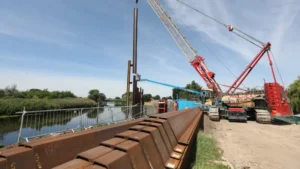
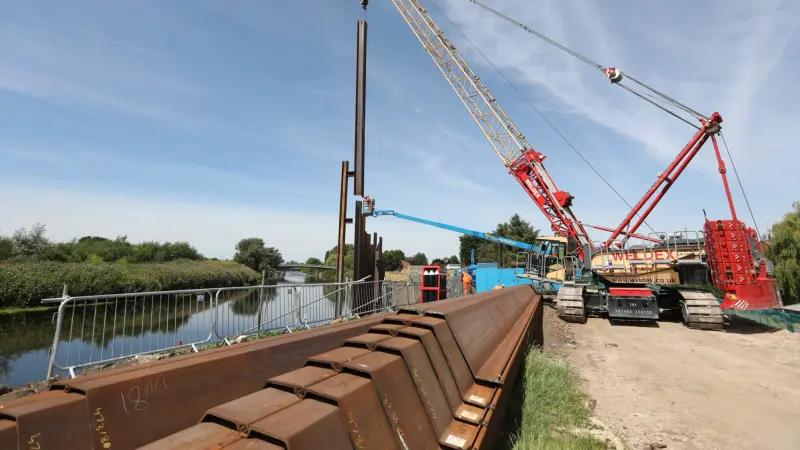
Sheet piling requires equipment such as vibratory hammers, impact hammers, crane systems, guide frames, and welding tools. These machines work together to drive steel sheet piles into the ground and ensure correct alignment, depth, and interlock connection.
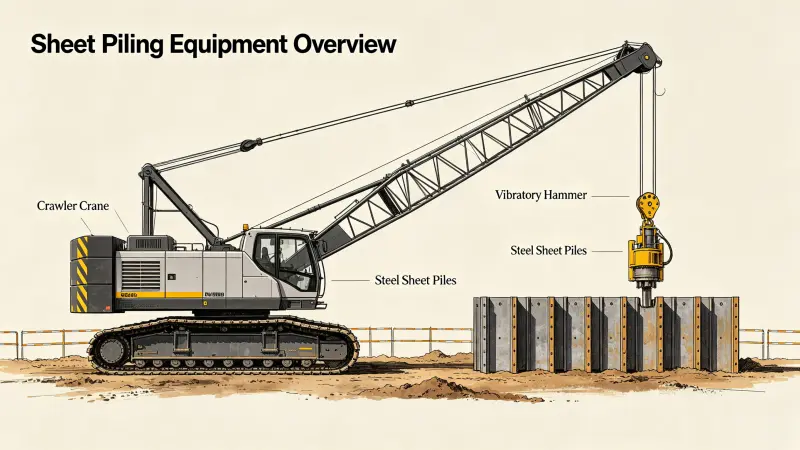
I often see contractors focus only on sheet pile type and steel grade. But equipment selection is just as important. The wrong hammer or crane setup can damage piles or slow the whole project. In this article, I explain the full equipment system and how I evaluate real construction sites before installation.
For equipment and installation overview, see the ArcelorMittal installation page and the ArcelorMittal installation manual.
What equipment is needed for sheet piling?
Many people think sheet piling only needs a hammer. This is not correct. The system depends on several connected machines working together.
The main equipment needed for sheet piling includes cranes, vibratory hammers, impact hammers, leader systems, guide frames, welding machines, and cutting tools for pile preparation and installation.
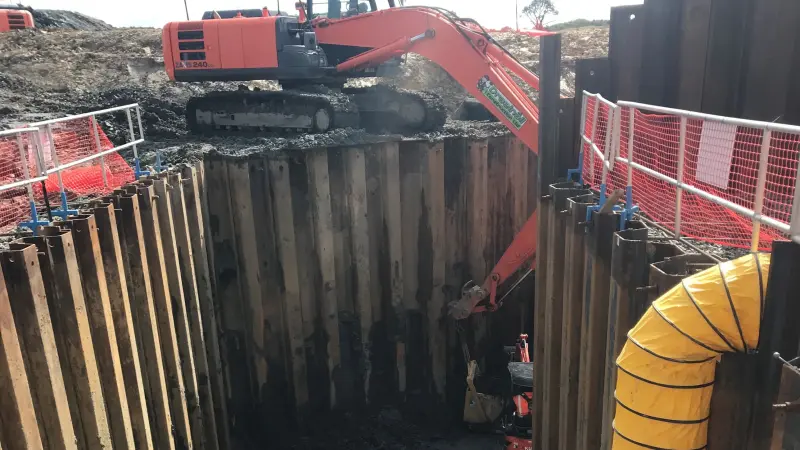
Main Installation Equipment
Each machine has a specific role in the process.
Crane System
The crane lifts and positions sheet piles.
It must have:
- Enough lifting capacity
- Good stability
- Long boom reach
Without a proper crane, alignment becomes difficult.
Vibratory Hammer
This is the most common tool for sheet piling.
It works by vibration to reduce soil resistance.
Advantages:
- Fast installation
- Efficient in sandy soil
- Lower driving resistance
Impact Hammer
This hammer uses repeated blows.
It is used in hard soil conditions.
Advantages:
- High driving force
- Works in dense soil layers
Guide Frame System
A guide frame controls alignment.
It helps prevent:
- Tilting
- Rotation
- Interlock misalignment
Auxiliary Equipment
Other tools include:
- Welding machines for connections
- Cutting tools for pile heads
- Measuring instruments
- Hydraulic power units
My Field Experience
I often see small contractors underestimate the importance of guide frames.
In one project, the first few piles were installed without a proper guide system. The entire wall shifted slightly. This created extra rework and cost.
My view is simple. Good equipment setup prevents future correction work.
For modern driving methods and equipment guidance, see the Steel Piling Group guidance notes and the Keller sheet piles page.
How are sheet pilings installed?
Installation is not a single action. It is a controlled process that requires sequencing and monitoring.
Sheet pilings are installed by setting out the alignment, positioning the first pile, driving piles into the ground using vibratory or impact hammers, connecting interlocks, and continuously checking depth and vertical alignment.
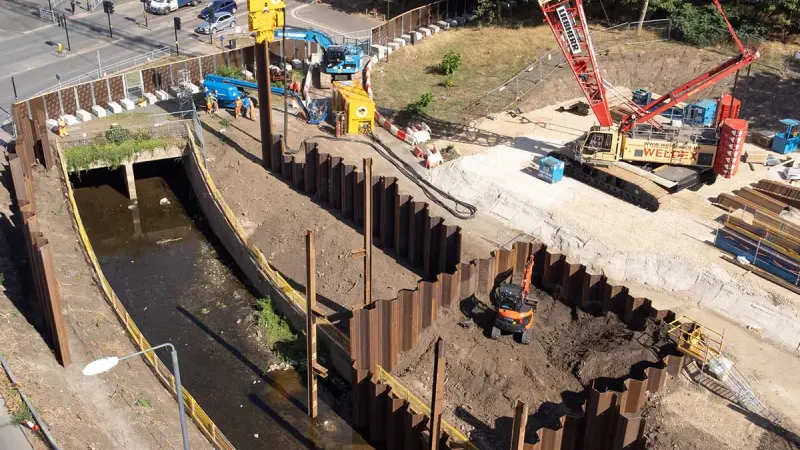
Step-by-Step Process
1. Site Preparation
The ground is cleared and leveled.
Access for cranes is prepared.
2. Setting Out
Surveyors mark the wall line.
This defines the full alignment.
3. First Pile Installation
The first pile controls the direction.
If this step is wrong, the whole wall will shift.
4. Driving Process
The hammer drives piles into soil.
Vibration or impact is used depending on soil type.
5. Interlock Connection
Each pile locks with the next one.
This creates a continuous wall system.
6. Depth Control
Engineers check penetration depth.
They ensure design requirements are met.
Installation Methods
| Method | Equipment Used | Best Soil Type |
|---|---|---|
| Vibratory Driving | Vibratory hammer | Sand, soft soil |
| Impact Driving | Diesel or hydraulic hammer | Dense soil |
| Press-in Method | Hydraulic press system | Urban zones |
My Practical Observation
I often see installation speed being prioritized too much.
But sheet piling is not only about speed. It is about control.
In our Southeast Asia riverbank project, vibratory equipment was used. The installation was fast, but alignment checks were done every few piles. This prevented long-term structural issues.
For installation methodology and execution guidance, see the ArcelorMittal installation manual and the Steel Piling Group design guidance.
What materials are used for sheet piling?
Many buyers think sheet piles are only made from one type of steel. This is not correct.
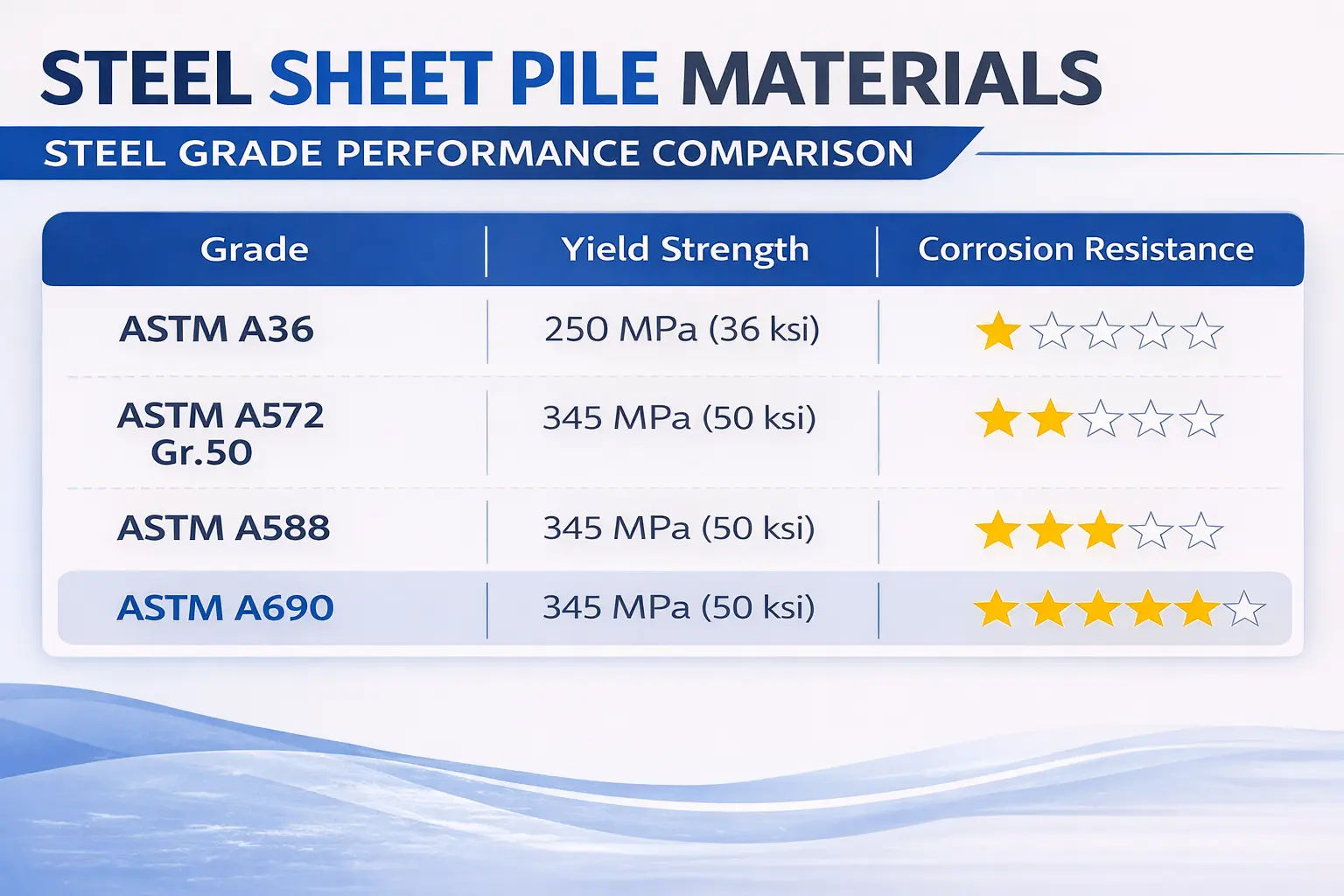
Sheet piles are mainly made from hot rolled steel, cold formed steel, and in some cases composite materials depending on strength requirements, corrosion conditions, and project design.
Hot Rolled Steel
This is the most common material.
Advantages:
- High strength
- Good interlock performance
- Suitable for heavy loads
Used in:
- Ports
- Deep excavations
- Flood protection
Cold Formed Steel
Made by bending steel sheets at room temperature.
Advantages:
- Lower cost
- Lighter weight
- Flexible design
Used in:
- Temporary works
- Light retaining walls
Composite Materials
Less common but growing.
They combine steel with coatings or polymers.
Advantages:
- High corrosion resistance
- Longer lifespan
Material Comparison Table
| Material Type | Strength | Cost | Durability |
|---|---|---|---|
| Hot Rolled Steel | High | Medium | High |
| Cold Formed Steel | Medium | Low | Medium |
| Composite | High | High | Very High |
My View
I often recommend hot rolled steel for most structural projects.
I see cold formed sections used in temporary works, but they are not suitable for deep excavation in most cases.
Material selection must always match soil conditions and design load.
For material and product range references, see the ArcelorMittal Sheet Piling homepage and the ArcelorMittal cold formed sections page.
Do sheet piles need a capping beam?
Many beginners assume sheet piles can stand alone without connection at the top.
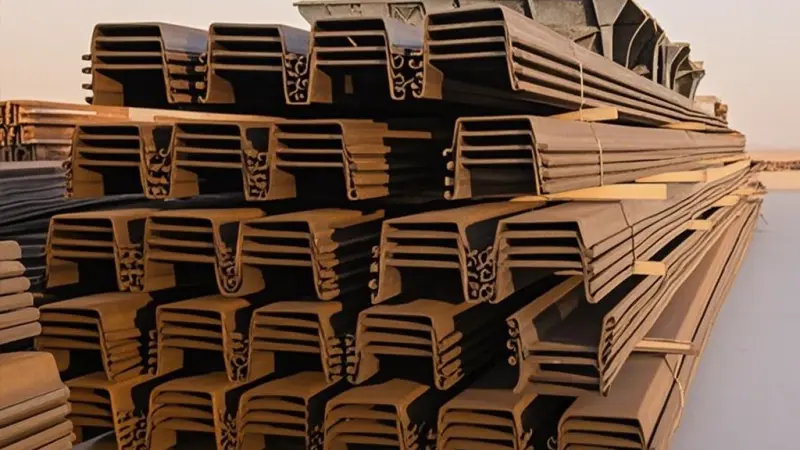
Sheet piles often need a capping beam to connect all pile heads, distribute loads evenly, and improve structural stability and alignment control, especially in permanent structures.
What Is a Capping Beam
A capping beam is a structural beam placed on top of sheet piles.
It can be:
- Reinforced concrete
- Steel beam system
Main Functions
- Connect all piles
- Distribute loads
- Improve alignment
- Protect pile heads
When It Is Needed
- Permanent retaining walls
- Marine structures
- High load environments
When It May Not Be Needed
- Temporary excavation support
- Short-term works
- Light load projects
My Field Experience
I usually recommend capping beams for long-term infrastructure.
In marine environments, wave force creates uneven pressure on pile heads.
Without a capping beam, small movement can grow over time and affect stability.
For capping beam detailing and structural context, see the Designing Buildings capping beam page and the Sheet Piling (UK) capping beam detail PDF.
How deep should sheet piling be installed?
Depth is one of the most important design factors in sheet piling systems.
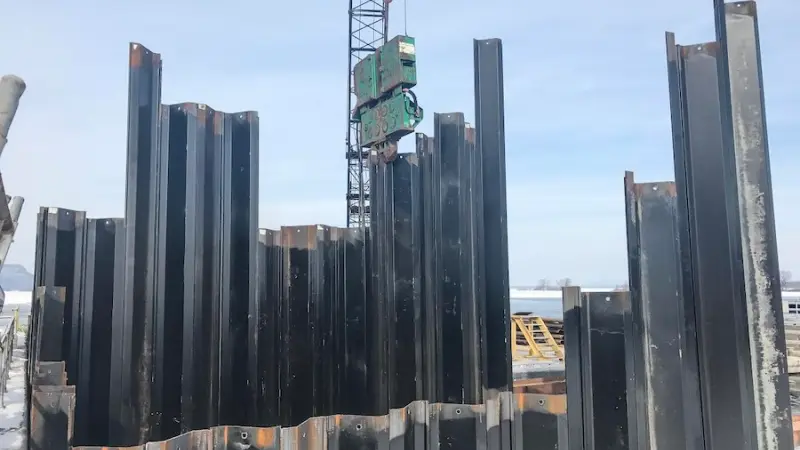
Sheet piling is usually installed to a depth where embedment equals 50% to 70% of retained height, but final depth depends on soil strength, water pressure, and structural design requirements.
Why Depth Matters
The embedded part resists:
- Soil pressure
- Water pressure
- Rotation force
- Sliding force
Without enough depth, failure risk increases.
Rule of Thumb Table
| Retained Height | Embedment Depth |
|---|---|
| 3 m | 1.5–2.1 m |
| 5 m | 2.5–3.5 m |
| 8 m | 4–5.6 m |
| 10 m | 5–7 m |
Soil Influence
Different soils affect depth:
- Clay needs deeper embedment
- Sand provides friction support
- Rock limits penetration
My Practical View
I never rely only on simple rules.
I always check soil investigation reports before final design.
In one project, deeper embedment solved a long-term movement issue that appeared after heavy rain.
So I always treat depth as a safety factor, not just a number.
For embedment and design methodology, see the ArcelorMittal installation manual and the Steel Piling Group design guidance.
What are the three types of piling?
Many people think piling is only one system. In reality, it includes different foundation methods.
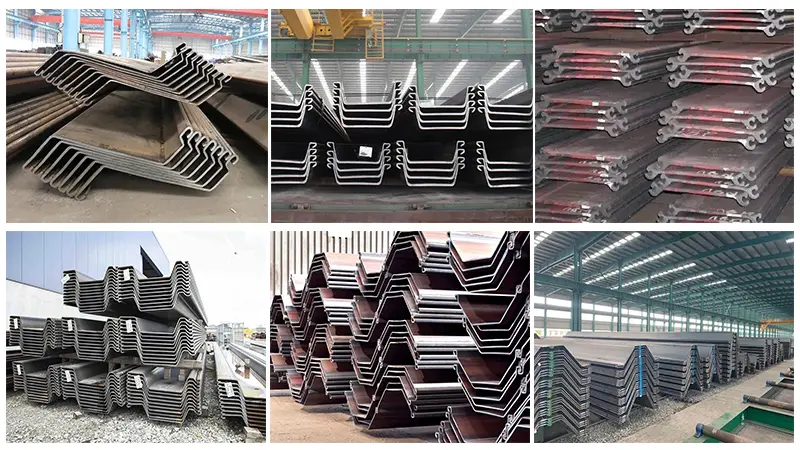
The three main types of piling are driven piles, bored piles, and sheet piles, each serving different structural and geotechnical functions in construction projects.
Driven Piles
Installed by hammering into the ground.
Used for:
- Deep foundations
- High load structures
Bored Piles
Constructed by drilling and filling with concrete.
Used for:
- Urban construction
- Low vibration areas
Sheet Piles
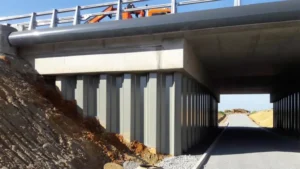
Used for soil retention and water control.
Used for:
- Excavation support
- Retaining walls
- Flood protection
Comparison Table
| Pile Type | Main Function | Installation |
|---|---|---|
| Driven Pile | Load support | Driven |
| Bored Pile | Load support | Drilled |
| Sheet Pile | Soil retention | Driven/pressed |
My Experience
I often explain this classification to new buyers.
Many confuse sheet piles with load-bearing piles.
But sheet piles are mainly earth retention systems, not vertical load foundations.
Understanding this difference prevents design mistakes.
For driven pile and foundation references, see the Deep Foundations Institute and the HSE Temporary Works guidance.
Conclusion
Sheet piling equipment works as a system where cranes, hammers, and guide structures all support safe and accurate installation.