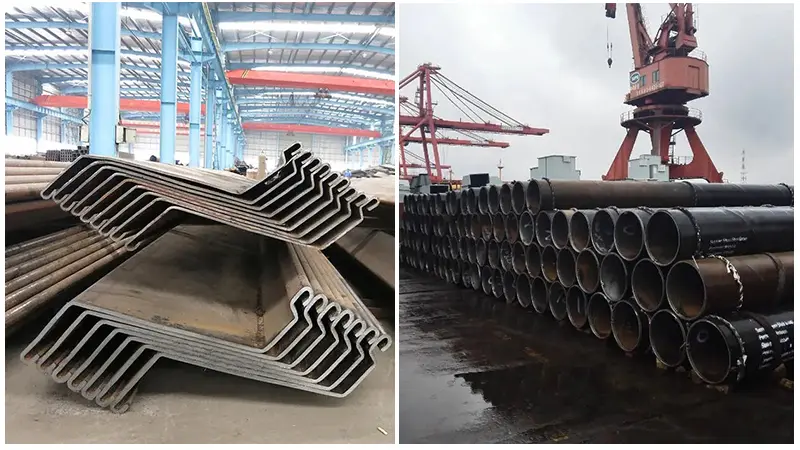
Choosing the right pile system can save time, cost, and headaches on your construction project. Making the wrong choice leads to delays and higher expenses. For background on deep foundations and piling systems, see Deep foundations and Piling.
Steel sheet piles and pipe piles serve similar purposes but differ in installation, strength, cost, and application. Understanding these differences ensures the right foundation solution for your project. For related references, see Sheet piling, What is Sheet Piling?, and What Is Pipe Pile? .
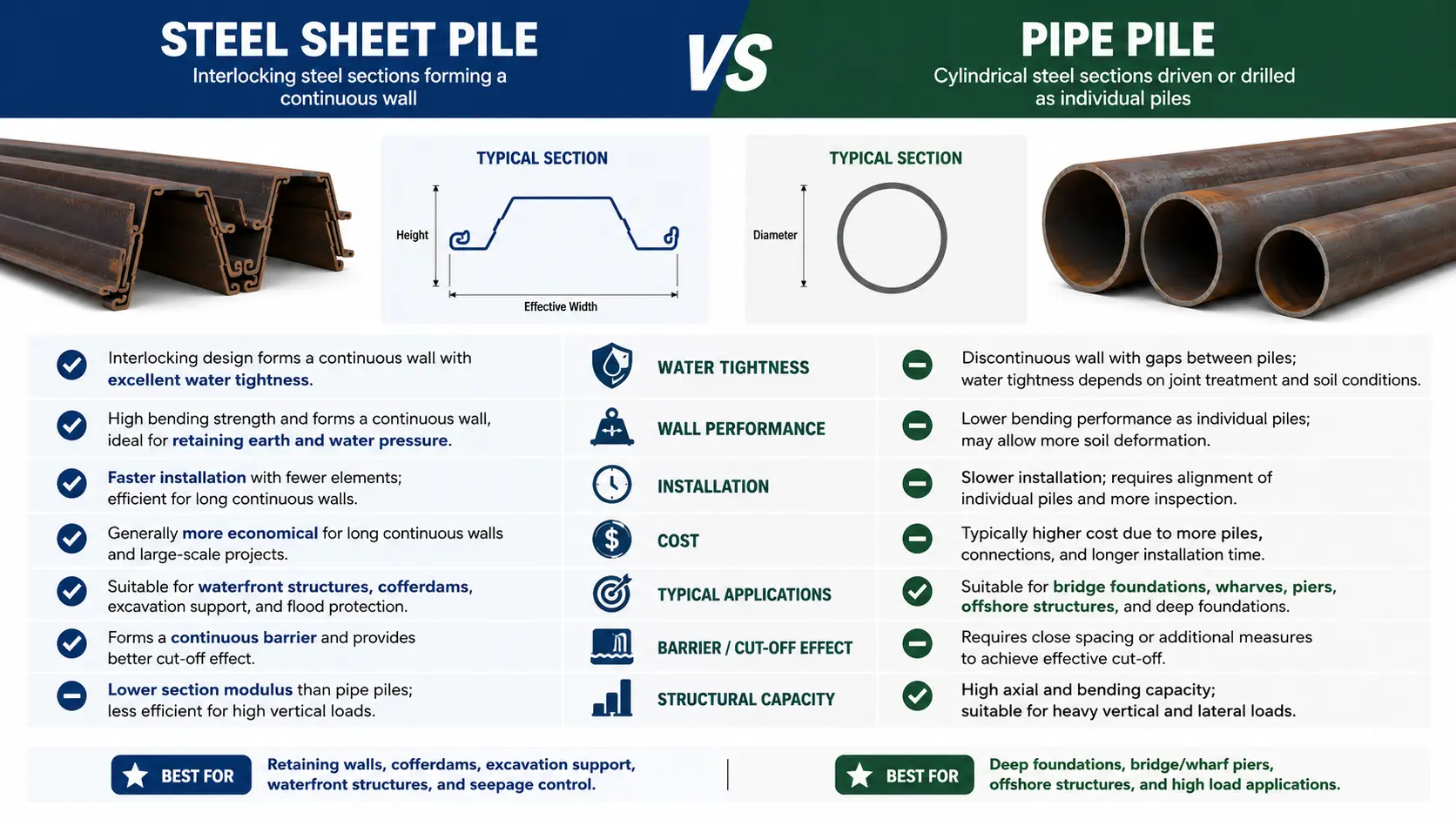
To make the best choice for your project, we need to examine installation methods, structural performance, cost efficiency, and suitable applications in detail. For more on sheet pile systems, see Sheet Piling Explained and Steel Sheet Pile .
How Do Steel Sheet Piles and Pipe Piles Differ in Installation Methods?
Installation can make or break a project. Fast, smooth piling prevents delays and reduces risks on site. For general pile-driving context, see Pile driver and Sheet piles .
Steel sheet piles are usually driven with vibratory hammers, while pipe piles can be driven or bored. Each method affects speed, noise, and soil impact. More on installation methods is available in Sheet Piling Explained and Pipe pile .
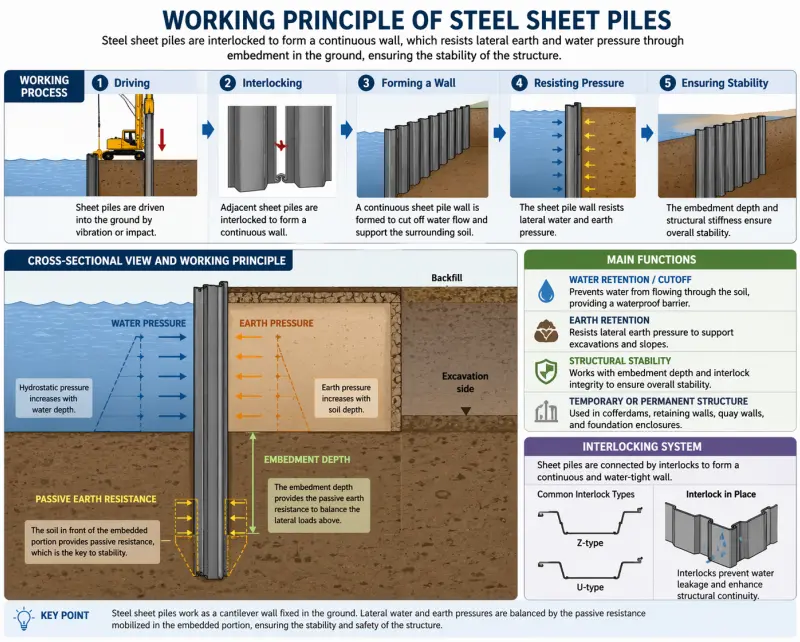
Installation Techniques Overview
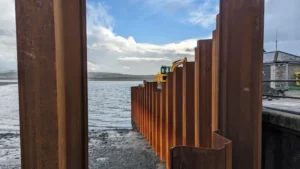
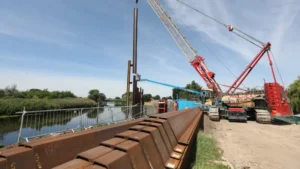
Steel sheet piles are typically interlocking, U-shaped or Z-shaped sections. They are driven vertically into the ground using vibratory hammers or impact hammers. This method is fast for soft to medium soil but can cause vibrations near existing structures. The interlocking system ensures water-tight walls, making them ideal for riverbanks and cofferdams. See sheet piling and Sheet piling explained .
| Pipe piles, on the other hand, are cylindrical steel tubes. They can be installed by driving, jetting, or bored methods. Driving is fast in firm soil but may require pre-drilling in dense soils. Bored piles reduce vibration but take longer to install. Pipe piles are excellent for deep foundations or areas with high load requirements. For more detail, see What Is Pipe Pile? and Pipe pile | Factor | Steel Sheet Piles | Pipe Piles |
|---|---|---|---|
| Installation Method | Vibratory / impact driving | Driving, jetting, boring | |
| Speed | Fast in soft soils | Variable, slower if bored | |
| Soil Disturbance | Medium | Low if bored, high if driven | |
| Noise & Vibration | Medium | High if driven, low if bored | |
| Special Equipment | Vibratory hammer, crane | Pile driver, boring rig |
I have observed projects in Southeast Asia where steel sheet piles completed riverbank walls in days, whereas pipe piles took weeks for deep pier foundations. The choice affects project schedules and neighboring structures. For practical examples of sheet pile applications, see Sheet Pile Types and Applications.
Which Pile System Offers Superior Load-Bearing Capacity and Structural Stability?
Choosing the wrong pile can compromise safety. Foundations must support massive loads reliably. For foundation capacity context, see Deep foundations and Pipe pile [web:3][web:16].
Pipe piles often offer higher axial load capacity due to their solid cross-section, while steel sheet piles provide lateral support with interlocking strength. See also What Is Pipe Pile? and Sheet piles.
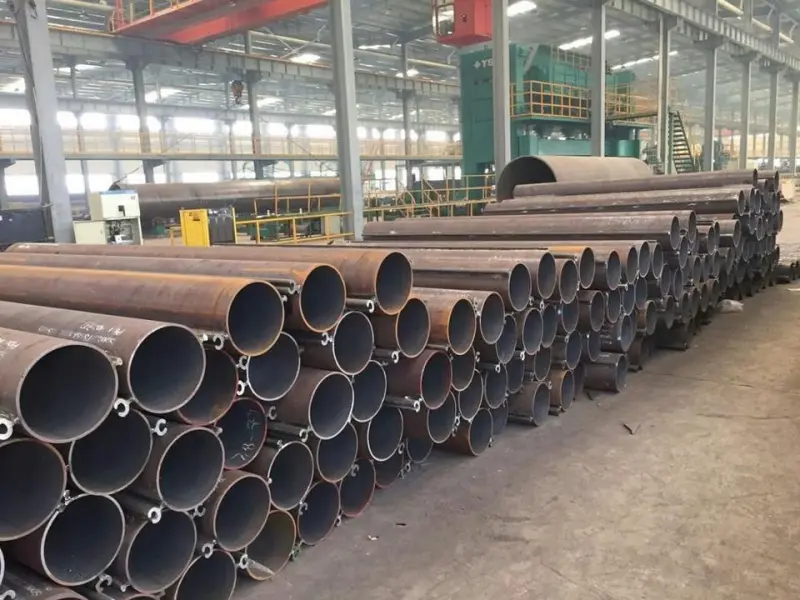
Structural Performance Comparison
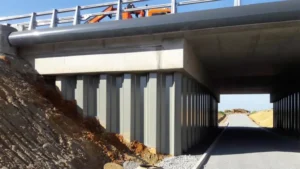
Steel sheet piles rely on interlocking sections to form continuous walls. They resist lateral pressures from soil and water. Their strength comes from wall thickness, steel grade, and shape. Hot rolled U-type sheets are stronger than Z-type cold-formed sections. They provide stability for retaining walls, flood protection, and excavations. For more, see Sheet piling explained and Sheet pile types and applications .
Pipe piles handle vertical loads exceptionally well. The circular cross-section distributes stress evenly. They can penetrate deep soils for tall structures. Filled or closed-end pipes increase load capacity. Pipe piles resist bending and buckling effectively, making them suitable for bridge piers and heavy industrial foundations. For additional background, see What Is Pipe Pile? .
| Factor | Steel Sheet Piles | Pipe Piles |
|---|---|---|
| Load Type | Lateral & some axial | Primarily axial |
| Strength | Medium to high depending on grade | High |
| Stability | Interlocking walls | Deep embedment |
| Flexibility | Moderate | High for tall structures |
| Example Use | Retaining walls, riverbanks | Bridge foundations, deep piers |
From personal experience, combining sheet piles for lateral containment and pipe piles for vertical load can optimize structural stability in mixed soil projects. For related marine and deep foundation use cases, see Steel Sheet Pile and Sheet piles.
What Are the Cost and Material Efficiency Differences Between Steel Sheet Piles and Pipe Piles?
Cost surprises can ruin budgets. Efficient material use saves money and reduces waste. For cost context in sheet piling systems, see Sheet piling explained and Sheet Pile Types and Applications.
Steel sheet piles usually require less steel per meter of wall, reducing material cost, while pipe piles may cost more due to thickness and depth requirements. For pipe pile material details, see What Is Pipe Pile? and Pipe pile .
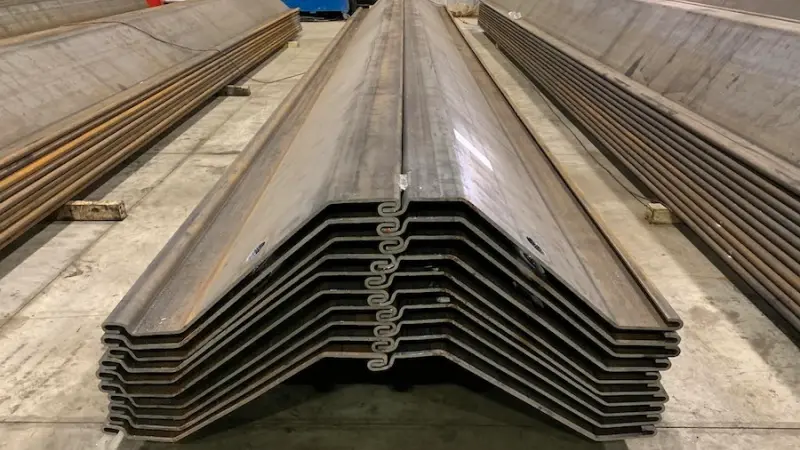
Comparing Material and Cost
Steel sheet piles are rolled sections. They are thin but wide, creating continuous walls with minimal steel. Installation speed reduces labor costs. The interlocking design minimizes gaps and material waste. Hot rolled sheets may be costlier initially but save time and labor. See sheet piles and Steel Sheet Pile .
Pipe piles are solid or thick-walled tubes. They use more steel per unit length. Deep pile requirements increase cost. Installation requires heavier equipment and sometimes specialized rigs. Jetting or boring methods add operational cost. However, pipe piles offer higher load-bearing capacity, which may reduce the number of piles required for heavy structures. For more, see What Is Pipe Pile? .
| Factor | Steel Sheet Piles | Pipe Piles |
|---|---|---|
| Material Usage | Moderate | High |
| Steel Cost | Medium | High |
| Labor & Installation | Lower | Higher |
| Waste | Low | Medium |
| Overall Cost | Competitive for walls | Higher for deep foundations |
In my observations, for a riverbank project, sheet piles delivered cost savings of 20% compared to pipe piles while achieving sufficient lateral support. For deep bridge foundations, pipe piles were unavoidable. For more on river and marine applications, see Exploring the role of sheet piling in construction .
Which Construction Projects Are Better Suited for Steel Sheet Piles or Pipe Piles?
Choosing the right project type ensures safety, efficiency, and cost control. For practical guidance, see Sheet Pile Types and Applications and Steel Sheet Pile.
Steel sheet piles excel in retaining walls, flood protection, and excavations, while pipe piles are ideal for heavy load foundations and deep marine structures. More background is available in What is Sheet Piling? and What Is Pipe Pile? .
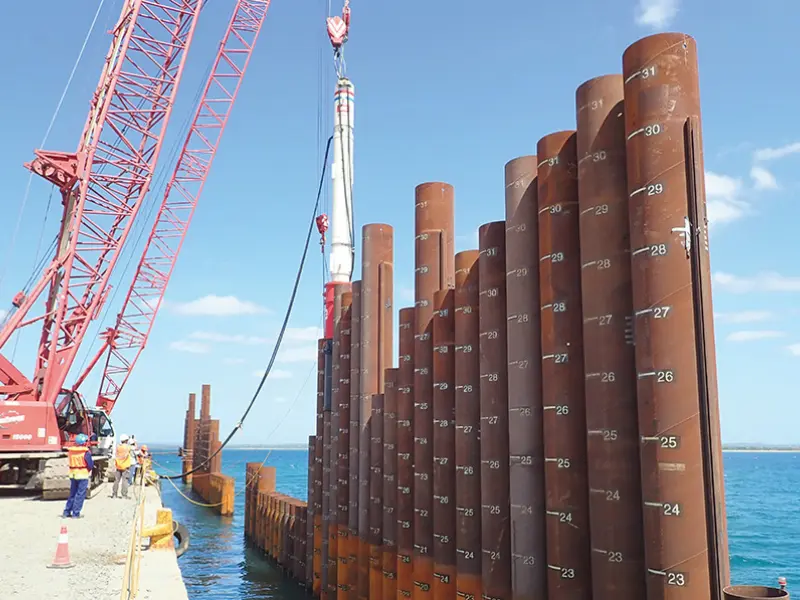
Application Analysis
Steel sheet piles are ideal for projects where lateral support is needed. Examples include:
- Riverbank walls and flood defenses.
- Deep excavation retaining walls.
- Temporary cofferdams and marine structures.
Pipe piles work well where vertical load is critical. Examples include:
- Bridge piers and highway foundations.
- Industrial structures with heavy machinery.
- High-rise building foundations.
| Project Type | Steel Sheet Piles | Pipe Piles |
|---|---|---|
| Retaining Walls | Excellent | Limited |
| Marine & River | Excellent | Excellent if deep |
| Bridge Foundations | Limited | Excellent |
| Excavations | Excellent | Moderate |
| Industrial Loads | Moderate | Excellent |
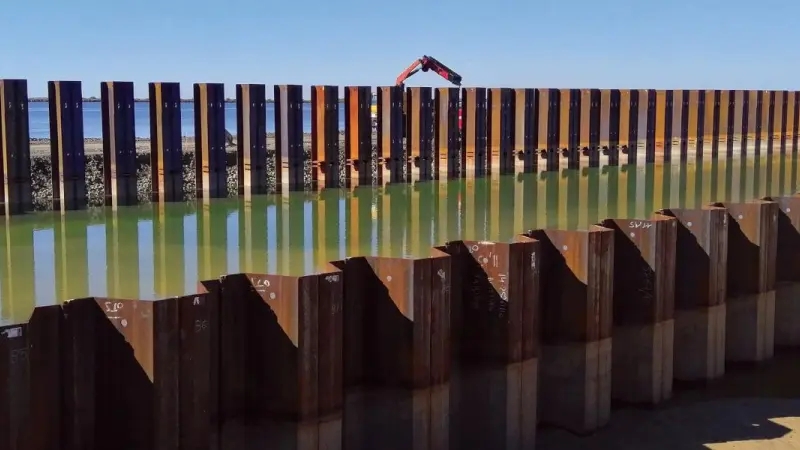
In my own experience, a combination of both often works best. For a river port project, steel sheet piles contained soil laterally, while pipe piles carried deep structural loads. For marine and foundation references, see Sheet pile and Pipe pile.
Conclusion
Both steel sheet piles and pipe piles have distinct strengths. Choosing depends on installation, load, cost, and project type. Often, a combination gives the best outcome. For additional reading, see Deep foundations and Sheet piling.