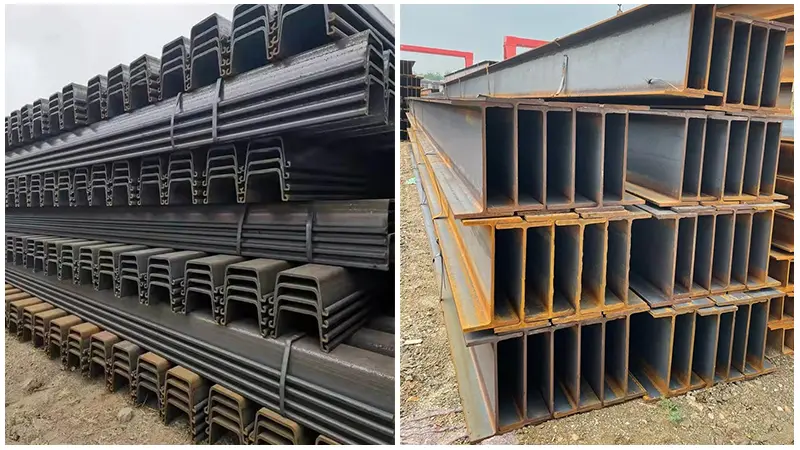
Choosing the right pile can make or break a construction project. Misjudging pile types leads to structural risks and costly delays. For an overview of piling and deep foundations, see Deep foundations and Piling.
Steel sheet piles and H piles serve distinct roles in construction. Understanding their differences helps engineers choose the most suitable option for retaining walls, deep excavations, and marine structures.
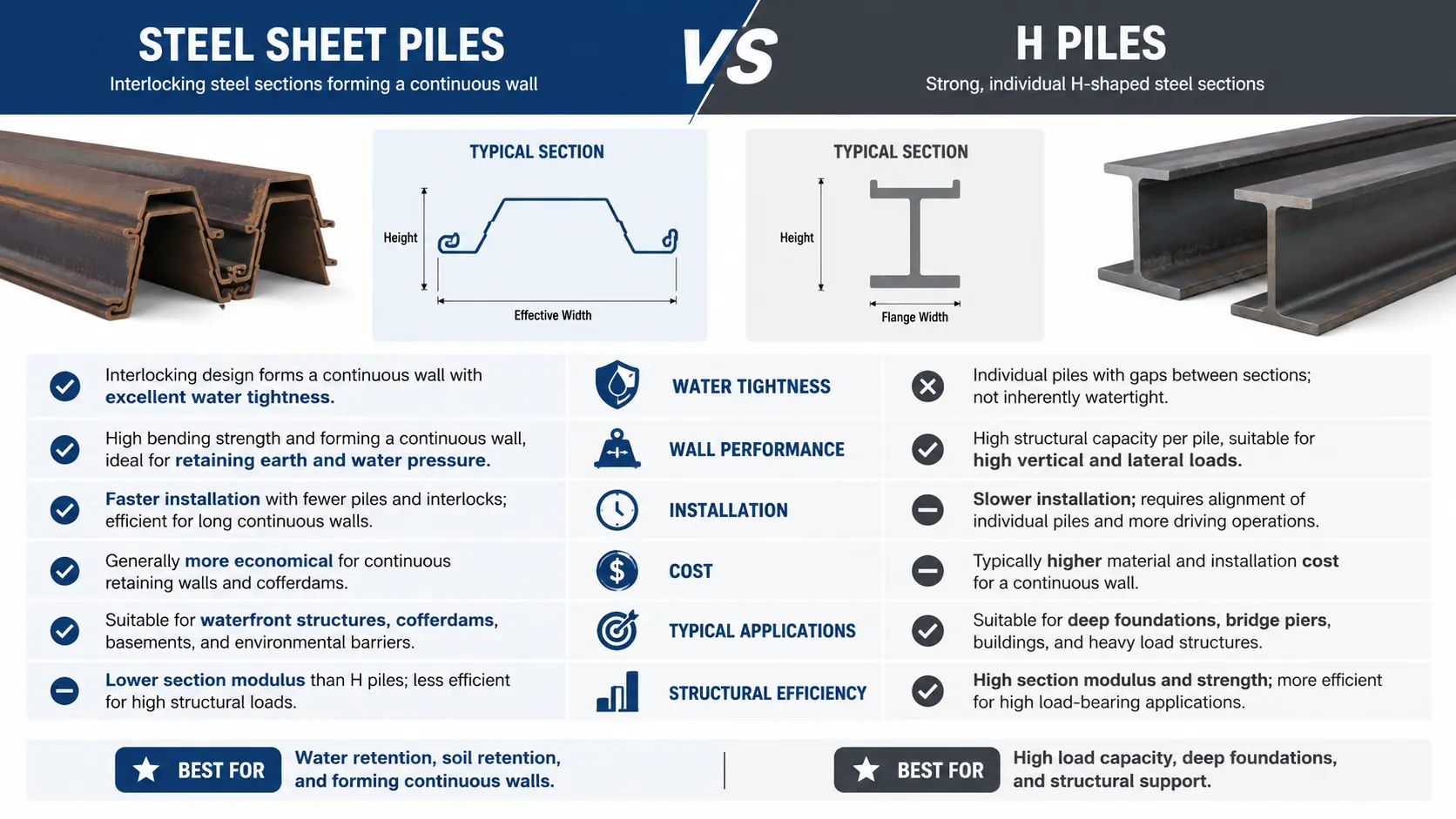
To make the right decision, we need to explore each type, their uses, structural differences, load-bearing capacities, installation methods, and cost implications. For broader context, also refer to Deep Foundations Institute.
What Are Steel Sheet Piles and Their Uses?
Steel sheet piles create barriers quickly, but many engineers still overlook their practical applications in real projects. For more on their function, see What is Sheet Piling? and Exploring the role of sheet piling in construction .
Steel sheet piles are interlocking steel sections used for retaining walls, flood control, and marine construction. Their shape ensures tight joints and water-tight performance. Learn more at Sheet Piling Explained and Sheet piles.
Types of Steel Sheet Piles
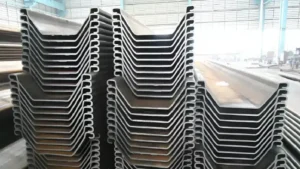
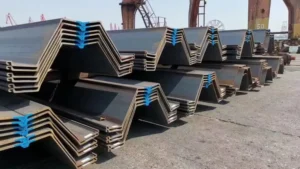
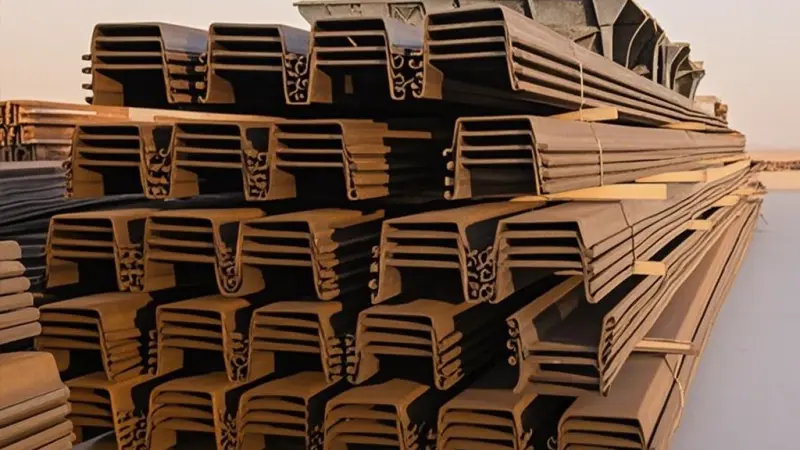
Steel sheet piles come in various shapes: U-type, Z-type, Ω-type, flat plate type, disc type, cap type, and straight flange type. Each shape suits different soil and project conditions. For example, U-type is commonly used in riverbank protection, while Z-type is popular in industrial and port structures. See Sheet piling explained and Eiffel 101: The Four Types of Steel Pile.
Applications
| Application | Description | Typical Pile Type |
|---|---|---|
| Deep Excavation Support | Stabilizes soil during large construction | U-type or Z-type |
| Retaining Walls | Holds back earth or water | Z-type |
| Marine Construction | Ports, wharves, flood control | U-type or Ω-type |
| Riverbank Protection | Prevents erosion | U-type |
| Bridge Foundations | Transfers loads from superstructure | Z-type or flat plate |
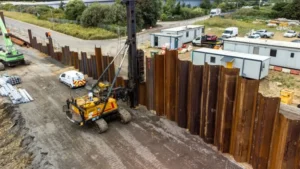
Steel sheet piles are installed via driving methods using vibratory or impact hammers. Interlocking edges ensure continuous walls that resist bending and lateral pressure. In river and marine projects, U-type piles are often selected for long-term stability against heavy water flow. Their corrosion resistance is crucial, especially for marine applications. Steel sheet piles also allow quick assembly and disassembly, which saves time and costs on temporary support structures. For installation methods, see Sheet Piling Explained and Sheet piles.
What Are H Piles and Their Applications?
H piles are often underrated but excel in projects where deep penetration and high load-bearing capacity are needed. For structural and foundation context, see Deep foundation and Piling.
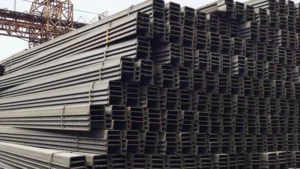
H piles are H-shaped steel sections driven into the ground for deep foundation support. They are suitable for transferring heavy structural loads to dense soil layers. Related background is available in Eiffel 101: The Four Types of Steel Pile [web:1].
Structural Advantages
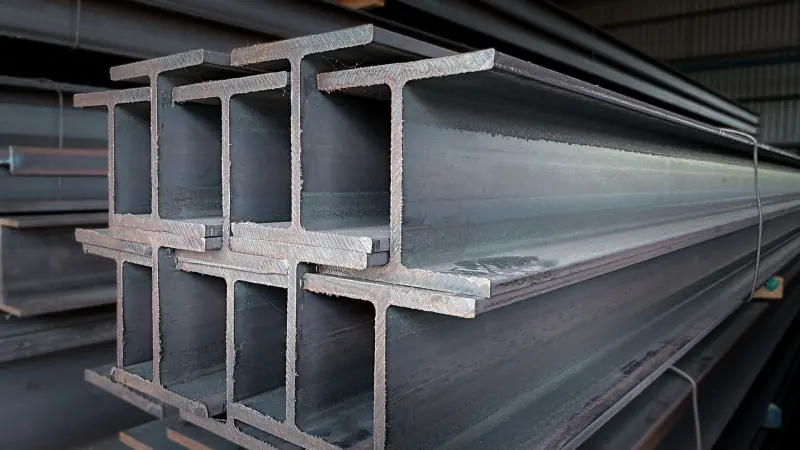
H piles feature a wide flange that resists bending and offers excellent load distribution. They can penetrate dense or hard soil layers that sheet piles cannot reach easily. Their design is closely related to structural steel beam sections, as discussed in Eiffel 101: The Four Types of Steel Pile [web:1].
Common Applications
| Application | Description | Typical Pile Type |
|---|---|---|
| Bridge Foundations | Supports high vertical loads | H piles |
| High-Rise Buildings | Transfers structural weight deep into soil | H piles |
| Deep Excavations | Stabilizes high retaining walls | H or combined piles |
| Marine Piling | Suitable for port superstructures | H piles |
In large bridge and foundation projects, H piles provide reliable deep load-bearing solutions where sheet piles would be insufficient. They may require larger driving equipment and sometimes pre-drilling in rocky soils. Proper alignment is critical to ensure full load transfer. For broader foundation references, see Deep foundations and Bridge engineering.
Key Structural Differences Between Steel Sheet Piles and H Piles
Many engineers confuse these two piles, which can result in incorrect design and structural failure. For more technical context, see Sheet piling and Piling.
Steel sheet piles interlock to form continuous walls, while H piles rely on individual deep penetration. Their shapes and load behaviors are distinctly different. For additional background, see Sheet piles
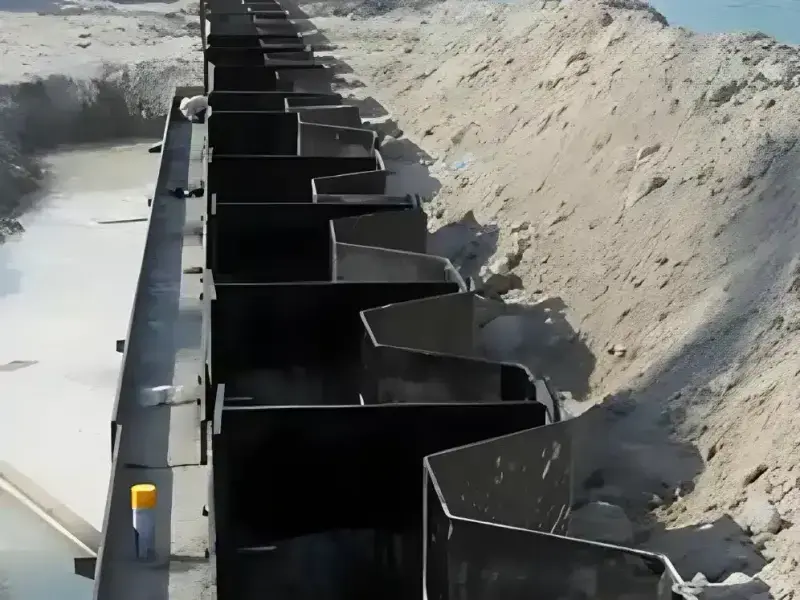
Comparison Table
| Feature | Steel Sheet Piles | H Piles |
|---|---|---|
| Shape | Interlocking sheets | H-shaped section |
| Installation | Driven into soft/mixed soil | Driven into deep, dense soil |
| Load Type | Lateral and earth retention | Vertical structural loads |
| Water Resistance | Water-tight interlocks | Limited water resistance |
| Reusability | High for temporary walls | Moderate |
| Common Uses | Retaining walls, flood control | Foundations, heavy structures |
Steel sheet piles perform best where lateral earth pressure and water-tight barriers are essential. H piles excel in vertical load transfer and deep foundation support. Choosing between them requires evaluating soil conditions, load demands, and project environment. For related references, see Lateral earth pressure and Soil mechanics .
Load-Bearing Capacity: Steel Sheet Piles vs H Piles
Load miscalculations are costly. Knowing each pile’s capacity ensures safety and efficiency. For foundation capacity context, see Bearing capacity and Settlement.
H piles generally handle higher vertical loads due to flange strength, while steel sheet piles excel in lateral resistance, forming continuous walls to resist soil and water pressure. For reference on sheet pile wall performance, see Sheet piles.
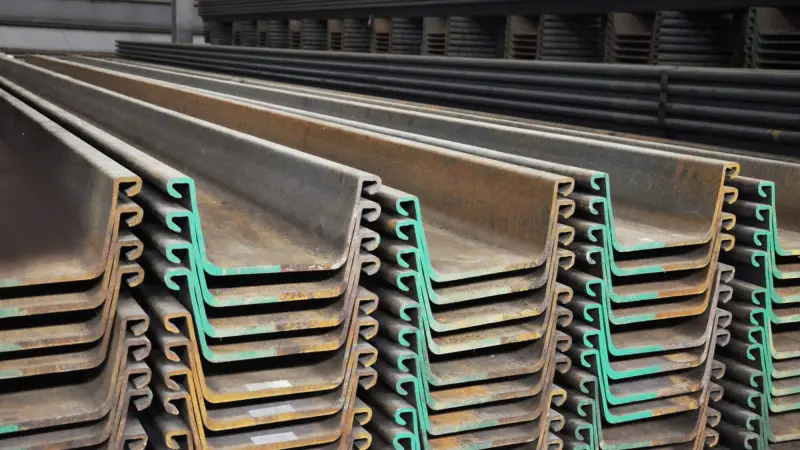
Load Capacity Comparison
| Aspect | Steel Sheet Piles | H Piles |
|---|---|---|
| Lateral Pressure | High | Moderate |
| Vertical Load | Moderate | High |
| Soil Stabilization | Continuous wall forms | Point load penetration |
| Water Pressure Resistance | Very high with interlocks | Low without casing |
H piles allow engineers to reach dense soil layers, transferring weight efficiently. Sheet piles distribute lateral forces along interlocks, preventing wall collapse. In riverbank protection projects, U-type sheet piles resist lateral water pressure effectively, but H piles are needed where high bridge abutments require deep load transfer. Selecting the correct pile based on load type can prevent settlement issues and ensure long-term durability. For more on deep foundation performance, see Deep foundation.
Installation Methods for Steel Sheet Piles and H Piles
Incorrect installation leads to structural failure. Understanding installation methods is crucial for success. For pile-driving background, see Pile driver.
Steel sheet piles are installed using vibratory hammers or impact drivers, forming interlocking walls. H piles are driven individually using heavy impact hammers or pre-drilling for hard soils. For installation references, see Sheet piling explained and Sheet piles.
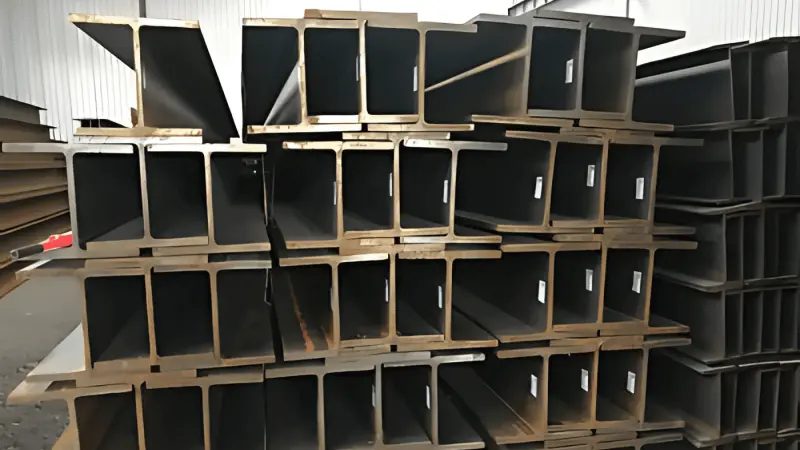
Steel Sheet Pile Installation
- Vibratory Hammers: Efficient in soft to medium soils.
- Impact Hammers: Suitable for dense soil, requires precise alignment.
- Pre-drilling: Sometimes used to reduce soil resistance.
- Interlocking Checks: Ensures water-tight walls.
H Pile Installation
- Impact Driving: Transfers vertical loads to deep soil layers.
- Pre-drilling: Required in rocky or dense layers to avoid damage.
- Guided Alignment: Prevents tilt and ensures correct load transfer.
- Cutting & Capping: Piles trimmed and capped to design height.
Installation affects performance and durability. In my projects, using vibratory hammers with U-type sheet piles reduced noise and vibration, crucial near sensitive areas. H piles demanded careful pre-alignment and sometimes heavy cranes, especially in high-rise or port projects. Following correct procedures avoids misalignment, uneven settlement, and long-term maintenance issues. For vibration-related considerations, see Vibration .
Cost Comparison Between Steel Sheet Piles and H Piles
Budget constraints affect project choice. Understanding costs prevents overspending. For related foundation economics, see Deep foundations [web:3].
Steel sheet piles are cost-effective for retaining walls and temporary structures. H piles, although more expensive, provide deep load-bearing solutions, often saving money on structural reinforcements. For reference, see Sheet piles.
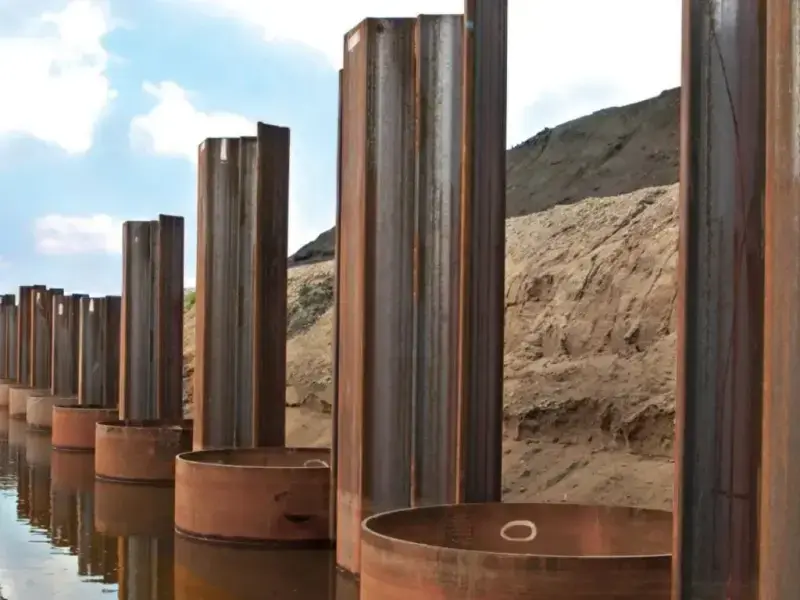
Cost Factors
| Factor | Steel Sheet Piles | H Piles |
|---|---|---|
| Material Cost | Moderate | Higher |
| Installation Cost | Lower | Higher due to driving equipment |
| Maintenance | Low | Moderate |
| Longevity | High if corrosion protected | High for deep load applications |
| Project Suitability | Retaining, flood, marine | Foundations, bridges, high-load structures |
I always calculate long-term project costs. For temporary walls, sheet piles reduce both material and installation costs. H piles have higher upfront costs but eliminate the need for additional structural supports in heavy-load applications. The total cost depends on soil conditions, project type, and expected lifespan. Careful planning ensures optimal investment in construction safety and durability. For broader construction context, see Civil engineering and Reinforced concrete .
Conclusion
Choosing between steel sheet piles and H piles depends on load type, soil conditions, and project needs. Both have unique advantages that ensure structural integrity and long-term durability. For a final reference on deep foundation systems, see Deep foundationsand [Piling.