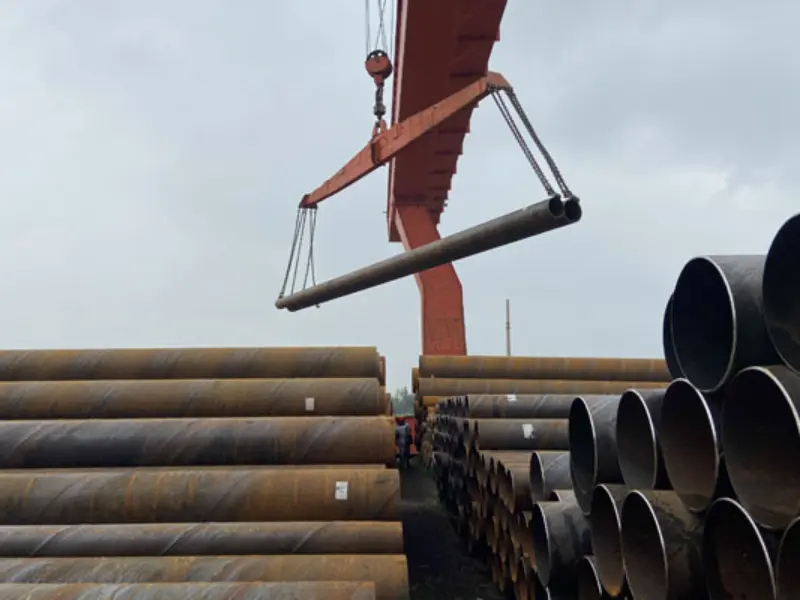
Steel piles form the backbone of stable foundations. Choosing the wrong type can lead to cost overruns and project delays. Quick decisions matter in construction.
SSAW Pipes (Spiral Submerged Arc Welded) and LSAW Pipes (Longitudinal Submerged Arc Welded) serve similar purposes but differ in performance, cost, and application. Understanding these differences ensures safer, more efficient pile foundations.
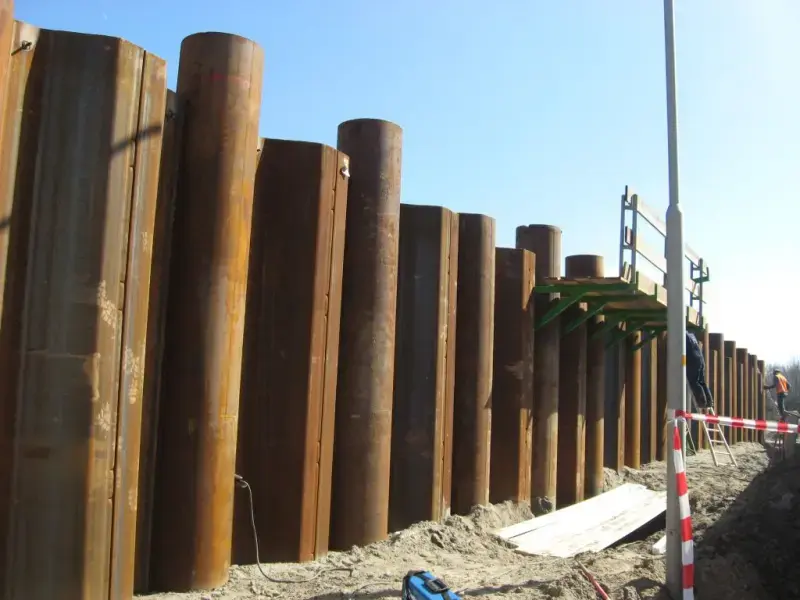
Foundations are complex. Choosing the right pipe is critical. Let’s explore how SSAW and LSAW perform across installation, load capacity, cost, and project suitability.
How Do SSAW and LSAW Pipes Differ in Manufacturing and Construction Techniques?
Fast, low-cost installation is always tempting. But hidden complexities in pipe manufacturing can affect long-term performance.
SSAW pipes are made by spirally welding steel strips, while LSAW pipes are produced by longitudinally welding steel plates. These processes influence pipe shape, size, and construction method.
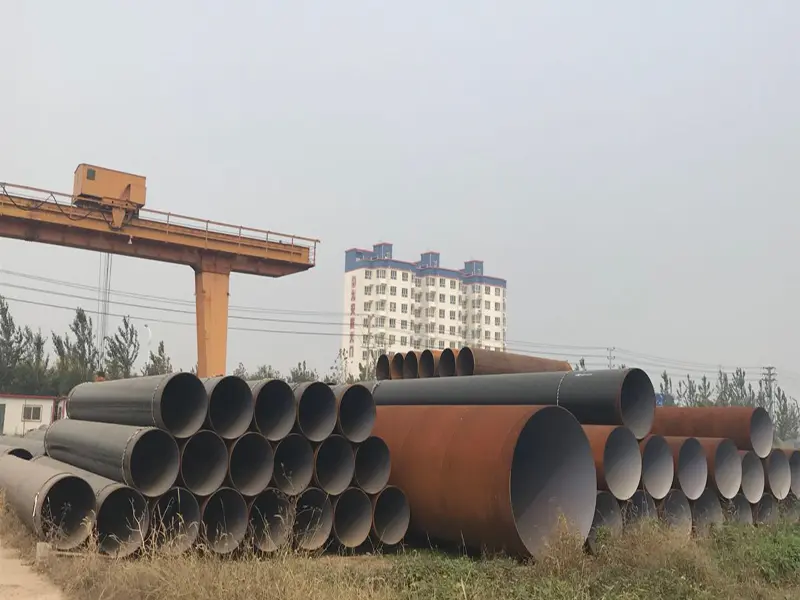
Construction teams must understand the differences. Installation, welding direction, and stress behavior all affect project outcome.
Manufacturing Processes
SSAW pipes are created by rolling steel strips into a spiral and welding along the seam. LSAW pipes involve bending steel plates and welding along the pipe’s length.
| Feature | SSAW Pipes | LSAW Pipes |
|---|---|---|
| Welding Direction | Spiral | Longitudinal |
| Wall Thickness | Moderate, uniform | Can be thick and customized |
| Diameter Range | Large diameters up to 3000mm | Typically smaller but can be precise |
| Length Capabilities | Flexible, often shorter sections | Longer sections possible |
| Production Speed | Faster for large quantities | Slower, higher precision |
SSAW’s spiral weld allows flexible length and cost-effective mass production. LSAW offers higher strength due to longitudinal weld alignment and less residual stress.
Construction Implications
SSAW pipes are easier to handle with vibratory hammers, while LSAW requires careful alignment. SSAW adapts to curved walls and marine works. LSAW suits deep foundations and high-load situations.
In my experience, choosing SSAW helps projects with large diameter, moderate load. LSAW is ideal when high precision and structural performance are critical.
Which Pipe Type Offers Superior Load-Bearing Capacity for Pile Foundations?
Load-bearing failure can collapse projects. Builders need reliable data to avoid disaster.
LSAW pipes typically provide higher load-bearing capacity because the longitudinal weld resists axial stress better, making them ideal for heavy foundation loads. SSAW pipes perform well but may show lower axial stiffness.
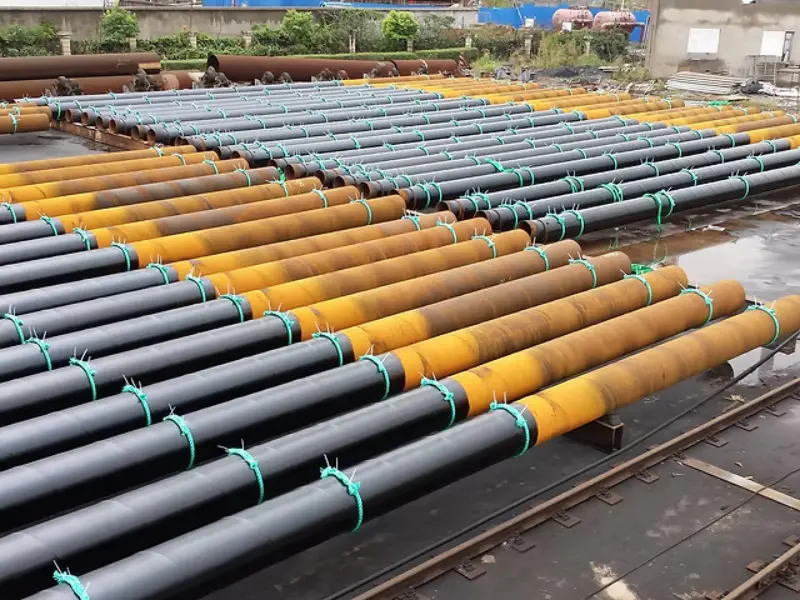
Selecting the correct pile prevents structural problems and ensures safety. Understanding the load performance difference is vital for engineers.
Structural Strength Analysis
Both SSAW and LSAW pipes are made of high-strength steel. Yet welding orientation affects stress distribution:
| Aspect | SSAW Pipes | LSAW Pipes |
|---|---|---|
| Axial Load Resistance | Moderate | High |
| Buckling Resistance | Moderate | High |
| Residual Stress | Higher due to spiral welding | Lower, longitudinal alignment |
| Fatigue Strength | Moderate | High |
| Foundation Depth Suitability | Shallow to medium depth | Medium to deep |
LSAW’s longitudinal weld minimizes stress concentration along the pipe, giving it higher axial load tolerance. SSAW’s spiral seam spreads stress differently, making it suitable for flexible layouts.
I have applied SSAW in riverbank protection projects with large diameters and moderate loads. For high-rise buildings, LSAW’s high strength ensures stability under heavy vertical stress.
What Are the Cost and Material Efficiency Differences Between SSAW and LSAW Pipes?
Construction budgets are tight. Wasting material or choosing expensive piles can hurt profits.
SSAW pipes generally cost less due to faster production and efficient material usage, especially for large diameters. LSAW pipes are costlier but can handle higher loads, reducing the number of piles needed.
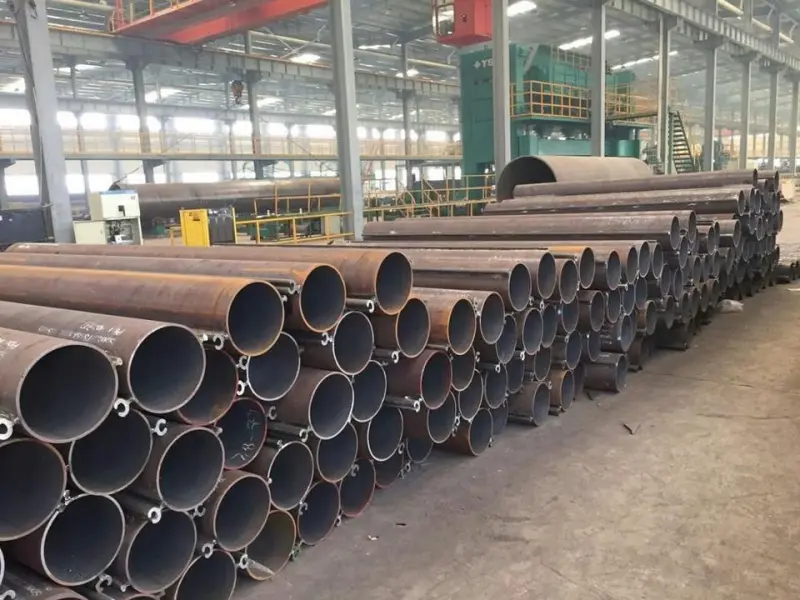
Cost comparison must include material, labor, installation, and long-term performance. Choosing purely by price may increase project risk.
Cost and Efficiency Comparison
SSAW and LSAW vary in manufacturing and logistics cost:
| Factor | SSAW Pipes | LSAW Pipes |
|---|---|---|
| Material Waste | Lower due to continuous spiral roll | Slightly higher due to plate cutting |
| Manufacturing Cost | Lower | Higher due to precision welding |
| Transport Cost | Moderate, shorter sections | Higher, longer heavy sections |
| Installation Time | Faster for large diameters | Slower, requires alignment |
| Overall Material Efficiency | Good | Very high for structural demands |
SSAW is suitable when budget and speed are priorities. LSAW is ideal when fewer piles are needed for deep, high-load foundations, offsetting higher initial costs.
I recommend evaluating the total project cost, including pile numbers, equipment, and labor, not just per meter price.
Which Construction Projects Are Better Suited for SSAW or LSAW Pipe Piles?
Choosing wrong can halt construction or compromise safety. Every project has unique requirements.
SSAW piles suit marine works, riverbank protection, and moderate-load foundations. LSAW piles excel in high-rise buildings, bridges, and projects with deep foundations or high axial stress.
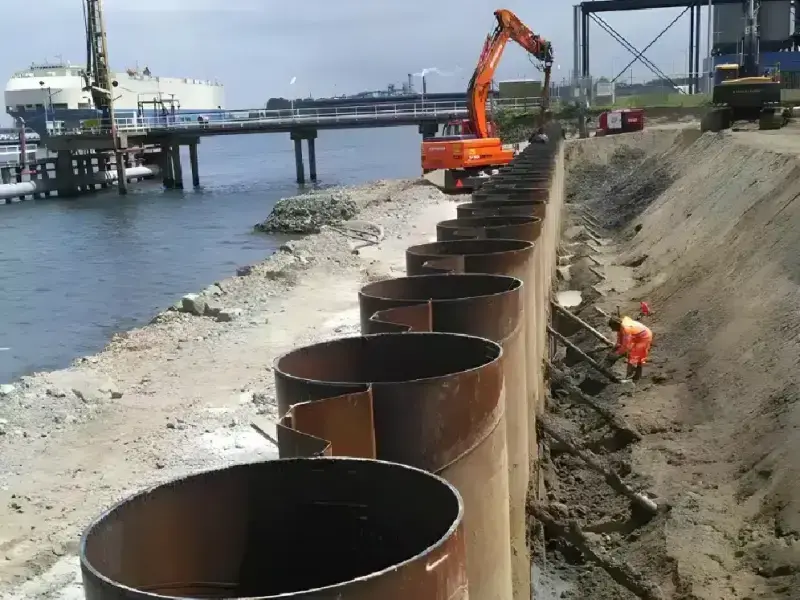
The right pipe selection depends on load, depth, soil, and environmental factors. I always analyze each project’s technical requirements.
Project Application Guidance
| Project Type | Recommended Pipe Type | Reason |
|---|---|---|
| Riverbank and Flood Control | SSAW | Large diameters, flexibility, cost-effective |
| Marine Ports and Coastal Works | SSAW | Handles curved walls, efficient installation |
| High-Rise Building Foundations | LSAW | High axial load, structural stability |
| Bridges and Deep Foundations | LSAW | Precise welding, high strength, long sections |
| Heavy Industrial Structures | LSAW | Minimizes pipe count, supports high load |
In my practice, SSAW is quick to deploy for wide projects. LSAW is reserved for critical, high-load areas to ensure long-term safety.
Conclusion
SSAW and LSAW pipes both serve pile foundations but differ in load, cost, and installation. Choose SSAW for flexibility and speed, LSAW for strength and deep foundations.