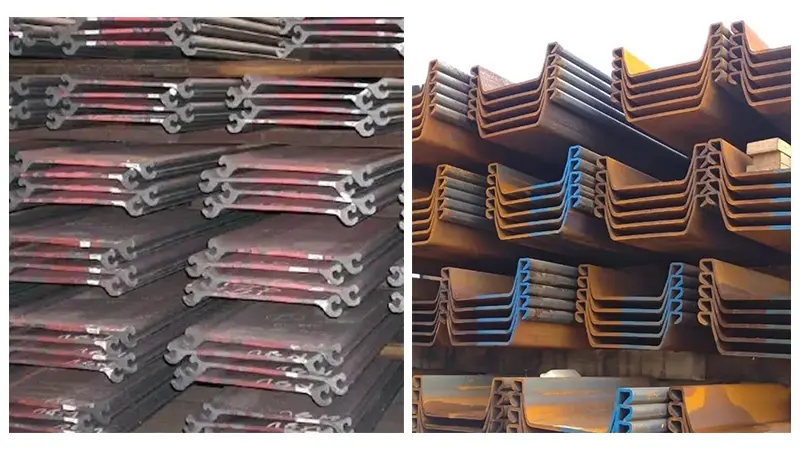
Many contractors choose sheet piles based on price alone. This often leads to overdesign, underperformance, or unnecessary project costs.
Straight web sheet piles are mainly used for circular cofferdams and cellular structures, while U type sheet piles are widely used for retaining walls, excavation support, and flood protection. The best choice depends on the project’s structural requirements, soil conditions, and construction method.
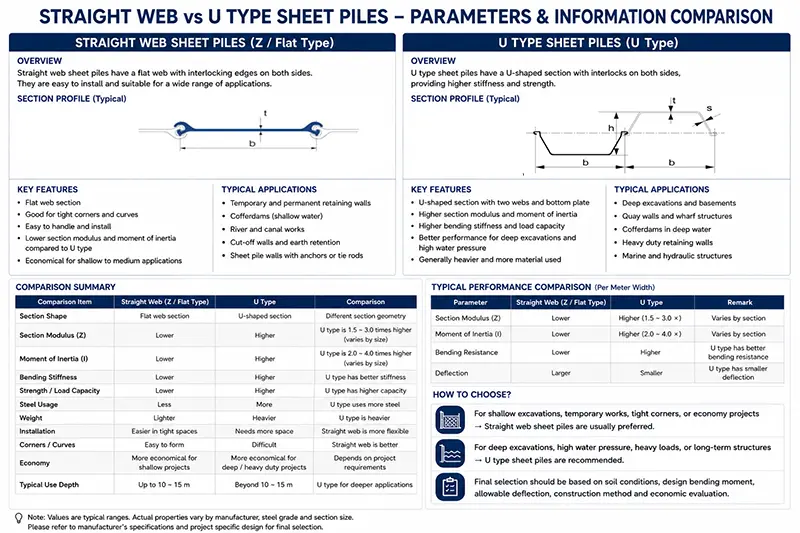
When clients contact me about sheet pile projects, they often compare U type and Z type profiles. Fewer buyers ask about straight web sheet piles. This is understandable because straight web sections are more specialized. Still, choosing the correct profile can significantly affect project performance and total cost. In this guide, I will explain how I evaluate straight web and U type sheet piles and answer several related questions that buyers frequently ask.
For straight web technical references, see the ArcelorMittal AS 500 straight web sheet piles page and the AS 500 design and execution manual.
What is the difference between Z type and U type sheet piles?
Many engineers focus on pile length and steel grade. They sometimes overlook section shape, even though it directly influences wall performance.
Z type sheet piles place interlocks at the outer edges of the section for higher structural efficiency, while U type sheet piles position interlocks at the center and provide strong interlocking performance with easier installation.
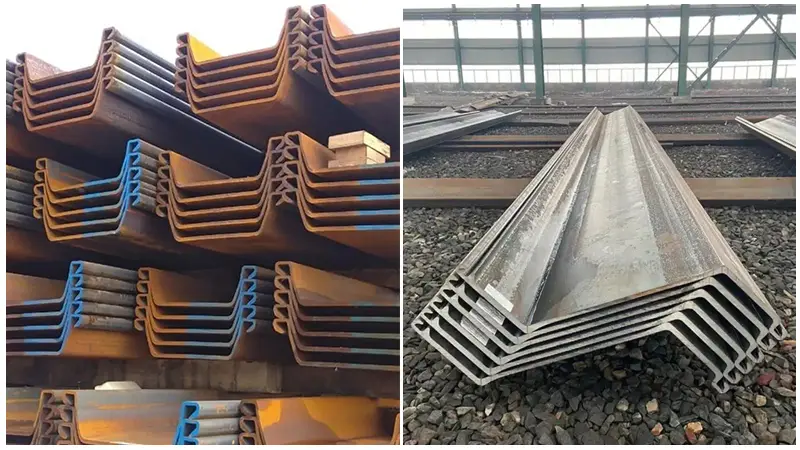
Understanding Structural Geometry
The position of the interlocks creates the main difference.
In U type sheet piles, interlocks are located close to the neutral axis. In Z type sections, interlocks are positioned at the outer edges.
This allows Z profiles to achieve greater section modulus with similar steel weight.
Performance Comparison
| Feature | U Type Sheet Pile | Z Type Sheet Pile |
|---|---|---|
| Interlock Position | Center | Outer Edge |
| Structural Efficiency | Good | Excellent |
| Installation Ease | Excellent | Good |
| Moment Resistance | High | Very High |
| Market Availability | Very High | High |
Common Applications
U type sheet piles are commonly used for:
- Riverbank protection
- Retaining walls
- Excavation support
- Flood control systems
Z type sheet piles are commonly used for:
- Deep excavation projects
- Marine structures
- Permanent retaining walls
- Large infrastructure projects
My Experience
Many contractors initially assume heavier sections automatically provide better performance.
In reality, Z type sheet piles often deliver higher strength-to-weight ratios.
At the same time, I continue to see strong demand for U type sheet piles because they are widely available and easy to install.
In our Southeast Asia riverbank protection project, the contractor selected hot rolled U type sheet piles because reliable interlocking performance and fast installation were the highest priorities.
My view is simple. The most efficient profile is not always the best choice. The right profile is the one that matches project conditions, available equipment, and construction goals.
For design methodology and structural references, see the ArcelorMittal engineering guidance and the Steel Piling Group design guidance.
What are the three types of piling?
Many buyers use the word piling without distinguishing between different foundation systems.
The three main types of piling are driven piles, bored piles, and sheet piles. Each serves a different purpose in civil engineering and construction projects.
Driven Piles
Driven piles are manufactured before installation.
Contractors drive them into the ground using impact hammers or vibratory equipment.
Common materials include:
- Steel
- Concrete
- Timber
Bored Piles
Bored piles are constructed directly on-site.
Workers drill a hole and fill it with reinforced concrete.
This method is often preferred in urban environments where vibration control is important.
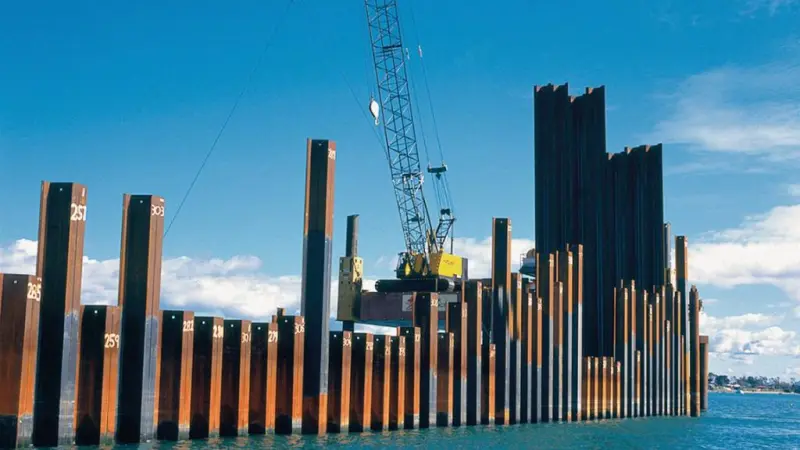
Sheet Piles
Sheet piles differ from load-bearing piles.
Their main purpose is earth retention and water control.
Applications include:
- Excavation support
- Cofferdams
- Retaining walls
- Waterfront structures
Comparison Table
| Pile Type | Primary Function | Installation Method |
|---|---|---|
| Driven Pile | Load Transfer | Driven |
| Bored Pile | Load Transfer | Drilled |
| Sheet Pile | Soil Retention | Driven |
How I Explain This to Buyers
I often receive inquiries that simply request "steel piles."
Before providing a quotation, I ask several questions:
- Does the project require vertical load support?
- Does the project require soil retention?
- Does the project involve groundwater control?
The answers help determine the correct pile type.
In my experience, this simple clarification prevents many procurement mistakes and improves project planning.
For driven pile and foundation context, see the Deep Foundations Institute and the Steel Piling Group design guidance.
What are the disadvantages of using sheet piles?
Every engineering solution has strengths and limitations. Buyers should understand both before making a purchasing decision.
The main disadvantages of sheet piles include installation noise, vibration, corrosion risks, driving difficulties in hard ground, and potential wall deflection under heavy loads.
Noise and Vibration
Vibratory hammers generate noise during installation.
Urban projects may face restrictions due to nearby residents and buildings.
Corrosion
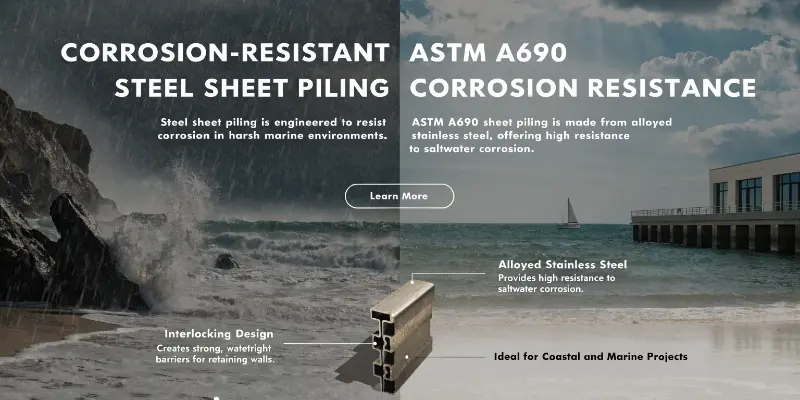
Steel sheet piles can corrode in aggressive environments.
Common protection methods include:
- Protective coatings
- Corrosion allowances
- Cathodic protection systems
Difficult Soil Conditions
Installation becomes more challenging in:
- Rock layers
- Dense gravel
- Construction debris
- Old foundations
Structural Movement
Flexible retaining walls naturally experience some movement.
Engineers often use:
- Anchors
- Struts
- Heavier sections
to reduce deflection.
Comparison Table
| Issue | Impact |
|---|---|
| Noise | Medium |
| Vibration | Medium |
| Corrosion | Medium to High |
| Difficult Ground | High |
| Deflection | Moderate |
My Opinion
I think many people exaggerate these disadvantages.
Every retaining system has limitations.
The real question is whether the benefits outweigh the drawbacks.
In many projects, sheet piles still offer the fastest and most economical solution despite installation challenges.
This is one reason why sheet piles remain widely used in modern infrastructure construction.
For temporary works and excavation support references, see the ArcelorMittal temporary works page and the Steel Piling (UK) excavation support page.
What are the different types of sheet piles?
Many first-time buyers assume all sheet piles look the same. The reality is very different.
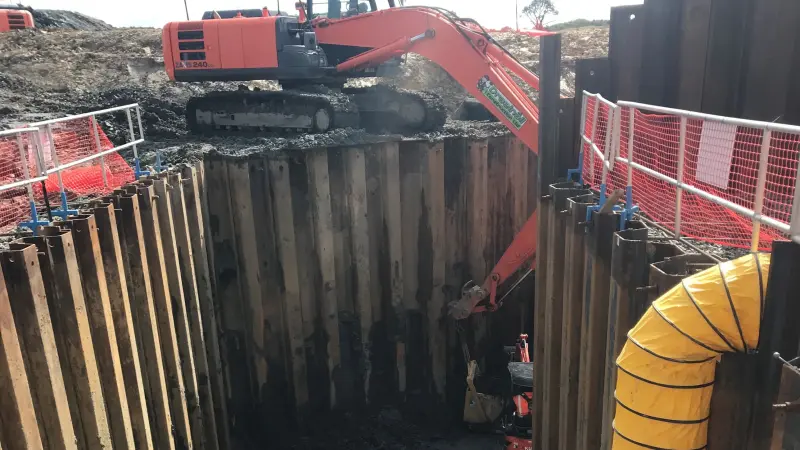
The main types of sheet piles include U-shaped, Z-shaped, straight web, straight flange, Omega-shaped, flat plate, disc-type, and cap-type sheet piles. Each profile serves specific engineering requirements.
U-Shaped Sheet Piles
U type sections are among the most common profiles worldwide.
Advantages include:
- Strong interlocks
- Easy installation
- Wide availability
Z-Shaped Sheet Piles
Z profiles provide:
- Higher section modulus
- Better material efficiency
- Excellent performance in deep excavations
Straight Web Sheet Piles
Straight web sections are often used for:
- Circular cofferdams
- Cellular structures
- Waterfront applications
Specialized Profiles
Our product range also includes:
- Omega-shaped sheet piles
- Flat plate sheet piles
- Disc-type sheet piles
- Cap-type sheet piles
- Straight flange sheet piles
Profile Comparison
| Profile Type | Main Advantage | Common Application |
|---|---|---|
| U Type | Strong Interlock | Retaining Walls |
| Z Type | Structural Efficiency | Deep Excavation |
| Straight Web | Circular Structures | Cofferdams |
| Omega Type | Special Applications | Infrastructure |
| Flat Plate | Water Cutoff | Hydraulic Projects |
| Straight Flange | Heavy Structures | Marine Engineering |
My Recommendation
I never recommend a profile based on popularity alone.
I always review:
- Soil conditions
- Excavation depth
- Design loads
- Corrosion requirements
This approach helps buyers select the most suitable solution instead of simply choosing the most familiar profile.
For technical references, many engineers consult the Steel Sheet Piling Association and the Deep Foundations Institute.
What is the difference between Type 2 and Type 4 sheet piles?
Many buyers compare Type 2 and Type 4 sheet piles only by weight. This can create misleading conclusions.
Type 2 sheet piles are lighter sections suitable for moderate retaining applications, while Type 4 sheet piles are heavier and provide greater bending resistance for deeper excavations and higher earth pressures.

Structural Differences
Type 4 sections offer higher section modulus and moment capacity.
This allows them to resist larger loads.
Typical Applications
| Application | Type 2 | Type 4 |
|---|---|---|
| Utility Trenches | Excellent | Good |
| Temporary Excavation | Excellent | Excellent |
| Deep Basements | Limited | Excellent |
| Marine Structures | Moderate | Excellent |
Cost Considerations
Type 4 sections generally cost more due to increased steel content.
However, stronger sections may reduce:
- Additional bracing
- Installation complexity
- Construction risks
My Experience
Many contractors initially request lighter sections because they focus on steel cost.
After engineering reviews, they often upgrade to stronger profiles.
I believe total project cost is more important than material cost alone.
A stronger section can reduce installation time and simplify structural support systems.
What are different types of piles?
Many people associate piles only with foundations. The pile industry includes a wide range of solutions.
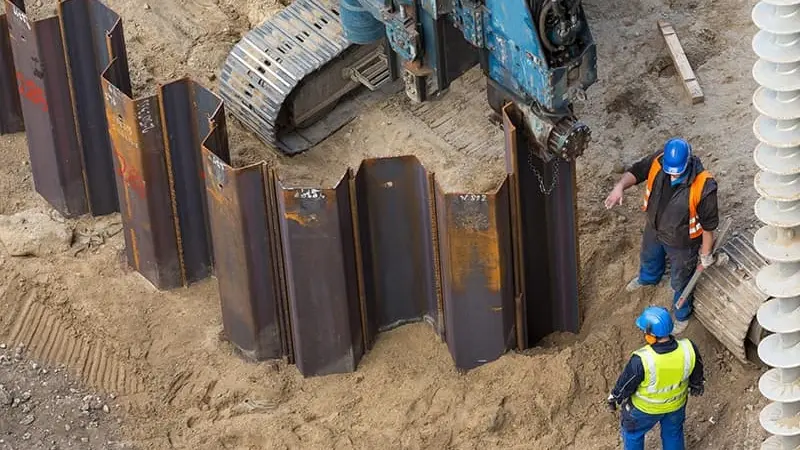
The main types of piles include driven piles, bored piles, screw piles, sheet piles, concrete piles, steel piles, timber piles, and composite piles. Each type serves different structural and geotechnical functions.
Classification by Material
Common pile materials include:
- Steel
- Concrete
- Timber
- Composite materials
Classification by Installation Method
Installation methods include:
- Driven piles
- Bored piles
- Screw piles
Comparison Table
| Pile Type | Material | Primary Purpose |
|---|---|---|
| Steel Pile | Steel | Foundation Support |
| Concrete Pile | Concrete | Heavy Loads |
| Timber Pile | Timber | Light Structures |
| Screw Pile | Steel | Rapid Installation |
| Sheet Pile | Steel | Earth Retention |
Choosing the Right Pile
Engineers evaluate:
- Soil conditions
- Load requirements
- Groundwater levels
- Construction schedule
before selecting a pile type.
My View
I have worked with contractors, civil engineering companies, and steel distributors across the Middle East, Africa, Australia, and South America.
One lesson remains consistent. Successful projects begin with understanding the problem before selecting the product.
The best pile is not necessarily the strongest or most expensive. The best pile is the one that solves the engineering challenge safely and economically.
Conclusion
Straight web and U type sheet piles serve different purposes. The right choice depends on project design, structural requirements, soil conditions, and long-term construction goals.