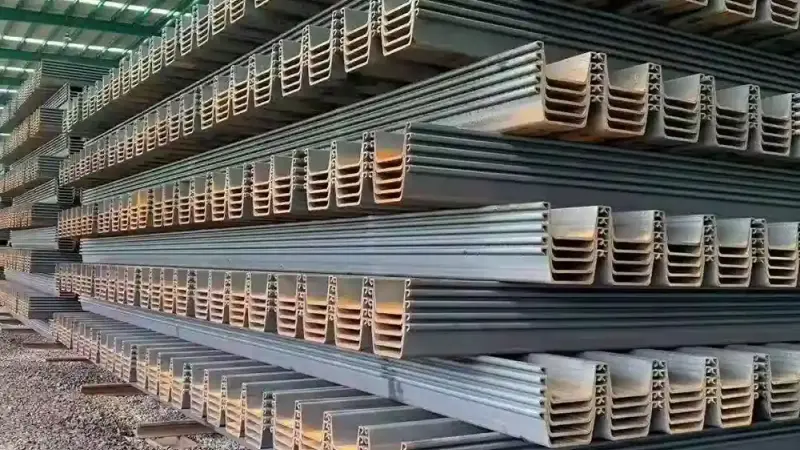
Oil and gas projects often face unstable soil, groundwater, and harsh environments. I have seen poor excavation support delay construction and increase costs when the wrong retaining system is chosen.
Steel sheet piles are widely used in oil and gas projects because they provide reliable excavation support, groundwater control, and structural stability. They are suitable for refineries, tank farms, pipelines, offshore terminals, and other heavy industrial facilities.
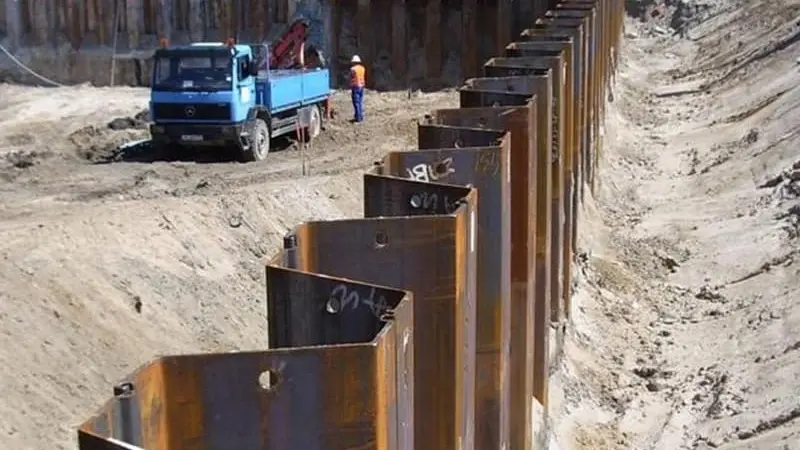
For examples of sheet piling in oil & gas terminals, see the Sabah Oil & Gas Terminal – ESC Scope of Supply (PDF).
Oil and gas facilities demand high safety standards from the first day of construction. Every storage tank, pipeline, pump station, and processing unit begins with a stable foundation. I have worked with contractors who needed retaining systems that could perform well under difficult ground conditions while keeping projects on schedule. In my experience, steel sheet piles continue to be one of the most practical solutions because they combine high structural strength, quick installation, and excellent adaptability. In this article, I will explain how piling is used in oil and gas projects and discuss the limitations of steel sheet piles so buyers can make better decisions.
What is piling in oil and gas?
Large industrial facilities require deep foundations and stable excavations. Without proper piling systems, heavy equipment and structures may suffer from settlement or unstable ground.
Piling in oil and gas refers to installing steel or concrete piles into the ground to support heavy structures, stabilize excavations, and improve soil conditions for facilities such as refineries, tank farms, offshore terminals, and pipeline stations.
Why piling is necessary
Oil and gas facilities usually carry much heavier loads than ordinary buildings.
These projects often include:
- Storage tanks
- Pump stations
- Compressor stations
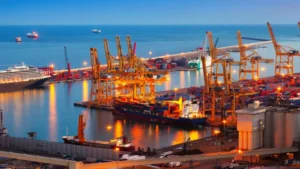
- LNG terminals
- Offshore platforms
- Pipeline crossings
- Marine loading terminals
Many of these structures are built on reclaimed land, coastal areas, or soft soil where ground improvement is essential.
The role of steel sheet piles
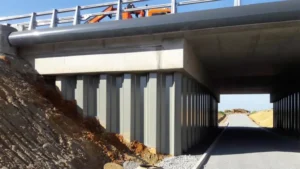
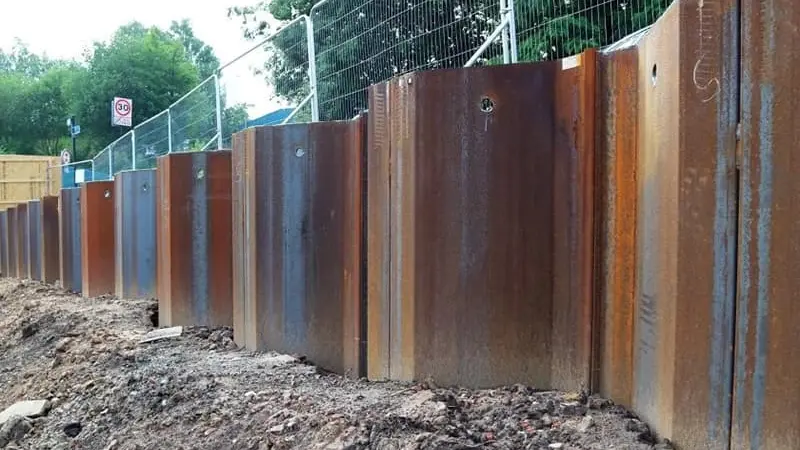
Steel sheet piles do not normally carry the entire building load like foundation piles. Instead, they create a stable excavation and protect surrounding soil during construction.
They are commonly used for:
- Excavation support
- Temporary cofferdams
- Retaining walls
- Flood protection
- Pipeline trench support
- Marine bulkheads
Benefits for oil and gas construction
| Benefit | Value to the Project |
|---|---|
| Fast installation | Reduces project schedule |
| High strength | Supports deep excavations |
| Water control | Limits groundwater inflow |
| Flexible design | Fits different project layouts |
| Reusable | Temporary piles reduce costs |
| Reliable interlocks | Improves wall stability |
Typical applications
Steel sheet piles appear in many stages of oil and gas construction.
Examples include:
| Application | Purpose |
|---|---|
| Tank foundations | Excavation support |
| Pump stations | Groundwater control |
| Pipeline crossings | Temporary retaining walls |
| Marine terminals | Bulkhead construction |
| Offshore supply bases | Shoreline protection |
| Processing plants | Deep foundation excavation |
Choosing the right pile profile
Every project has different design requirements.
Engineers normally evaluate:
- Soil conditions
- Excavation depth
- Groundwater level
- Equipment loads
- Corrosion environment
- Construction schedule
These factors determine whether U-shaped, Z-shaped, Ω-shaped, straight flange, or other profiles provide the best solution.
My opinion
I often receive inquiries asking only for the lowest price.
I usually ask for the soil report before preparing any quotation.
A refinery excavation in soft clay needs a different solution than a pipeline trench in dense sand.
I believe engineering should always guide product selection. The cheapest pile is not always the lowest-cost solution for the entire project.
Our company works with certified steel mills in China. We supply U-shaped, Z-shaped, Ω-shaped, flat plate, cap type, disc type, and straight flange steel sheet piles. We support OEM production, SGS inspection, flexible MOQ, and fast delivery from Liaocheng, Shandong. Our customers include construction contractors, civil engineering companies, and steel distributors across the Middle East, Australia, Africa, North America, and South America.
From my experience, customers appreciate technical recommendations more than simple quotations. Helping them select the correct profile often saves both construction time and overall project cost.
What are the disadvantages of using sheet piles?
Every retaining system has limitations. Ignoring them during project planning may increase risks, maintenance costs, or construction delays.
Steel sheet piles may experience corrosion, installation vibration, water seepage through interlocks, and driving difficulties in hard ground. Proper engineering and installation methods can minimize these disadvantages.
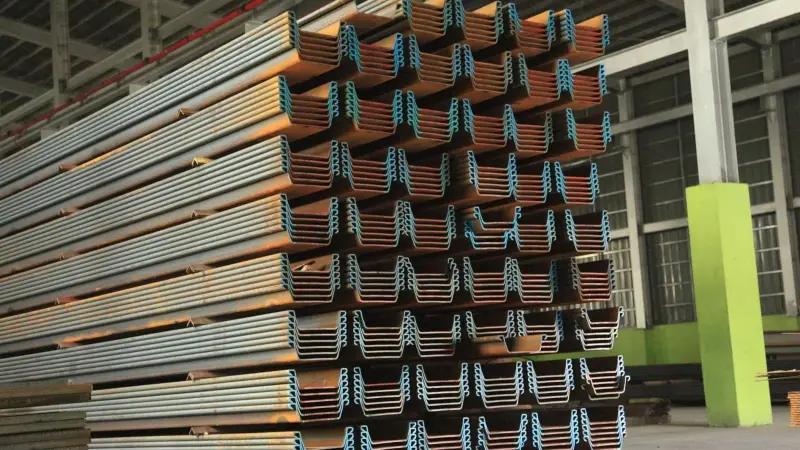
For guidance on corrosion protection, see the Guidelines for the Protection of Steel Piles (Theseus), the Different Sheet Piling Anti-Corrosion Protection Methods (China Steelpiling), and the Steel Sheet Piles | Corrosion Rates & Design Life Guide (Ivor King).
No retaining system is perfect
I always explain to customers that every engineering solution involves trade-offs.
Steel sheet piles provide many advantages, but they should always be evaluated together with project conditions.
Understanding the limitations early allows engineers to prepare effective solutions before construction begins.
Common disadvantages
| Issue | Possible Solution |
|---|---|
| Corrosion | Protective coating or thicker steel |
| Installation vibration | Hydraulic press-in equipment |
| Hard ground | Pre-drilling before installation |
| Water seepage | Interlock sealant or grouting |
| Noise | Silent piling equipment |
| Wall movement | Anchors or internal bracing |
Corrosion in industrial environments
Oil and gas facilities often expose steel to moisture, salt, chemicals, and changing temperatures.
Corrosion is usually the first concern raised by contractors.
Fortunately, corrosion rates can be estimated during design.
Engineers may improve durability by:
- Applying protective coatings
- Increasing steel thickness
- Using cathodic protection
- Performing regular inspections
These methods significantly extend the service life of permanent sheet pile structures.
Installation challenges
Dense gravel, weathered rock, or existing underground structures may slow installation.
Contractors often solve these problems by using:
- Pre-drilling
- Larger vibratory hammers
- Hydraulic impact hammers
- Silent press-in machines
Proper equipment selection improves installation efficiency and reduces delays.
Water leakage
Steel sheet piles greatly reduce groundwater movement, but they are not naturally 100% waterproof.
The interlocking joints may allow minor seepage under high water pressure.
Many oil and gas projects improve water tightness by adding sealants or grouting after installation.
Environmental considerations
Industrial projects often operate under strict environmental regulations.
Contractors may need to reduce:
- Noise
- Ground vibration
- Soil disturbance
- Groundwater contamination
Modern installation equipment helps meet these environmental requirements.
My experience
One contractor planned to install permanent sheet piles near a coastal storage terminal.
Their main concern was corrosion.
Instead of recommending a standard section immediately, I suggested increasing the corrosion allowance and selecting additional protective coatings.
The final design improved the expected service life without greatly increasing the project budget.
Experiences like this remind me that successful projects depend on engineering decisions rather than product prices alone.
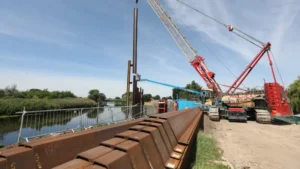
I also remember our riverbank protection project in Southeast Asia. Hot rolled U type steel sheet piles formed a continuous retaining wall that stabilized the riverbank and controlled erosion. Strong interlocks improved structural performance, while vibratory installation helped the contractor complete construction on schedule. Although the project was not part of the oil and gas industry, it demonstrated how proper sheet pile selection delivers reliable long-term performance in wet environments.
In my opinion, honest technical advice creates stronger partnerships than simply promoting product advantages. I prefer helping customers understand both the strengths and the limitations of steel sheet piles before they make purchasing decisions.
Conclusion
I believe steel sheet piles remain one of the most reliable retaining solutions for oil and gas projects when engineers choose the right design, installation method, and corrosion protection.