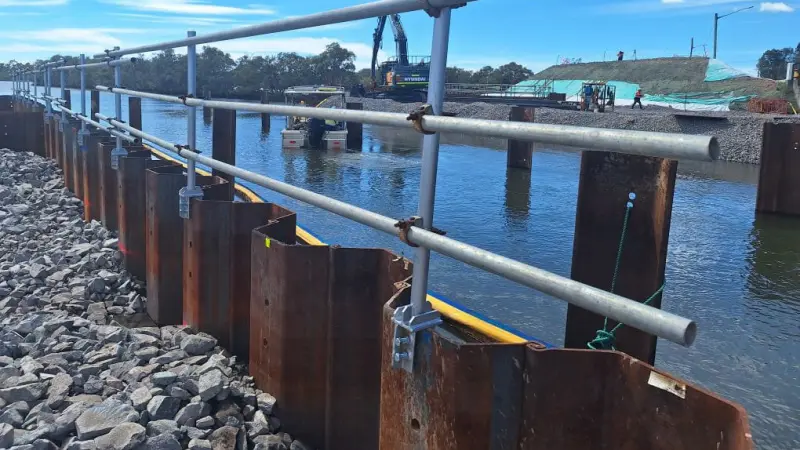
Coastal erosion, rising tides, and wave action threaten infrastructure every year. I have seen many shoreline projects fail because the retaining system could not withstand harsh marine conditions.
Steel sheet piles are widely used for coastal protection because they create strong retaining walls, reduce shoreline erosion, resist wave forces, and help stabilize coastal infrastructure. They provide both temporary and permanent protection for ports, seawalls, riverbanks, and waterfront developments.
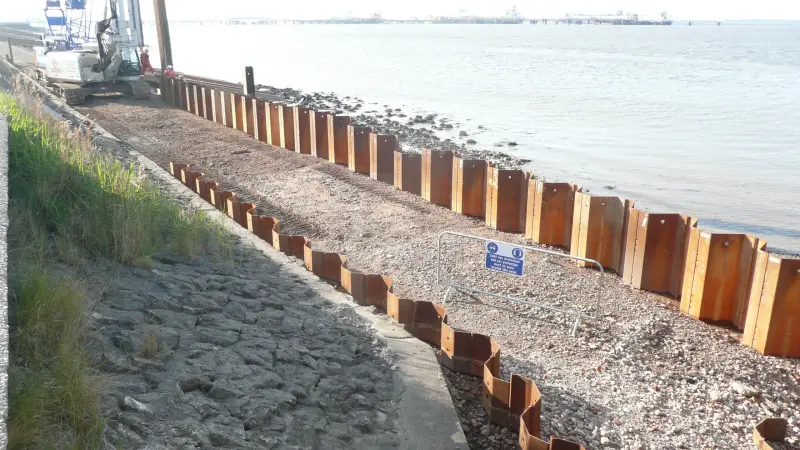
For coastal protection solutions in marine construction, see the Designing & Installing Sheet Piling for Storm Protection (YouTube) and the Flexcrete: Steel Marine Structures.
Coastal engineering is one of the most demanding fields in civil construction. Every project must deal with saltwater, tides, soft soil, and continuous wave impact. I often work with contractors who need reliable retaining systems for seawalls, ports, riverbanks, and waterfront developments. From my experience, steel sheet piles remain one of the most practical solutions because they offer high structural strength, quick installation, and long service life. In this article, I will explain the difference between shore piles and sheet piles, discuss whether sheet piles are waterproof, and share my own thoughts on selecting the right solution for coastal projects.
What is the difference between shore pile and sheet pile?
Many buyers confuse shore piles with sheet piles. This misunderstanding often leads to choosing the wrong product for coastal construction.
A shore pile mainly supports vertical structural loads, while a steel sheet pile forms a continuous retaining wall that resists lateral soil and water pressure. Sheet piles are primarily used for excavation support, shoreline protection, and retaining structures.
Understanding the basic difference
The names sound similar, but they serve different purposes.
A shore pile, often called a bearing pile or foundation pile, transfers vertical loads from structures into stronger soil or rock below the surface. Bridges, piers, offshore platforms, and buildings often use this type of pile.
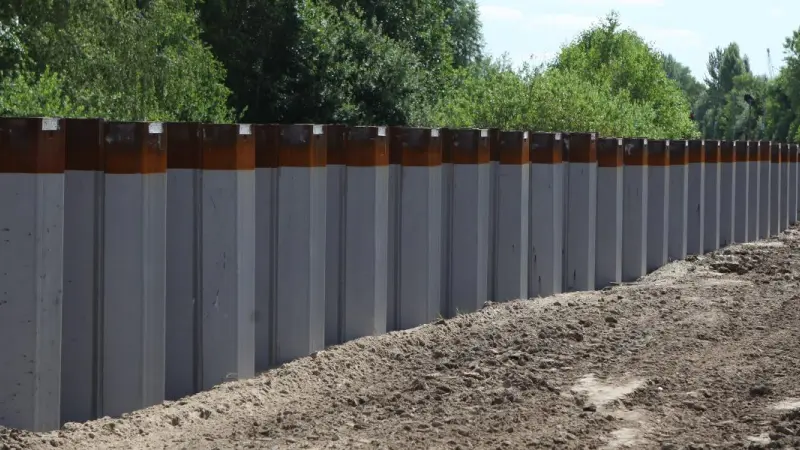
A steel sheet pile performs another job. It interlocks with adjacent sections to create a continuous wall. This wall resists horizontal earth pressure and water pressure instead of carrying the main structural load.
Understanding this difference helps engineers choose the correct system during project planning.
Comparison table
| Feature | Shore Pile | Steel Sheet Pile |
|---|---|---|
| Main purpose | Carry vertical loads | Retain soil and water |
| Structure | Individual pile | Continuous interlocking wall |
| Load direction | Vertical | Lateral |
| Typical use | Foundations | Retaining walls and seawalls |
| Reusability | Limited | Often reusable |
| Installation | Driven or bored | Driven with interlocking joints |
Applications in coastal projects
Both systems may appear in the same project.
For example:
- Bridge piers use bearing piles.
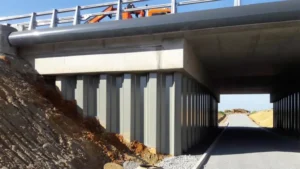
- Cofferdams use steel sheet piles.
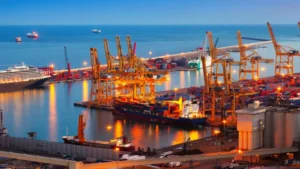
- Port terminals combine both systems.
- Seawalls often rely on sheet piles.
- Marine foundations use bearing piles for heavy loads.
Each system solves a different engineering problem.
Why sheet piles are preferred for coastal protection
Coastal projects require a barrier that can resist continuous wave pressure and prevent soil erosion.
Steel sheet piles provide several advantages.
- Continuous interlocking structure
- High bending resistance
- Fast installation
- Good groundwater control
- Long service life
- Flexible design options
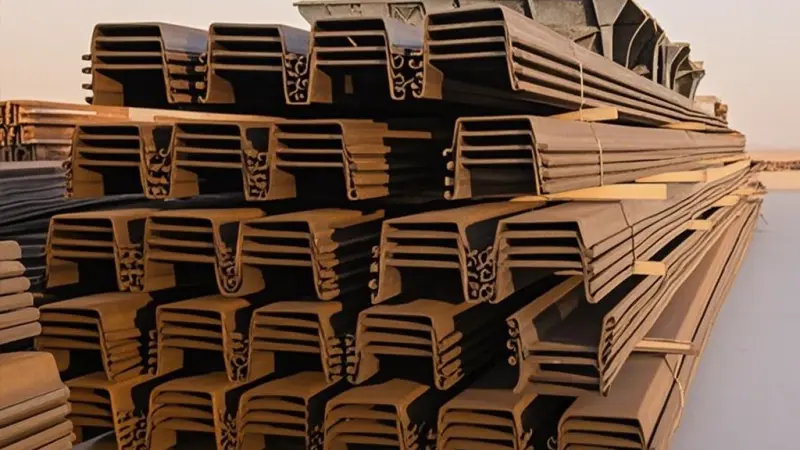
Engineers can also select U-shaped, Z-shaped, Ω-shaped, straight flange, or flat plate sections according to project requirements.
Material selection
Different marine environments require different steel grades.
Engineers consider:
- Corrosion rate
- Water depth
- Wave height
- Soil type
- Design life
- Maintenance requirements
These factors determine the most suitable sheet pile profile.
My opinion
Many buyers ask me whether they should purchase bearing piles or sheet piles.
I always ask one simple question.
"What is the structure expected to do?"
If the goal is supporting a bridge or offshore platform, bearing piles usually carry the main load.
If the goal is retaining soil, controlling water, or protecting the shoreline, steel sheet piles are often the better solution.
I believe understanding the engineering purpose is more important than comparing prices.
Our company supplies U-shaped, Z-shaped, Ω-shaped, flat plate, cap type, disc type, and straight flange steel sheet piles through long-term cooperation with certified mills in China. We support OEM production, SGS inspection, flexible MOQ, and fast delivery from Liaocheng, Shandong. Customers across the Middle East, Australia, Africa, Europe, North America, and South America trust our products for ports, retaining walls, bridge foundations, and coastal engineering projects.
From my experience, choosing the correct pile type early in the design stage saves both construction time and long-term maintenance costs.
Are sheet piles water proof?
Groundwater and seawater constantly challenge coastal structures. Many contractors ask me whether steel sheet piles can completely stop water.
Steel sheet piles are water resistant but not naturally 100% waterproof. Their interlocking joints greatly reduce water flow, and additional sealing systems can achieve very high water tightness for coastal engineering projects.
For marine corrosion protection, see the Eiffel 101: How to Protect Sheet Pile in Marine Construction, the From Prevention to Repair: Pile Buck’s Guide to Corrosion in Marine Projects, and the High-durability Corrosion Protection of Marine Steel Structures (Nippon Steel PDF).
Steel itself is waterproof
The steel plate itself does not allow water to pass through.
The challenge comes from the interlocking joints between adjacent piles.
These joints are designed to create a continuous wall, but tiny openings may still allow limited seepage under high water pressure.
For many coastal protection projects, this level of performance is already sufficient.
Methods to improve water tightness
Engineers can improve water control by using additional sealing methods.
| Method | Water Tightness |
|---|---|
| Standard interlock | Good |
| Bituminous sealant | Better |
| Polyurethane sealant | Very good |
| Welding | Excellent |
| Pressure grouting | Excellent |
The selected method depends on project requirements and budget.
Coastal applications requiring water control
Many marine projects need reliable groundwater control.
Examples include:
- Seawalls
- Port terminals
- Dry docks
- Pump stations
- Flood barriers
- Riverbank retaining walls
Each project has different performance requirements.
Factors affecting water performance
Several conditions influence seepage.
- Installation quality
- Interlock alignment
- Water pressure
- Soil type
- Wave action
- Long-term settlement
Good installation often has a greater effect than choosing a heavier section.
Corrosion and waterproof performance
Some buyers believe corrosion automatically causes water leakage.
I do not completely agree.
Corrosion affects long-term durability, but proper coatings, corrosion allowance, and maintenance significantly extend service life while maintaining structural performance.
My experience
One contractor working on a waterfront project asked me if sheet piles alone could replace a waterproof concrete wall.
I explained that the two systems have different purposes.
Steel sheet piles provide structural retention and groundwater control.
Concrete waterproofing systems serve another function.
Many successful coastal projects combine both systems to achieve the required performance.
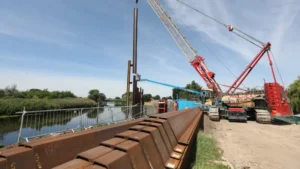
Our riverbank protection project in Southeast Asia demonstrated this principle. Hot rolled U type steel sheet piles formed a continuous retaining wall that stabilized the riverbank and reduced erosion. The strong interlocking system controlled soil movement and limited water penetration. Vibratory installation also allowed the contractor to finish construction efficiently while maintaining the project schedule.
In my opinion, contractors should evaluate the complete water management system instead of expecting one product to solve every engineering challenge. This approach usually produces better long-term results and reduces maintenance costs.
Conclusion
I believe steel sheet piles remain one of the most reliable solutions for coastal protection because they combine strength, durability, fast installation, and excellent shoreline stabilization.