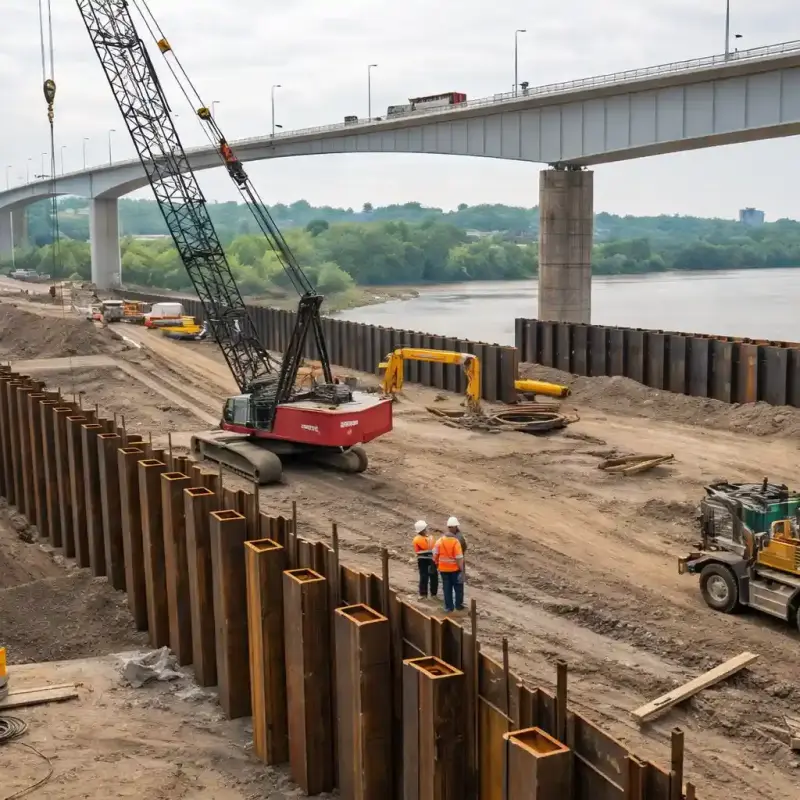
Choosing the wrong hammer can double your piling program. I have watched a crew lose almost three weeks on one river wall because nobody matched the driving method to the ground before mobilizing.
Vibratory driving uses high-frequency eccentric weights to reduce soil resistance around the pile, so it suits most sands and soft clays. Impact driving drops a heavy ram onto the pile head, so it wins in dense sand, gravel, and stiff clay. Always match the hammer to the soil first, then to site constraints.
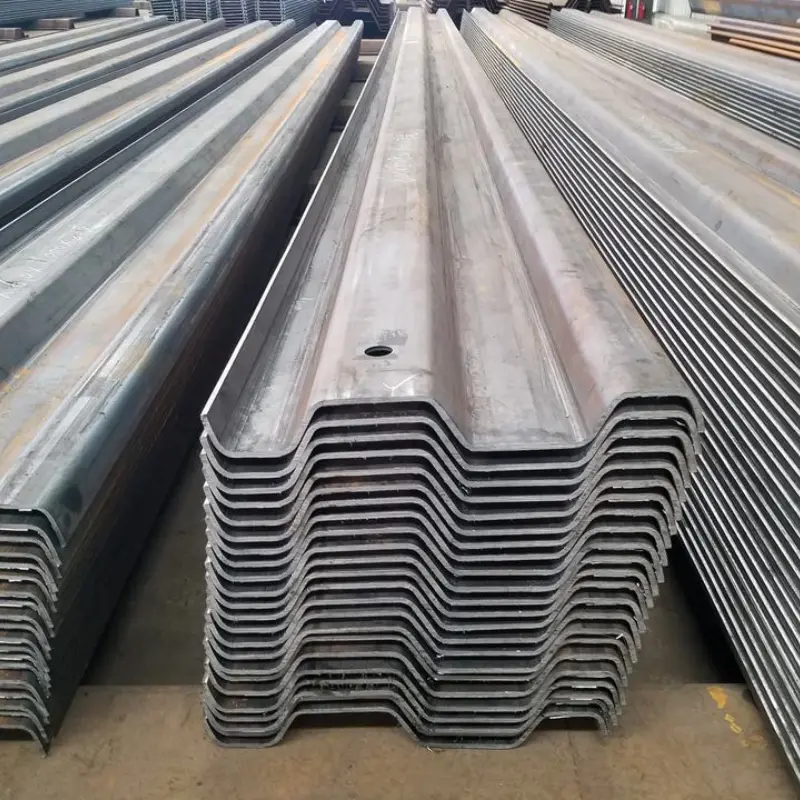
On my side, I supply U and Z type sheet piles to contractors across the Middle East, Australia, and Africa, and the driving question follows every shipment. Buyers ask me the same thing before they rent equipment: vibratory or impact? This guide is the answer I give them, based on what I see on real sites, not just in catalogues.
What Is the Difference Between Vibratory and Impact Driving?
Getting this difference wrong costs time, money, and sometimes the pile itself. Many crews buy or rent a hammer first and only then discover the ground does not cooperate.
A vibratory hammer shakes the pile at 20 to 40 Hz, which fluidizes granular soil and cuts skin friction, so the pile sinks under its own weight. An impact hammer strikes the pile head with a falling or hydraulic ram, converting each blow into end-bearing penetration through dense or hard layers.

Two different energy paths into the same pile
The two methods push the pile into the ground through completely different physics. A pile driver built for vibration rotates eccentric weights in opposite directions. The horizontal forces cancel, but the vertical forces add up, so the suspension and the pile vibrate up and down. The soil grains at the shaft lose contact for a moment, friction drops, and the pile slides down. This is why a vibratory hammer feels almost effortless in clean medium sand.
An impact hammer works the opposite way. It stores energy in a raised ram and releases it in a single blow. The shock wave travels down the pile and crushes or displaces material at the toe. Friction along the shaft matters less; what matters is end resistance. That is why impact keeps working when a vibratory hammer stalls in dense gravel or stiff clay.
I summarize the practical differences for my customers in one table:
| Aspect | Vibratory driving | Impact driving |
|---|---|---|
| Working principle | High-frequency vibration reduces shaft friction | Repeated blows overcome toe resistance |
| Best ground | Sands, silts, soft to medium clays | Dense sand, gravel, stiff clay, mixed fills |
| Noise at 10 m | About 70-85 dB(A) | About 90-105 dB(A) |
| Speed in favorable soil | 6-12 piles per hour | 3-7 piles per hour |
| Pile extraction | Excellent, same machine reverses the job | Poor, needs a separate puller |
| Depth control feedback | Continuous, easy to read | Blow count per set interval |
| Equipment cost | Lower for excavator-mounted units | Higher, needs crane and leader system |
Neither machine is “better”. They solve different resistance problems, and most serious projects end up using both at different stages.
When Should You Choose a Vibratory Hammer for Sheet Pile Installation?
Speed and noise rules push most urban and waterfront jobs toward vibration. But vibratory hammers have real limits, and ignoring them creates stubborn refusals.
Choose a vibratory hammer when you drive sheet piles in loose to medium dense granular soil, when site noise limits are strict, or when the piles must be extracted later. In clean medium sand a good vibratory rig installs two to three times faster than an impact hammer.
Where vibratory driving earns its money
In my export markets, vibratory driving is the default for riverbank protection walls and shallow cofferdams. The soil along most river channels is alluvial sand and soft clay, exactly the profile where vibration shines. A crew with an excavator-mounted vibratory hammer can set 60 to 80 piles a day once they find a rhythm. I saw this in our Southeast Asia riverbank project, where hot rolled U type piles went in with a vibratory rig and the contractor finished ahead of schedule.
Vibratory hammers also dominate temporary works. When the retaining structure is temporary, extraction matters as much as installation. The same machine that drove the wall can pull it out, and the piles stay clean enough for three or four reuse cycles. For a wholesale buyer like me, that reuse story is a strong selling point, because the customer calculates cost per drive cycle, not per pile.
The limits are just as clear:
| Situation | Vibratory verdict | Why |
|---|---|---|
| Loose to medium sand | First choice | Friction drops sharply, penetration is fast |
| Soft clay and silt | Workable | Penetrates well but slower, watch interlock smear |
| Dense sand below 15 m | Risky | Amplitude cannot overcome toe resistance |
| Near sensitive structures | Check first | Low-frequency units can shake loose soils nearby |
| Very low headroom | Good fit | Excavator-mounted units need little overhead space |
One more point from experience: variable moment hammers reduce vibration transmission during start-up and shutdown. If your job sits next to an old masonry building, pay the extra rent for a variable moment unit. The standard fixed eccentric machine is fine on open ground, but the resonance at start and stop is what cracks nearby plaster.
When Is Impact Driving the Better Choice?
Sooner or later every deep wall meets a layer the vibrator cannot pass. That is where impact driving proves why it has survived two centuries of piling.
Choose impact driving when sheet piles must reach dense sand, gravel, or stiff clay, when design depth demands high toe resistance, or when driving must be verified blow by blow. The impact hammer is also the fallback for every refusal a vibratory unit leaves behind.
Blow counts tell you the truth about depth
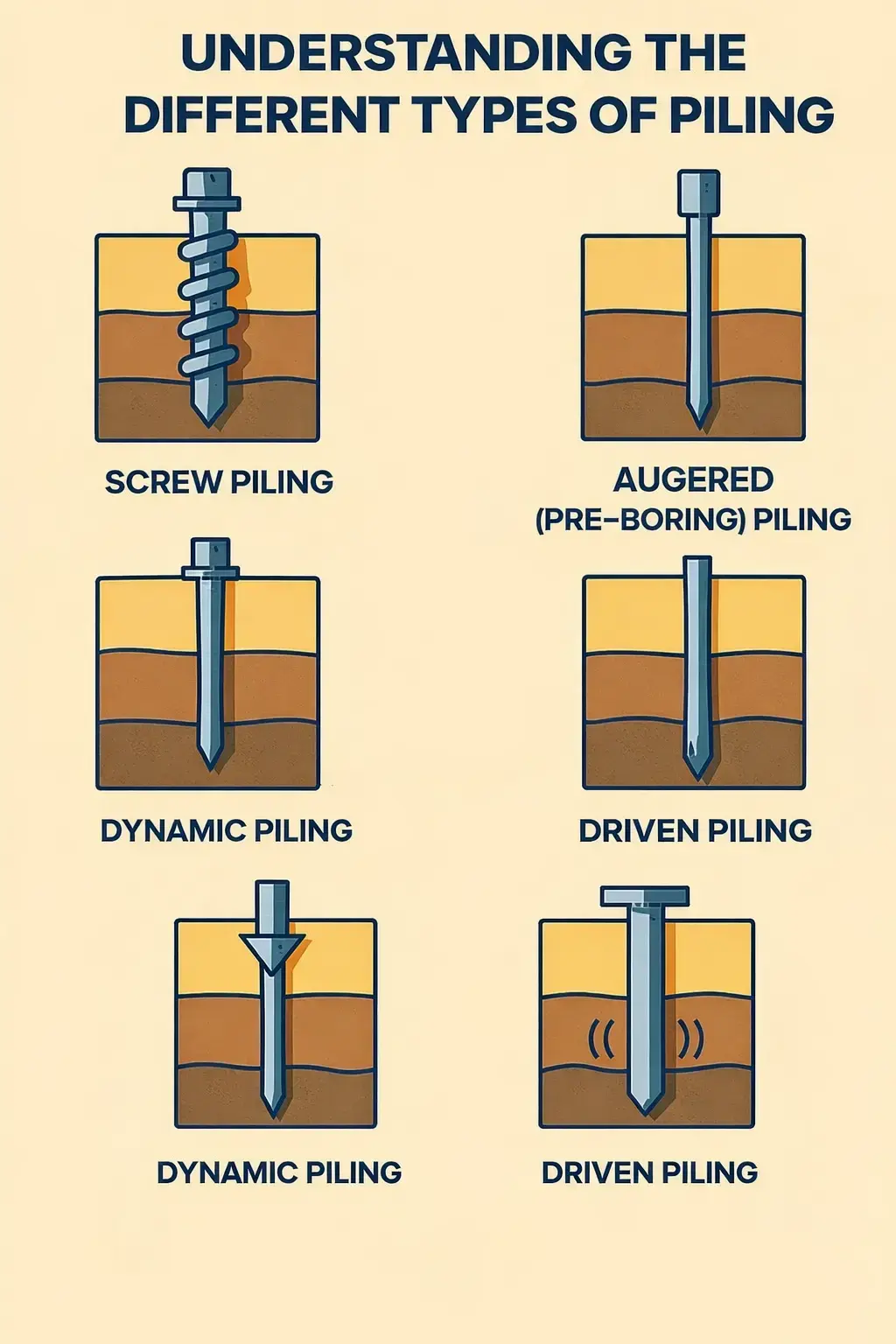
Impact driving gives you something vibration never will: a measurable blow count for every 25 or 30 centimeters of penetration. Site engineers love this, because the blow count is evidence. It proves the pile reached the design toe and it exposes obstructions immediately. On bridge foundation and pier works, where the sheet pile wall is often a cofferdam with real hydrostatic load behind it, I almost always see impact hammers finish the last meters.
The method also handles ground that defeats vibrators completely. Gravel with cobbles, dense residual soils, and stiff over-consolidated clay all respond to repeated sharp blows rather than steady shaking. In many coastal jobs I supply for, the wall starts with a vibrator through soft upper layers, then a crane-suspended diesel or hydraulic hammer takes over near refusal. Crews that plan this switch from day one lose far less time than crews that discover the hard layer at pile 40.
| Factor | What impact driving gives you | What it costs you |
|---|---|---|
| Penetration power | Wins in dense and hard strata | Slower in soft soil, energy is wasted |
| Verification | Blow count per interval, clear proof of depth | Requires a stop-watch discipline on site |
| Noise | Simple, robust, weather tolerant | 90-105 dB(A), often restricted in cities |
| Pile head stress | Controllable with cushion blocks | Bad cushions split pile heads, replace them |
| Wall tightness | Driving force beds interlocks firmly | Hard driving can spread interlocks if misaligned |
Protect the pile head. I sell piles for a living, and even I will tell you that a worn cushion is more expensive than a new one. Undersized or hard cushions send shock spikes into the head, and a split head stops the wall as surely as a boulder does.
How Do Soil Conditions Decide the Driving Method?
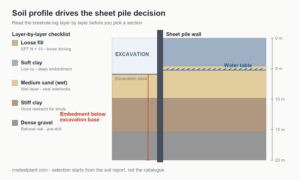
Soil is the real project manager on any piling job. The hammer selection should follow the borehole log, not the rental company’s stock list.
Read the ground before you pick the hammer. Loose sands and soft clays favor vibratory driving, dense sands and stiff clays favor impact driving, and rock or buried concrete calls for pre-drilling regardless of hammer type. A simple SPT profile usually settles the debate in minutes.

Turn the borehole log into a hammer decision
The standard penetration test gives you a number, the SPT N-value, for every meter of the profile. I am not a geotechnical engineer, but after years of supplying piles I read these logs the way a driver reads a road map:
| SPT N-value | Ground description | Recommended approach |
|---|---|---|
| 0-10 | Very loose to loose | Vibratory, watch for overdriving and lean |
| 10-30 | Medium dense | Vibratory, fastest and cleanest zone |
| 30-50 | Dense | Impact driving or high-amplitude vibrator |
| Over 50 | Very dense or weathered rock | Impact with pre-drilling or jetting support |
Mixed profiles deserve special respect. A wall for port and harbor protection often drives through dredged silt, then medium sand, then a stiff clay crust. Each layer favors a different energy path. My advice to contractors is simple: decide the switch point before driving starts, and keep the impact hammer within one mobilization of the site from day one.
Water content matters too. Below the water table, saturated sand behaves almost kindly for vibration. Above it, the same sand gains apparent cohesion and slows a vibratory hammer noticeably. This is one more reason the same wall can drive beautifully at low tide and fight you after rain.
How Do Noise and Vibration Rules Change the Decision?
On paper the hammer choice looks purely technical. In practice, one clause in a city noise ordinance can overrule every geotechnical argument.
Vibratory driving runs 15 to 20 dB(A) quieter than impact driving and produces lower ground vibration, which makes it the default inside cities. But vibration affects neighboring structures, so sensitive sites often end up specifying press-in or silent piling methods instead of either hammer.
Plan for the neighbors, not just the pile
Ground vibration from impact driving is measured as peak particle velocity, usually in millimeters per second. Standards such as the German DIN 4150-3 give conservative guideline values for building categories, and most authorities borrow from them. The Federal Highway Administration construction manual in the United States carries similar guidance, and I see the same logic appear in Middle East project specs.
| Constraint | Vibratory answer | Impact answer |
|---|---|---|
| City night work | Often permitted, still check hours | Rarely permitted |
| Next to hospitals or schools | Preferred, with variable moment unit | Practically excluded |
| Old masonry buildings within 10 m | Low-frequency units risky at start-up | High PPV, usually needs monitoring |
| Underground utilities | Moderate vibration, verify with survey | Survey and monitor before driving |
| No compromise allowed at all | Press-in / silent piling replaces both hammers | |
When the site allows neither hammer, press-in systems jacking the pile statically are the escape route. They are slow and they need a reaction force, but for subway and underground works in dense city centers, they are often the only method the authorities will sign off.
What Does the Choice Mean for Cost and Schedule?
Contractors feel the hammer decision in the quote long before the first pile enters the ground. The rental rate per day is only one line of the real cost.
Vibratory driving costs less per pile in suitable ground because it moves faster and needs smaller machines. Impact driving costs more per day but prevents expensive refusals and rework in hard ground. The cheapest program is the one that matches both hammers to their layers.
Run the numbers per pile, not per day
When I quote marine and coastal projects, I encourage buyers to calculate cost per installed pile, including standby. A vibratory rig at 10 piles per hour and a modest rental rate usually wins in medium sand. But add three days of fighting refusal at the toe, and the impact hammer that costs more per day becomes cheaper per finished wall. Our coastal protection case study showed exactly this: two extra rental days avoided by switching methods early paid for the whole switch.
Interlock integrity belongs in the cost column too. Vibratory driving in soft soil can pump fines along the interlocks and loosen the wall, while aggressive impact driving can spread poorly engaged locks. Either way you pay for jetting, sealing, or re-driving later. A wall driven with the right method, in the right sequence, closes tight with minimal interlock performance surprises. That is why I tell distributors to sell the driving plan with the piles, not just the steel.
My Take: Buy the Hammer Decision After You Test the Ground
Here is my honest view from the supply side. I have shipped piles to five continents, and the projects that run smoothly share one habit: they test the ground honestly and pick the method without ego. The projects that bleed money share another habit: the equipment was booked before the boreholes were read.
If I could give every contractor one rule, it would be this. Get one test pile driven with each candidate hammer on day one of mobilization. Two piles, half a day, one clear answer. On a 300-pile wall, that half day is the best investment on the whole program. And when you plan a switch from vibratory to impact, tell your pile supplier early. We can check that the section modulus and interlock type suit hard driving, and we would much rather confirm that before shipment than hear about split pile heads after.
The steel rarely fails on these projects. The plan fails. Match the hammer to the soil, and the wall almost builds itself.
Conclusion
Vibratory driving wins speed and noise in sands and soft clays. Impact driving wins depth and proof in dense ground. Test your soil, choose per layer, and drive accordingly.