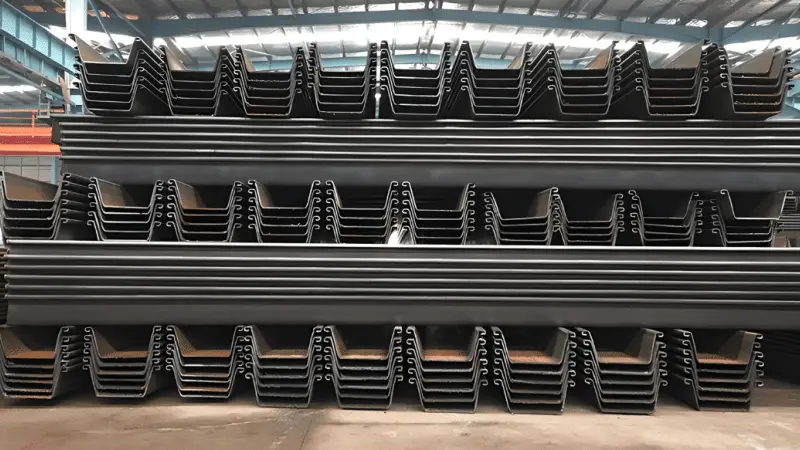
Many sheet pile failures happen because soil conditions are ignored during design. This leads to poor penetration, instability, and costly redesign work.
Sheet pile selection based on soil conditions depends on soil type, strength, permeability, and installation method. Soft clay, sand, and mixed soils each require different pile types, embedment depth, and installation techniques to ensure stability and performance.
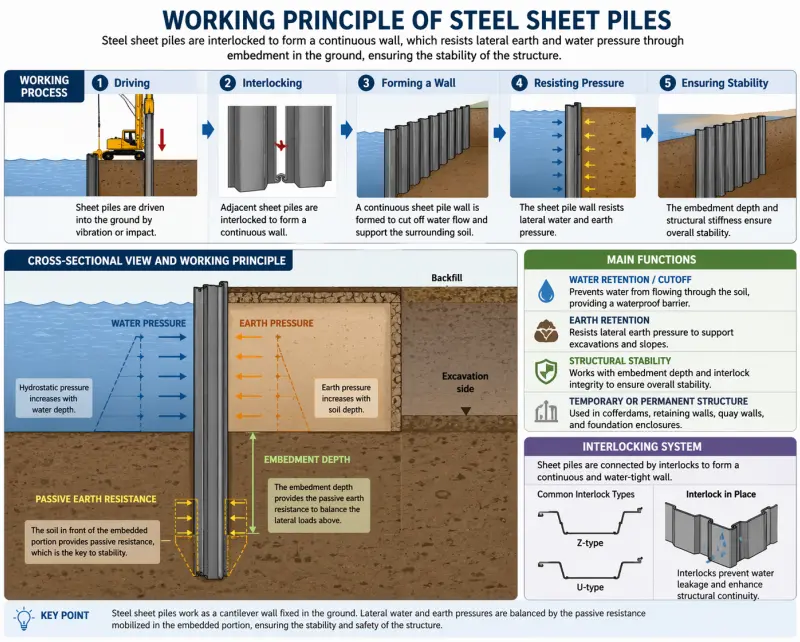
I often see contractors select sheet piles only based on steel grade or price. This creates problems during installation. Soil is the real foundation of every sheet pile project. If soil behavior is not understood, even strong steel will not perform well. In my experience, correct soil analysis is the first step of every successful retaining wall or excavation project.
What is the difference between Type 2 and Type 4 sheet pile?
Many engineers see Type 2 and Type 4 labels but do not fully understand the structural difference behind them.
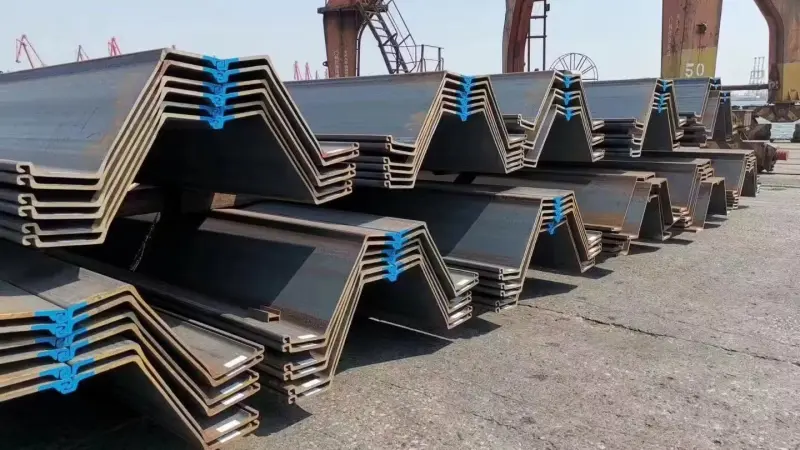
Type 2 sheet piles are lighter sections with lower bending resistance, while Type 4 sheet piles are heavier sections with higher section modulus and stronger load capacity. Type 4 is used in deeper excavations and higher soil pressure conditions.
Understanding Section Capacity
Sheet pile types are defined by geometry, not steel grade.
The key difference is section modulus.
| Type | Weight | Section Modulus | Soil Condition |
|---|---|---|---|
| Type 2 | Low | Low | Shallow soil |
| Type 4 | High | High | Deep soil |
Higher section modulus means better resistance to bending from soil pressure.
Soil Pressure Effect
Soil pushes sideways against sheet piles.
This pressure increases with:
- Depth
- Water content
- Soil density
Type 2 piles can fail in deep excavation because bending stress becomes too high.
When Type 4 Becomes Necessary
Type 4 sheet piles are used when:
- Excavation depth is large
- Groundwater level is high
- Soil is soft clay
- Retaining wall height increases
In these cases, structural strength becomes more important than cost.
My Field Experience
I once worked on a project where the contractor used Type 2 piles in a deep excavation area. The soil was soft clay with high water content. The piles started to deform during installation.
After redesign, we switched to Type 4 sections. The installation became stable. The wall performed as expected.
My view is simple. Soil condition always decides pile type. Steel grade alone is not enough.
What is the rule of thumb for sheet pile embedment?
Many buyers ask how deep sheet piles should go into the ground. This is one of the most important design questions.
A common rule of thumb for sheet pile embedment is that the embedded depth should be 1/3 to 1/2 of the total exposed height, depending on soil conditions and water pressure. Softer soil requires deeper embedment for stability.
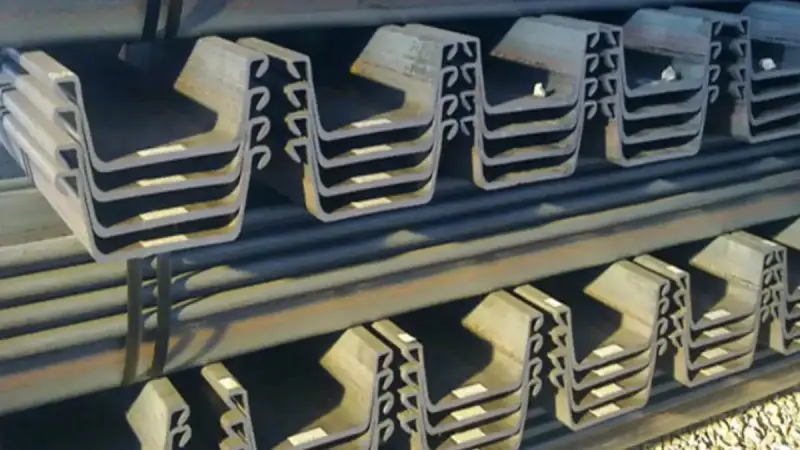
Basic Embedment Concept
Sheet piles work like a cantilever wall.
They resist:
- Soil pressure
- Water pressure
- External loads
The embedded part provides stability.
Simple Design Ratio
Engineers often use:
| Condition | Embedment Ratio |
|---|---|
| Firm soil | 1/3 height |
| Medium soil | 1/2 height |
| Soft soil | More than 1/2 height |
This is not a final design rule. It is only a starting point.
Influence of Water Table
Water pressure changes embedment depth.
When groundwater is high:
- Pressure increases
- Stability decreases
- Embedment must increase
Marine and river projects often need deeper penetration. Reference FEMA flood protection guidelines.
Soil Type Effect
Different soils behave differently:
- Sand → drains water quickly but shifts easily
- Clay → holds shape but deforms slowly
- Mixed soil → unpredictable behavior
Clay often requires deeper embedment due to long-term deformation.
My Practical Observation
In many projects, I see under-designed embedment depth. The wall looks stable at first. Later it starts to move slowly.
When embedment is corrected, performance improves significantly.
My opinion is that embedment depth is more important than steel strength in many soil problems.
How to choose pile?
Many buyers think pile selection is only about steel grade. This is not correct.
Pile selection depends on soil conditions, load requirements, excavation depth, groundwater level, and installation method. Engineers must match pile type, steel grade, and section geometry to site conditions.
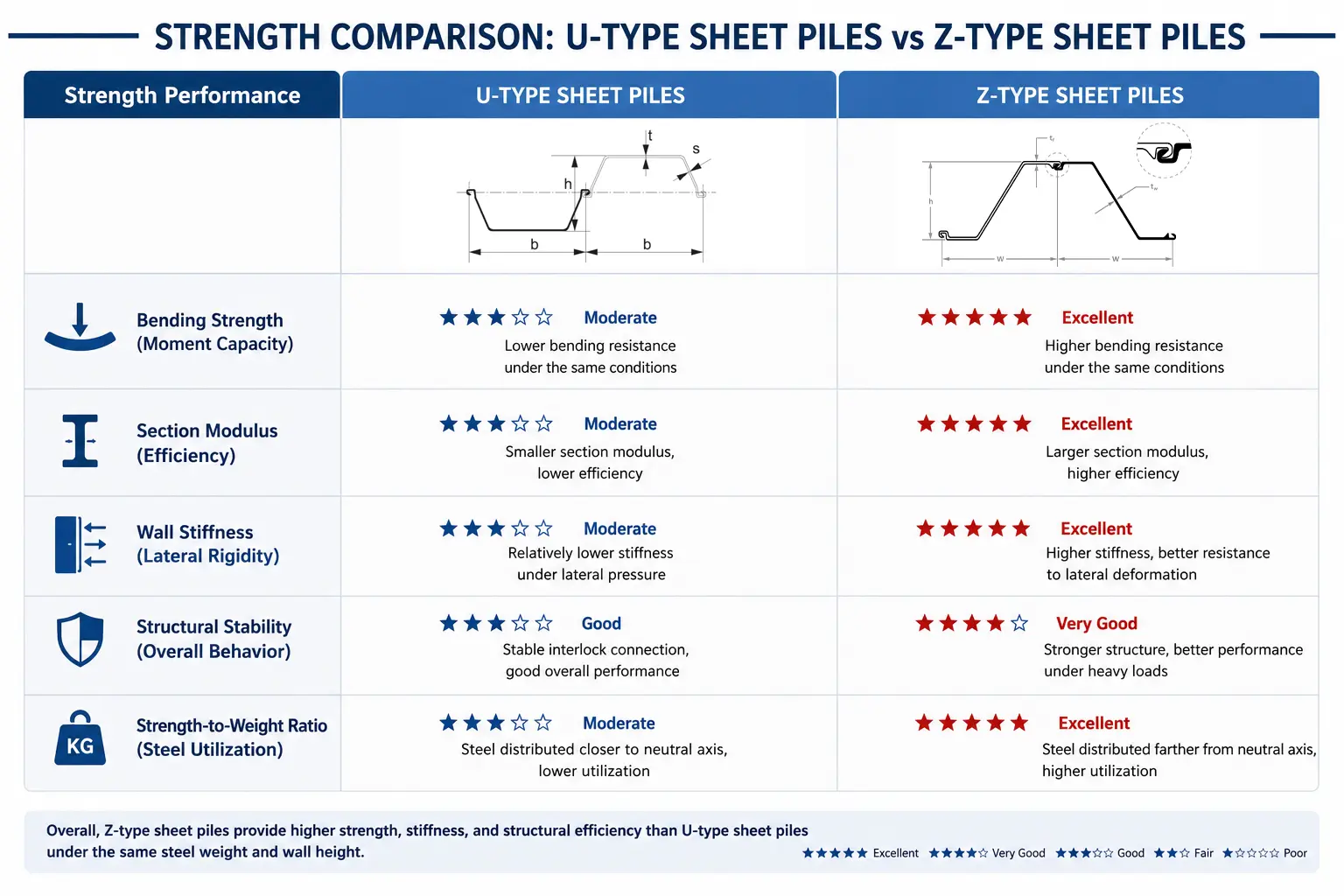
Step 1: Analyze Soil Condition
Soil investigation is the first step.
Engineers check:
- Soil type
- Bearing capacity
- Water content
- Layer structure
Without this data, selection is not reliable. Refer to ASTM D1586 soil testing standard.
Step 2: Define Structural Load
Loads include:
- Earth pressure
- Water pressure
- Surcharge loads
Higher loads require stronger sections like Type 4 or Z-type piles.
Step 3: Select Steel Grade
Common choices:
| Steel Grade | Use |
|---|---|
| S235 | Temporary works |
| S355 | Permanent structures |
| Q355 | General infrastructure |
| ASTM A690 | Marine environments |
Steel grade affects strength and durability.
Step 4: Choose Profile Type
Z-type is often preferred in deep excavations.
Step 5: Select Installation Method
Installation methods include:
- Vibratory driving
- Impact hammer
- CFA-assisted systems
Method affects speed and soil disturbance.
My Engineering View
I always tell clients that pile selection is a system decision.
It is not only steel.
It is soil + structure + method combined.
If one part is wrong, the system fails.
What is the CFA method of piling?
Many contractors ask about CFA piling when dealing with soft or unstable soil.
CFA (Continuous Flight Auger) piling is a drilling method where a hollow auger is drilled into the ground, concrete is pumped through the hollow shaft, and the pile is formed without casing support. It is used in soft soil and urban areas.
How CFA Works
The process is simple:
- Auger drills into soil
- Soil is removed during drilling
- Concrete is pumped through hollow shaft
- Reinforcement is inserted
This creates a continuous concrete pile.
Advantages of CFA
CFA offers:
- Low vibration
- Fast installation
- Suitable for urban areas
- Good for soft soil
It reduces noise and ground disturbance.
Soil Suitability
CFA works best in:
- Soft clay
- Loose sand
- Water-bearing soil
It is not suitable for hard rock.
CFA vs Sheet Piles
CFA is a foundation system.
Sheet piles are retaining systems.
They solve different problems:
| System | Function |
|---|---|
| CFA pile | Vertical load support |
| Sheet pile | Lateral earth retention |
My Field Observation
I once saw a project in a city center where CFA was chosen because vibration was not allowed.
Sheet piles could not be used due to nearby buildings.
This shows that method selection depends on environment, not only strength.
What is the difference between CFA and FDP piles?
Many people confuse CFA with FDP because both use auger drilling systems.
CFA piles use continuous flight auger with concrete pumping, while FDP (Full Displacement Piles) use displacement drilling that compresses soil sideways instead of removing it. FDP improves soil density and reduces spoil material.
CFA Method
CFA removes soil during drilling.
Main features:
- Soil extraction
- Concrete injection
- Suitable for soft ground
FDP Method
FDP does not remove soil.
Instead, it:
- Displaces soil sideways
- Improves ground density
- Creates minimal spoil
Key Comparison
| Feature | CFA | FDP |
|---|---|---|
| Soil removal | Yes | No |
| Vibration | Low | Very low |
| Ground improvement | No | Yes |
| Spoil material | High | Low |
Application Differences
CFA is used when:
- Soil is weak
- Fast construction is needed
FDP is used when:
- Ground improvement is required
- Environmental control is strict
Impact on Sheet Pile Projects
Both methods influence nearby sheet pile work.
They affect:
- Ground stability
- Lateral support
- Construction sequencing
My Opinion
In many projects, engineers combine systems.
CFA or FDP is used for foundations.
Sheet piles are used for retaining walls.
Together they create a stable structure system.
Understanding this difference helps avoid wrong design assumptions.
Conclusion
Sheet pile selection based on soil conditions requires understanding soil behavior, embedment depth, pile type, and installation method together, not individually.