Green building rules tighten every year, and clients now ask where every ton of material ends up. As a supplier, I hear this question from contractors almost every week.
Steel sheet piles support sustainable construction because one set can serve three to five projects, the steel is fully recyclable at end of life, and these walls replace thick concrete sections that nobody can ever recover. Less material goes in, and less waste comes out.
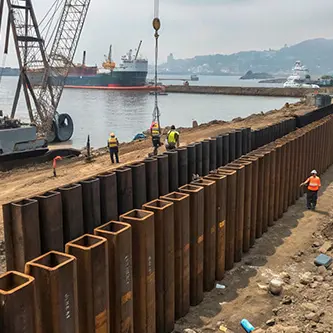
Sustainability in construction is no longer a marketing slogan. It is a tender requirement, a rating point, and sometimes a legal duty. In this guide, I will walk through the sustainability story of steel sheet piles from my own desk at a factory in Liaocheng, Shandong. I ship these sections to the Middle East, Australia, Africa, and the Americas, so I see how different markets treat reuse, recycling, and green design. By the end, you will know exactly why sheet piles earn their green credentials, and where the honest limits are.
What Makes Steel Sheet Piles a Sustainable Building Material?
Most retaining materials end up buried, broken, or lost forever. Steel sheet piles follow a different path, and that path starts with the metal itself.
Steel sheet piles are sustainable because structural steel is one of the most recycled materials on earth. Modern high-strength grades also let a lighter section carry the same load, so the wall needs less mined ore and carries less embodied carbon from day one.
The core argument is simple: steel sheet piles are a manufactured product, not a poured one. Every section is rolled under tight tolerance, inspected before it leaves the mill, and delivered with a known yield strength. Nothing about the wall depends on weather, curing time, or the skill of a formwork crew. When the project finishes, the pile keeps its shape and its strength. A poured concrete wall, by contrast, is bonded to the soil and the rebar inside it. Demolition turns it into mixed rubble that can only be downcycled into road base.
High-strength grades mean less steel per meter of wall
Twenty years ago, many walls were built from mild steel with a yield strength around 235 MPa. Today, most of my export orders ask for S355 or Q355 grades. The higher yield strength lets the designer pick a lighter, narrower section for the same bending moment. Less steel per meter means less ore mined, less energy in the rolling mill, and a smaller carbon footprint before the pile even reaches the site. In my experience, a well-chosen modern section can trim 10 to 20 percent off the steel weight of a wall compared with an old specification. If you want the details, I compared the common grades in an earlier article on sheet pile steel grades.
| Grade | Min yield strength | Typical use | Why it saves material |
|---|---|---|---|
| Q235 / S235 | 235 MPa | Light temporary works | Low cost, easy welding |
| Q355 / S355 | 355 MPa | Most retaining walls | Lighter section for the same load |
| S390–S430 | 390–430 MPa | Deep or high-load walls | Thinner web, less steel per meter |
| ASTM A690 | 345 MPa (marine) | Seawalls, splash zones | Longer life in corrosive water |
How Does Reusing Sheet Piles Cut Carbon and Cost?
Temporary walls used to be demolished and dumped after one project. With sheet piles, I watch customers pull the same piles out and drive them again on the next job.
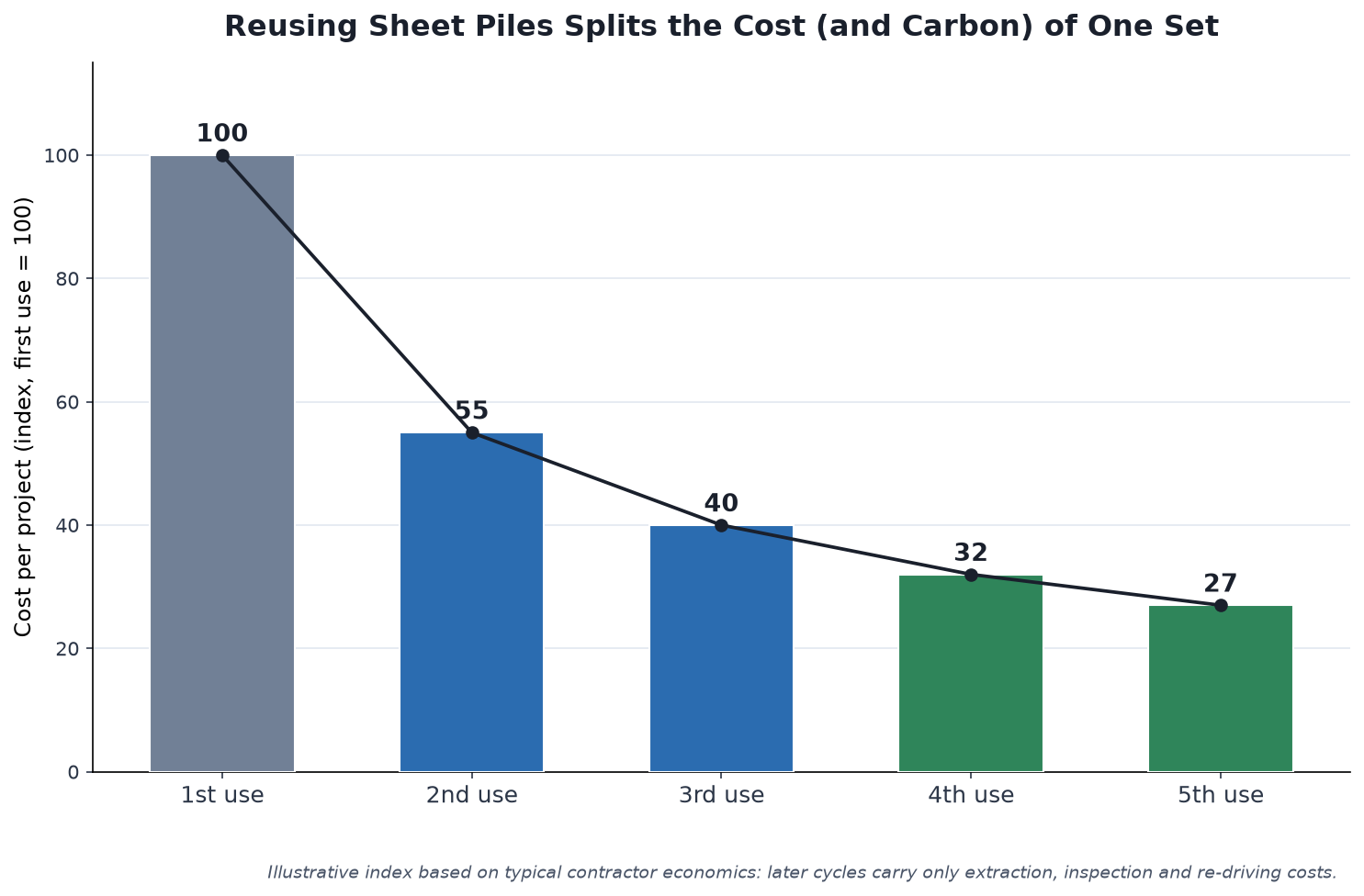
Each reuse cycle spreads the embodied carbon of one steel section over several projects. Industry estimates suggest that four reuse cycles can cut the per-project footprint of a sheet pile wall by roughly 70 to 85 percent compared with a single-use wall.
This is the single strongest green argument for the product. I explained the full lifecycle in my article on the environmental advantages of reusable steel sheet piles, so here I will focus on the practical side. Reuse only works when the wall is designed for extraction from day one. That means choosing a section with some driving reserve, keeping the wall temporary where the site allows, and planning the pull-out before the first pile is pitched. I covered this logic in more depth in my guide to temporary and permanent sheet pile walls. When it is done right, the same steel earns money two, three, even four times, and the carbon math improves with every cycle.
Design for extraction starts on day one
The contractors who get the best reuse results treat extraction as a design input, not an afterthought. They specify corner profiles that can be undone, avoid encasing pile heads in concrete, and keep records of what was driven where. It is the same mindset that drives the wider circular economy in construction: keep the product at its highest value for as long as possible. The table below shows how the economics typically play out.
I should also mention the second-hand market, because it quietly does a lot of green work. In Australia and the Gulf, trading companies buy extracted piles in bulk, re-grade them, and sell them into lighter-duty jobs such as trench shoring or farm water control. A pile that starts on a port quay wall can finish its life holding a drainage channel, and at every step the alternative was new steel or new concrete. When my distributor customers ask me about second-hand stock, I always tell them the same thing: the price is attractive, but insist on a thickness survey before you bid, because the sustainability claim only holds if the steel is still fit for the duty.
| Reuse cycle | Cumulative cost index (first use = 100) | What changes |
|---|---|---|
| First project | 100 | Full purchase price plus driving |
| Second project | ~55 | Extraction, inspection, and re-driving only |
| Third project | ~40 | Same low re-use cost, no new steel |
| Fourth project | ~32 | Footprint per project drops below half |
| Fifth project | ~27 | Deep discounts versus a new wall |
What Happens to Steel Sheet Piles at the End of Their Service Life?
Nothing lasts forever, not even steel. The good news is that the end of a sheet pile’s journey is a furnace door, not a landfill gate.
At end of life, sheet piles are pulled out, graded, and either reused or sold as scrap. The steel is remelted into new products with no loss of quality, which keeps demand for virgin ore low and keeps the material in circulation.
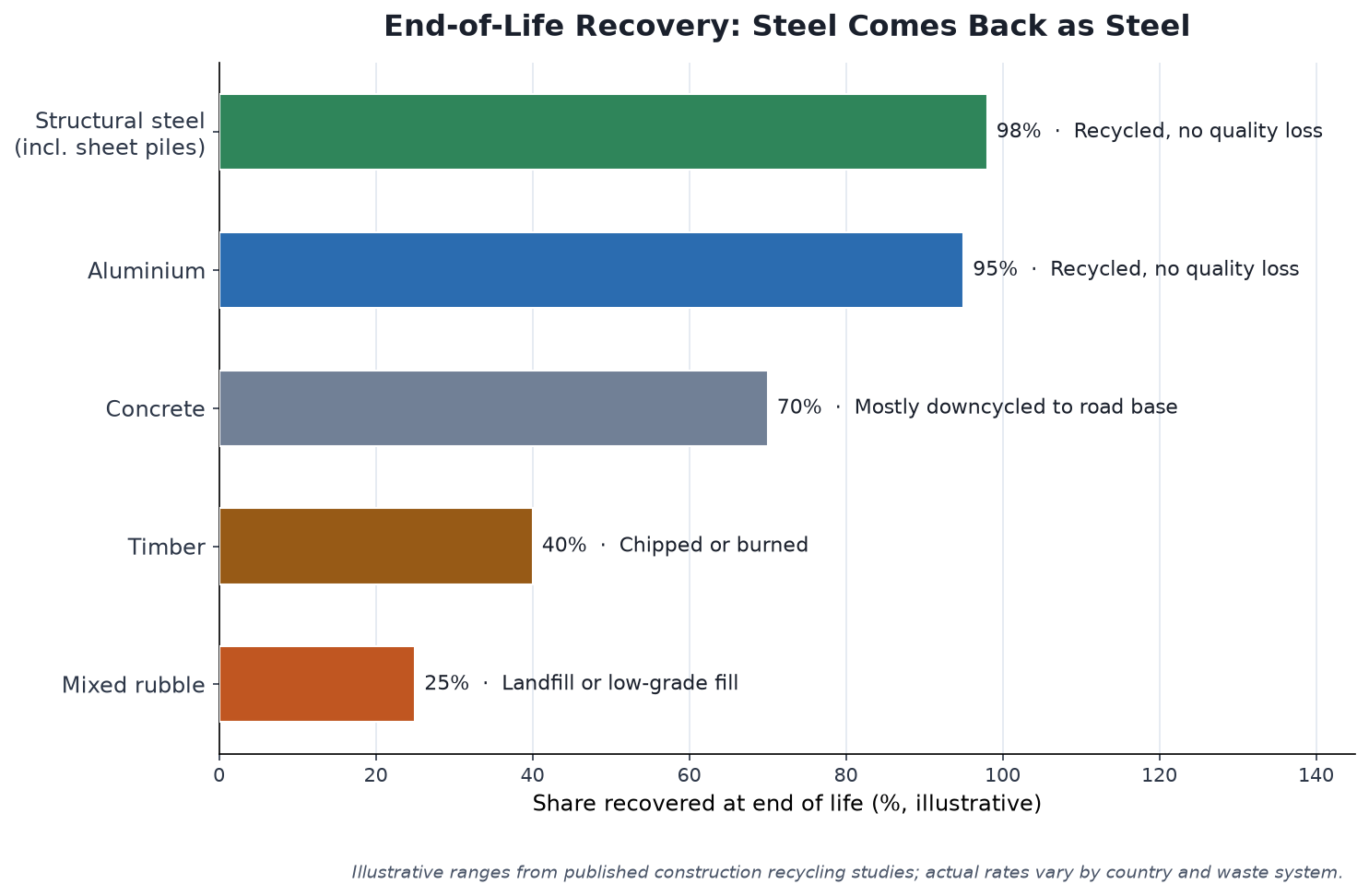
Steel does not degrade when it is recycled. A pile that comes out of the ground after thirty years still contains the same iron atoms it started with. It may have lost some section thickness to corrosion, and its interlocks may be worn, but the metal itself goes back into the scrap stream and returns as new sections, rebar, or structural beams. Electric arc furnaces in particular run heavily on scrap, so old piles are a genuine feedstock, not waste. This is why I tell buyers that a sheet pile order is really a deposit of steel that they will get value from more than once.
There is also a slower trend worth knowing: urban mining. Cities are full of steel walls driven decades ago under streets, basements, and quay edges. As those structures get redeveloped, the old steel re-enters the market instead of new ore entering a blast furnace. I have seen tenders in Europe and Australia that explicitly ask contractors to recover and re-use existing underground steel before buying new material. That would have been unthinkable ten years ago, and it tells you where procurement is heading.
Scrapping is the last option, not the first
In practice, most piles that come out of the ground do not go straight to the furnace. Contractors inspect them, gauge the remaining thickness, and re-grade them for a second life. Only the piles that fail inspection, usually the ones with heavy corrosion or bent interlocks, are sold as scrap. The routes below cover nearly every pile I have shipped.
| End-of-life route | Typical share of extracted piles | What happens |
|---|---|---|
| Direct reuse, same owner | 30–50% | Inspected and re-driven on the next contract |
| Sold as second-hand piles | 20–40% | Re-graded and sold to a lighter-duty project |
| Recycled as scrap | 10–25% | Remelted into new steel, zero quality loss |
| Left in ground (permanent) | Small share | Stays as the designed permanent wall |
How Do Sheet Pile Walls Save Raw Materials on Site?
Concrete walls consume sand, gravel, cement, and water. A steel wall needs none of them, and it disturbs far less ground.
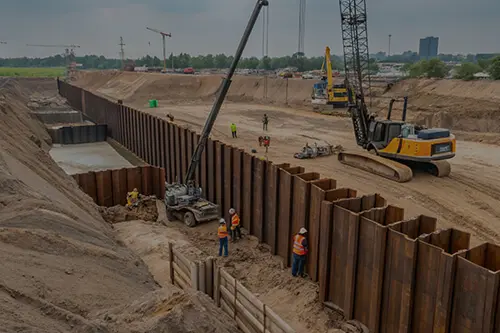
A sheet pile wall replaces a concrete structure that needs excavation, formwork, rebar, and curing time. The steel section is the structure itself, so the project moves less soil, pours less concrete, and burns less fuel on site.
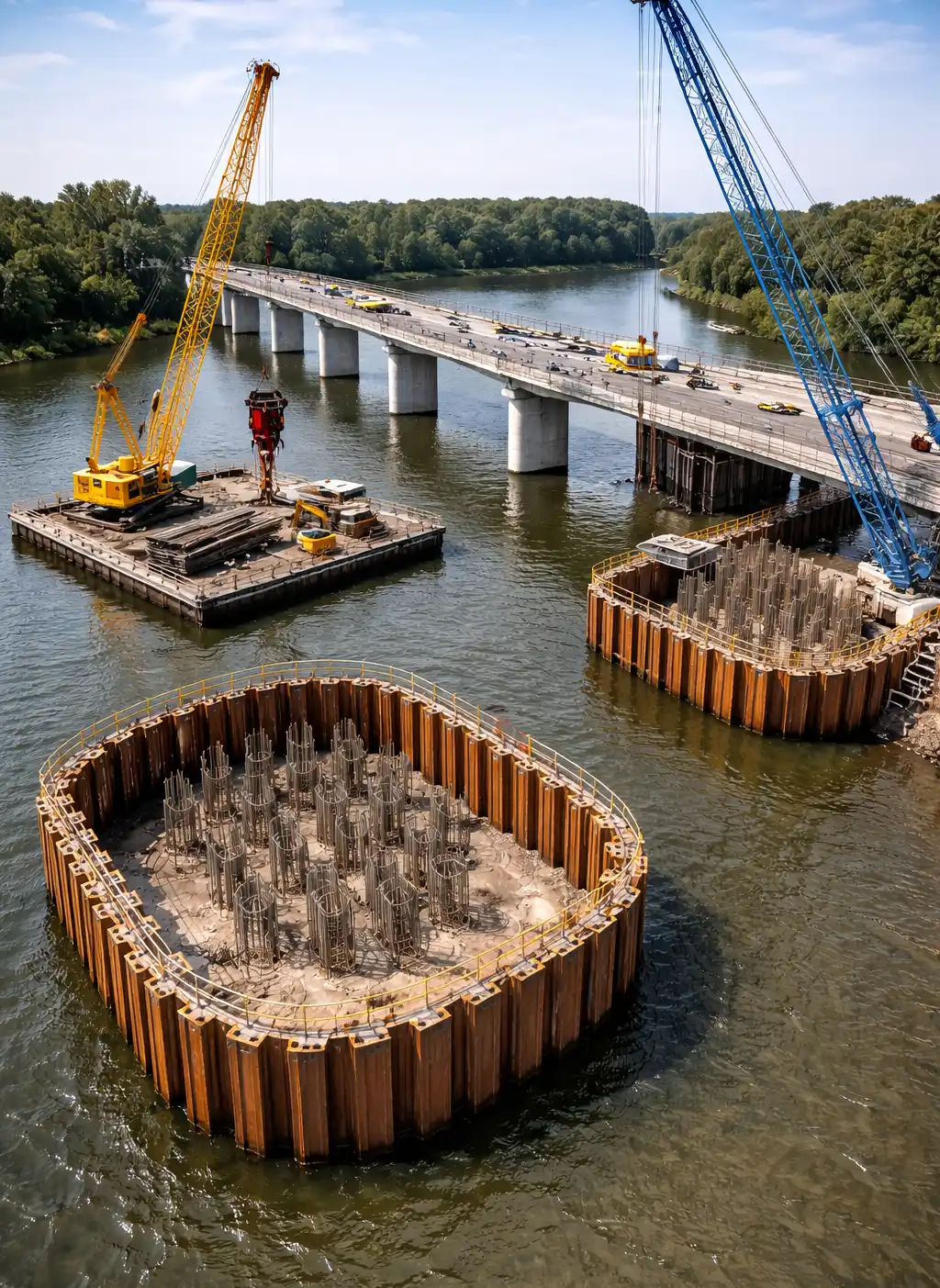
I see this most clearly on cofferdam and deep excavation projects. A secant pile or diaphragm wall needs a bentonite plant, truck after truck of ready-mix, and a wide working platform. A sheet pile wall needs a piling rig and a stack of sections. The excavation face is narrower, the spoil heap is smaller, and the concrete trucks never arrive. Every avoided truck movement is diesel saved and dust avoided in the neighborhood. On tight urban sites, that difference decides who wins the contract, and it happens to be the greener option too.
Less spoil, less trucking, and a quieter site
The embodied energy stored in cement is enormous, and a sheet pile wall simply skips most of it. Research on embodied energy consistently ranks cement and steel as the two biggest material energy sinks in construction, so a wall that uses rolled steel without concrete removes one of those sinks almost completely. The comparison below reflects what I see on typical mid-depth excavation jobs.
| Item per meter of wall | Concrete diaphragm wall | Steel sheet pile wall |
|---|---|---|
| Structural material | Concrete plus rebar | Rolled steel section only |
| Excavation footprint | Wide working platform | Narrow trench line |
| Spoil to truck away | Large (slurry and soil) | Small (trench soil only) |
| Water consumption | High (mixing and curing) | Almost none |
| Recoverable after use | No | Yes, by extraction |
Can Steel Sheet Piles Support Green Infrastructure Projects?
Sustainability is not only about carbon math. It is also about protecting rivers, coasts, and cities for decades without rebuilding them every few years.
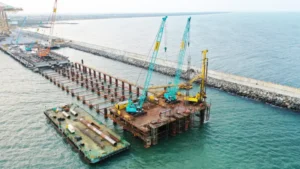
Sheet piles are a natural fit for green infrastructure: flood walls, riverbank protection, contaminated soil containment, and port upgrades. They install fast, seal tightly, and can be removed when the land use changes.
Climate change is pushing every government I ship to, from Gulf states to Australian councils, to spend more on [water defense](https://en.wikipedia.org/wiki/Flood_control). Steel sheet pile walls handle this work well because they combine strength with a small ground footprint, and because a wall that is no longer needed can be taken out instead of abandoned. In one Southeast Asian riverbank project I supplied, hot-rolled U-type piles were driven with vibratory equipment to form a continuous flood barrier. The tight interlocks kept the wall watertight, the schedule held, and the contractor kept the piles in service instead of pouring a concrete embankment. My article on riverbank and flood control solutions tells that story in full.
Flood defense that can move with the risk
A permanent concrete flood wall fixes the defense line forever. A sheet pile wall can be extended, raised, or even extracted and re-driven where the flood risk shifts. Ports are upgrading the same way, and my overview of sheet piles in port projects shows how quay walls and flood gates share the same sections. The applications below are where I see the strongest green demand today.
| Application | Sustainability benefit | Typical product |
|---|---|---|
| Riverbank protection | Stops erosion, removable at end of use | Hot-rolled U-type piles |
| Urban flood walls | Fast install, relocatable as risk shifts | Z-type or hat-type piles |
| Contaminated soil containment | Seals pollutants without mass excavation | Tight-interlock U piles |
| Port and quay upgrades | Extends asset life, steel recoverable | High-strength Z-type piles |
What Is My Take as a Sheet Pile Supplier?
I will be honest with you, because my buyers are engineers and they smell sales talk from a kilometer away. Steel sheet piles are one of the genuinely green stories in foundation work, but the green result is not automatic. It depends on how the wall is designed and how the piles are treated after extraction. A set of piles left in the ground after a “temporary” job, or sold off un-inspected to a project that is too demanding, wastes the whole advantage. That is why we support SGS inspection on every export order from our Liaocheng base, and why I keep telling customers to plan corrosion protection early, because a wall that resists corrosion for fifty years is a wall that serves several generations of projects. My guide to corrosion resistance solutions explains the options in detail. My advice is simple: if sustainability is written into your tender, ask your supplier for reusability data, section records, and an inspection plan, not just a price per ton. The suppliers who can answer those questions are the ones who will still be shipping to you in ten years.
Conclusion
Steel sheet piles cut waste, save carbon, and come back for another job. For contractors who must build green without losing margin, they remain one of the smartest retaining choices.