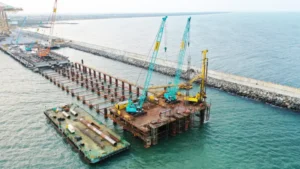
How Do Steel Sheet Piles Improve Soil Retention and Stability?
Most retaining failures I get called about are not steel failures. They are soil failures that the wall simply could not stop.
Steel sheet piles improve soil retention by cutting off the soil wedge behind the excavation, resisting it with continuous interlocked sections, and using toe embedment to mobilize passive soil resistance. The result is less ground movement, less water loss, and a stable face that holds through the whole construction cycle.
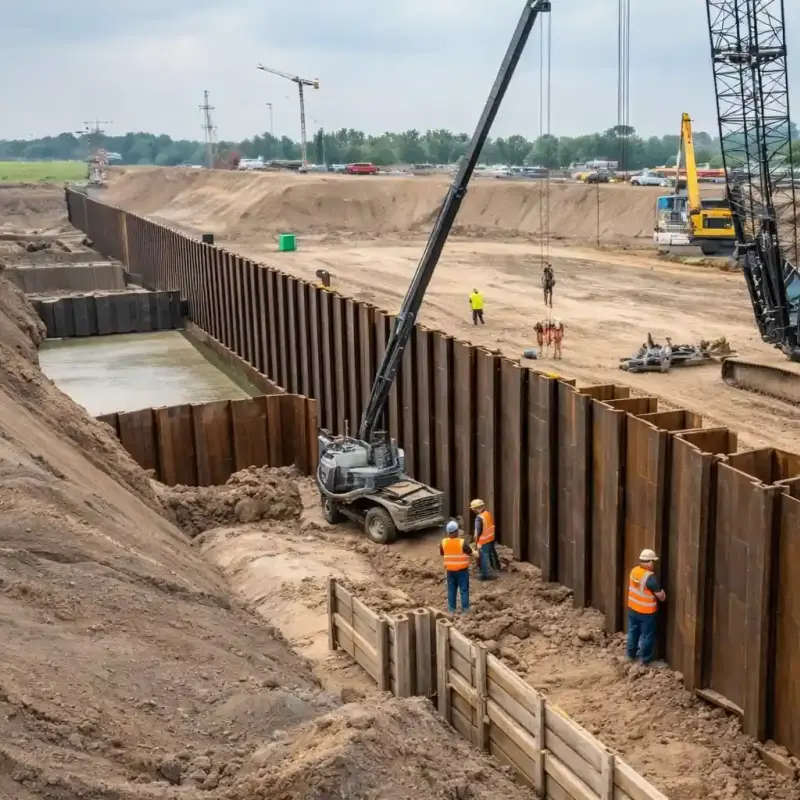
I have walked around enough excavations to know the difference between a wall that is holding soil and a wall that is fighting soil. On a well designed project, the retained ground behind the wall barely moves. On a badly designed one, cracks appear in the pavement behind the wall, services start to settle, and the pump never stops running. In this article I will explain, in plain terms, how a sheet pile wall actually retains soil, what makes that retention stable, and which details matter most when you plan a project with our factory in Liaocheng.
What Does a Steel Sheet Pile Wall Actually Do to the Soil Behind It?
A sheet pile wall does not push soil back. It interrupts the path that soil would take if the wall were not there.
A sheet pile wall cuts the soil mass in two, so the wedge behind the excavation can no longer slide toward the open face. The interlocked sections carry that sliding force down into the ground, and the embedded toe transfers it into deeper, stronger soil.
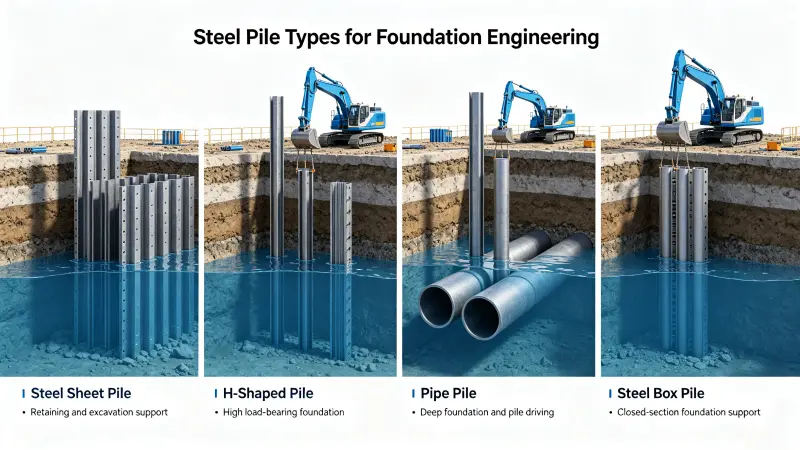
The sliding wedge is the thing you are stopping
When we excavate, the soil behind the cut wants to move toward the open side. Engineers call the moving mass the active wedge. In most soils, that wedge starts to form as soon as the excavation passes a shallow depth. If nothing stops it, the ground surface behind the cut settles, cracks, and eventually slides.
A steel sheet pile wall stops the wedge in two ways. First, the continuous wall face gives the wedge nothing to slide past. Second, the wall is long enough to reach below the failure surface, so the sliding mass cannot pass under the toe either. This is why we always ask customers for a soil report before quoting sections. Without the report, we cannot tell whether a light U type section will hold the ground or whether the project needs a heavy Z type profile.
| Soil behavior | What happens without a wall | What the sheet pile wall changes |
|---|---|---|
| Active wedge forms | Ground behind the cut settles and cracks | Wall face blocks the wedge from moving |
| Water seeps toward the cut | Fine particles wash out, soil loosens | Interlocks lengthen the seepage path |
| Toe soil is loaded | Bearing failure at shallow depth | Embedment pushes load into stronger strata |
| Vibrations reach neighbors | Settlement of nearby structures | Continuous wall reduces transmitted ground movement |
I keep this comparison in mind every time a contractor tells me they want to save money on section weight. The saving is real, but so is the risk. A wall that is too light does not fail dramatically. It creeps, it leaks, and it drags the ground behind it down with it.
Why Does Toe Embedment Decide Whether the Wall Stays Stable?
The buried part of the wall does most of the quiet work.
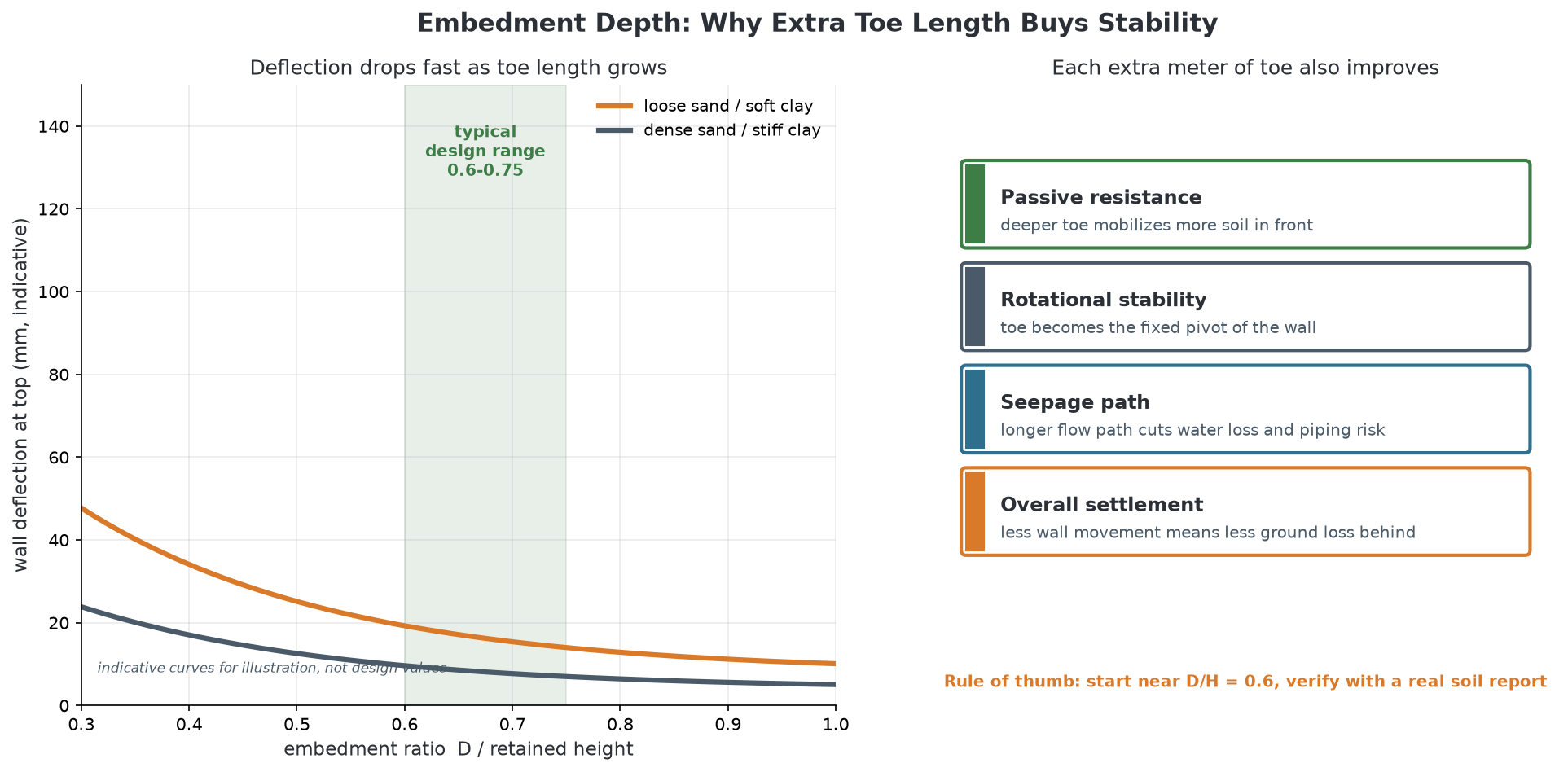
Embedment depth is the main lever for stability. A deeper toe mobilizes more passive resistance in front of the wall, raises the safety factor against rotation, makes the seepage path longer, and reduces how far the wall head moves.
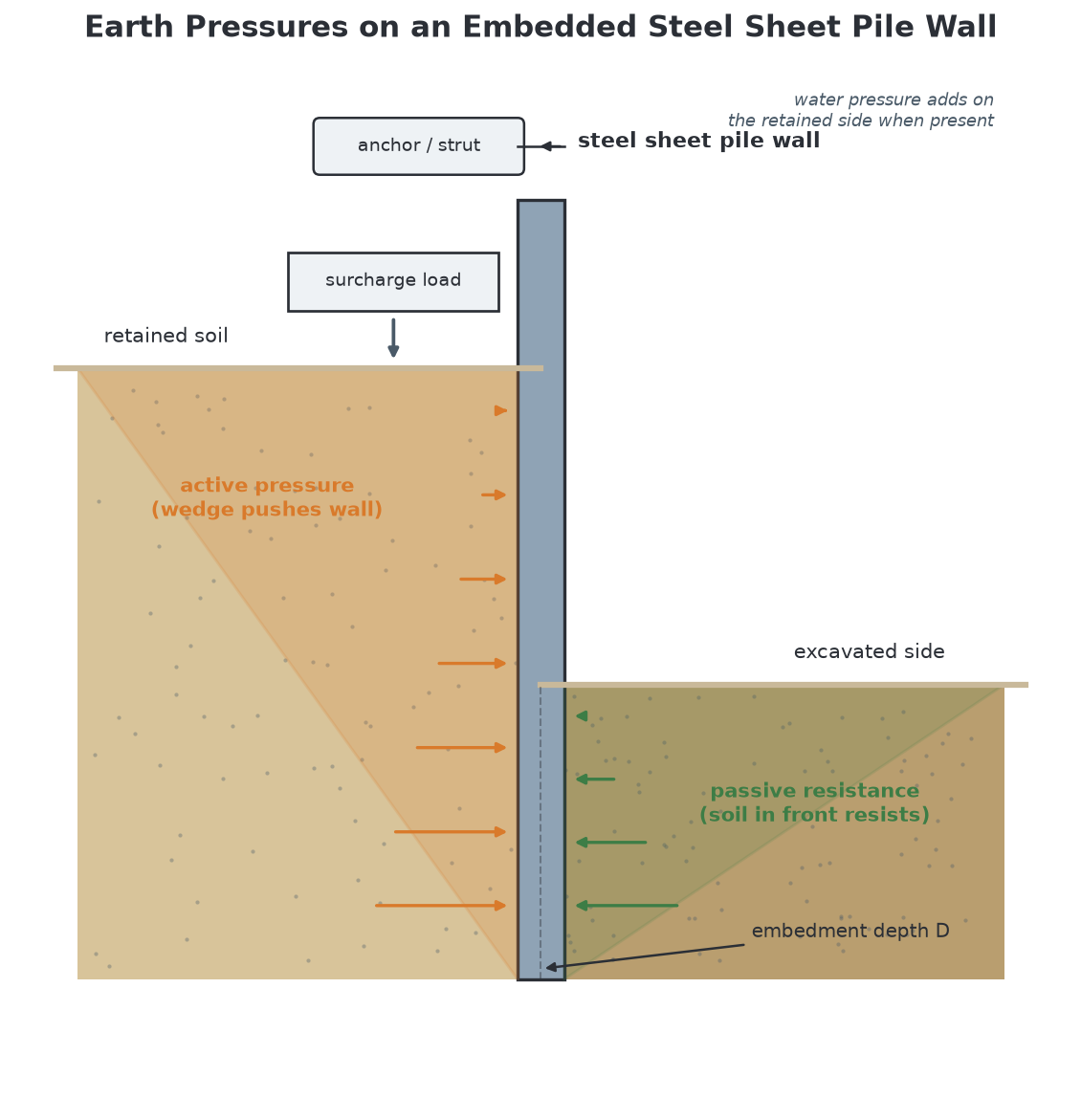
Active pressure versus passive resistance
Two pressures fight each other in every retaining wall. Behind the wall, the soil pushes with active pressure. In front of the wall, below the excavated level, the soil pushes back with passive resistance. The wall is stable when passive resistance and any anchors or struts can hold the active push with a comfortable margin.
Most design guidelines aim for a factor of safety of about 1.5 to 2.0 against passive pressure failure, and I have seen projects where the engineer used a higher value because neighboring buildings were sensitive to movement. Local rules, such as the excavation standards used in the United States, set the minimum ground rules for spoil placement and edge protection, and they are worth reading even if your project sits outside that jurisdiction. That number drives the embedment depth, and the embedment depth drives the pile length. So when a contractor asks me to cut two meters off the pile length to save freight, I want to see the calculation first. Freight is a small line in the budget. Ground settlement claims are not.
Another point that surprises people: the passive resistance you can actually count on depends on the soil in front of the toe, and that soil is often disturbed by excavation. Contractors who dig too close to the wall and leave soft, remixed material in front of the toe are quietly lowering the passive resistance to a fraction of the design value. I always tell site teams to protect the ground in front of the toe. It is part of the structure, even though it looks like dirt.
How Do You Keep the Soil Behind the Wall from Moving and Settling?
Retention is not only about strength. It is about movement control.
To limit ground movement, you need a stiff section, a deep embedment, a short open excavation period, and careful control of water. Movement usually comes from three sources: wall bending, soil loss through the interlocks, and vibration during driving.
Bending, seepage, and vibration
Wall bending is the easiest to understand. A flexible wall deflects, and the soil behind it follows. That is why stiffness matters. A Z type section rolled to sheet piling steel standards such as ASTM A328 or a heavy U profile with a large section modulus will hold movement much better than a light section, even though both may be strong enough on paper.
Seepage is the second cause and the one people underestimate. Interlocks are not watertight joints in the same way a welded plate is. Water passes through the joints slowly, and if the soil contains fine sand or silt, it carries particles with it. The ground behind the wall then loses volume, and the surface settles. This is why I recommend a longer embedment path and, where groundwater is aggressive, additional measures such as filter fabric behind the wall or a proper dewatering plan.
Vibration is the third cause, and it happens before the excavation even opens. Impact driving sends ground waves into the soil, and in loose granular soils those waves can compact the material near the wall. Contractors working near existing buildings often choose vibratory driving for this reason, and in the most sensitive locations we see press-in machines used to keep ground movement almost unmeasurable. Bodies such as the UK construction safety regulator publish clear guidance on vibration near structures, and it applies to piling just as much as demolition.
| Cause of movement | Early warning sign | Practical control |
|---|---|---|
| Wall bending | Growing gap at the wall head | Heavier section, deeper toe, add struts |
| Soil loss through joints | Cloudy water at the pump | Longer seepage path, filter fabric |
| Driving vibration | Cracks in nearby pavement | Vibratory or press-in method |
| Surface surcharge | Bulging near the top of the wall | Move spoil and plant away from the wall |
| Fast excavation | Sudden inward movement | Stage the dig, support early |
How Do Sheet Piles Compare with Other Retaining Solutions for Soil Control?
I sell sheet piles, so I will be honest about where they win and where they do not.
Sheet piles win on speed, water cutoff, reuse, and working width. They lose to concrete walls on stiffness in very deep or heavily loaded cases, and they need access for a piling rig that bored pile solutions sometimes do not.
Where the interlocked wall is hard to beat
The first advantage is continuity. A sheet pile wall is a single interlocked barrier from end to end. There are no gaps between piles the way there can be between soldier piles with lagging. That continuity is exactly what you want when the goal is soil retention and water control at the same time. I have delivered walls to riverbank and flood control projects where the seepage cutoff was as important as the structural strength.
The second advantage is speed and site width. Sheet piles are driven from the ground surface with a relatively compact rig, so the retained soil behind them stays untouched. Concrete diaphragm walls need large plant and wide working platforms. On confined city sites, that difference decides which solution is even possible.
The third advantage is reuse. A temporary sheet pile wall can be extracted, checked, and driven again on another project. That matters commercially for contractors and it matters environmentally, because the steel keeps working instead of being demolished and sent away as waste.
Where sheet piles are not the best answer: very deep excavations with heavy surcharge, or walls that must act as a stiff load-bearing element under a high building. In those cases, engineers often move toward diaphragm walls, bored piles, or a combined system. I would rather tell a customer that early than sell a section that will fight the design for three years.
| Solution | Soil retention | Water cutoff | Reuse | Site footprint |
|---|---|---|---|---|
| Steel sheet piles | Good, continuous | Good with interlocked joints | High | Small |
| Soldier piles and lagging | Fair, gaps between piles | Poor unless treated | Medium | Medium |
| Diaphragm concrete wall | Excellent | Excellent | None | Large plant |
| Bored pile wall | Good | Poor without additional seal | None | Large plant |
What Should You Check Before the Excavation Opens?
The design can be perfect and the site can still lose ground. The difference is usually preparation.
Before excavation starts, confirm the soil report matches the ground, protect the soil in front of the toe, complete the interlock seal, set movement monitoring points, and stage the dig so support goes in before the soil has a chance to move.
Practical checks I recommend to every contractor
The first check is the soil. Borrowers and trial pits tell you what the report assumed, and they often reveal surprises: old foundations, soft pockets, or a water table higher than expected. When we ship piles for a project, we ask the contractor to confirm the first few piles drive as planned. If the driving resistance is much lower than expected, the soil is weaker than the design assumed, and the engineer needs to know immediately.
The second check is the toe zone. Mark it on the drawing and protect it on site. Nobody parks a machine on it, nobody digs into it, and nobody dumps spoil on it. I have seen a wall that was perfectly designed lose its safety margin simply because an excavator had been tracking over the toe area for a week.
The third check is the interlock seal. Before the excavation opens, the wall line should be inspected for open joints, damaged interlocks, and gaps at the corners. Repairing an interlock from the dry side is easy. Repairing it after water starts flowing through is not.
The fourth check is monitoring. Set survey points on the wall head, on the ground behind the wall, and on any nearby structure. Record the initial readings before excavation and keep the frequency high during the first days of digging, because that is when most movement happens. Our guide on vertical accuracy during driving covers the installation side of this, and monitoring carries the same idea through to excavation.
The fifth check is sequencing. Dig in short stages and install struts or anchors as designed. A wall that is designed for a strutted condition will move if the excavation runs ahead of the support. On several projects we have supplied, the subway and underground works used a strict stage sequence, and their movement records stayed inside the tolerance the whole way down.
My View from the Factory Floor
Here is what I have learned after years of watching these projects from the supply side. Soil retention is a system problem, not a steel problem. The section matters, the embedment matters, but the decisions that cause the most trouble happen around the wall, not inside it. Contractors who protect the toe, who seal the interlocks, who stage the dig, and who monitor movement get walls that hold. Contractors who treat the wall as a product to be installed and forgotten get settlements, pumps that never stop, and lawyers. If I could give one piece of advice to a project manager planning a sheet pile wall, it would be this: pick the section with the engineer, then manage the ground around it like it is part of the structure. Because it is.
Conclusion
Sheet piles retain soil by blocking the sliding wedge and using embedded toes to mobilize passive resistance. Get the embedment, section stiffness, and water control right, and the ground behind the wall stays where it belongs.
Tags: steel sheet pile soil retention, retaining wall stability, sheet pile embedment, ground movement control, steel sheet pile retaining walls