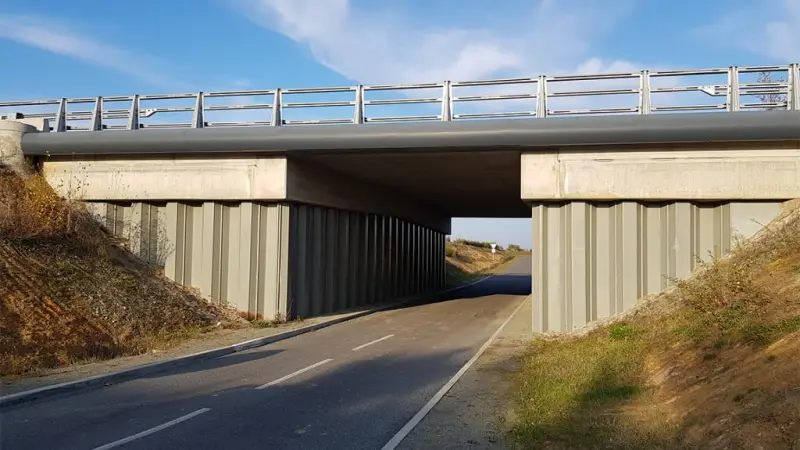
Bridge foundation work often faces soft soil, flowing water, and deep excavations. I have seen these challenges delay projects when the retaining system cannot provide enough strength or water control.
Steel sheet piles are widely used in bridge foundations because they provide strong excavation support, control groundwater, and create safe working areas for foundation construction. They also reduce construction time and improve project safety in difficult site conditions.
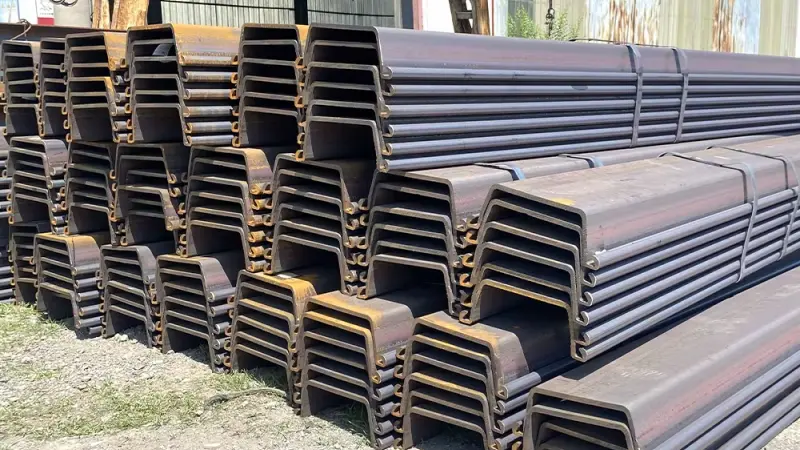
For reference on sheet pile uses in civil works, see the Steel Pipe Sheet Piles – Civil Engineering (Nippon Steel) and the Guidelines for the Use of Steel Piling for Bridge Foundations (TXDOT).
Every successful bridge begins below ground. Before workers can pour concrete or install piles, they need a stable excavation. I have worked with contractors from many countries who needed reliable retaining systems for bridge projects near rivers, highways, and ports. In my experience, steel sheet piles remain one of the most dependable solutions because they are strong, reusable, and quick to install. In this article, I will explain why engineers choose steel sheet piles for bridge foundations and how deep they should be installed for safe construction.
Why are steel sheet piles used in bridge foundations?
Poor excavation support can lead to soil collapse, groundwater problems, and costly project delays. I have seen these risks increase quickly when the wrong retaining system is selected.
Steel sheet piles are used in bridge foundations because they provide temporary or permanent earth retention, groundwater control, and structural stability during excavation. They also allow faster construction in confined or underwater environments.
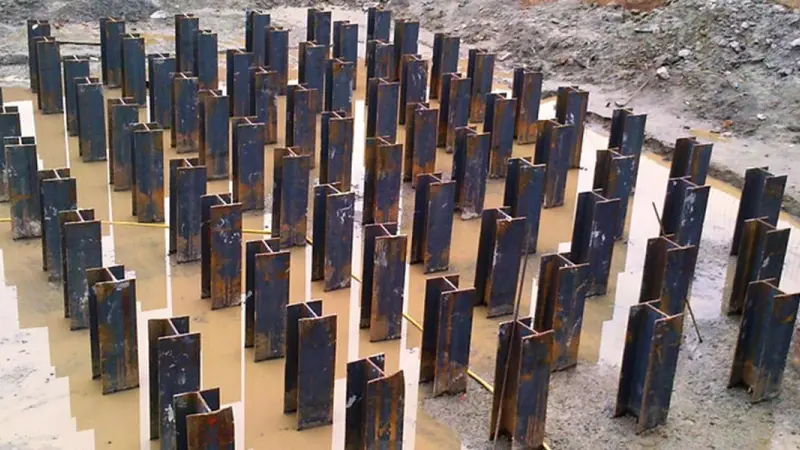
For more on sheet pile abutments, see the Sheet Pile Wall Abutments (Short Span Steel Bridge Alliance) and the Bridge Abutments – Factbook (ArcelorMittal).
They create a safe excavation
Before a bridge foundation can be built, contractors usually excavate below the existing ground level. Soil around the excavation naturally wants to move inward. Water can also flow into the work area.
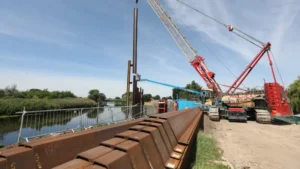
Steel sheet piles create a continuous retaining wall around the excavation. This wall supports the surrounding soil and limits groundwater movement. Workers can then complete the foundation inside a safer and more stable environment.
For projects near rivers, lakes, or coastal areas, this protection becomes even more important because water pressure increases the engineering challenges.
Major benefits for bridge projects
| Benefit | Description |
|---|---|
| Earth retention | Prevents soil collapse during excavation |
| Water control | Reduces groundwater entering the work area |
| Fast installation | Shortens construction schedules |
| High strength | Resists large lateral soil pressure |
| Reusability | Temporary piles can often be reused |
| Flexible design | Fits different bridge foundation layouts |
Common bridge applications
Steel sheet piles are used in many bridge construction activities.
These include:
- Cofferdams
- Abutment excavations
- Pier foundations
- Riverbank stabilization
- Temporary retaining walls
- Scour protection
- Utility diversions
Each application requires different pile lengths and structural capacities.
Performance in difficult ground
Bridge foundations are often built where soil conditions are poor.
Common conditions include:
- Soft clay
- Loose sand
- River sediment
- High groundwater
- Seasonal flooding
Steel sheet piles perform well because they combine strength with flexibility. Engineers can also add anchors or internal bracing when deeper excavations require additional support.
Temporary or permanent use
Many contractors only think of sheet piles as temporary products.
In reality, they can also become permanent structural elements.
Permanent applications include:
- River retaining walls
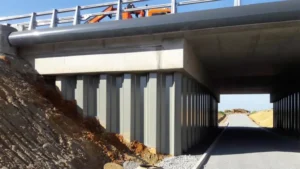
- Bridge approach walls
- Flood protection systems
- Foundation support walls
Engineers evaluate corrosion rates and service life before deciding whether the piles should remain in place.
My experience
I once discussed a bridge project with a contractor who planned to use concrete retaining walls during excavation. After reviewing the project schedule, we compared several alternatives. Steel sheet piles reduced excavation preparation time because installation was much faster. The contractor also appreciated that temporary piles could be removed and reused on another project.
Experiences like this continue to strengthen my confidence in steel sheet piles. I believe they offer one of the best combinations of structural performance, installation speed, and cost control.
For steel sheet pile cofferdams in bridge infrastructure, see The Application of Steel Sheet Pile in Bridge Infrastructure Construction (China Steel Group).
Our company works closely with certified steel mills in China. We supply U-shaped, Z-shaped, Ω-shaped, flat plate, straight flange, disc type, and cap type steel sheet piles. We support OEM production, SGS inspection, flexible MOQ, and fast delivery from Liaocheng, Shandong. Our customers include construction contractors, civil engineering companies, and steel distributors across Iraq, Jordan, Saudi Arabia, UAE, Pakistan, Australia, Africa, North America, South America, and many other regions.
From my point of view, every bridge project deserves a retaining solution based on engineering data instead of only the lowest purchase price. I always encourage customers to provide soil reports and project drawings so I can recommend the most suitable sheet pile profile instead of simply quoting the largest section.
How deep should sheet piles be driven for bridge foundations?
Many people assume deeper foundations only require longer sheet piles. I have found that proper embedment depends on much more than excavation depth.
Sheet piles for bridge foundations are commonly driven between 10 and 30 meters. The required depth depends on soil conditions, groundwater level, excavation depth, structural loads, and the retaining wall design.
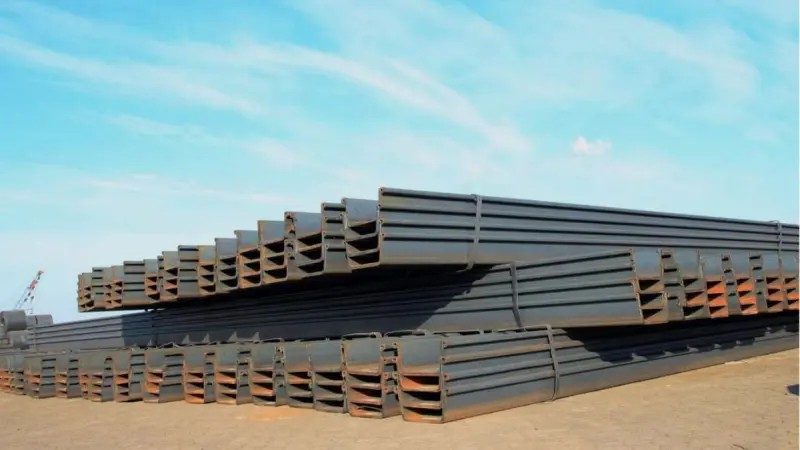
For general guidance on sheet piles in construction projects, see Sheet Piles 101 (Aema Steel).
Embedment is the key
The visible height of a sheet pile wall is only part of the total pile length.
A large section remains below the excavation level. Engineers call this the embedment depth.
This underground portion provides passive soil resistance. It keeps the retaining wall stable under lateral earth pressure.
Without enough embedment, the wall may rotate or move during excavation.
Factors affecting installation depth
| Design Factor | Influence |
|---|---|
| Excavation depth | Deeper excavations require longer piles |
| Soil strength | Weak soil increases embedment requirements |
| Groundwater level | Higher water pressure increases wall loads |
| Bridge loading | Heavy equipment adds surcharge pressure |
| Anchor system | Anchors can reduce required pile length |
| Safety factor | Larger safety margins increase embedment |
Typical depth ranges
| Project Type | Typical Sheet Pile Depth |
|---|---|
| Small bridge abutment | 8–12 m |
| Medium bridge foundation | 12–18 m |
| Large river bridge | 18–25 m |
| Deep cofferdam | 20–35 m |
| Marine bridge construction | 25–40 m |
Actual values always depend on engineering calculations.
Installation methods
Different equipment affects achievable depth and construction efficiency.
The most common methods include:
- Vibratory hammer
- Diesel impact hammer
- Hydraulic impact hammer
- Silent hydraulic press-in machine
Urban bridge projects often prefer silent press-in systems because nearby buildings are sensitive to vibration.
River bridges often use large vibratory hammers because installation speed is important.
Soil investigation comes first
I never recommend pile length before reviewing the soil report.
Important information includes:
- Soil layers
- Bearing capacity
- Groundwater level
- Rock depth
- Existing structures
- River flow conditions
Good geotechnical data allows engineers to optimize pile length without increasing unnecessary steel consumption.
My opinion
Some buyers ask me for the deepest sheet pile available because they believe longer always means safer.
I do not agree with that idea.
An oversized pile increases material cost without always improving performance.
Instead, I recommend balancing structural safety, installation efficiency, and project budget. A properly designed retaining system often performs better than simply choosing the longest section.
One project reminded me of this lesson. A contractor requested extremely long sheet piles for a bridge excavation beside a river. After reviewing the soil report, the engineer adjusted the design by adding anchors instead of increasing pile length. The final solution reduced steel consumption while meeting all safety requirements.
That experience reinforced my belief that engineering should guide every purchasing decision.
The same engineering approach helped our Southeast Asia riverbank protection project succeed. Hot rolled U type steel sheet piles formed a continuous retaining wall that stabilized the riverbank and controlled soil movement. Strong interlocks improved structural performance, and vibratory installation allowed the contractor to complete the project efficiently while maintaining the construction schedule.
Conclusion
I believe steel sheet piles provide reliable, efficient, and economical support for bridge foundations when engineers select the right profile and embedment depth for each project.