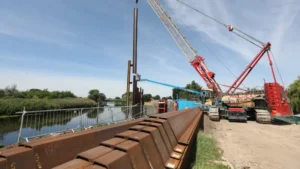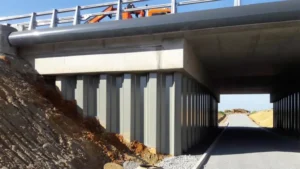
I have seen many contractors look at a sheet pile wall and wonder how it stays in place. The steel piles are driven into the ground, but the soil pressure is strong. Something has to hold them back. That is where the waling beam comes in.
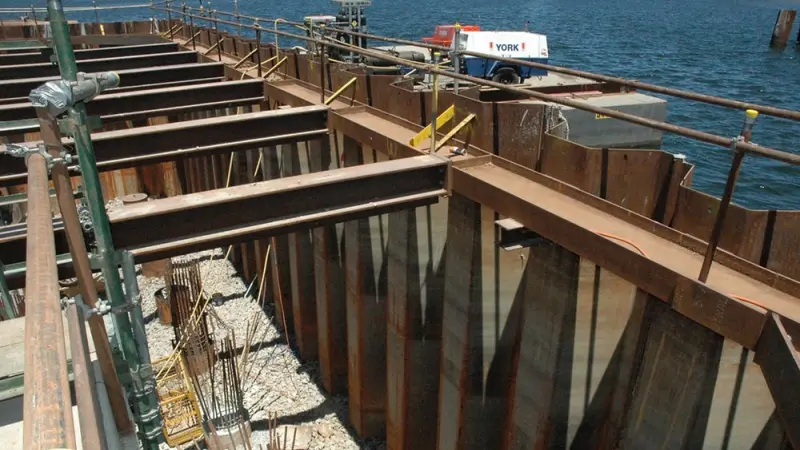
The role of a waling beam in sheet piles is to transfer the lateral earth pressure from the wall to the tie rods or anchors. It is a horizontal structural beam that runs along the wall. It helps to align, stiffen, and distribute the loads from the sheet piles to the anchoring system.
I have worked with steel sheet piles for years. I have supplied them for riverbank protection in Southeast Asia, port construction in the Middle East, and deep excavation support in many countries. The waling beam is a critical component that is often overlooked. Let me walk you through what it is, why it matters, and how it is used.
What are waling beams?
This is a question I get from many people who are new to sheet pile design. They see the term on a drawing and are not sure what it means. A waling beam has a simple but important job.
A waling beam is a horizontal structural member attached to a sheet pile wall. It is also called a waler or wale. The beam runs along the length of the wall. It is used to transfer the lateral loads from the sheet piles to the tie rods or struts that anchor the wall.
For a general overview of sheet pile walls and their structural components, see Sheet Pile Walls and Design of Sheet Pile Walls.
The Basic Function of a Waling Beam
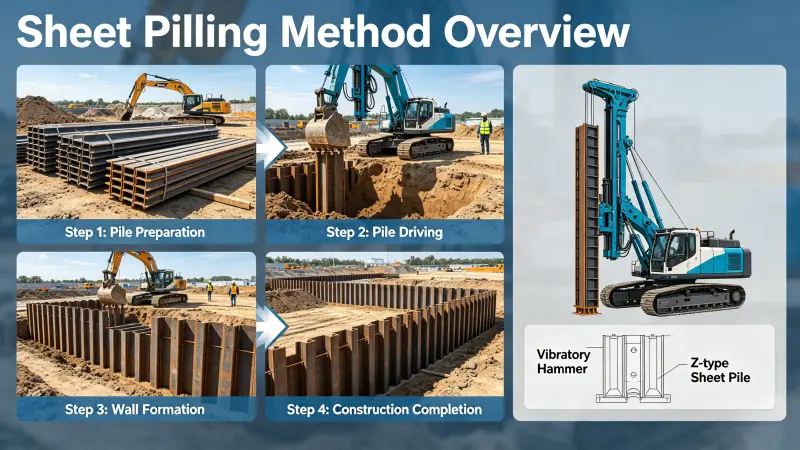
Let me explain the main job of a waling beam in simple terms. I will break it down into three key functions.
1. Load Transfer
This is the most important job. The soil pushes against the sheet pile wall. The wall wants to bend and move. The waling beam is attached to the wall. It collects the load from the wall. Then it transfers that load to the tie rods or anchors that hold the wall in place. Without the waling beam, the tie rods would only pull on a single point. The waling beam spreads the load across a larger area.
2. Alignment and Stiffening
The waling beam also helps to keep the wall straight. It runs horizontally along the wall. This helps to stiffen the wall and reduce deflection. It acts like a spine that keeps all the sheet piles in line.
3. Distribution of Forces
The waling beam creates a connection between the wall and the anchoring system. It allows the forces from the soil to be evenly distributed to the anchors. This prevents any single anchor from taking too much load.
A Quick Look at the Components
A waling beam system is made up of several parts. The main parts are:
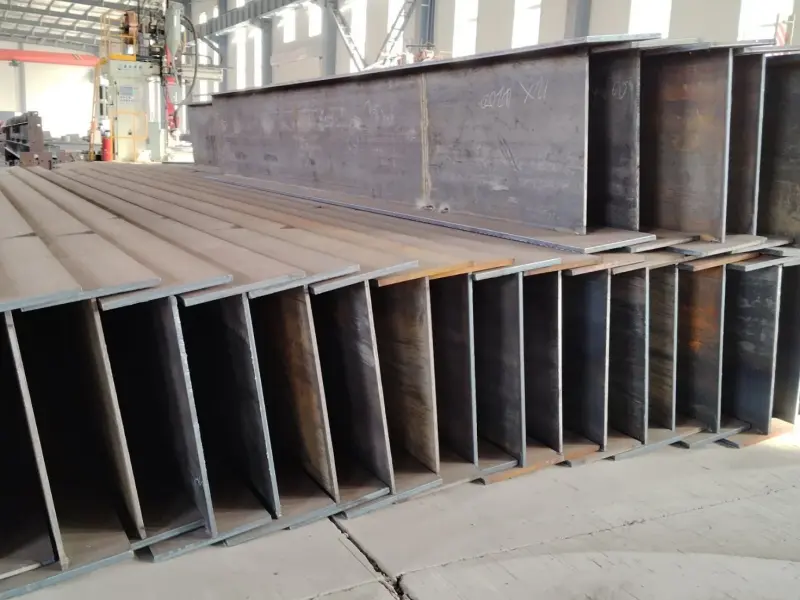
- The Beam: This is the horizontal steel member. It is usually a wide flange beam (like a W-shape) or a channel.
- Bolts or Welds: These are used to connect the beam to the sheet piles.
- Tie Rods: These are the bars or cables that connect the beam to the anchors.
- Bearing Plates: These are plates that help spread the load from the bolts to the beam.
- Stiffeners: These are welded plates that strengthen the connection points.
Anchored sheet pile systems commonly use waling beams together with tie rods to distribute load and transfer it to anchor points .
Do sheet piles need a capping beam?
This is a common question. People see the terms "waling beam" and "capping beam" and think they are the same thing. They are not. A capping beam is a different component with a different job.
Sheet piles do not always need a capping beam, but they often do. A capping beam is at the top of the wall. Its job is to tie the tops of the sheet piles together and protect them. It is different from a waling beam, which is used for load transfer to anchors.
Capping Beam vs. Waling Beam
Let me clearly explain the difference. This is a point of confusion for many people.
What Is a Capping Beam?
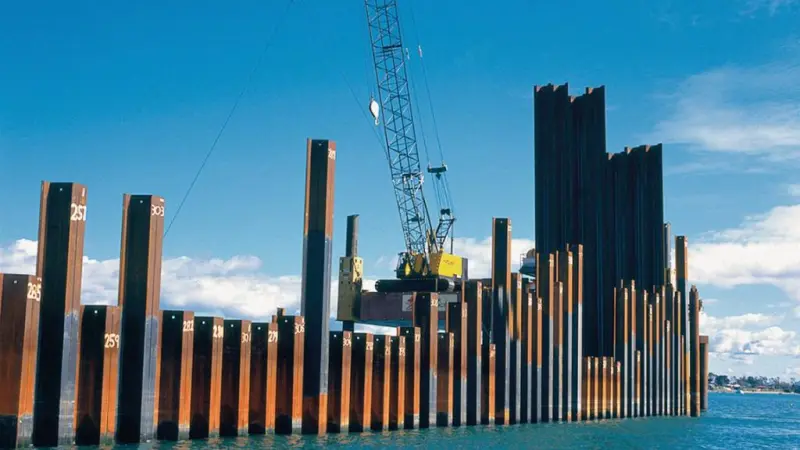
A capping beam is a beam that sits on top of the sheet pile wall. It is sometimes called a "wall capping" or "cap beam." It serves a few different purposes:
- Alignment: It helps to keep the tops of the sheet piles in alignment.
- Closure: It acts as an upper closure for the sheet pile wall.
- Protection: It protects the top of the sheet piles from damage and corrosion.
- Load Distribution: It can distribute loads from mooring forces or live loads.
When Is a Capping Beam Needed?
A capping beam is often used when the wall needs to support loads at the top. For example, if there are bollards for mooring ships, the capping beam helps to spread those loads. A capping beam can be made of steel, concrete, or a combination of both.
The Key Difference
A waling beam is used for lateral load transfer to the anchors. A capping beam is used for top closure, alignment, and protection. They are at different locations and serve different functions.
My Experience
I have seen many projects where a capping beam was not strictly required but was still used. It is a good idea to have one for any wall that will be exposed to the elements or that needs to support any top loads. I always recommend that my clients consider a capping beam for permanent walls. It is a small investment that protects the wall for a long time.
What does a waler do?
I often hear this question from site engineers. They are looking at the wall and want to understand the role of this horizontal beam. The answer is clear and simple.
A waler transfers the lateral earth pressure from the sheet pile wall to the tie rods or anchors. It acts as a horizontal beam that collects the load from the wall and distributes it to the anchor points. Without the waler, the tie rods would only load a single point on the wall, causing failure.
For a practical explanation of how waling beams work with tie rods in anchored sheet pile systems, see Waling beam systems and Sheet Pile Walls .
How the Waler System Works
Let me explain the full system. This will help you see why the waler is so important.
The Load Path
- The soil behind the wall pushes against the sheet piles.
- The sheet piles want to move. They transfer the load to the waler beam.
- The waler beam collects the load. It then transfers it to the tie rods.
- The tie rods carry the load to the anchors. The anchors hold the wall in place.
Why a Waler Is Required
If you did not have a waler, the tie rods would attach to the sheet piles at single points. The load would be concentrated at those points. The sheet piles could bend or fail at those points. The waler spreads the load over a larger area. This makes the system much stronger.
Types of Waler Attachment
A waler can be placed on either side of the sheet pile wall. The choice depends on the project.
- Soil Side: The waler is on the side facing the soil. This is less visible and can be buried.
- Water Side: The waler is on the side facing the water. This allows the waler to bear directly against the sheet piles. It is easier to see and maintain.
My Perspective
I have seen many projects where the waler was the key to the whole design. In one project, the wall was very high and the soil was soft. The waler beam was very large. It had to be designed to handle a huge load. The designer chose a wide flange beam with a large section modulus. The waler performed perfectly and the wall stayed stable.
What is wailing in construction?
This is a common misspelling. People sometimes say "wailing" when they mean "waling." The terms are easy to confuse. Waling is the correct term for the horizontal beam.
"Wailing" is a common misspelling of "waling." In construction, waling is the process of installing a waler or waling beam. This is the horizontal structural member that transfers loads from a sheet pile wall to its anchors. The term comes from the same root as "gunwale," the top edge of a boat.
The Correct Term and Its Origin
Let me clear up this common confusion. It is a small detail, but it is good to get it right.
The Spelling: Waling, Not Wailing
The correct term is "waling." "Wailing" is a different word that means crying or making a loud sound. In construction, we are talking about a structural beam. So it is always "waling."
The Origin of the Word
The word "wale" has an interesting history. It comes from the same root as "gunwale." The gunwale is the top edge of a boat. The term was carried over to construction because the beam serves a similar purpose. It is the horizontal member that ties things together.
What "Waling" Means in Practice
In construction, "waling" refers to the act of installing the waling beam. The beam is attached to the sheet piles. It is connected to the tie rods. It is a key part of the shoring system. A waling beam is used in many different temporary works applications. These include facade retention, back-propping, and structural propping.
For broader background on sheet pile wall systems and temporary works, see Technical Supplement 14R–Design and Use of Sheet Pile Walls and Sheet Pile Wall Design .
A Word About Spelling
When you are looking at construction drawings or talking to engineers, use the term "waling" or "waler." This is the standard term in the industry. If you use "wailing," people might not know what you mean.
Conclusion
A waling beam is a horizontal structural member on a sheet pile wall. It transfers lateral earth pressure from the wall to tie rods or anchors. It aligns and stiffens the wall and is a key part of the anchoring system.
For further reading, good reference points include Design of Sheet Pile Walls, Sheet Pile Wall Design, and Sheet Pile Walls.