I have seen many sheet pile wall failures over the years. They often happen without warning. A wall that looks fine one day can suddenly collapse the next. Understanding why this happens is the first step to preventing it.
Analyzing sheet pile wall failure involves checking three key areas: excessive deflection, structural overstress, and geotechnical instability. Common failure modes include excessive wall rotation, passive soil failure in front of the wall, and tie rod or anchor system failure. You analyze these by comparing design values like allowable deflection and factor of safety against site measurements.
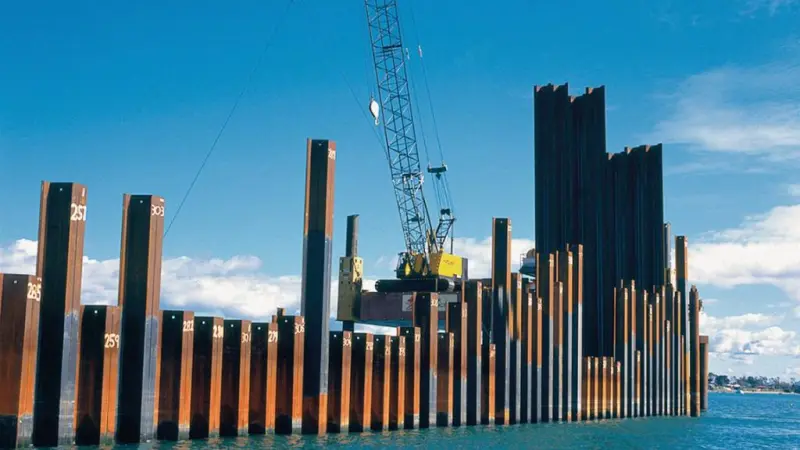
I have worked with steel sheet piles for years. I have supplied them for riverbank protection, port construction, and deep excavation support. A well-designed wall can last for decades, but a poorly designed one can fail during construction or in service. Let me walk you through the key aspects of analyzing sheet pile wall failure.
What is the allowable deflection for sheet pile wall?
I get this question from site engineers all the time. They are monitoring a wall and need to know when to raise the alarm. The answer depends on the project and the design code.
The allowable deflection for a sheet pile wall is often set at 2 inches (50 mm) at the top of the wall, or between 0.5% and 1.0% of the excavation depth. The exact value depends on the project’s sensitivity to movement. For critical structures like cofferdams adjacent to traffic, the limit is usually 2 inches. For design guidance, see Steel Sheet Piling and Design of Sheet Pile Walls.
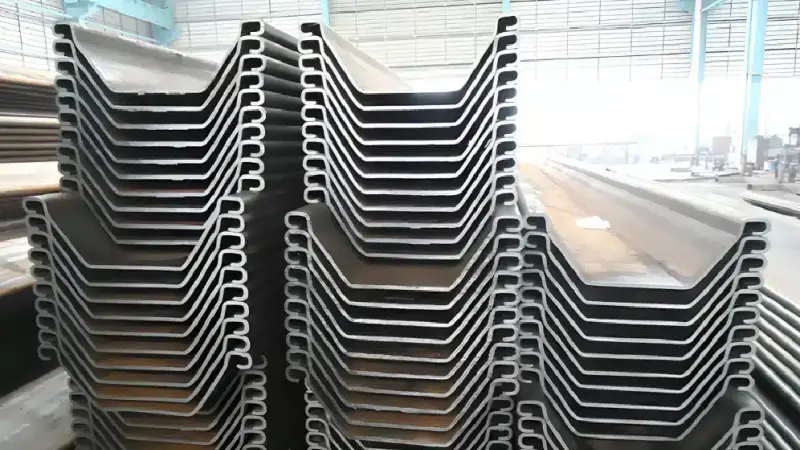
Standard Deflection Limits
Let me give you the numbers that are commonly used in the industry.
Common Deflection Limits
- Michigan DOT Specification: The maximum deflection allowed at the top of steel sheet piling is 2 inches. This is a typical value for walls adjacent to traffic or structures.
- General Excavation Support: Designers often aim to keep deflection in the range of 0.5% to 1.0% of the excavation depth.
- Cofferdam Construction: For cofferdams, the 2-inch limit is common. The contractor must check the wall frequently and notify the Engineer if excessive deflections are present.
What Happens if You Exceed the Limit?
If the deflection exceeds the allowable limit, you need to take action. This might mean:
- Reducing the excavation depth.
- Adding more bracing or anchors.
- Monitoring the wall more frequently.
- Stopping work until the problem is fixed.
How Deflection is Calculated
Deflection is controlled by the flexural stiffness (EI) of the sheet pile section. The key design equation is δ = f(P)/(EI). This shows that deflection depends on:
- E: The modulus of elasticity of the steel. This is a material property. For steel, E is about 30 x 10⁶ psi.
- I: The moment of inertia of the sheet pile section. This is a geometric property. It depends on the shape and thickness of the pile.
For general retaining-wall and sheet-pile behavior, see Sheet Pile Wall Design and the USACE manual Design of Sheet Pile Walls.
If the calculated deflection exceeds the allowable limit, you need to choose a stiffer section or add support.
What are the mechanisms of pile failure?
This is a big question. I have seen walls fail in many ways. The failure mechanisms are usually divided into two main categories: structural failure and geotechnical failure.
The main mechanisms of sheet pile wall failure include excessive rotation of the wall, passive soil failure in front of the wall, tie rod or anchor failure, and buckling of the wall section. Seismic loading can also cause failure due to liquefaction and soil fluidization.
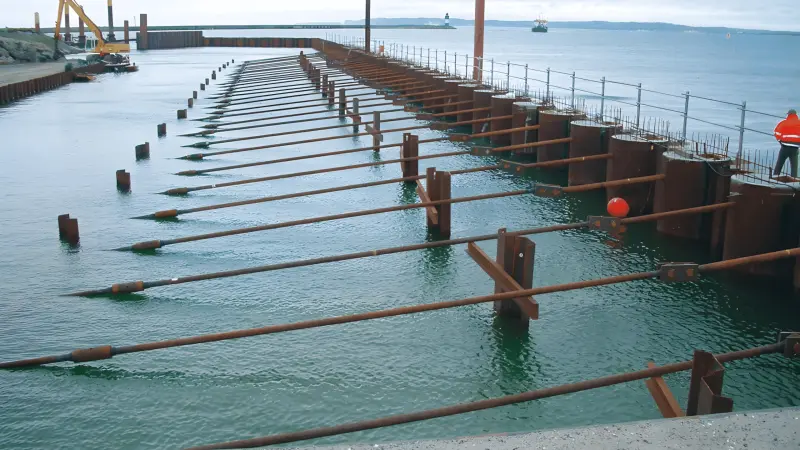
Structural Failure Mechanisms
These happen when the sheet pile section is not strong enough to resist the loads.
1. Flexural Failure
The wall bends too much and reaches its yield strength. This leads to plastic hinges forming in the wall. The wall can then collapse. This happens when the bending moment exceeds the section’s capacity.
2. Buckling
The wall can buckle under axial compression. This is a concern when the wall is driven into hard soil. It can also happen if the wall is loaded in compression by the anchoring system.
3. Connection Failure
The interlocks between the sheet pile sections can fail. This opens up gaps in the wall. The wall loses its watertightness and structural integrity.
Geotechnical Failure Mechanisms
These happen when the soil can no longer support the wall.
1. Passive Soil Failure
The soil in front of the wall cannot provide enough passive resistance. The wall rotates forward. This is one of the most common failure modes for cantilever walls. The toe of the wall moves, and the wall rotates about a point.
2. Active Soil Failure
The soil behind the wall pushes the wall forward. This happens when the wall is too shallow or the loads are too high.
3. Anchorage Failure
The tie rods or ground anchors fail. This can happen if the anchors pull out of the soil or if the tie rods break.
4. Liquefaction and Fluidization
In saturated soils, seismic loading can cause liquefaction. The soil loses its strength and behaves like a fluid. This can cause the wall to fail by rotating into the backfill. For background on seismic retaining wall behavior, see the USACE manual Design of Sheet Pile Walls.
The "Rotation Failure" Mechanism
This is a specific failure mode. In a centrifuge test, researchers observed that the retained backfill experienced significant excess pore pressure, leading to rotation failure of the sheet pile wall. During the transition of the wall from static to unstable, the passive earth pressure in front of the wall extended deeper, causing a downward shift in the location of the maximum bending moment. This shows how failure is a dynamic process.
What is the factor of safety of sheet pile wall?
The factor of safety is the margin of safety built into the design. It is a number that tells you how much stronger the wall is than it needs to be.
The factor of safety for a sheet pile wall is typically between 1.5 and 2.0. For cohesionless soils, the overall factor of safety in AS4678 ranges from 1.7 to 2.3. The factor is applied to the passive earth pressure or to the embedment depth. For reference, see Design of Sheet Pile Walls and Sheet Pile Wall Design.
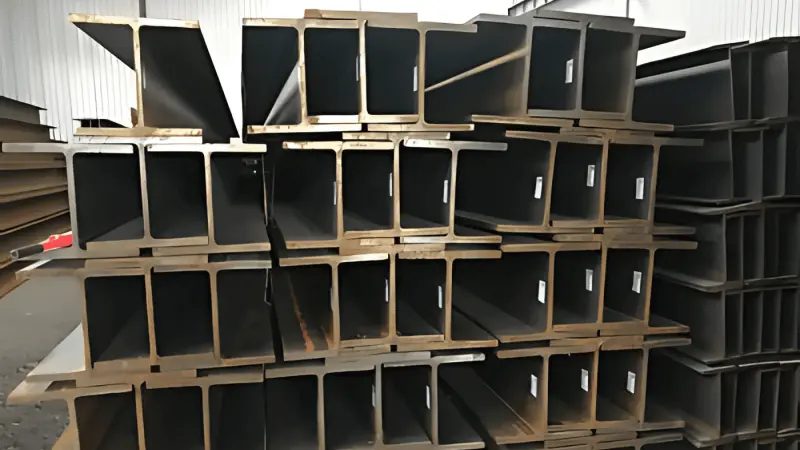
How the Factor of Safety is Applied
There are two main ways to apply the factor of safety.
1. Apply to Passive Pressure (Global Factor of Safety)
The passive earth pressure coefficient (Kp) is divided by the factor of safety. This reduces the resisting force. The wall must be driven deeper to compensate.
2. Apply to Embedment Depth
The theoretical embedment depth is multiplied by a factor (often 1.2 to 1.4). This gives the actual embedment depth.
A Real Example
For a wall with a 3.5-meter excavation, the design used a global factor of safety of 1.5. The passive pressure coefficient was divided by 1.5. This gave a required embedment depth of 3.86 meters. Without the factor of safety, the wall would have been much shallower.
Factors Affecting the Factor of Safety
The factor of safety is not a fixed number. It depends on:
- The level of uncertainty in the soil properties.
- The consequences of failure.
- The design code you are using.
- Whether the wall is temporary or permanent.
What is the maximum height of a sheet pile wall?
The maximum height is related to failure analysis. A wall that is too high for its design will fail. The height limit depends on the wall type.
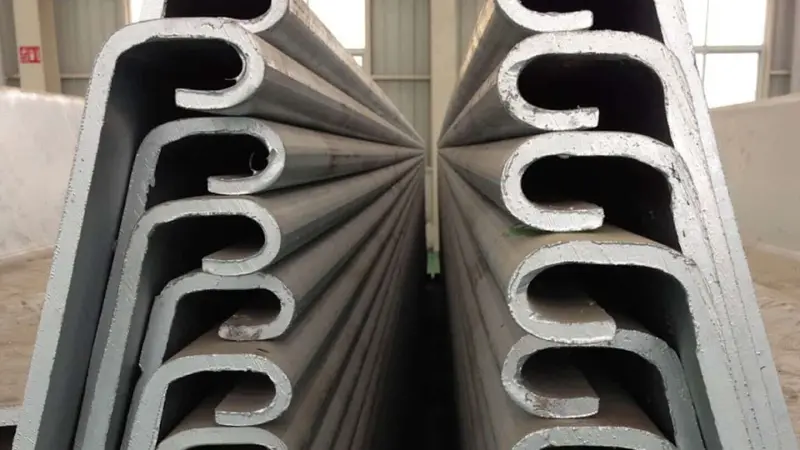
The maximum height of a cantilever sheet pile wall is about 3 to 6 meters (10 to 20 feet). Above this, you need anchors. Anchored walls can reach 10.5 meters (35 feet) or more. Cellular walls can go up to 18 to 20 meters. For wall-height guidance, see the USACE manual Design of Sheet Pile Walls and Steel Sheet Piling.
How Height Affects Failure Analysis
The height of the wall is directly related to the failure mechanisms. A taller wall has higher earth pressures and bending moments. It requires deeper embedment and stronger sections.
Cantilever Walls
These are limited to about 6 meters. The passive soil resistance in front of the wall is the limiting factor. If the wall is too high, it will rotate forward.
Anchored Walls
These can be much taller. The tie rods or anchors carry the load at the top of the wall. This reduces the bending moment in the wall.
My Advice
When you are analyzing a wall for failure, always check the height. If the wall is approaching the height limits, you need to check the design carefully. Make sure the factor of safety is sufficient and the deflection is within limits.
Conclusion
Sheet pile wall failure is analyzed by checking deflection, structural capacity, and geotechnical stability. Key factors are the allowable deflection (often 2 inches), the factor of safety (typically 1.5 to 2.0), and the maximum height limits for the wall type.
For deeper reading, the most useful references are Design of Sheet Pile Walls, Steel Sheet Piling, and Sheet Pile Wall Design.