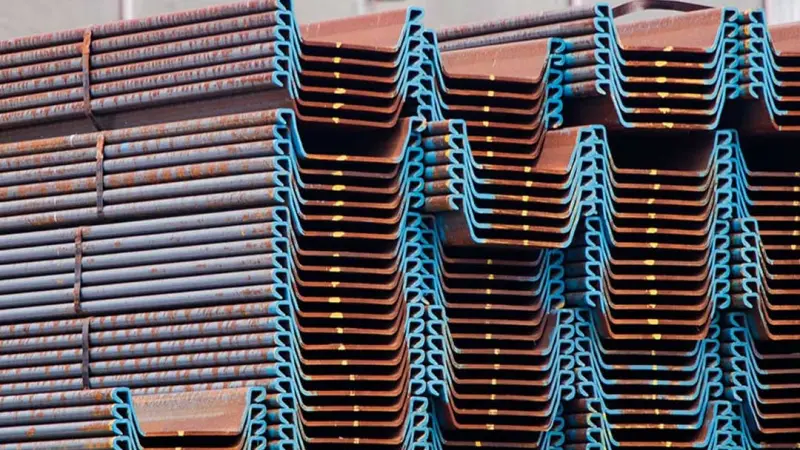
Many buyers choose sheet pile steel based only on strength. This often leads to corrosion problems, higher maintenance costs, and shorter service life.
ASTM A690 and S355 are both popular sheet pile steels. S355 offers higher structural versatility, while ASTM A690 provides enhanced corrosion resistance in marine and coastal environments. The better choice depends on project location, exposure conditions, and design requirements.
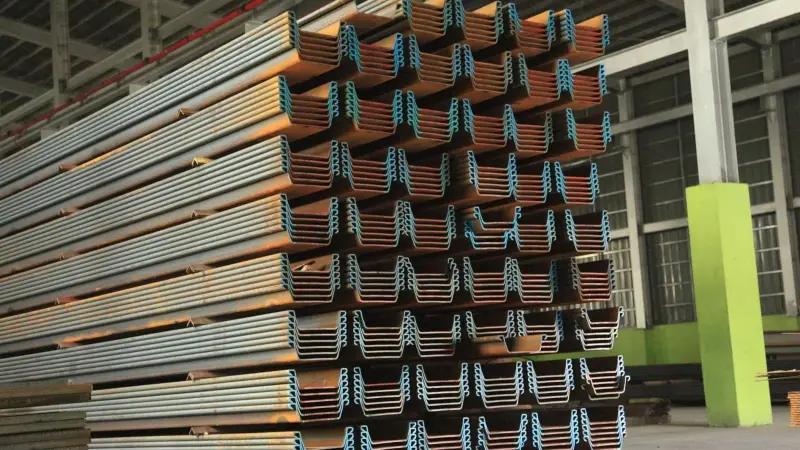
I often discuss this comparison with contractors and distributors working on ports, seawalls, bridge foundations, and riverbank projects. Many people assume strength is the only factor that matters. In reality, corrosion resistance, project standards, maintenance expectations, and lifecycle costs can be just as important. Understanding the differences between ASTM A690 and S355 helps buyers avoid costly mistakes and select the right sheet pile for the job.
What Is the ASTM Equivalent of S355?
Many project teams work across different countries. They often need to compare European and American steel standards during procurement.
The closest ASTM equivalent to S355 is ASTM A572 Grade 50. Both grades offer similar yield strength levels around 345–355 MPa and are widely used in structural and sheet piling applications.
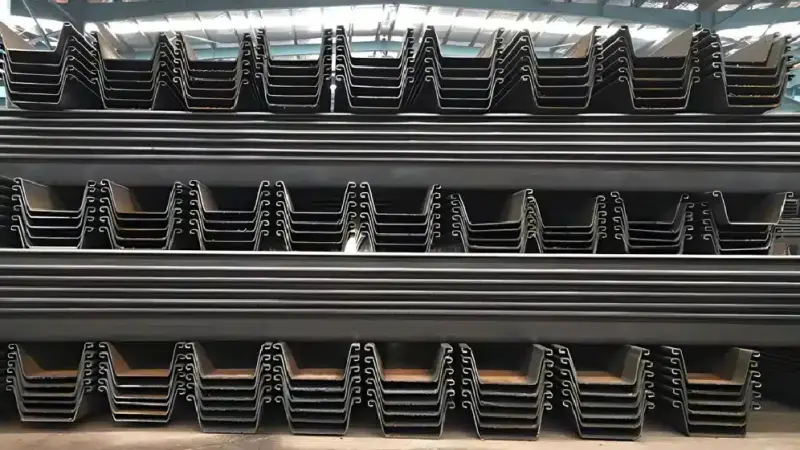
Understanding Equivalent Steel Grades
Global construction projects rarely use a single steel standard. Engineers, consultants, and suppliers often work with materials from different countries.
The most common comparison is between:
| European Standard | ASTM Standard |
|---|---|
| S355 | ASTM A572 Grade 50 |
| S275 | ASTM A36 |
| S460 | ASTM A913 Grade 65 |
While S355 and ASTM A572 Grade 50 share similar strength levels, they are not identical.
Mechanical Property Comparison
| Property | S355 | ASTM A572 Grade 50 |
|---|---|---|
| Yield Strength | 355 MPa | 345 MPa |
| Tensile Strength | 470-630 MPa | 450-620 MPa |
| Weldability | Excellent | Excellent |
| Structural Use | Extensive | Extensive |
Why Standards Matter
I often explain to customers that strength alone does not determine equivalency.
Engineers must also review:
- Chemical composition
- Impact testing
- Certification requirements
- Welding procedures
- Project specifications
Many government-funded projects require exact compliance with specified standards.
Sheet Pile Procurement Challenges
One contractor from the Middle East contacted me regarding a waterfront retaining wall. The original design called for S355 sheet piles. The contractor wanted to source equivalent material from multiple regions.
After reviewing the project requirements, ASTM A572 Grade 50 was approved by the consulting engineer. This reduced procurement risk and improved supply flexibility.
My View
I always recommend discussing substitutions before production begins. Equivalent grades often work well, but formal approval avoids future disputes. In most structural sheet pile applications, ASTM A572 Grade 50 remains the closest practical alternative to S355.
What Grade of Steel Is Used in Sheet Piles?
Many buyers know the sheet pile shape they need but remain uncertain about steel grades. This creates confusion during project planning.
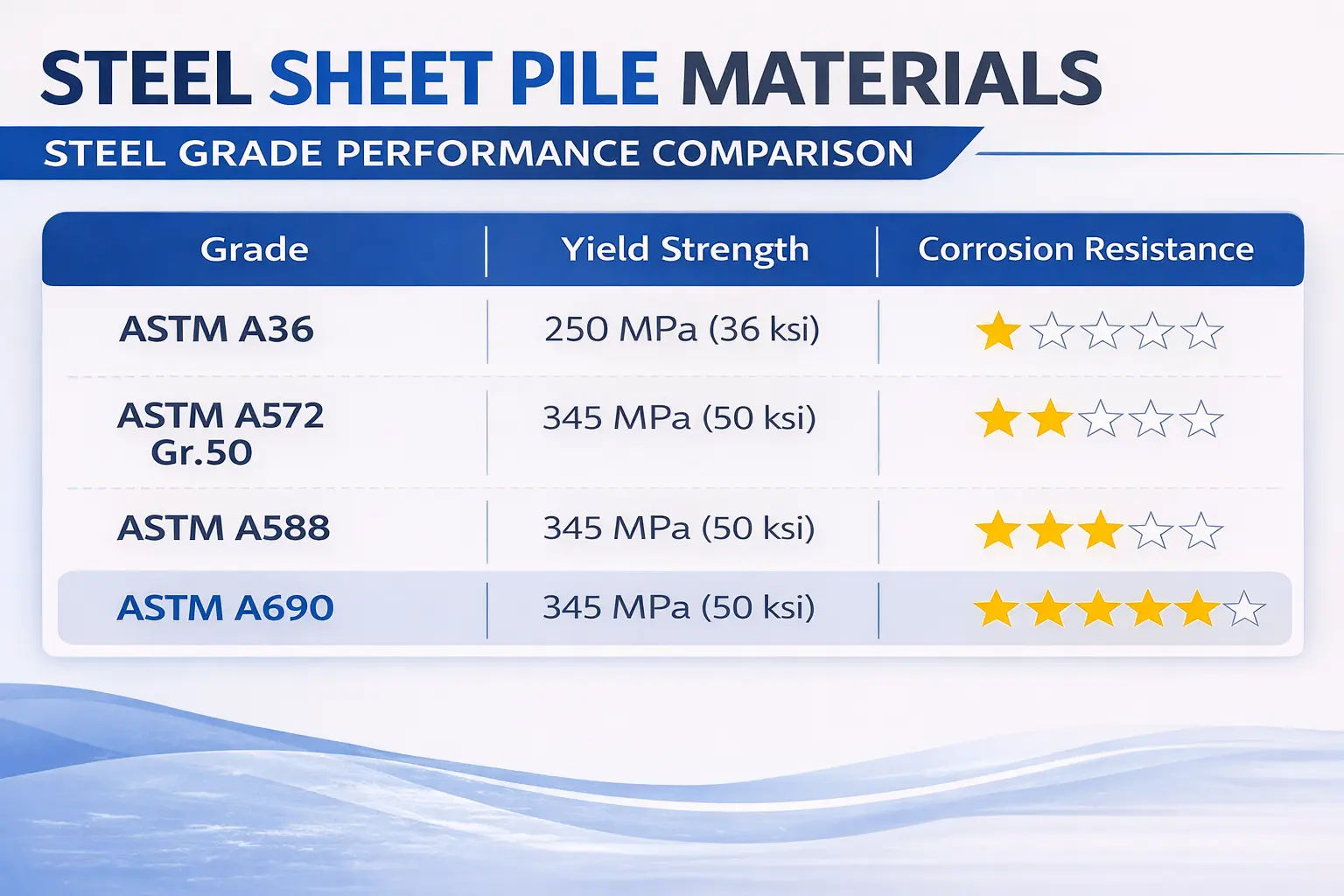
Sheet piles are commonly produced from structural steel grades such as S235, S275, S355, ASTM A572 Grade 50, ASTM A690, Q345, and Q355. The selected grade depends on structural loads, corrosion exposure, and project specifications.
Common Grades Used Worldwide
Modern sheet pile production supports a wide range of structural applications.
The most common grades include:
| Steel Grade | Standard | Typical Use |
|---|---|---|
| S235 | EN 10248 | Temporary works |
| S275 | EN 10248 | Light retaining walls |
| S355 | EN 10248 | Permanent structures |
| ASTM A572 Gr.50 | ASTM | Bridges and foundations |
| ASTM A690 | ASTM | Marine structures |
| Q345 | GB/T 1591 | Infrastructure |
| Q355 | GB/T 1591 | Heavy-duty retaining systems |
Why Higher Grades Are Popular
Higher-strength steels provide several advantages.
They can:
- Reduce steel weight
- Improve bending resistance
- Lower transportation costs
- Increase structural capacity
These benefits become important in deep excavations and waterfront projects.
Corrosion Resistance Matters
Strength is only one part of the equation.
Marine projects often require enhanced corrosion resistance.
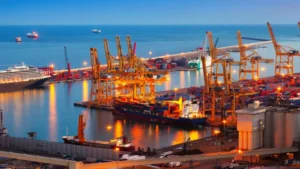
That is one reason ASTM A690 remains popular for:
- Ports
- Seawalls
- Coastal retaining walls
- Offshore foundations
Sheet Pile Shapes and Steel Grades
Most steel grades can be manufactured into:
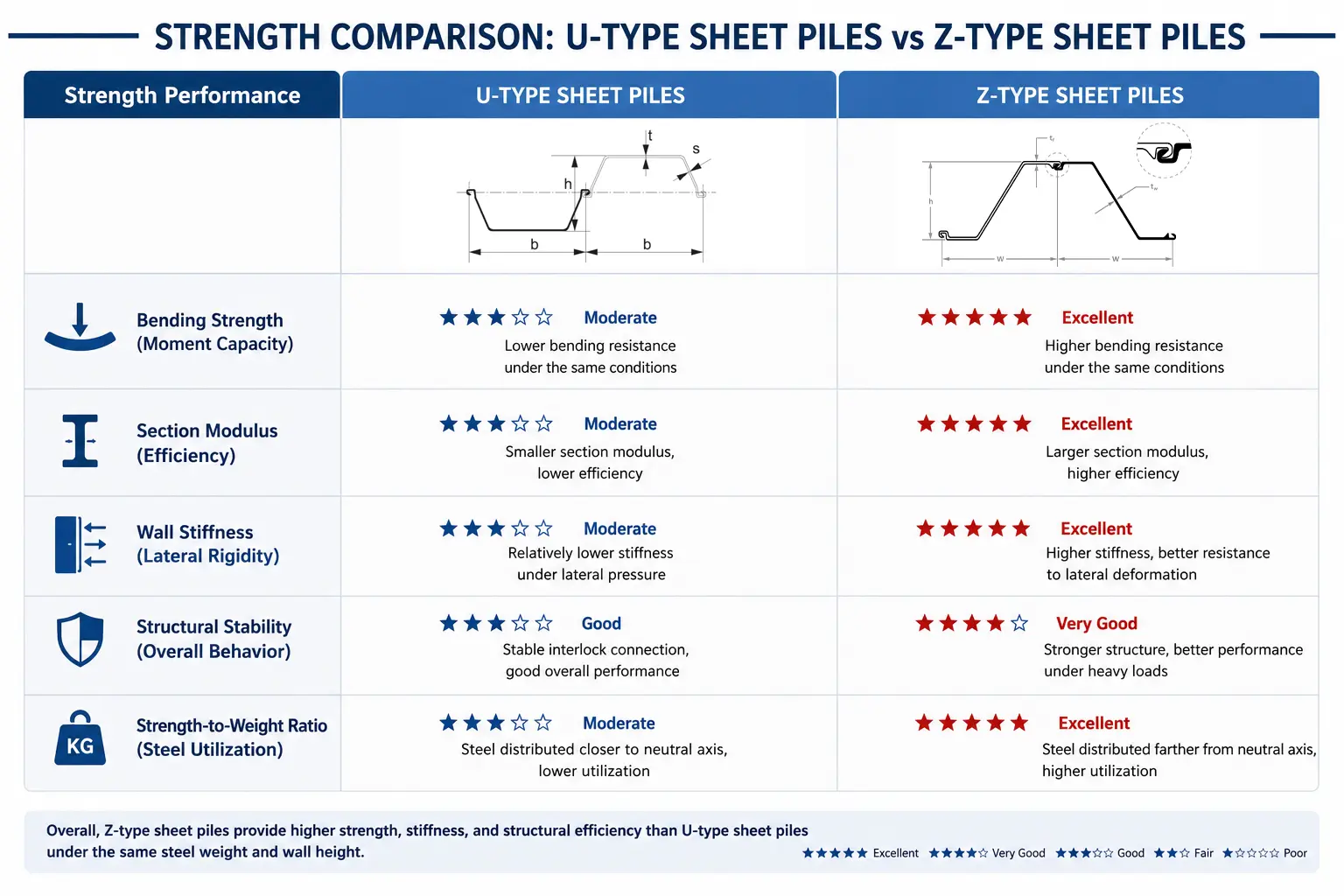
- U-shaped sheet piles
- Z-shaped sheet piles
- Ω-shaped sheet piles
- Straight web sheet piles
The shape affects structural performance. The steel grade affects strength and durability.
My Experience in Export Markets
Many customers from Iraq, Saudi Arabia, Jordan, and Pakistan initially ask for the lowest-cost grade.
After reviewing engineering requirements, many projects move toward S355 or ASTM A690 because these grades provide stronger long-term performance.
My opinion is simple. Choosing the right steel grade early often saves more money than trying to reduce initial material costs.
Is S355 Stronger Than S275?
Many buyers see only a small difference in the grade numbers. They wonder whether the performance difference is meaningful.
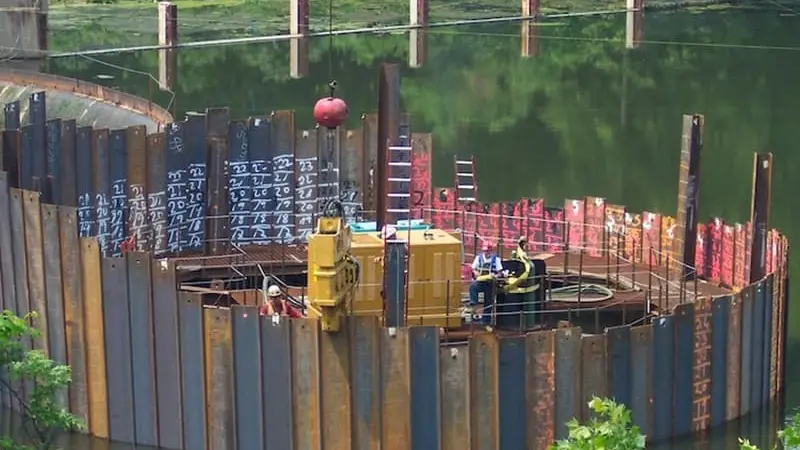
Yes, S355 is stronger than S275. S355 has a minimum yield strength of 355 MPa, while S275 has a minimum yield strength of 275 MPa. This higher strength allows engineers to design more efficient structures with reduced steel consumption.
Understanding Yield Strength
Yield strength represents the point where steel begins permanent deformation.
A higher yield strength means the material can withstand greater loads.
Mechanical Property Comparison
| Property | S275 | S355 |
|---|---|---|
| Yield Strength | 275 MPa | 355 MPa |
| Tensile Strength | 410-560 MPa | 470-630 MPa |
| Structural Efficiency | Moderate | High |
| Common Usage | Light structures | Heavy structures |
Why Engineers Prefer S355
S355 provides:
- Higher load capacity
- Better design flexibility
- Reduced material usage
- Improved project efficiency
These advantages explain its popularity in modern infrastructure projects.
Applications Where S355 Excels
I frequently see S355 specified for:
- Deep excavation support
- Bridge foundations
- Marine retaining walls
- Flood protection systems
- Industrial facilities
These projects require reliable structural performance under demanding conditions.
Cost Versus Value
Some buyers focus on the slightly higher cost of S355.
However, higher strength often reduces the amount of steel required.
In many cases, the total project cost becomes similar or even lower.
My Perspective
When customers ask me whether S355 is worth the additional investment, my answer depends on the project.
For temporary retaining walls, S275 may work perfectly.
For permanent infrastructure, I usually prefer S355 because it offers stronger performance and greater design flexibility over the life of the structure.
What Is the Difference Between Type 2 and Type 4 Sheet Pile?
Many contractors encounter Type 2 and Type 4 designations but do not fully understand how they affect project performance.
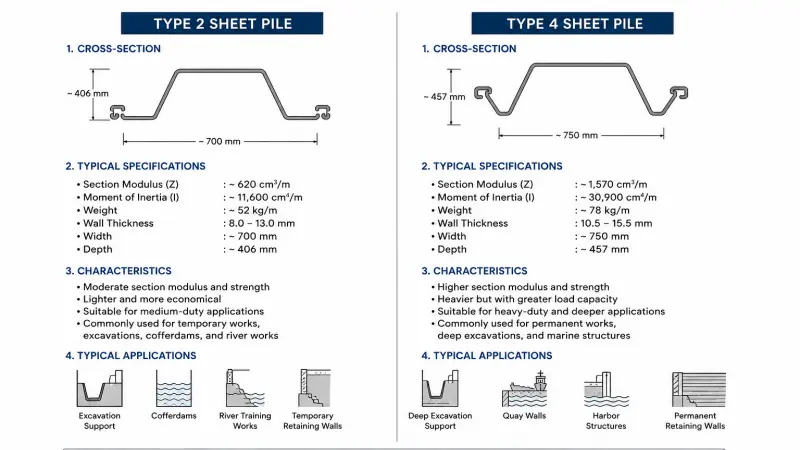
Type 2 sheet piles are lighter sections designed for moderate loads, while Type 4 sheet piles are heavier sections with higher section modulus and greater bending resistance. Type 4 piles are typically used in deeper excavations and more demanding retaining structures.
Understanding Sheet Pile Types
The classification usually refers to section properties rather than steel grade.
The main difference lies in:
- Section modulus
- Weight per meter
- Structural capacity
Comparison Table
| Property | Type 2 | Type 4 |
|---|---|---|
| Weight | Lower | Higher |
| Section Modulus | Lower | Higher |
| Bending Resistance | Moderate | High |
| Typical Depth | Shallow Excavations | Deep Excavations |
Choosing the Right Type
Project requirements determine the correct selection.
Factors include:
- Excavation depth
- Soil conditions
- Water pressure
- Design loads
Selecting a heavier pile than necessary increases costs.
Selecting a lighter pile than required creates structural risks.
Typical Applications
Type 2 sections often serve:
- Temporary retaining walls
- Light foundation support
- Small infrastructure projects
Type 4 sections often serve:
- Ports
- Bridge foundations
- Deep basements
- Flood protection systems
Case Study: Riverbank Protection
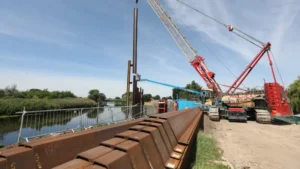
In a Southeast Asian riverbank project, hot rolled U type sheet piles were used to stabilize a river embankment.
The project required sufficient bending resistance to handle water pressure and soil loads.
The interlocking system provided continuous support along the riverbank.
The contractor completed installation efficiently using vibratory piling equipment.
The result was a durable retaining structure that improved flood control and erosion resistance.
My View
I often tell customers that section type matters just as much as steel grade. Even the strongest steel cannot compensate for an undersized pile section. Successful projects balance both factors together.
What Are the Three Types of Piles?
Many people think all piles perform the same function. In reality, different pile systems solve different engineering challenges.
The three primary pile categories are end-bearing piles, friction piles, and sheet piles. Each type transfers loads differently and serves distinct construction purposes.
End-Bearing Piles
End-bearing piles transfer structural loads directly to strong soil or rock layers.
They function much like columns.
Common applications include:
- High-rise buildings
- Bridges
- Industrial structures
Friction Piles
Friction piles transfer loads through skin friction between the pile surface and surrounding soil.
These piles are useful when deep rock layers are unavailable.
Typical applications include:
- Soft clay regions
- Coastal developments
- Large foundations
Sheet Piles
Sheet piles serve a different purpose.
They primarily provide:
- Earth retention
- Water control
- Excavation support
Unlike bearing piles, sheet piles usually resist lateral loads rather than vertical loads.
Comparison Table
| Pile Type | Main Function | Load Transfer Method |
|---|---|---|
| End-Bearing Pile | Structural Support | Through pile tip |
| Friction Pile | Structural Support | Through soil friction |
| Sheet Pile | Retaining System | Through wall action |
Why Sheet Piles Remain Unique
Sheet piles create continuous walls using interlocking sections.
This allows them to:
- Retain soil
- Control groundwater
- Protect shorelines
- Support excavations
Their versatility explains why they remain essential in civil engineering.
My Practical Observation
Many customers initially compare sheet piles with traditional bearing piles. I explain that they solve different problems.
When a project requires excavation support, waterfront protection, or retaining walls, sheet piles often provide the most efficient solution.
My own experience shows that understanding pile function before selecting material helps avoid costly design mistakes and improves overall project performance.
Conclusion
ASTM A690 and S355 both perform well in sheet piling. S355 offers broad structural versatility, while ASTM A690 provides superior corrosion resistance for demanding marine environments.