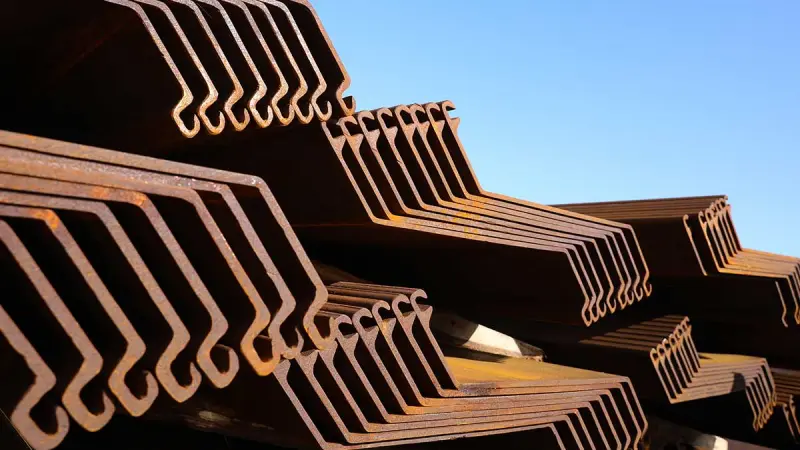
Many buyers compare prices between S355 and Q345 sheet piles. A wrong choice can affect strength, compliance, and long-term project performance.
S355 and Q345 are both high-strength structural steels used for sheet piles. S355 follows European standards, while Q345 follows Chinese standards. Their mechanical properties are similar, but differences in standards, chemical composition, and certification requirements can affect project suitability.
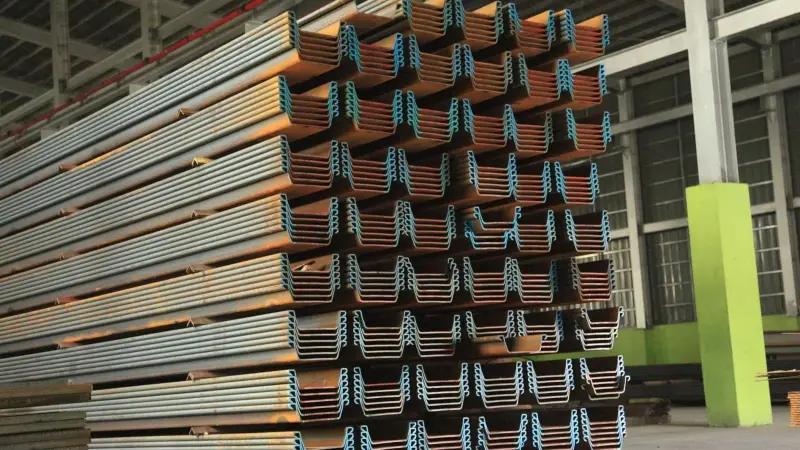
I often receive inquiries from contractors, distributors, and engineering companies asking whether S355 or Q345 is better for sheet piling projects. The truth is that both grades perform well in many applications. The best choice depends on project specifications, local standards, environmental conditions, and customer requirements. Before making a decision, it is important to understand how these grades compare in real construction projects.
What Grade Steel Is Used for Sheet Piles?
Many people focus on sheet pile dimensions and forget that steel grade directly affects strength, service life, and project safety.
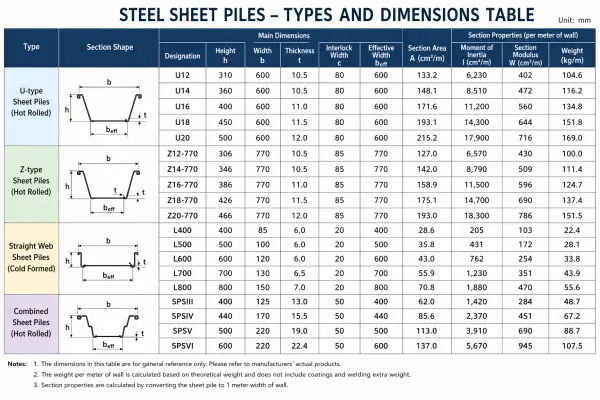
Most steel sheet piles are manufactured from structural steel grades such as S235, S275, S355, Q235, Q345, Q355, ASTM A572 Grade 50, and other high-strength low-alloy steels designed for retaining walls, marine structures, and foundation support systems.
Common Steel Grades Used in Sheet Piling
When I discuss projects with contractors, I always ask about loading conditions before recommending a steel grade. Different projects require different strength levels.
| Steel Grade | Standard | Yield Strength (MPa) | Common Application |
|---|---|---|---|
| S235 | EN 10248 | 235 | Temporary excavation support |
| S275 | EN 10248 | 275 | Light retaining walls |
| S355 | EN 10248 | 355 | Permanent structures |
| Q235 | GB/T 700 | 235 | General construction |
| Q345 | GB/T 1591 | 345 | Infrastructure projects |
| Q355 | GB/T 1591 | 355 | Heavy-duty structures |
| ASTM A572 Gr.50 | ASTM | 345 | Bridges and foundations |
Why High-Strength Steel Is Popular
Modern projects often require deeper excavations and higher loads. Engineers therefore prefer stronger grades.
High-strength steels provide:
- Better bending resistance
- Reduced steel consumption
- Improved structural efficiency
- Lower transportation costs
Standards Matter
A steel grade is more than a strength number. It also includes testing methods, impact requirements, and chemical composition.
For European projects, engineers often specify sheet pile standards.
For Chinese projects, engineers commonly reference GB/T standards.
My Experience with International Buyers
I export steel sheet piles to Iraq, Saudi Arabia, Jordan, Pakistan, Australia, and Africa. Most buyers initially focus on price. Later they discover that project specifications require a particular standard.
One customer requested Q345 sheet piles because of cost advantages. After reviewing the project documents, we found that the consulting engineer required EN-certified materials. The project eventually switched to S355 production.
My view is simple. Steel grade selection should start with engineering requirements, not price alone.
What Is the Difference Between Q345 and Q355?
Many buyers believe Q345 and Q355 are completely different materials. The actual difference is smaller than most people expect.
Q355 is the upgraded version of Q345 under China’s revised steel standards. Q355 offers a minimum yield strength of 355 MPa, while Q345 provides 345 MPa. Q355 also includes improved requirements for toughness and mechanical performance.
Why Q355 Replaced Q345
China updated its structural steel standards several years ago.
The main goals were:
- Better alignment with international standards
- Improved material consistency
- Enhanced quality control
As a result, Q355 gradually replaced Q345 in many applications.
Mechanical Property Comparison
| Property | Q345 | Q355 |
|---|---|---|
| Yield Strength | 345 MPa | 355 MPa |
| Tensile Strength | 470-630 MPa | 470-630 MPa |
| Weldability | Excellent | Excellent |
| Toughness Requirements | Lower | Higher |
Impact on Sheet Pile Performance
The increase of 10 MPa may seem small.
However, higher yield strength can provide:
- Better structural margins
- Improved design flexibility
- Reduced material usage
For large infrastructure projects, even small performance improvements can create significant savings.
Availability in Global Markets
Q345 remains widely recognized because many existing projects were designed before the standard update.
Q355 is becoming more common because it aligns more closely with European S355 grades.
This makes communication easier when international contractors compare specifications.
My Personal Observation
I still receive requests for Q345 every month. Most buyers use the name because it has become familiar in the industry.
When I discuss the details, many projects actually accept Q355 without any issues.
My opinion is that Q355 is the better long-term choice because it reflects current standards and provides slightly stronger performance. For new projects, I usually recommend checking whether Q355 can be used instead of Q345.
What Is S355 Steel Used For?
Many people hear about S355 steel in engineering drawings but do not understand why engineers prefer it.
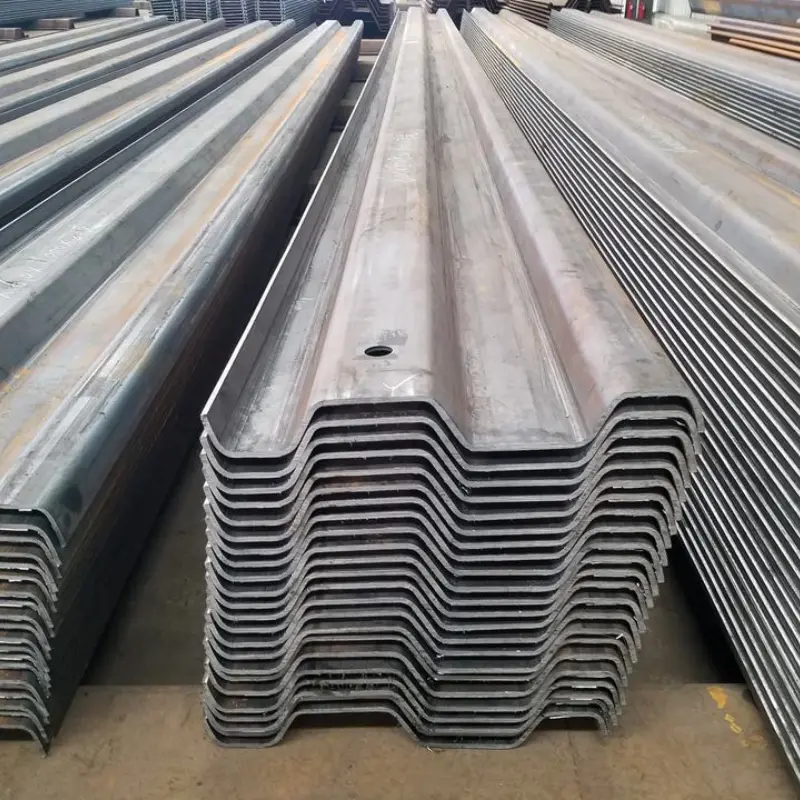
S355 steel is widely used in bridges, buildings, offshore structures, retaining walls, steel sheet piles, heavy equipment, and foundation systems because it combines high strength, excellent weldability, and reliable structural performance.
Understanding S355 Steel
S355 belongs to the European structural steel family.
The "355" refers to a minimum yield strength of 355 MPa.
This strength level makes it suitable for demanding applications.
Common Applications
| Industry | Typical Use |
|---|---|
| Construction | Buildings and frames |
| Marine | Ports and seawalls |
| Infrastructure | Bridges |
| Foundation Engineering | Sheet piles |
| Energy | Wind turbine structures |
Why Engineers Like S355
S355 offers an excellent balance of properties.
Key advantages include:
- High strength
- Good toughness
- Excellent weldability
- Wide international acceptance
These characteristics make it one of the most commonly specified structural steels in Europe and many international projects.
Sheet Pile Applications
S355 is particularly popular in:
- Deep excavations
- Riverbank protection
- Port construction
- Flood control systems
- Bridge foundations
These applications require reliable load-bearing performance.
Case Study: Riverbank Protection Project
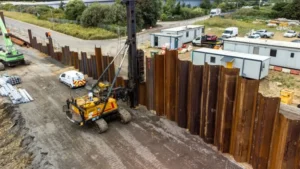
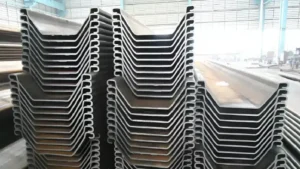
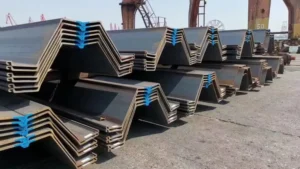
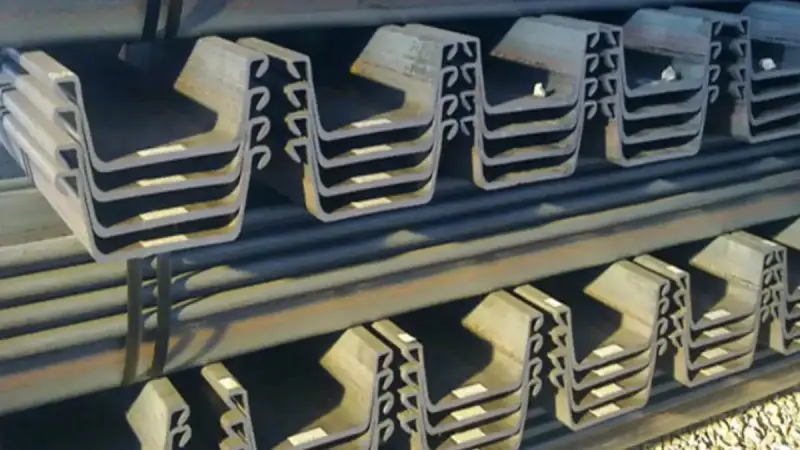
One project in Southeast Asia used hot rolled U type steel sheet piles for riverbank stabilization.
The contractor required a strong retaining wall system capable of resisting soil movement and seasonal flooding.
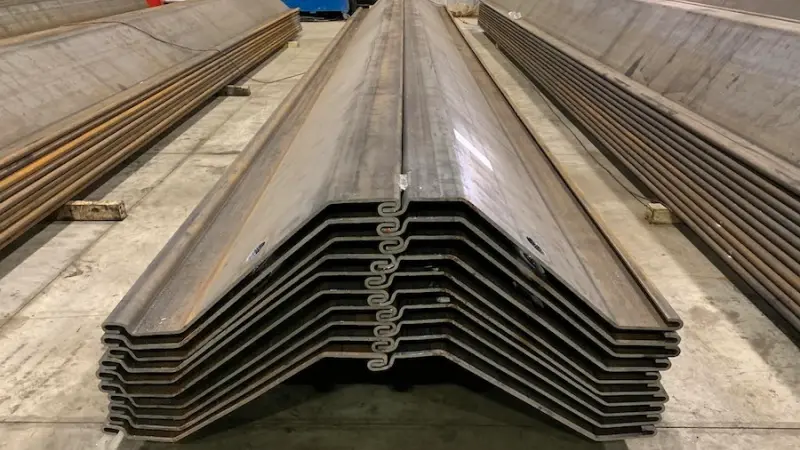
The sheet piles were installed using vibratory piling equipment. The interlocks created a continuous barrier. The wall successfully stabilized the riverbank and reduced erosion risks.
The project demonstrated why higher-strength structural steels remain popular for long-term infrastructure.
My View on S355
I often recommend S355 when buyers need internationally recognized material certifications.
Many consulting engineers already understand its properties. This reduces approval time and simplifies project documentation.
For export projects, this advantage often becomes as important as the mechanical properties themselves.
What Is Grade S355 Steel Equivalent To?
Many buyers compare standards from different countries and wonder which materials can replace S355.
S355 steel is approximately equivalent to Q355 in China, ASTM A572 Grade 50 in the United States, and several other high-strength structural steels with yield strengths around 345–355 MPa. Exact equivalency should always be verified through project specifications and mechanical property requirements.
Why Equivalency Matters
Global construction projects often involve suppliers, contractors, and consultants from different countries.
Each region uses its own standards.
Understanding equivalencies helps:
- Simplify procurement
- Reduce costs
- Expand sourcing options
Common Equivalent Grades
| Standard | Grade |
|---|---|
| European EN | S355 |
| China GB/T | Q355 |
| ASTM | A572 Grade 50 |
| Japan JIS | SM490 |
| Australia AS/NZS | Grade 350 |
Similar Does Not Mean Identical
Many buyers make the mistake of treating equivalent grades as identical materials.
Differences may exist in:
- Chemical composition
- Impact testing
- Heat treatment requirements
- Certification procedures
Engineers should always verify compliance before substitution.
Certification Requirements
Large infrastructure projects often require:
- Mill Test Certificates
- SGS inspection
- Third-party verification
These requirements may influence which grade is acceptable.
My Practical Recommendation
I always ask customers for project specifications before recommending substitutes.
Some projects accept equivalent grades without issue.
Other projects require exact compliance with European or ASTM standards.
In my experience, early communication with the design engineer prevents most problems later in the project.
Does S355 Steel Rust?
Many buyers assume that high-strength steel automatically resists corrosion. This assumption can create maintenance problems later.
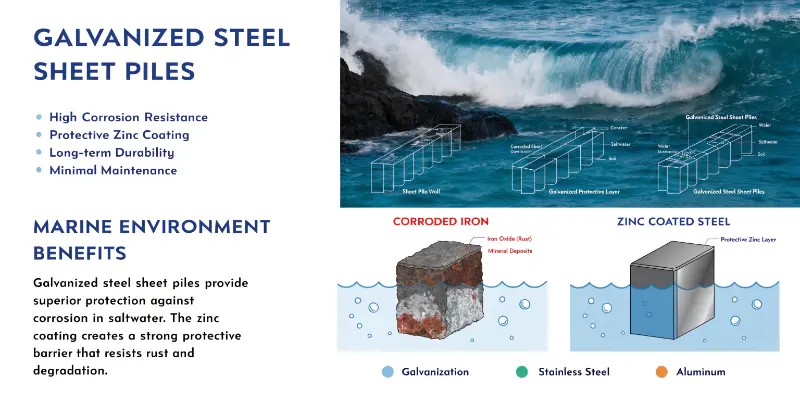
Yes, S355 steel can rust when exposed to moisture and oxygen. S355 is not a stainless steel. Its corrosion resistance depends on environmental conditions, protective coatings, and maintenance practices.
Why Rust Forms
Rust develops when steel reacts with:
- Water
- Oxygen
- Electrolytes such as salts
The corrosion rate depends heavily on the surrounding environment.
Corrosion Environment Comparison
| Environment | Corrosion Risk |
|---|---|
| Dry Indoor | Very Low |
| Rural Outdoor | Low |
| Urban Area | Moderate |
| Coastal Area | High |
| Marine Structure | Very High |
Protection Methods
Engineers commonly use several protection systems.
These include:
- Protective coatings
- Epoxy paint systems
- Cathodic protection
- Corrosion allowances
Guidance on corrosion protection can be found through the World Steel Association.
Sheet Piles in Marine Environments
Marine projects present the greatest challenge.
Saltwater accelerates corrosion.
Engineers often compensate by:
- Using thicker sections
- Applying coatings
- Adding sacrificial corrosion allowances
What I Tell Customers
Many customers ask me whether S355 sheet piles will rust.
My answer is always the same.
Every carbon steel can rust under the right conditions.
The real question is how the engineer manages corrosion throughout the design life of the structure.
For example, many ports around the world successfully use S355 sheet piles for decades because they combine proper coatings with suitable design allowances.
My opinion is that corrosion management matters more than the steel grade itself. A properly protected S355 sheet pile can outperform a poorly protected alternative, even if that alternative has slightly different mechanical properties.
Conclusion
S355 and Q345 offer similar performance for sheet piles, but project standards, certification requirements, and long-term durability considerations often determine the best choice.