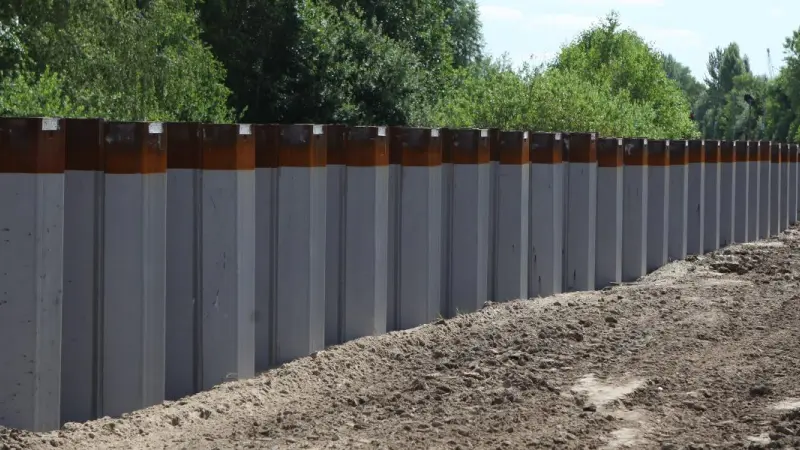
Project delays, water leakage, and high maintenance costs often start with the wrong retaining wall choice. Many buyers struggle when comparing steel sheet piles and concrete wall systems.
Steel sheet piles usually provide faster installation, better flexibility, and easier maintenance, while concrete walls offer massive rigidity and long-term mass stability for certain permanent structures. The better choice depends on project conditions, soil environment, budget, and construction timeline.
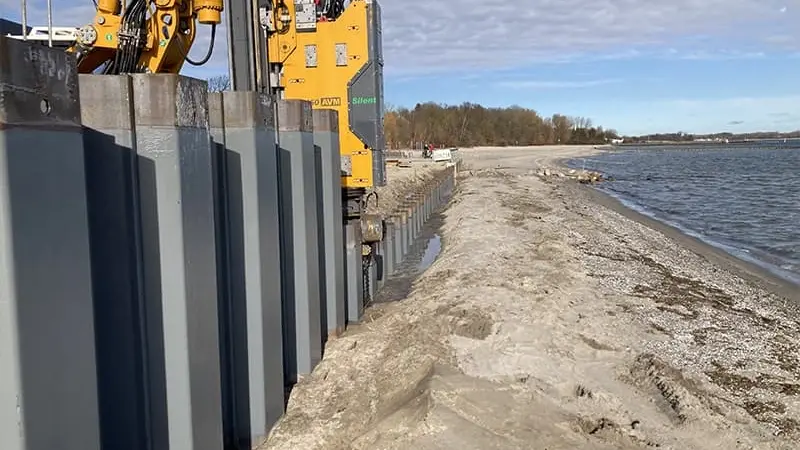
I often discuss this topic with contractors and distributors from the Middle East and Southeast Asia. Many buyers first focus on material price only. Later, they realize installation speed, transportation cost, and long-term maintenance are equally important. In many marine and foundation projects, steel sheet piles have become more popular because they offer faster construction and stronger adaptability. Still, concrete walls remain common in heavy civil engineering projects where rigid mass structures are needed.
How Do Steel Sheet Piles and Concrete Walls Compare in Installation Speed?
Slow installation can increase labor cost, delay project schedules, and create extra equipment expenses. This becomes a major problem during rainy seasons or marine construction work.
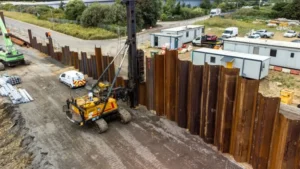
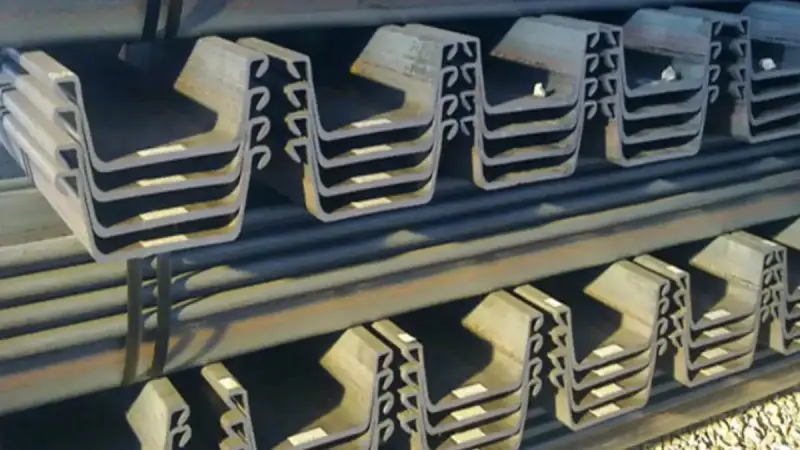
Steel sheet piles install much faster than concrete retaining walls because they use driven interlocking sections instead of large-scale excavation, formwork, and concrete curing processes.
Why Steel Sheet Piles Install Faster
I have seen many contractors switch from concrete retaining systems to steel sheet piles mainly because of time pressure.
Steel sheet piles use methods such as:
- Vibratory hammer driving
- Hydraulic pressing
- Impact hammer installation
This process allows contractors to install large retaining sections very quickly.
In our Southeast Asia riverbank protection project, hot rolled U type sheet piles were installed continuously with vibratory piling equipment. The contractor completed the retaining wall much earlier than expected.
I think installation efficiency is one of the biggest advantages of steel sheet piles.
You can also learn more about vibratory pile driving methods used in sheet pile installation.
Why Concrete Walls Take Longer
Concrete retaining walls need many additional steps:
- Excavation work
- Reinforcement placement
- Formwork preparation
- Concrete pouring
- Concrete curing
- Waterproof treatment
Each step increases project duration.
Bad weather can also slow concrete curing and affect structural quality.
I have seen contractors lose valuable construction time because of unexpected rain during concrete wall projects.
Installation Speed Comparison
| Factor | Steel Sheet Piles | Concrete Walls |
|---|---|---|
| Installation Speed | Fast | Slow |
| Equipment Requirement | Moderate | High |
| Excavation Volume | Lower | Higher |
| Weather Sensitivity | Lower | Higher |
| Labor Requirement | Lower | Higher |
| Site Disturbance | Lower | Higher |
Transportation and Site Efficiency
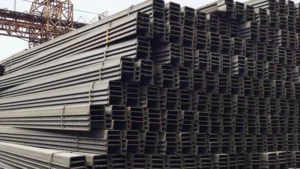
Steel sheet piles are easier to transport and store.
They arrive ready for installation.
Concrete wall systems need large amounts of:
- Cement
- Reinforcement bars
- Formwork materials
- Mixing equipment
This creates more site complexity.
I personally believe fast installation has become more valuable in modern infrastructure projects because labor costs continue to rise worldwide.
My Practical View
For temporary retaining systems, deep excavation support, and marine construction, I usually recommend steel sheet piles first.
Their speed advantage is difficult for concrete walls to match.
Still, some heavy permanent structures may still require reinforced concrete systems depending on design load and local engineering standards.
Which Retaining System Offers Better Long-Term Durability and Maintenance Performance?
Many retaining structures fail because buyers underestimate environmental exposure, corrosion, and long-term maintenance requirements.
Steel sheet piles offer strong long-term durability when proper corrosion protection is used, while concrete walls provide rigid stability but may develop cracking, leakage, and repair challenges over time.
Durability of Steel Sheet Piles
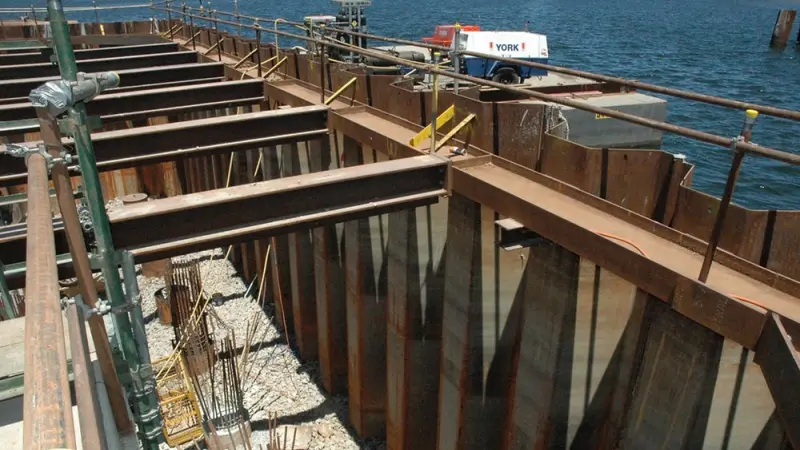
Modern steel sheet piles are designed for long service life.
Many projects use:
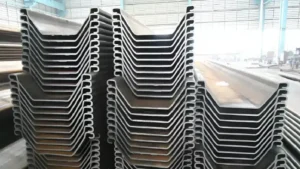
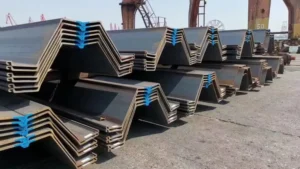
- Hot rolled steel sheet piles
- Protective coatings
- Cathodic protection systems
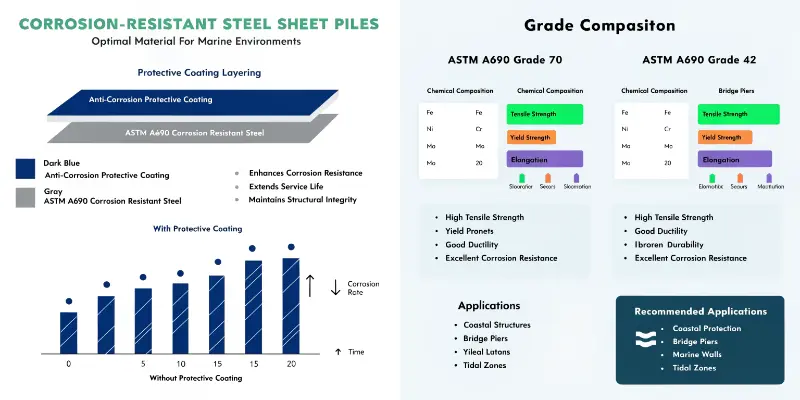
- Corrosion-resistant steel grades
These methods improve durability in marine and coastal environments.
I often recommend ASTM A690 steel for projects near seawater because it provides better atmospheric corrosion resistance.
The interlocking system also helps reduce water leakage.
Concrete Wall Durability Challenges
Concrete walls look massive and stable. Still, they also have weaknesses.
Over time, concrete may develop:
- Cracks
- Water seepage
- Reinforcement corrosion
- Surface spalling
Repair work can become expensive because damaged sections are difficult to access.
In groundwater conditions, waterproofing failure can become a serious issue.
Maintenance Comparison
| Performance Factor | Steel Sheet Piles | Concrete Walls |
|---|---|---|
| Corrosion Risk | Manageable with protection | Reinforcement corrosion possible |
| Crack Risk | Low | Higher |
| Water Tightness | Strong interlock system | Depends on waterproof treatment |
| Repair Complexity | Easier replacement | Difficult repair |
| Marine Durability | Excellent with coating | Good but crack-sensitive |
| Service Life | Long-term | Long-term |
Marine Environment Performance
In coastal regions like the UAE and Saudi Arabia, marine exposure creates harsh conditions.
I have noticed many contractors prefer steel sheet piles because:
- Installation is faster near water
- Maintenance access is easier
- Interlock systems improve water control
Concrete walls in marine zones often require extensive waterproofing systems.
My Engineering Opinion
I think durability depends more on design quality and maintenance planning than material alone.
Still, for marine retaining structures and deep excavations, hot rolled steel sheet piles usually provide better long-term flexibility and easier maintenance access.
That is one reason many modern port projects continue using steel sheet pile systems worldwide.
What Are the Cost Differences Between Steel Sheet Piles and Concrete Retaining Walls?
Many buyers only compare initial material prices. They forget to calculate installation cost, maintenance expense, and project timeline impact.
Steel sheet piles often reduce total project cost through faster installation and reusable materials, while concrete walls may require lower raw material cost in some regions but create higher labor and construction expenses.
Initial Material Cost Comparison
Concrete materials may appear cheaper in some markets.
Still, total project cost includes much more than concrete volume.
Concrete walls require:
- Reinforcement steel
- Formwork systems
- Concrete pumping
- Skilled labor
- Longer equipment rental
Steel sheet piles may cost more per ton, but they reduce many indirect expenses.
Reusability Advantage
One major benefit of steel sheet piles is reusability.
Temporary projects can reuse steel piles multiple times.
This lowers lifecycle project cost significantly.
Concrete retaining walls cannot usually be removed and reused economically.
Cost Efficiency Table
| Cost Factor | Steel Sheet Piles | Concrete Walls |
|---|---|---|
| Initial Material Price | Moderate to high | Moderate |
| Labor Cost | Lower | Higher |
| Installation Equipment | Moderate | High |
| Project Duration Cost | Lower | Higher |
| Maintenance Cost | Moderate | Higher over time |
| Reusability | Excellent | Very limited |
Logistics and Supply Chain
I work with many buyers from Iraq, Jordan, and Pakistan.
Transportation efficiency matters a lot in export projects.
Steel sheet piles are easier to load and ship internationally.
Concrete wall construction often depends heavily on local site conditions and local material supply chains.
Hidden Costs Buyers Ignore
I often tell buyers to calculate:
- Construction delay risk
- Weather downtime
- Future maintenance
- Groundwater control
- Repair accessibility
These factors strongly affect total project profitability.
Sometimes a cheaper retaining wall system becomes more expensive after installation problems appear.
My Real Experience
One contractor initially selected concrete retaining walls for a waterfront project because of lower local material cost.
Later, labor shortages delayed the project badly.
The contractor finally switched part of the project to steel sheet piles to accelerate construction.
That project taught me that time is often more expensive than material.
Which Projects Are More Suitable for Steel Sheet Piles or Concrete Wall Systems?
Different retaining systems perform better in different engineering environments. The wrong selection can increase long-term structural risk.
Steel sheet piles are better for marine construction, temporary works, deep excavations, and fast-track projects, while concrete walls are better for heavy permanent structures requiring massive rigid support.
Best Projects for Steel Sheet Piles
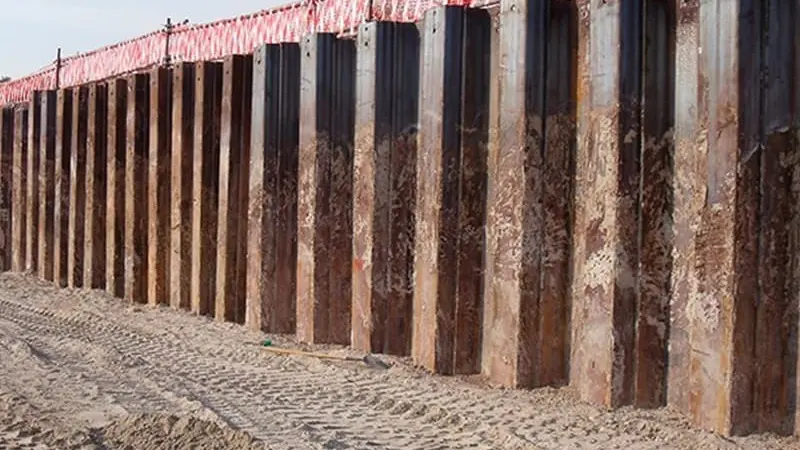
I usually recommend steel sheet piles for:
- Port construction
- Cofferdams
- Riverbank protection
- Flood control systems
- Bridge foundations
- Temporary excavation support
- Marine retaining walls
Their flexibility and fast installation provide major advantages.
You can also review how cofferdams use sheet pile systems in water construction projects.
Best Projects for Concrete Walls
Concrete walls work well for:
- Highway retaining systems
- Heavy infrastructure foundations
- Permanent gravity retaining structures
- Large urban retaining walls
These structures benefit from rigid mass stability.
Project Suitability Comparison
| Project Type | Better Choice |
|---|---|
| Port Construction | Steel Sheet Piles |
| Marine Retaining Walls | Steel Sheet Piles |
| Deep Excavation | Steel Sheet Piles |
| Temporary Structures | Steel Sheet Piles |
| Flood Control | Steel Sheet Piles |
| Highway Retaining Wall | Concrete Walls |
| Heavy Permanent Structures | Concrete Walls |
| Urban Infrastructure | Concrete Walls |
Soil and Water Considerations
Soil condition strongly affects retaining wall selection.
Steel sheet piles perform better in:
- Soft soil
- Wet environments
- High groundwater zones
- Marine conditions
Concrete walls often need deeper foundations in unstable ground.
My Final Project Selection View
I think modern infrastructure projects increasingly favor steel sheet piles because:
- Construction schedules are tighter
- Labor costs are higher
- Marine projects are increasing
- Temporary retaining systems are common
Still, concrete walls remain important in heavy civil engineering projects.
The best solution always depends on project conditions, structural load, lifespan requirements, and environmental exposure.
Conclusion
Steel sheet piles and concrete walls both have strengths. The right choice depends on installation speed, durability needs, project conditions, and total lifecycle cost.