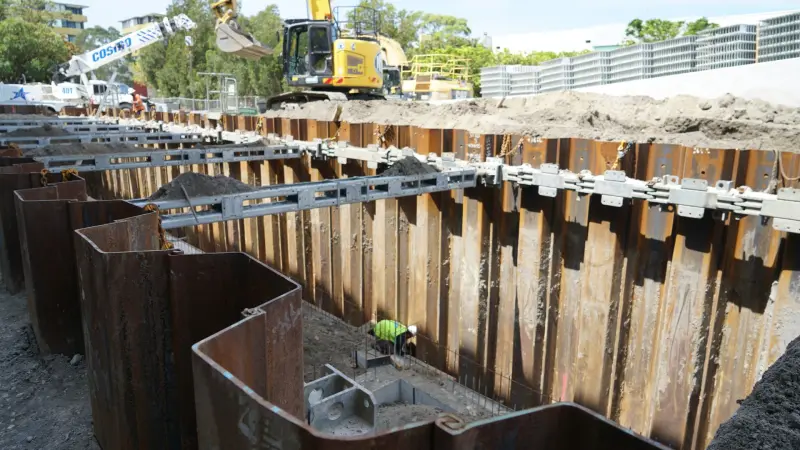
I have seen many basement projects delayed because of problems with the excavation support. The walls move too much. Water seeps in. The construction work stops. It is a problem that can cost a lot of time and money.
Steel sheet piles are an effective solution for basement construction because they provide strong, watertight support for deep excavations. They are used to create temporary or permanent retaining walls that hold back soil and water during construction. The interlocking sections are driven into the ground to form a continuous barrier.
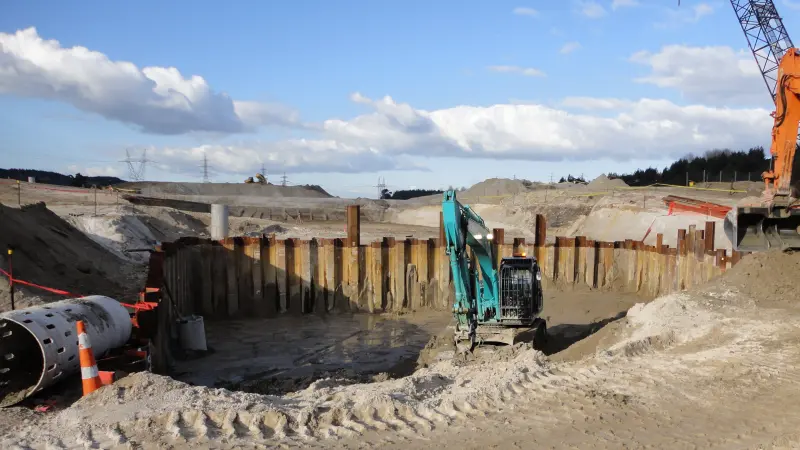
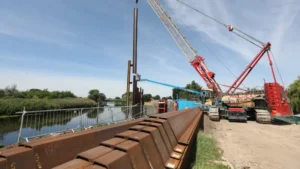
I have worked with steel sheet piles for years. I have supplied them for basement construction, riverbank protection, and port projects. The use of sheet piles for basements is common in urban areas where space is tight and excavation depth is significant. Let me walk you through what you need to know.
For basement design references, see the ArcelorMittal: Underground Car Parks & Basements and the Sheet Piling (UK): Steel Intensive Basements.
How deep can sheet piles go?
This is the first question I get from project managers. They want to know if sheet piles can handle the basement depth they need. The answer depends on the equipment and the soil conditions.
With conventional vibratory hammers on leader rigs, sheet piles can be installed to depths of about 21 meters. With specialized methods like the NB System, steel pipe sheet piles have been installed to depths of about 90 meters. However, the practical limit for most basement construction is set by the structural design of the wall, not the installation equipment.
Breaking Down the Depth Limits
Conventional Installation
Most basement projects use standard vibratory hammers. These can drive sheet piles to depths of about 21 meters. This is the practical limit for most construction projects. For smaller equipment, the maximum depth is about 10 meters.
Specialized Methods
The NB System is an inner-excavation pile installation method. It can install steel pipe sheet piles to depths of about 90 meters. This method is used in Japan for bridge foundations and other deep applications. It is not commonly used for standard basement construction.
The Real Limit
In most basement projects, the limiting factor is the structural capacity of the sheet pile wall. For a floating sheet pile wall in soft clay, a penetration depth equal to one-half the excavation depth appears to be adequate. For a 10-meter excavation, that is 5 meters of embedment. The total pile length would be about 15 meters.
Depth by Excavation Depth
| Excavation Depth (m) | Typical Embedment Depth (m) | Total Pile Length (m) |
|---|---|---|
| 5 | 3-5 | 8-10 |
| 10 | 5-8 | 15-18 |
| 15 | 7-10 | 22-25 |
| 20 | 10-12 | 30-32 |
What are the disadvantages of using sheet piles?
I have seen many clients focus only on the advantages. They forget about the potential downsides. It is important to consider these before choosing sheet piles for your basement project.
The main disadvantages of sheet piles are their vulnerability to corrosion, the high noise and vibration during installation, and the fact that they are not suitable for supporting heavy vertical loads. They are also expensive, and the interlocks can be a weak point in the wall.
The Key Limitations
Corrosion
This is the single biggest threat to steel sheet piles. Steel can corrode when exposed to water and soil. The corrosion rate depends on the aggressiveness of the environment. For long-term durability, you must plan for corrosion protection. This is especially important for permanent basements.
Installation Challenges
Driving sheet piles into the ground is not always easy. It can be difficult in dense, bouldery, or very stiff soils. The traditional method of driving also creates high noise and vibration. This can be disruptive in urban areas. However, newer vibration-free pressing technology is available to minimize this impact.
Limited Load Capacity
Steel sheet piles alone are not good at supporting heavy vertical loads. They are not designed to carry the weight of the building above. If the basement wall needs to support a heavy structure, you will need to use a relieving slab or a separate foundation system.
Interlock Weakness
The interlocks between sheet pile sections are a weak point. Corrosion can weaken them over time. If the interlocks fail, the wall can collapse.
Cost
Sheet piles are expensive. The cost of the material is just one part of the total budget. You also have to pay for transportation, driving equipment, and installation labor.
Risk Mitigation
| Risk | Mitigation Strategy |
|---|---|
| Corrosion | Use corrosion-resistant grade (e.g., AMLoCor), apply protective coatings, use cathodic protection |
| Noise/Vibration | Use silent piling (press-in) or impact hammers with noise shrouds |
| Interlock Failure | Use high-quality piles, avoid over-driving, inspect interlocks |
| Cost | Optimize design, use standard sections, consider rental equipment |
Is sheet piling a type of foundation?
This is a common question. People often confuse sheet piles with other types of piles. The answer is that they are not a foundation in the traditional sense.
Sheet piling is not a type of foundation. It is a type of retaining wall. The piles are driven into the ground to hold back soil and water. They do not carry the weight of the building above. The term "piling" refers to the installation method, not the function. Sheet piles are used for temporary excavation support, not for load-bearing foundations.
Sheet Piles vs. Load-Bearing Piles
Sheet Piles
- Function: Retain soil and water.
- Load: Resists lateral (horizontal) forces.
- Shape: Thin, interlocking sections.
- Installation: Driven vertically, close together.
Load-Bearing Piles
- Function: Support vertical loads.
- Load: Carries the weight of the structure above.
- Shape: Solid or hollow sections.
- Installation: Driven vertically, spaced apart.
The Role in Basement Construction
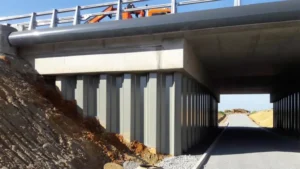
In basement construction, sheet piles are used to create the excavation support. They hold back the soil while the basement is being built. Once the basement is complete, the sheet piles may be left in place as a permanent wall. But they do not support the building load. That is done by the foundation slab or footings.
What is the difference between Type 2 and Type 4 sheet piles?
I hear this question from many engineers. The numbers refer to the capacity of a standard U-shaped pile. This classification is based on standards like those from Yamato Steel. The difference is in the size and strength of the pile.
The main difference is their structural capacity. Type 2 piles are lighter and used for small, shallow projects. Type 4 piles are much heavier and have a higher section modulus. This allows them to handle deeper excavations and heavier loads.
A Direct Comparison
The table below compares the key properties of Type 2 and Type 4 piles. This data is based on the widely used Yamato Steel standard.
| Property | Type 2 (YASP-Ⅱ) | Type 4 (YASP-Ⅳ) |
|---|---|---|
| Effective Width | 400 mm | 400 mm |
| Effective Height | 100 mm | 170 mm |
| Thickness | 10.5 mm | 15.5 mm |
| Section Modulus (Per Pile) | 152 cm³ | 362 cm³ |
| Unit Mass (Per Pile) | 48 kg/m | 76.1 kg/m |
The Type 4 pile is much thicker, heavier, and has more than double the section modulus of the Type 2 pile. The section modulus is the key number. It tells you how resistant the pile is to bending.
Choosing the Right Type
Type 2 Sheet Piles
These are light-duty piles. They are recommended for:
- Bottom protection in shallow water.
- Temporary trench shoring.
- Light retaining walls.
Type 4 Sheet Piles
These are heavy-duty piles. They are used for:
- Deep water applications.
- Construction of primary breakwaters.
- Large reclamation projects.
- Deep basements.
Conclusion
Steel sheet piles are an effective solution for basement construction, providing strong, watertight support for deep excavations. Type 4 piles are for heavy-duty work, while Type 2 piles are for light-duty use. They are retaining walls, not load-bearing foundations.
For more on basement sheet piling, see the Keller Group: Sheet Piles and the Sheet Piling (UK): Permanent Sheet Pile Basement Projects.