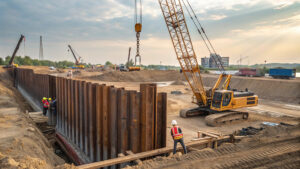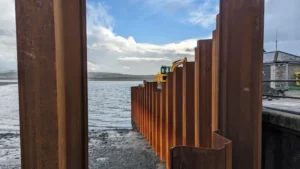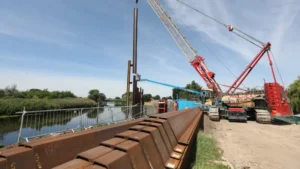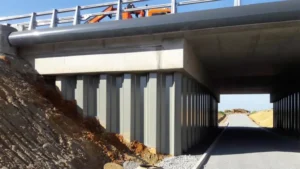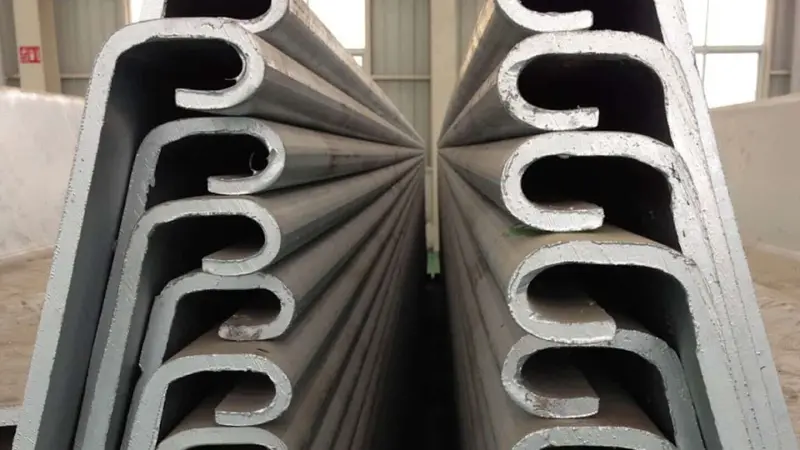
A sheet pile wall can save an excavation, but once the job is done, removal can become the next risk, cost, and delay if nobody planned for extraction from the start.
To remove steel sheet piles, I usually start by unloading the wall, checking whether the piles are temporary or permanent, and then choosing the right extraction method such as a vibratory hammer, hydraulic extractor, or assisted loosening. Steel sheet piles can often be removed and reused, but only if the ground, interlocks, and surrounding structures allow safe extraction.
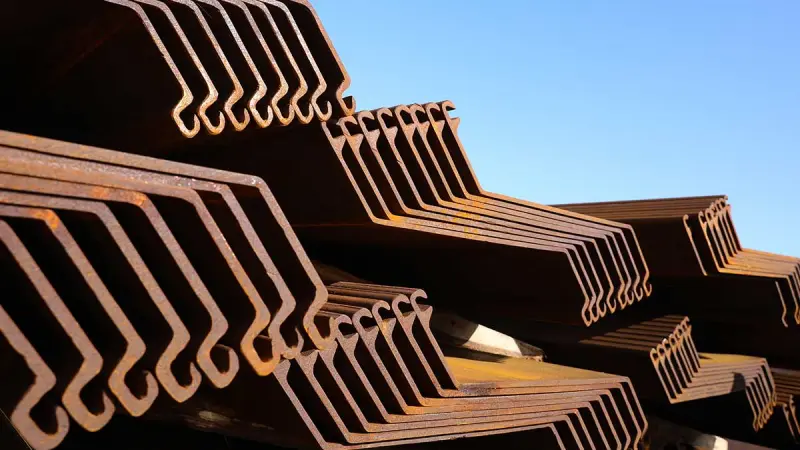
I have noticed that many buyers focus heavily on sheet pile installation and leave extraction as an afterthought. I understand why. Installation is visible. It happens at the start of the job. Removal comes later, when the pressure is on to clear the site, return rented equipment, or hand over the project. But from my side, I think removal deserves attention much earlier. If a contractor plans to use steel sheet piles as temporary support, then extraction should be part of the original strategy, not a last-minute problem for the site team. In many projects, especially excavation support, cofferdams, trench works, and temporary river works, steel sheet piles are not only chosen because they are strong. They are also chosen because they can often be removed and reused, which helps control total project cost. That is one of the biggest practical advantages of steel sheet piles over many cast-in-place retaining systems.
Still, “can be removed” does not mean “easy to remove.” Soil type, pile length, installation damage, corrosion, embedment depth, vibration limits, and wall bracing details all affect the removal process. In this article, I want to explain how I think about steel sheet pile removal in the real world. I will go through whether sheet piles can be removed, how I get rid of temporary piling in a practical sense, when sheet piling is meant to stay in the ground, and how I approach the wider question of removing existing piles. My goal is not just to give a simple yes-or-no answer. I want to show the trade-offs behind the answer, because that is what usually matters on site and in procurement.
Can sheet piles be removed?
Yes, sheet piles can often be removed, especially when they were installed as temporary works. But successful removal depends on soil conditions, installation damage, pile length, corrosion, surrounding structures, and whether the wall has been fully unloaded before extraction.
Steel sheet piles are commonly removed after temporary excavation support, cofferdams, and trench works. In most cases, I use a vibratory hammer or hydraulic extractor to pull them vertically after the retained load has been released. Still, not every sheet pile should be removed, and not every sheet pile can be removed without risk or damage.
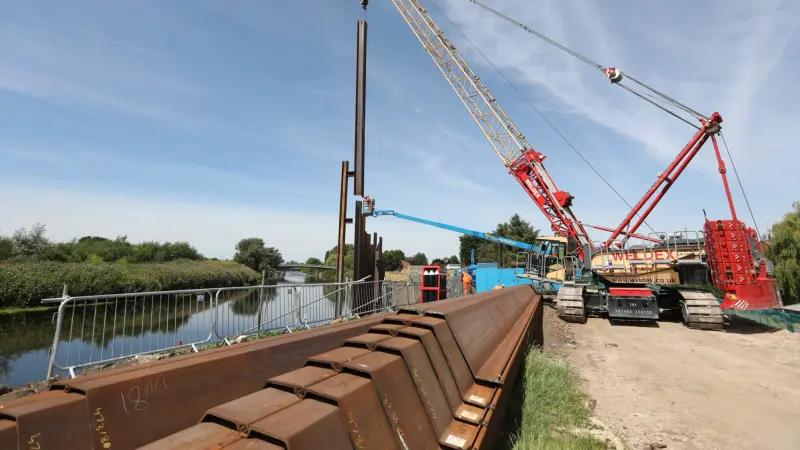
I always start with the project purpose, not the extraction machine
When someone asks me whether sheet piles can be removed, I do not start by talking about vibratory hammers. I first ask a more basic question: why were the piles installed in the first place, and what are they doing right now? That sounds obvious, but it changes the answer.
Steel sheet piles are used in both temporary and permanent retaining structures. The Steel Piling Group describes sheet piles as a system used for both temporary and permanent walls, including basements, cofferdams, and marine works. That matches what I see in export projects as well. Some piles are installed only to support excavation for a short period. Those are strong candidates for removal and reuse. Other piles become part of the permanent structure, such as riverbank walls, quay walls, flood defense lines, and some foundation support systems. Those are a different conversation.
So before I answer “yes, they can be removed,” I check these points.
1. Is the wall temporary or permanent?
If the wall is temporary excavation support, removal is often expected. In fact, the reusability of steel sheet piles is one of the reasons contractors choose them. Keller also notes that steel sheet piles are a sustainable option because the piles can often be reused.
If the wall is permanent, removal may make no sense at all. In some jobs, the piles stay in place and are cut to final level or buried below grade after the permanent structure is built.
2. Has the wall been unloaded?
This is one of the most important checks. I do not want anyone pulling piles from a wall that is still resisting active soil or water pressure. Before extraction, the support function of the wall must be released in a controlled way. In older technical guidance on vibratory extraction, the wall should be unloaded first by backfilling, removing retained fill, draining water, or taking away the pressure condition that the sheet pile wall was resisting. If that is not done, removal becomes unsafe and unpredictable. For general extraction method notes, see sheet pile extraction equipment and methods.
3. What happened to the interlocks during installation and service?
In theory, sheet piles interlock and then come back out one by one. In practice, piles may have twisted, been driven through obstructions, been welded locally, or deformed under load. Interlocks may be packed with soil or damaged by impact. If that happened, extraction becomes harder, slower, and more uncertain.
4. What are the ground conditions?
Loose sand is one thing. Dense granular soil, stiff clay, cobbles, fill with debris, and long-term corrosion are another. A pile that went in smoothly with vibration may still resist extraction if the soil has reconsolidated around it or if the toe is trapped by obstructions.
When I expect removal to be practical
| Situation | My view on removability | Notes |
|---|---|---|
| Temporary excavation support in moderate soils | Usually removable | Best case for vibratory extraction and reuse |
| Cofferdam sheet piles after dewatering and unloading | Often removable | Sequence matters; water and retained fill must be managed |
| Short-term trench support sheets | Usually removable | Good if interlocks are not badly damaged |
| Permanent waterfront or river wall | Often left in place | Removal may compromise the permanent works |
| Piles driven through obstructions or distorted interlocks | Uncertain | Extraction may damage piles or need special methods |
| Piles near sensitive structures with vibration limits | Possible, but more difficult | Hydraulic extraction or silent methods may be preferred |
How I usually remove them
The most common method I see is vibratory extraction. A vibratory hammer clamps the pile head and induces vertical vibration to reduce soil friction, then the crane or rig lifts the pile out. The Steel Piling Group’s overview of vibratory piling equipment explains that vibratory systems are commonly used both to drive and extract piles because vibration reduces friction and helps the pile move with less resistance.
In some sites, a hydraulic pile extractor is a better choice, especially where noise or vibration is a concern. Hydraulic extractors apply pull-out force through clamping jaws and can be useful when the site is tight or when vibration has to be limited. On difficult jobs, extraction may also be assisted by pre-augering, water jetting, or loosening around the pile.
My view: “can be removed” should be discussed before the purchase order
This is one of my strongest opinions on the topic. If a client tells me a sheet pile wall is temporary, I do not want to sell the piles as if installation is the only important stage. I want the team to think about extraction before the piles even ship. That means asking whether the pile length, section choice, corrosion exposure, and ground condition will still allow reuse later. It also means asking whether the site will still have access for extraction equipment at the end of the project. A wall can be technically removable and still become a financial headache if the site sequence makes removal impossible or unsafe.
How to get rid of sheet piling?
To get rid of sheet piling, I first decide whether “get rid of” means remove for reuse, remove for scrap, cut off below grade, or leave in place with approval. Each option has different cost, risk, and site impact.
In practical construction terms, I get rid of sheet piling by extracting it with a vibratory hammer, hydraulic extractor, or press-in type system when the wall is temporary and accessible. If removal would damage nearby structures, disturb utilities, or cost more than the value of the recovered steel, I may recommend cutting the piles down or leaving them in place if the project allows it.
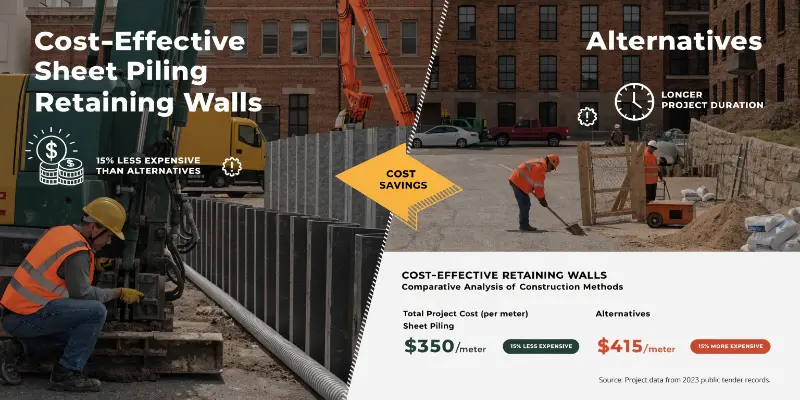
“Get rid of” is not one decision. It is four different decisions.
I think this phrase creates confusion because people use it loosely. On site, “get rid of sheet piling” can mean very different things:
- Pull the piles out and reuse them
- Pull the piles out and send them to scrap or recycling
- Cut the piles off below grade and leave the embedded part in place
- Leave the full pile in place as part of the final condition
If I do not separate those options, the discussion goes nowhere. A contractor may assume extraction and reuse. The owner may assume cut-off and burial. The engineer may assume permanent retention. Those are three different cost models.
Option 1: Remove and reuse
This is the best outcome for many temporary works projects. Steel sheet piles are expensive enough that reuse can make a big difference to the total project budget. Temporary sheet piling contractors also highlight removal and reuse as one of the main benefits of temporary steel piling systems. Aarsleff describes temporary sheet piles being inspected, exposed, disconnected, and extracted after the project is complete, so they can be used again.
If reuse is the goal, I pay attention to:
- whether the interlocks stayed in good condition
- whether the pile heads were damaged during installation
- whether corrosion or bending makes future reuse unrealistic
- whether the extraction method will distort the piles
- whether the piles are standard lengths that are worth storing and shipping again
Option 2: Remove and scrap
Sometimes the piles come out, but they are no longer ideal for structural reuse. That does not mean removal is pointless. Steel still has scrap value, and the site may require a clear ground condition for future works, utilities, or property handover.
I usually see this when:
- the piles are heavily worn or deformed
- the project used mixed second-hand sections
- the wall geometry created extraction damage
- the cost of sorting and grading reusable piles is not worth it
Option 3: Cut off below grade
This is more common than many buyers expect. If pulling the piles would create settlement, open voids, damage nearby assets, or cost too much in equipment remobilization, the project team may decide to cut the piles below finished ground level and leave the embedded section in place.
I have seen this in urban works, utility corridors, and projects where the temporary sheet piles are too close to existing structures. In some field discussions among engineers and contractors, the decision to leave sheet piles in place often comes down to whether removal could compromise the structure or utilities they were meant to protect. I think that is a practical way to look at it.
Option 4: Leave them in place by design
This is not “getting rid of” in the normal sense, but it is still a real outcome. A temporary wall can become a semi-permanent buried obstruction if the owner approves it. In other cases, the piles were permanent from day one.
The practical removal sequence I like to see
| Step | What I want checked | Why it matters |
|---|---|---|
| 1 | Confirm whether piles are temporary or permanent | Prevents wrong assumptions and wrong scope |
| 2 | Remove soil, water, or surcharge load acting on the wall | Unloads the sheet pile before extraction |
| 3 | Check bracing, walers, tie rods, and welded points | Hidden restraints can stop removal or create danger |
| 4 | Expose pile heads and confirm clamp access | Extraction equipment needs a safe grip |
| 5 | Select extraction method based on ground and site limits | Vibratory is common, but not always best |
| 6 | Pull in a controlled sequence | Avoids instability and damage to nearby works |
| 7 | Inspect extracted piles | Decide reuse, repair, or scrap |
My view: sometimes the smartest way to “get rid of” sheet piling is to stop chasing perfect recovery
This is the kind of judgment call that does not show up in simple articles. People like the idea that temporary steel sheet piles should always be extracted and reused. In theory, I like that too. But in practice, I do not think it is always the best answer. If extraction needs heavy remobilization, causes vibration concerns, risks settlement, or may damage a newly completed permanent structure, then chasing full recovery can become false economy.
In those cases, I would rather make the decision openly: either cut off the piles and document the as-built condition, or leave them in place with owner approval and future utility records updated. What I do not like is pretending removal will be easy and then discovering at the end of the job that nobody allowed time, access, or budget for it.
Is sheet piling permanent?
Sheet piling can be temporary or permanent. It depends on the project purpose, design life, corrosion conditions, and whether the wall is meant to remain part of the finished structure after construction.
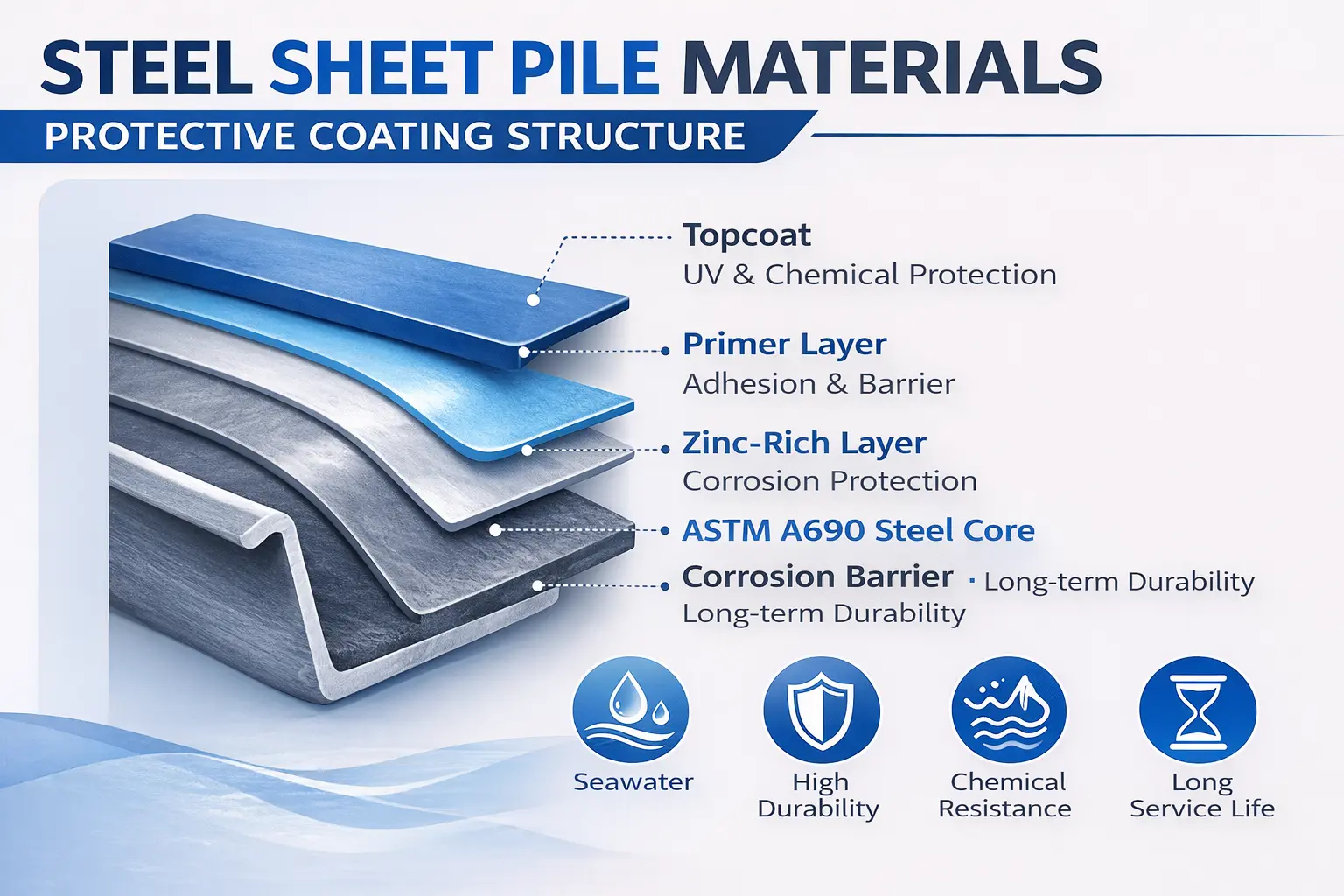
Sheet piling is not automatically permanent. In many excavation support and cofferdam projects, steel sheet piles are temporary and removed after use. In quay walls, riverbank protection, flood defense, marine structures, and some retaining walls, sheet piling is often designed as a permanent structure and left in place for long-term service.
This is one of the first questions I ask every buyer
When I discuss a project with a contractor or distributor, I want to know very early whether the sheet pile wall is temporary or permanent. That one answer changes a lot:
- section selection
- corrosion allowance
- coating or protection needs
- tolerance for installation damage
- extraction planning
- resale or reuse expectations
- final cut level and finishing details
If the wall is temporary, I am thinking about installation speed, structural adequacy for the construction phase, and removability. If the wall is permanent, I am thinking about service life, groundwater exposure, corrosion, maintenance, and long-term structural reliability.
The Steel Piling Group and Keller both describe sheet piles as suitable for both temporary and permanent applications. That is exactly how I explain it to clients: the product itself does not decide permanence. The project design intent decides it.
When I expect sheet piling to be temporary
Temporary sheet piling is common in:
- deep excavation support
- cofferdams for foundations or marine works
- trench support and utility works
- short-term flood control or emergency stabilization
- bridge and abutment construction stages
In these cases, the wall is often there to protect the excavation or work zone only during construction. Once the permanent structure is complete and can resist the loads itself, the sheet piles may be removed.
When I expect sheet piling to be permanent
Permanent sheet piling is common in:
- riverbank protection systems
- quay walls and bulkheads
- seawalls and port works
- flood defense lines
- retaining walls in industrial or infrastructure projects
- underground structures where the pile wall becomes part of the final envelope or remains buried
This is very relevant to our own business because many buyers in river, port, and infrastructure work are not buying steel sheet piles for a few weeks of use. They are buying them as a long-term structural product.
Our riverbank protection case is a good example
In our Southeast Asia riverbank protection project, the hot rolled U type steel sheet piles were not a temporary convenience. They were part of the long-term retaining system. The piles were driven into the riverbank to form a continuous barrier that stabilized the soil and controlled erosion. In that type of application, the interlocking performance, corrosion resistance, and long-term structural reliability matter much more than future extraction.
That is why I think buyers should be careful when reading general articles that treat all sheet piling as if it belongs to temporary excavation work. A contractor building a basement support wall and a contractor protecting a riverbank may both buy “steel sheet piles,” but the project logic is not the same.
The factors I use to judge permanence
| Factor | Temporary sheet piling | Permanent sheet piling |
|---|---|---|
| Main purpose | Construction-phase support | Long-term retaining or water-control structure |
| Design life | Short-term to project duration | Multi-year or multi-decade service life |
| Extraction plan | Usually considered from the start | Usually not relevant |
| Corrosion strategy | May be limited if exposure is short | Much more important |
| Finish level | Often extracted or cut off after use | Integrated into final works |
| Cost logic | Reuse and recovery matter | Durability and life-cycle performance matter |
Can a “temporary” wall become permanent?
Yes, and I have seen that happen. Sometimes a temporary sheet pile wall is left in place because removal would be risky, too costly, or disruptive to adjacent works. Sometimes the permanent structure is built against the temporary sheet pile wall, and the piles remain buried below grade. In that case, the wall has effectively changed status.
That is why I do not like treating “temporary” and “permanent” as purely commercial labels. They affect procurement, but they also affect risk. If a wall might remain in the ground, even if that was not the original plan, I think it is wise to think early about corrosion, future obstructions, and owner approval.
My view: temporary vs permanent should shape the whole buying strategy
This is the point I keep coming back to. If I know a wall is temporary, I can help the client think about reuse, extraction damage, and practical length choices. If I know it is permanent, I can focus on long-term section performance, coating, corrosion reserve, and structural stability. In other words, the “temporary or permanent” question is not a side detail. It is one of the main keys to choosing the right steel sheet pile solution.
How to remove existing piles?
To remove existing piles, I first identify what type of pile I am dealing with, what load it is still carrying, and what is around it. The removal method for steel sheet piles is very different from the method for H piles, pipe piles, concrete piles, or timber piles.
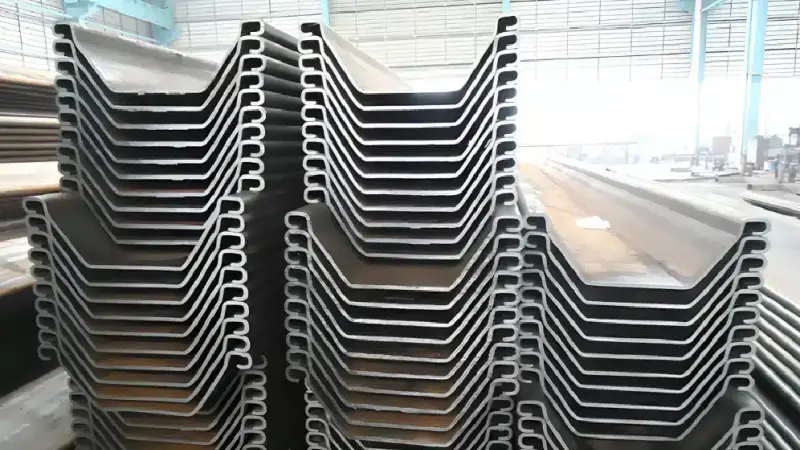
To remove existing piles, I begin with a survey of pile type, embedment, structural role, and surrounding risks. Existing steel sheet piles are often removed with vibratory or hydraulic extraction after unloading and exposing the pile head. Other pile types may need cutting, coring, breaking out, over-excavation, or partial removal rather than full extraction.
“Existing piles” is too broad unless we define the pile type
This section matters because many clients use the word “pile” for very different things. A steel sheet pile wall is one thing. A tubular pile in a marine berth is another. A concrete bearing pile under a structure is another again. If I do not define the pile type, any removal advice becomes vague and risky.
So when I hear “How do I remove existing piles?” I break it into categories.
1. Existing steel sheet piles
These are usually the easiest existing piles to talk about because they are often designed as a wall of interlocking elements rather than isolated load-bearing foundation piles. If they are temporary and accessible, removal usually follows the same logic I described earlier:
- unload the wall
- expose the pile head
- disconnect walers, anchors, welds, or capping restraints
- use a vibratory hammer or hydraulic extractor
- pull in sequence
- inspect for reuse or scrap
The ESC overview of pile extraction equipment and methods gives a good simple summary of extraction by vibration and silent press-in type systems, and it matches the approach I see in the field.
2. Existing bearing piles under structures
This is a very different problem. If a pile is supporting a building, bridge, jetty, or heavy structure, “remove it” is not just an extraction question. It is a structural replacement question. The pile may need to be unloaded by temporary support, cut in sections, broken out, or abandoned in place if removal would endanger the structure.
I do not treat that as a sheet pile issue at all. I treat it as a structural intervention with geotechnical and temporary works implications.
3. Existing piles in marine or industrial sites
In ports, wharves, and old industrial sites, existing piles may be corroded, buried under fill, tied into caps, or obstructed by utilities and debris. Full extraction may be unrealistic. In those jobs, partial removal to a required depth, cutting below mudline or below grade, or installing replacement elements nearby may be more practical.
4. Existing piles that are in the way of new construction
Sometimes the goal is not to recover the pile. The goal is simply to clear the footprint for new works. In those cases, I want to know the required clearance depth. If a pile can be cut below formation level and left deeper in the ground, that may be enough.
My practical decision framework for existing pile removal
| Question I ask | Why I ask it | What it changes |
|---|---|---|
| What type of pile is it? | Sheet pile, H pile, pipe pile, concrete pile, timber pile all behave differently | Determines extraction vs cutting vs demolition |
| Is it still carrying load? | Loaded piles cannot be treated like abandoned piles | Controls safety sequence and temporary support |
| How deep is it embedded? | Deep piles may resist extraction heavily | Affects plant size, cost, and feasibility |
| What is around it? | Utilities, basements, roads, and marine assets create constraints | May rule out vibration or full extraction |
| Does the pile need to be reused? | Recovery target changes the removal method | Affects how carefully the pile is handled |
| Is full removal really necessary? | Sometimes only obstruction clearance is needed | May allow cut-off instead of extraction |
When extraction becomes difficult
I think it helps to be honest about the common failure points in existing pile removal.
Locked or damaged interlocks
For old steel sheet piles, the interlocks may be packed with soil, corroded, bent, or welded in places. That can make sequential extraction much harder than expected.
Soil setup and reconsolidation
A pile that was installed years ago may have much higher resistance on removal than it had during installation. Time matters.
Access and headroom
Even if the pile itself is removable, the site may not allow the crane, rig, or extractor to work safely.
Vibration restrictions
Near rail, basements, heritage structures, or sensitive utilities, a standard vibratory hammer may not be acceptable. That can change the whole method.
Unknown pile records
This is a big one. Old drawings may be incomplete. Pile lengths, toe levels, welds, and connections may not match the records. I always prefer to assume uncertainty until proven otherwise.
My view: removal planning is part of value, not just a site headache
I think suppliers and contractors both undersell this point. Removal is not only a construction nuisance. It is part of the total value story of steel sheet piles. One reason many contractors like steel sheet piles is that they can often be installed quickly, extracted efficiently, and reused across multiple jobs. That flexibility matters in B2B purchasing.
But I also think the industry sometimes oversimplifies the message. We say “sheet piles are reusable,” and that is true. Still, reuse only happens when the pile selection, installation method, ground condition, and extraction planning all support it. A cheap section that distorts during driving or gets damaged at the head may not give the contractor the reuse value they expected. In that sense, extraction planning starts much earlier than the day the rig returns to pull the wall.
My practical checklist before I approve sheet pile removal
Before a temporary sheet pile wall is removed, these are the questions I would want answered clearly:
1. Has the wall been fully unloaded?
No active soil or water pressure should remain on the wall without a controlled sequence.
2. Are all braces, walers, anchors, and welded connections released?
Hidden restraints create dangerous surprises.
3. Is the surrounding structure safe if the piles come out?
Settlement, voids, and ground relaxation need to be considered.
4. Is the extraction method suitable for the site?
Vibratory extraction is common, but not every site can accept the vibration.
5. Do we need the piles back in reusable condition?
If yes, handling, clamping, and sequencing should reflect that goal.
6. Is leaving them in place actually the better commercial answer?
I do not ask this to avoid work. I ask it because sometimes the honest answer is yes.
Conclusion
I see steel sheet pile removal as a planning issue, not just an end-of-project task. If the team thinks about extraction early, the wall is much easier to remove, reuse, or retire properly.