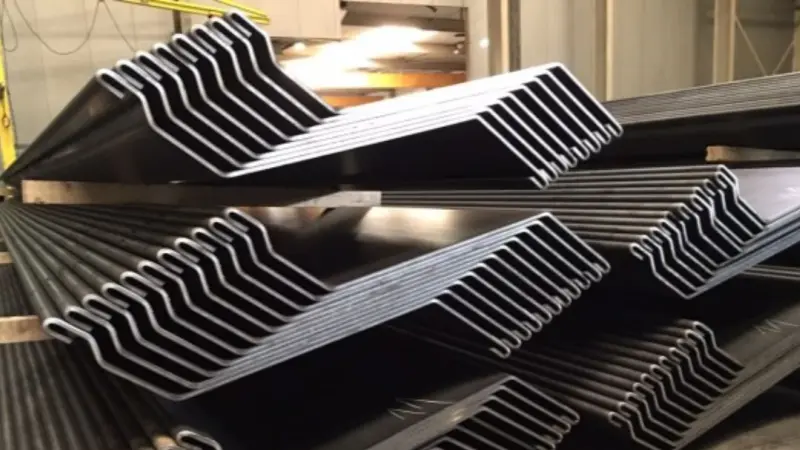
A sheet pile wall can solve a hard site problem fast, but if the piles cannot be reused after extraction, the project may lose one of steel piling’s biggest cost advantages.
Yes, sheet piles can often be reused, especially in temporary works such as cofferdams, excavation support, and trench shoring. In my experience, reuse depends on pile condition, extraction method, soil resistance, corrosion, and whether the interlocks and pile heads stay in usable shape after removal.
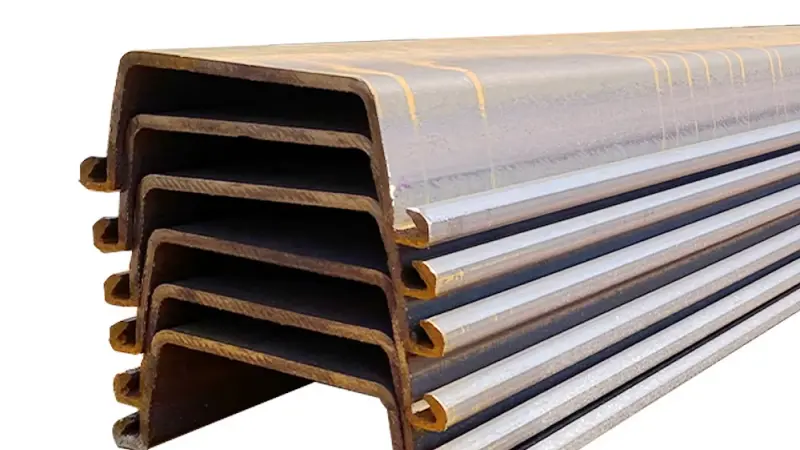
I think many buyers ask the reuse question too late. They wait until the wall is already installed, the excavation is almost done, and then they start wondering whether the steel sheet piles can be pulled out and used again. I do not like that sequence. If a contractor wants reuse value, the project team should think about it before the first pile reaches the site. Reuse is not only about what happens at the end of the job. It starts with the section choice, the steel grade, the installation method, the ground condition, and even the way the piles are stacked and handled on site. That is why I see “Can sheet piles be reused?” as more than a yes-or-no technical question. It is a planning question, a cost question, and in many cases, a procurement question too.
From my side, this is one of the reasons steel sheet piles stay attractive in B2B projects. A concrete retaining wall is built once and stays where it is. A temporary steel sheet pile wall can often be installed, extracted, inspected, and sent to the next job. That flexibility matters for contractors who handle repeated excavation support or temporary water-retaining works. It also matters for distributors and owners who care about life-cycle cost, resale value, and project sustainability. In this article, I want to break the topic down in a practical way. I will answer whether sheet piles are reusable, what construction resources usually cannot be reused, whether sheet piles are permanent, and whether piles in general can be reused. I will also add my own view on where contractors lose reuse value without realizing it.
Are sheet piles reusable?
Yes, steel sheet piles are often reusable, especially when they are used for temporary works and extracted with care. But I do not treat reuse as automatic. It depends on damage, corrosion, deformation, interlock condition, and how the piles were installed and removed.
Steel sheet piles are reusable in many temporary applications. In practice, I usually see reuse in cofferdams, trench support, and excavation retaining walls where the piles are extracted after use. If the piles are not badly bent, cracked, corroded, or damaged at the interlocks and pile heads, they can often be used again on later projects.
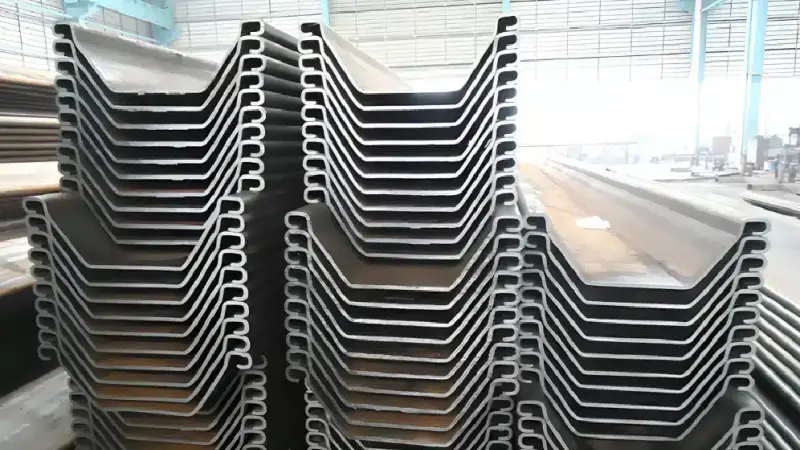
I do not separate “reuse” from “temporary works”
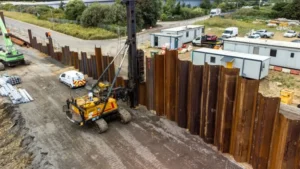
When someone asks me if sheet piles are reusable, my first thought is not the steel itself. My first thought is the type of project. Reuse makes the most sense when the sheet piles were installed for temporary works. That includes construction pits, cofferdams, shoring, trench support, and some short-term flood control works. In those cases, steel sheet piles are often chosen not only because they can hold soil and water, but also because they can be driven, extracted, and reused many times. ArcelorMittal temporary works guidance says exactly that: steel sheet piles can be driven, extracted, and reused many times, which is one reason they work so well for circular construction and cost control in temporary jobs.
The Steel Piling Group and Keller also make the same point in different ways. Steel sheet piles are used for both temporary and permanent walls, but one of their sustainability advantages is that they can often be extracted and reused instead of being treated as single-use material.
Reusable does not mean unlimited reuse
This is where I think some marketing language becomes too simple. Yes, sheet piles are reusable. No, that does not mean every pile will come out perfect after every job. Reuse has limits. A sheet pile that has been driven through hard obstructions, heavily vibrated, distorted by poor alignment, or cut and welded repeatedly may still be recoverable as scrap steel, but not necessarily as a good structural pile for the next project.
ArcelorMittal’s published best-practice paper on reuse notes that steel sheet piles used in temporary applications can be reused multiple times, and in some cases up to 10 times, depending on soil conditions and handling. It also notes that a small portion of the pile length, often near the head, may need to be cut away after each use because of deformation or damage. Reuse of Steel Sheet Piles – Best Practice
That matches what I have seen in practice. Reuse is real, but it is not free of wear.
What I check before I call a sheet pile “reusable”
1. Interlock condition
If the interlocks are badly damaged, packed with hardened soil, torn, or distorted, the pile may be difficult to reuse, especially if the next project needs reliable wall continuity or water control.
2. Pile head damage
Pile heads take abuse during driving and extraction. If the head is mushroomed, split, or heavily cut, the pile may need trimming. Minor trimming is normal. Major damage reduces reuse value.
3. Overall straightness
A pile does not need to look brand new to be reused. But if it is significantly bent, twisted, or bowed, I need to think about whether it can still be driven safely and interlock properly.
4. Corrosion loss
Temporary use in mild ground is one thing. Long exposure in marine or aggressive groundwater conditions is another. A corroded pile may still have scrap value, but that is not the same as reuse as a structural product.
5. Extraction damage
The extraction method matters. A controlled vibratory pull is different from a rough recovery operation where piles are forced out with damage to heads and shoulders.
My practical view of reuse conditions
| Condition after extraction | My view on reuse | Typical outcome |
|---|---|---|
| Minor head damage, straight profile, good interlocks | High reuse potential | Reuse after inspection and local trimming |
| Moderate wear, small bends, minor interlock cleaning needed | Reusable with repair | Reuse on less demanding temporary jobs |
| Heavy head damage, bent profile, damaged interlocks | Limited reuse potential | Repair if economical, otherwise scrap |
| Long marine exposure with serious corrosion | Often poor reuse candidate | Scrap or very limited reuse |
| Short-term excavation use with careful extraction | Best reuse case | High chance of multi-project reuse |
My own view: reuse value is often lost during installation, not during extraction
This is one of the points I care about most. People often think reuse depends mainly on how the piles are removed. I do not fully agree. In many cases, the real damage starts much earlier during installation. Poor alignment, over-driving, hard obstructions, wrong hammer choice, and careless handling can all reduce the future reuse value of the sheet pile before extraction even begins.
That is why I think reuse starts at design and planning stage. ArcelorMittal’s recent guidance on optimizing reuse makes this point clearly. It recommends using the right profile, avoiding over-design, choosing a reuse-friendly installation method, keeping good alignment during driving, extracting early when possible, and storing the piles correctly afterward. 10 ways to optimise the re-use of steel sheet piles
I agree with that approach. If a contractor tells me they want to reuse the piles on the next project, I want that intention reflected in the whole job sequence, not only in the extraction plan.
Which construction resources cannot be reused?
Not every construction resource is reusable in the same way as steel sheet piles. Many materials are consumed, cast in place, cut to fit, contaminated, or damaged during use, which makes direct reuse impractical or unsafe.
In construction, resources that often cannot be reused in their original form include cast-in-place concrete, single-use form liners, contaminated backfill, damaged timber shoring, some geotextiles, grout materials, and foundations that are buried permanently. By contrast, modular steel products such as steel sheet piles, beams, props, and some trench support systems usually have much better reuse potential if they are handled correctly.
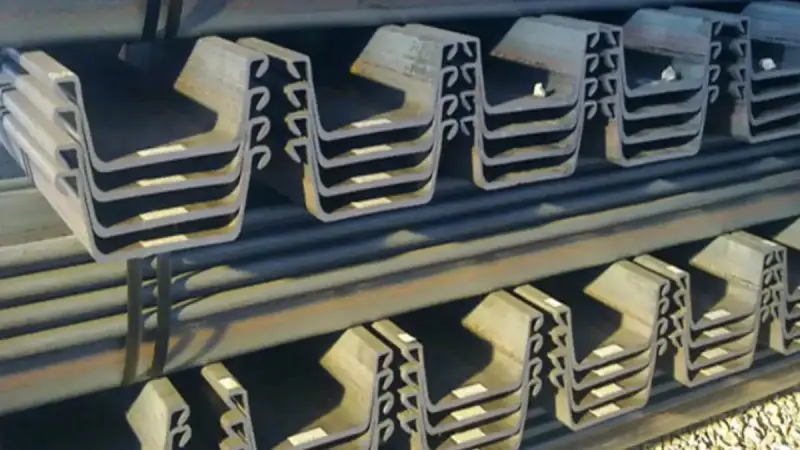
I think this question matters because it shows why sheet piles are valuable
At first glance, this question looks unrelated to steel sheet piles. But I actually think it is useful. The best way to understand the value of reusable sheet piles is to compare them with the resources that usually cannot come back into the next project in the same form.
Construction materials do not all behave the same way. Some are consumable. Some are demolished in place. Some are recyclable but not reusable. That distinction matters. If a contractor buys a temporary retaining solution, the financial picture changes a lot depending on whether the system can be reused, resold, rented, or only demolished and scrapped at the end.
I divide construction resources into three groups
1. Materials that are usually consumed or left in place
These materials often cannot be reused as the same product after the project:
- Cast-in-place concrete retaining walls or foundation elements
- Grout and injected sealing materials
- Backfill that becomes contaminated or mixed with waste
- Shotcrete temporary linings
- Soil nails and many buried reinforcement systems
- Temporary timber lagging that has split, rotted, or deformed badly
- Single-use membranes or liners that are damaged during removal
A cast-in-place concrete wall is a good example. It can be durable, but once it is built, it is not going anywhere in reusable form. It may later be crushed and recycled as aggregate, but that is not the same as lifting it out and installing it on the next job.
2. Materials that are sometimes reusable, but only in limited ways
Some resources can be reused, but their reuse is inconsistent or depends heavily on site conditions:
- timber shoring planks
- plywood formwork
- some geotextiles and protective mats
- small trench boxes or support frames that suffer heavy wear
- pipe sections that are cut and welded for one specific layout
These resources may survive one or two jobs, but their reuse value often drops quickly because they are cut, drilled, worn, or damaged.
3. Materials that are strongly reusable when treated well
This is where steel sheet piles sit, along with several other modular steel products:
- steel sheet piles
- steel struts and walers
- steel trench sheets
- temporary steel beams and frames
- some hydraulic bracing systems
- rental cofferdam components and modular support systems
The reason these products do better is simple: they are modular, they are strong, and they are not destroyed by normal use if the project is managed well.
A simple comparison from a contractor’s point of view
| Construction resource | Can it usually be reused directly? | My practical view |
|---|---|---|
| Cast-in-place concrete retaining wall | No | Durable, but not reusable as a wall element |
| Grout or injected sealant | No | Consumable material |
| Timber lagging | Sometimes, but limited | Often damaged or inconsistent after use |
| Geotextile or liner | Sometimes, but often no | Depends on contamination and removal condition |
| Structural steel beam | Yes, often | Good reuse if not badly cut or damaged |
| Steel sheet pile | Yes, often | One of the strongest reuse cases in temporary works |
| Hydraulic strut or frame | Yes | Common rental/reuse product |
| Contaminated excavated soil | Usually no | Disposal or treatment issue, not a reusable resource |
My own view: “recyclable” is not the same as “reusable”
I think this is where people mix up two different ideas. Concrete can be crushed and recycled. Steel can be melted and recycled. Timber can sometimes be chipped or burned for energy recovery. But none of that is the same as reuse.
Reuse means the product comes back as the same type of working component with limited processing. A steel sheet pile that is extracted, inspected, trimmed, and driven again is reused. A steel sheet pile that is melted in a furnace and rolled into a new product is recycled. Both are useful, but reuse usually saves more time, more embodied energy, and more project value than starting over from scrap.
That is one reason I think steel sheet piles are so attractive for temporary works. They sit in a very useful middle ground: they are strong enough for structural use, modular enough for extraction, and still fully recyclable at the end of their real service life. Not many construction products can offer all three.
Are sheet piles permanent?
Sheet piles can be temporary or permanent. I do not treat “sheet pile” as a permanent product by default. I treat it as a retaining system that can serve either short-term construction needs or long-term infrastructure needs depending on the project design.
Sheet piles are not always permanent. In excavation support, trench works, and many cofferdams, sheet piles are often temporary and removed after use. In riverbank protection, quay walls, seawalls, flood defense, and some retaining structures, sheet piles are designed as permanent works and stay in the ground for decades.
This is one of the first questions I want answered in any inquiry
If a buyer sends me a sheet pile inquiry, one of the first things I want to know is whether the wall is temporary or permanent. That answer changes almost everything:
- section selection
- corrosion allowance
- coating needs
- water-sealing expectations
- extraction planning
- resale or reuse value
- delivery strategy and cost logic
The Steel Piling Group states clearly that steel sheet piles are used for both temporary and permanent retaining walls. Keller says the same. That is also exactly what I see in the market. A contractor supporting a basement excavation for four months and a contractor building a permanent riverbank wall may both buy steel sheet piles, but they are not buying the same solution logic.
When I expect sheet piles to be temporary
Temporary sheet piling is common in:
- deep excavation support
- utility trenches and linear works
- cofferdams for bridge foundations or marine repair
- temporary flood protection or emergency works
- staged construction where the final permanent structure will later take over
In these jobs, the piles are there to solve a construction-phase problem. Once the permanent structure is complete or the excavation is backfilled, the piles may be extracted and reused.
When I expect sheet piles to be permanent
Permanent sheet piling is common in:
- riverbank protection
- quay walls and bulkheads
- seawalls
- flood defense systems
- industrial retaining structures
- waterfront infrastructure
- contaminated land cut-off walls and environmental barriers
This matters to our own business because many of our buyers are not only doing temporary shoring. They are working on river protection, retaining walls, bridge foundations, and marine or civil infrastructure where the steel sheet piles may become part of the permanent works.
Our riverbank project is a good example of permanent use
In our Southeast Asia riverbank protection project, the hot rolled U type steel sheet piles were installed to create a continuous retaining wall along the riverbank. The wall was not meant to be pulled out a few months later. It was there to stabilize soil, resist erosion, and support long-term flood control and infrastructure safety.
In that kind of project, I am not thinking mainly about how many times the piles can be reused. I am thinking about interlocking performance, corrosion resistance, structural strength, and long-term service life. Reuse is still part of the broader steel sustainability story, but it is no longer the main design driver.
How I separate temporary and permanent sheet pile thinking
| Topic | Temporary sheet piling | Permanent sheet piling |
|---|---|---|
| Main goal | Construction support | Long-term retaining or water-control function |
| Extraction | Usually planned | Often not planned |
| Reuse value | Very important | Less important than durability |
| Corrosion design | Often lighter if short-term | Much more important |
| Section choice | Based on temporary load and removability | Based on long-term structural and durability needs |
| Final site condition | Piles may be removed or cut off | Piles remain part of the finished works |
Can a temporary wall become permanent?
Yes, and I think that possibility is often underestimated. A wall that was originally planned as temporary may stay in the ground because extraction becomes too risky, too expensive, or too disruptive to nearby structures. Sometimes the permanent structure is built against the temporary wall, and the piles remain buried below grade. Sometimes the owner simply decides that leaving them in place is more practical than pulling them out.
That is why I do not like rigid labels. “Temporary” and “permanent” are useful categories, but real projects do not always stay inside the original box.
My own view: if the project might leave the piles in place, the buying decision should reflect that risk
This is one of the practical things I would tell a buyer early. If there is any real chance that the “temporary” sheet pile wall may remain in the ground, then I want the procurement and design teams to think ahead about corrosion, future obstructions, and owner approval. A cheap temporary section can become a bad long-term buried asset if the project suddenly decides not to extract it. I would rather have that discussion at the start than after the permanent works are already built around the wall.
Can piles be reused?
Some piles can be reused, but I do not treat all piles the same way. Steel sheet piles are among the best candidates for reuse. Other pile types, such as cast-in-place concrete piles or deeply loaded foundation piles, are usually not reused in the same practical way.
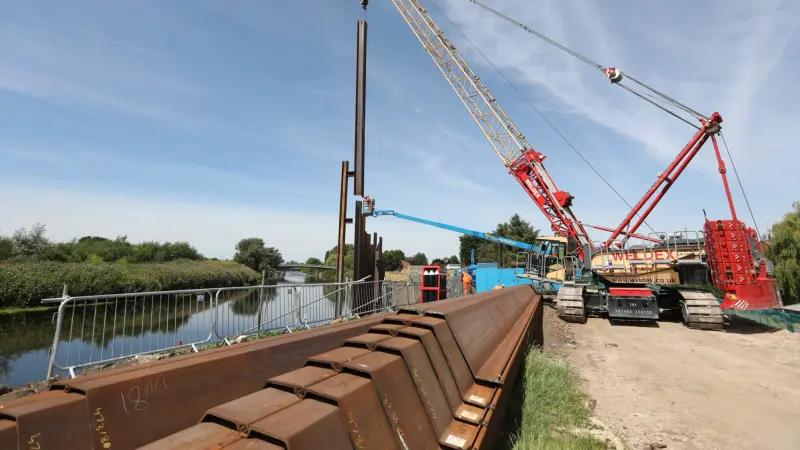
Yes, some piles can be reused, but the answer depends heavily on pile type. Steel sheet piles and some steel bearing piles can sometimes be extracted and reused if they remain in good condition. Cast-in-place concrete piles, bored piles, and many heavily loaded foundation piles are usually not reused because they are formed in place, damaged during removal, or too difficult to extract safely.
I think this question becomes clearer once we stop saying only “pile”
“Pile” is a very broad word. In one project, it means a steel sheet pile wall. In another, it means a driven H-pile under a bridge. In another, it means a bored concrete pile below a building. These are completely different products, and they do not have the same reuse potential.
So when I answer “Can piles be reused?” I always split the answer by pile type.
1. Steel sheet piles: the strongest reuse case
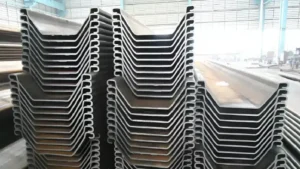
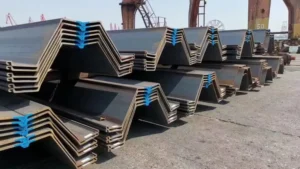
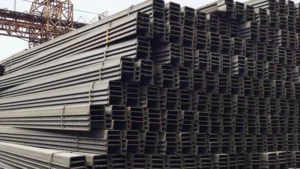
Steel sheet piles are one of the best examples of reusable piling because they are modular, interlocking, and often used in temporary works. They are designed as separate elements that can be installed and later extracted. This is why sheet pile rental, second-hand sales, and buy-back models exist in the market. ArcelorMittal’s FAQ says that, depending on soil conditions and application, steel sheet piles can generally be re-used 5 to 10 times before being scrapped.
That does not mean every extracted pile should go straight back into a critical job without inspection. But as a category, steel sheet piles are clearly reuse-friendly.
2. Steel bearing piles: possible, but less straightforward
Some driven steel bearing piles, such as H-piles or pipe piles used temporarily, can sometimes be extracted and reused. But I think the reuse case is weaker than for sheet piles because:
- they may carry significant vertical load
- they may be installed deeper and harder to extract
- they may be cut off or connected to pile caps
- extraction may damage the pile or surrounding ground
So I would say possible in some cases, but not nearly as routine as sheet pile reuse.
3. Precast concrete piles: limited reuse in real project conditions
In theory, a precast pile is a manufactured product, so some people assume it can be reused. In practice, I am cautious. If a precast pile has been driven, loaded, cut, and then extracted, I do not automatically trust it for reuse without serious assessment. Damage can be hidden, and extraction itself may crack the element.
4. Bored piles and cast-in-place piles: usually not reusable
These are formed in the ground and become part of the permanent foundation system. They are not extracted and reused like steel sheet piles. At the end of a structure’s life, they may be cut, broken out, or left in place, but not “reused” as piles in the normal sense.
My quick comparison of pile reuse potential
| Pile type | Reuse potential | My practical opinion |
|---|---|---|
| Steel sheet piles | High | Best reuse case, especially for temporary works |
| Temporary steel trench sheets | High | Similar logic to sheet piles |
| Driven steel H-piles or pipe piles | Medium in some cases | Possible, but site and load history matter a lot |
| Precast concrete piles | Low to medium | Technically possible in rare cases, but not my preferred reuse product |
| Bored cast-in-place piles | Very low | Not a practical reuse product |
| CFA piles / drilled shafts | Very low | Built in place, not reusable in normal project terms |
Reuse is not only about technical possibility. It is about commercial sense.
This is the part I always come back to. A pile may be technically extractable, but that does not automatically make reuse the best choice. I ask a second question: does reuse make commercial sense after extraction, inspection, trimming, transport, and storage?
A reusable pile still needs to justify itself. If the pile is heavily damaged, short after repeated trimming, or expensive to transport back to stock, the contractor may prefer to scrap it rather than keep it for the next project. On the other hand, if the pile is a standard hot rolled U or Z section in good condition, reuse can be very attractive.
My own view: sheet piles are one of the clearest examples of circular construction in heavy civil work
I do not say that because I sell steel sheet piles. I say it because, compared with many construction resources, sheet piles genuinely fit the logic of install, extract, inspect, reuse, and finally recycle. That sequence is hard to match with concrete retaining walls, cast-in-place foundations, or many buried geotechnical systems.
Still, I think the industry should be honest about one thing: reuse value is not guaranteed by the product name alone. A “reusable sheet pile” only stays reusable if the project treats it that way. Good design, good handling, correct driving, careful extraction, and realistic inspection standards all matter. If those steps are ignored, the contractor may still recover steel, but not the full reuse value they expected.
My practical checklist for maximizing sheet pile reuse
When a contractor tells me they want to reuse the piles after the project, these are the points I think about first:
1. Choose the right profile for temporary work
I prefer a section that is strong enough for the job without being unnecessarily heavy or difficult to extract.
2. Avoid installation damage
Good alignment, proper guiding, and a suitable hammer reduce interlock damage and head deformation.
3. Think about extraction before installation
If the site will not allow extraction access later, the reuse plan may fail before the first pile is driven.
4. Extract as soon as the structure is safely unloaded
The longer piles sit in the ground, the more soil adhesion and extraction resistance may build up.
5. Inspect, trim, and sort after extraction
Not every pile should go back into stock in the same category. I like clear sorting between reusable piles, repairable piles, and scrap.
6. Store the piles properly
Bad storage can damage good piles after they leave the site. That is a waste I hate seeing.
Conclusion
Yes, sheet piles can often be reused, and that is one of their biggest strengths. But in my view, reuse is not luck. It is the result of good planning, good handling, and good extraction.