Choosing the wrong sheet pile size can increase project costs and create safety risks. Many contractors struggle to balance strength, depth, and budget.
The right sheet pile size depends on soil conditions, excavation depth, groundwater level, and structural loads. Engineers typically select a sheet pile profile based on section modulus, bending resistance, and required embedment depth rather than width alone.
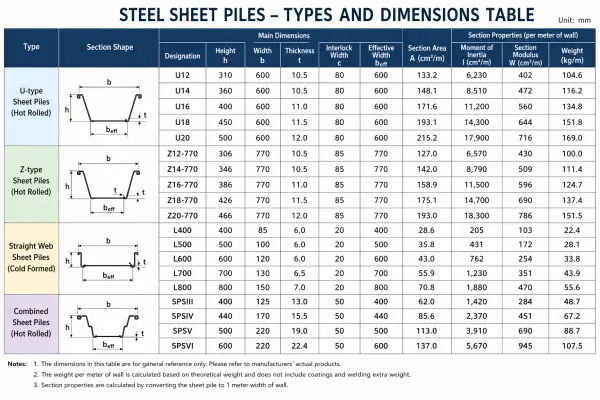
I often receive inquiries from contractors and distributors asking which sheet pile size is best for their projects. My answer is always the same. There is no universal size that fits every project. The correct sheet pile profile depends on site conditions, load requirements, and design life. In this guide, I will explain how I evaluate sheet pile sizes for retaining walls, cofferdams, bridge foundations, and marine structures.
For design reference, see the ArcelorMittal Piling Handbook and the Steel Piling Group design guidance.
What is the rule of thumb for sheet pile depth?
Many project failures start with insufficient embedment depth. A strong profile cannot compensate for poor penetration into the soil.
A common rule of thumb is that sheet pile embedment depth should be about 50% to 70% of the retained wall height. Actual depth should always be confirmed through geotechnical analysis.
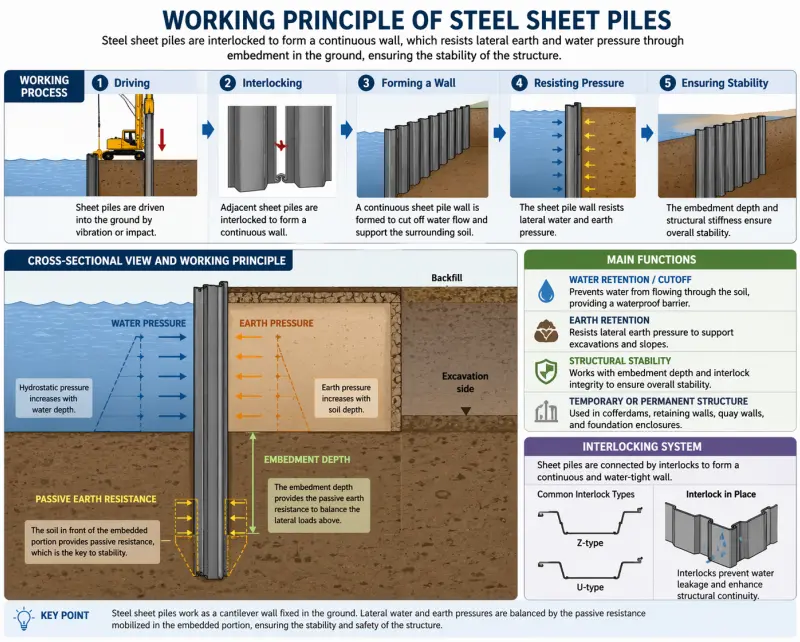
Why Embedment Matters
The embedded section below excavation level provides resistance against overturning and sliding forces. Without enough penetration, the wall may rotate or fail.
Typical Reference Values
| Retained Height | Approximate Embedment |
|---|---|
| 3 m | 1.5 – 2.0 m |
| 5 m | 2.5 – 3.5 m |
| 8 m | 4.0 – 5.5 m |
| 10 m | 5.0 – 7.0 m |
These numbers are preliminary estimates only.
Soil Conditions Affect Depth
Different soil types provide different resistance.
| Soil Type | Embedment Requirement |
|---|---|
| Dense Sand | Lower |
| Soft Clay | Higher |
| Loose Sand | Higher |
| Mixed Soil | Variable |
My Experience
When I review customer inquiries, I always ask for the soil report before recommending a sheet pile section. I have seen projects where increasing embedment by one meter reduced wall movement significantly. The extra steel cost was much lower than the potential repair cost.
For embedded retaining wall design and durability considerations, see the Steel Piling Group design guidance and the ArcelorMittal Piling Handbook.
What is the difference between Type 2 and Type 4 sheet piles?
Many buyers compare Type 2 and Type 4 profiles because both are widely used. The main difference is structural capacity.
Type 4 sheet piles provide greater section modulus and bending resistance than Type 2 sheet piles. Type 2 profiles are lighter and more economical for moderate applications.

Structural Differences
| Property | Type 2 | Type 4 |
|---|---|---|
| Weight | Lower | Higher |
| Section Modulus | Smaller | Larger |
| Bending Capacity | Lower | Higher |
| Cost | Lower | Higher |
| Deep Excavation Suitability | Moderate | Excellent |
Typical Applications
Type 2 Applications
- Temporary retaining walls
- Utility trenches
- Small cofferdams
- Flood control projects
Type 4 Applications
- Port construction
- Bridge foundations
- Deep excavations
- Permanent retaining walls
Cost vs Performance
Many contractors initially focus on steel weight. However, a heavier profile often reduces wall deflection and increases safety margins.
My View
I often recommend Type 4 profiles for projects with uncertain soil conditions. The additional section modulus provides extra confidence during construction and long-term service.
For section selection and structural efficiency references, see the ArcelorMittal AZ sections page and Nippon Steel sheet pile catalog.
How deep can sheet piles be driven?
Some clients assume sheet pile length determines installation depth. In reality, soil conditions often control the final depth.
Steel sheet piles can commonly be driven between 6 and 30 meters. Specialized equipment and favorable soil conditions can allow installations beyond 40 meters.
Factors Affecting Driving Depth
| Factor | Influence |
|---|---|
| Soil Type | High |
| Pile Profile | Medium |
| Equipment Capacity | High |
| Obstructions | High |
| Groundwater | Medium |
Typical Depth Ranges
| Project Type | Typical Depth |
|---|---|
| Temporary Works | 6 – 12 m |
| Retaining Walls | 8 – 18 m |
| Marine Structures | 12 – 25 m |
| Deep Foundations | 20 – 40 m+ |
Installation Methods
Common methods include:
- Vibratory hammer driving
- Impact hammer driving
- Press-in installation
Each method offers different penetration capabilities.
My Experience
In marine projects across the Middle East and Southeast Asia, I frequently supply sheet piles between 12 and 18 meters long. Most projects achieve target depths efficiently when the soil investigation is completed properly before installation.
For installation and driveability references, see the Steel Piling Group guidance and the ArcelorMittal Piling Handbook.
How to decide pile length?
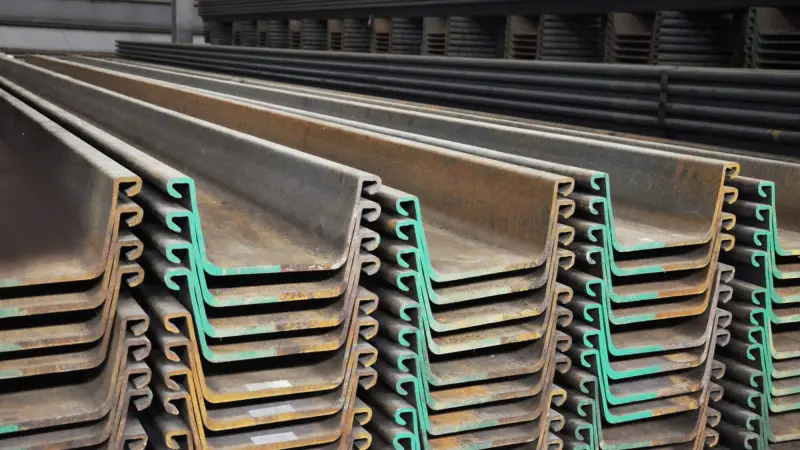
Selecting pile length requires balancing structural performance and budget. Longer piles are not always better.
Pile length is determined by excavation depth, soil conditions, groundwater levels, lateral loads, and required embedment depth.
Key Design Factors
Excavation Depth
The retained height directly influences the required pile length.
Soil Strength
Weak soils generally require deeper penetration.
Water Conditions
Groundwater increases pressure on retaining structures.
Simplified Selection Process
| Design Factor | Impact on Length |
|---|---|
| Higher Loads | Longer |
| Weak Soil | Longer |
| Deep Excavation | Longer |
| Dense Soil | Shorter |
Engineering Verification
Engineers normally verify:
- Bending moments
- Wall deflection
- Passive resistance
- Global stability
My View
I always encourage clients to think about total project performance rather than minimizing steel length. A slightly longer pile often improves stability and reduces construction risk.
For verification and design methodology, see the Steel Piling Group design guidance and the ArcelorMittal Piling Handbook.
What is the 4 2 1 rule for concrete?
Many people hear the term "4 2 1 mix" during construction discussions. It relates to concrete rather than sheet piling.
The 4:2:1 rule refers to a traditional concrete mix ratio consisting of four parts aggregate, two parts sand, and one part cement.
Understanding the Mix
| Material | Ratio |
|---|---|
| Aggregate | 4 |
| Sand | 2 |
| Cement | 1 |
Typical Uses
This mix may be used for:
- General construction
- Small foundations
- Non-structural applications
Modern Construction Practices
Today, most commercial projects use engineered concrete mixes designed to meet specific strength requirements.
Relation to Sheet Piles
Concrete often works together with sheet piles in:
- Capping beams
- Anchor blocks
- Foundation structures
My Observation
Many infrastructure projects combine steel sheet piles with reinforced concrete systems. The combination provides strength, durability, and construction flexibility.
How to calculate pile diameter?
Sheet piles do not have a diameter like tubular piles or bored piles. However, many contractors compare foundation systems during project planning.
Pile diameter is typically calculated based on load requirements, soil capacity, and structural design criteria. Larger loads generally require larger pile diameters.
Diameter Selection Factors
| Factor | Influence |
|---|---|
| Vertical Load | High |
| Soil Strength | High |
| Settlement Limits | Medium |
| Construction Method | Medium |
Typical Bored Pile Diameters
| Application | Diameter Range |
|---|---|
| Small Buildings | 300 – 600 mm |
| Commercial Buildings | 600 – 1200 mm |
| Bridges | 1000 – 2500 mm |
Why Sheet Piles Are Different
Sheet piles function as continuous retaining walls. Engineers focus on:
- Section modulus
- Wall stiffness
- Embedment depth
- Bending resistance
My Practical View
Many customers compare bored piles and sheet piles during early project planning. I explain that the two systems serve different purposes. Sheet piles provide earth retention and water control, while bored piles primarily transfer vertical loads.
My Perspective on Selecting Sheet Pile Size
After supplying sheet piles to contractors across Iraq, Saudi Arabia, UAE, Pakistan, Africa, and Southeast Asia, I have learned one important lesson. Bigger is not always better.
The best sheet pile size balances structural performance, installation efficiency, and project budget. I usually begin by reviewing soil reports, excavation depth, groundwater conditions, and design life requirements. Then I compare section modulus, profile type, and corrosion allowance.
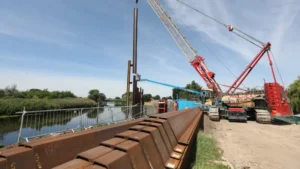
In our Southeast Asia riverbank protection project, hot rolled U type sheet piles delivered the required strength while maintaining efficient installation. The project remained on schedule, and the retaining wall achieved excellent long-term stability.
My personal recommendation is simple. Do not choose a sheet pile size based only on weight or price. Choose the profile that matches the engineering requirements of the site.
Conclusion
The right sheet pile size depends on soil conditions, excavation depth, structural loads, and design life. Proper engineering evaluation always leads to better long-term performance.