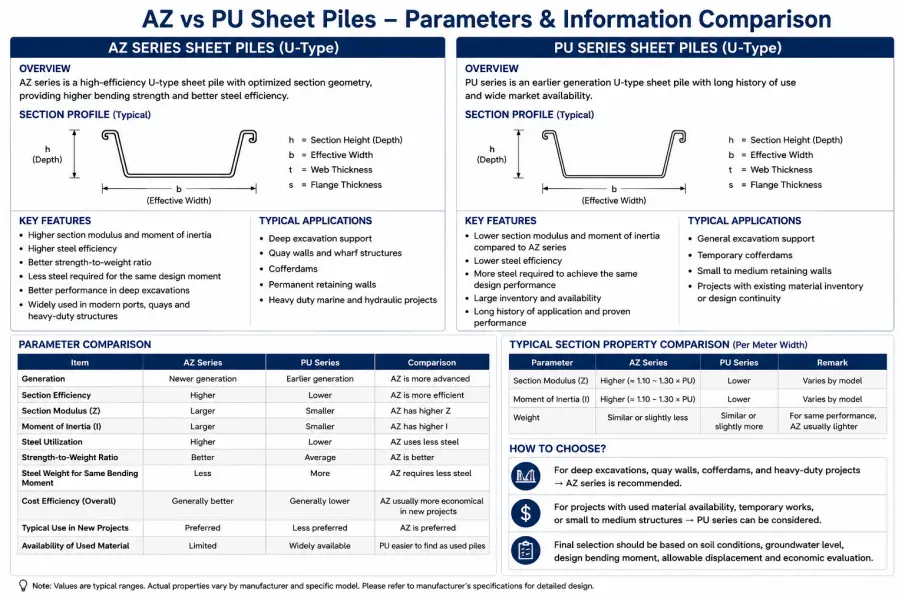
Many buyers see AZ and PU sheet piles in project specifications and assume they are interchangeable. A wrong choice can affect wall strength, project cost, and installation efficiency.
AZ sheet piles are Z-shaped profiles designed for high structural efficiency, while PU sheet piles are U-shaped profiles known for strong interlocks and flexible applications. AZ sections usually offer higher section modulus per ton, while PU sections provide easier handling and wide availability.
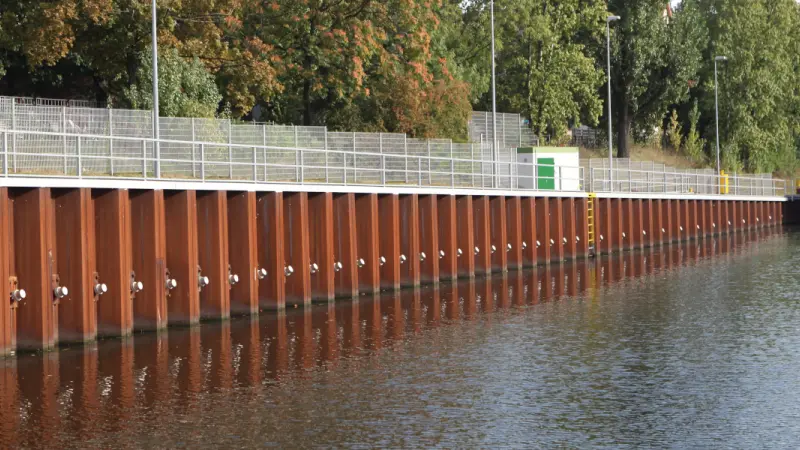
When I discuss sheet pile solutions with contractors and distributors, this question appears frequently. The answer goes beyond shape alone. Structural performance, installation conditions, project requirements, and total cost all influence the final decision. In this guide, I will explain the differences and answer several related questions that buyers often ask before placing an order.
For profile definitions and technical references, see the ArcelorMittal AZ sections page and the ArcelorMittal engineering guidance.
What is the difference between U type and Z type sheet piles?
Many engineers focus on pile length and steel grade. They sometimes overlook profile shape, even though it directly affects structural performance.
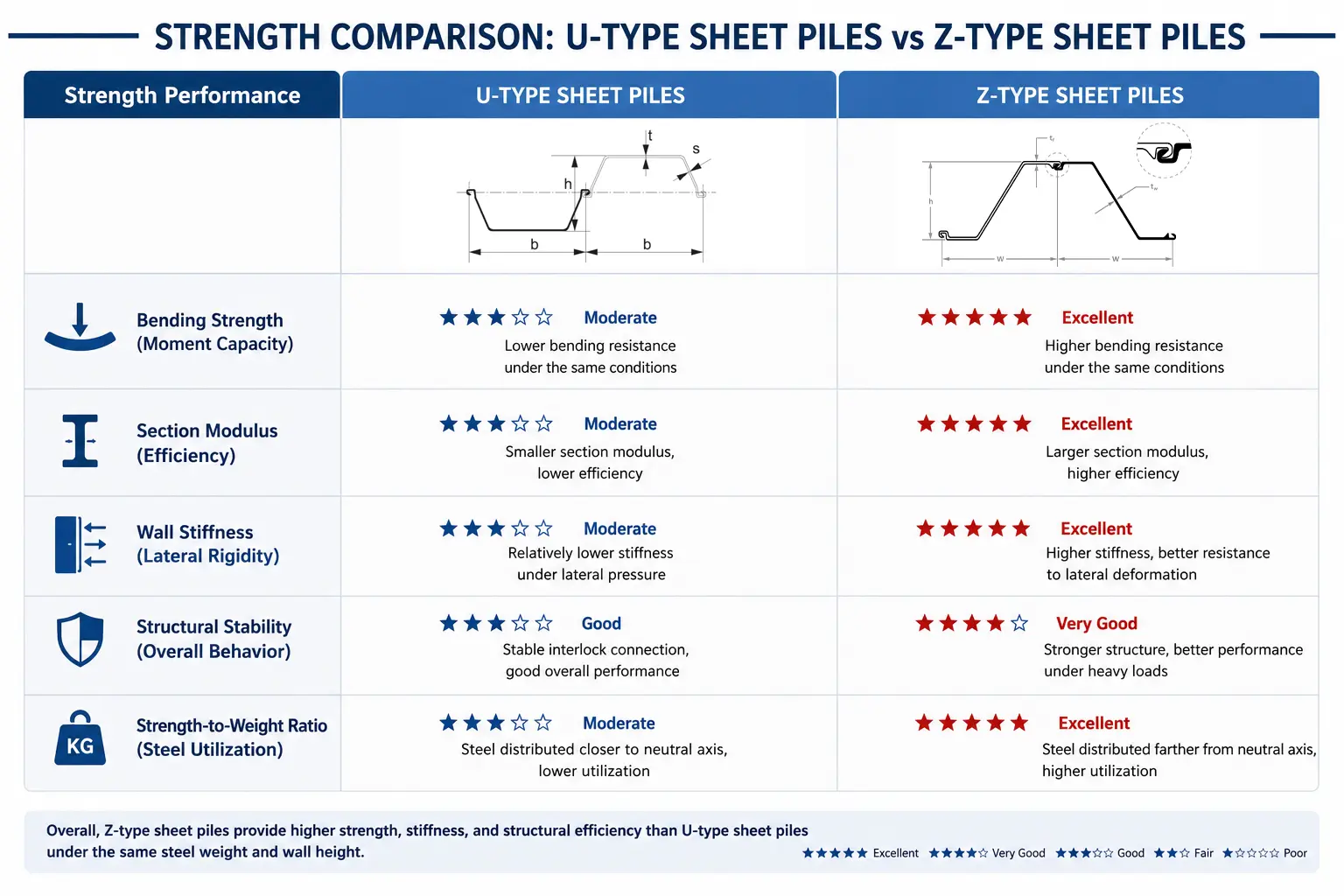
U type sheet piles have interlocks located on the neutral axis, while Z type sheet piles place interlocks at the outer edges. This gives Z profiles higher structural efficiency and often better strength-to-weight performance.
Understanding the Structural Design
The biggest difference is the location of the interlocks.
In U type sheet piles, the interlocks are positioned near the center of the wall section. In Z type sheet piles, the interlocks sit at the outer edges.
This design changes how bending forces are distributed throughout the wall.
Performance Comparison
| Feature | U Type Sheet Piles | Z Type Sheet Piles |
|---|---|---|
| Interlock Position | Center | Outer Edge |
| Structural Efficiency | Good | Excellent |
| Moment Resistance | High | Very High |
| Installation Simplicity | Easy | Moderate |
| Availability | Very High | High |
Typical Applications
I often see U type sheet piles used in:
- Riverbank protection
- Temporary excavation support
- Flood control projects
- Retaining walls
I often see Z type sheet piles used in:
- Deep excavations
- Port construction
- Marine structures
- Permanent retaining walls
My Experience from Export Projects
Many clients initially believe stronger means heavier. In reality, Z type sections often achieve higher strength with similar or even lower steel consumption.
At the same time, I still see strong demand for hot rolled U type sheet piles. Contractors appreciate their reliable interlocking system and straightforward installation process.
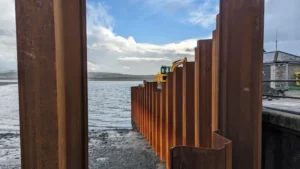
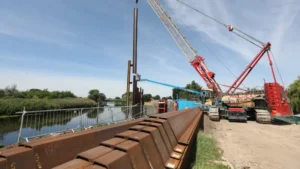
In our Southeast Asia riverbank protection project, the contractor selected hot rolled U type sheet piles. The project required dependable water control and quick installation. The strong interlocks helped create a continuous retaining wall that stabilized the riverbank and reduced erosion.
My personal view is simple. I never recommend a profile based only on theoretical efficiency. I first examine installation conditions, equipment availability, project budget, and engineering requirements. The best profile is the one that balances performance and practicality.
For deeper design and selection guidance, see the Steel Piling Group design guidance and the ArcelorMittal Piling Handbook.
What is the best material for sheet piling?
Many buyers ask for the "best" material. The reality is that different environments require different solutions.
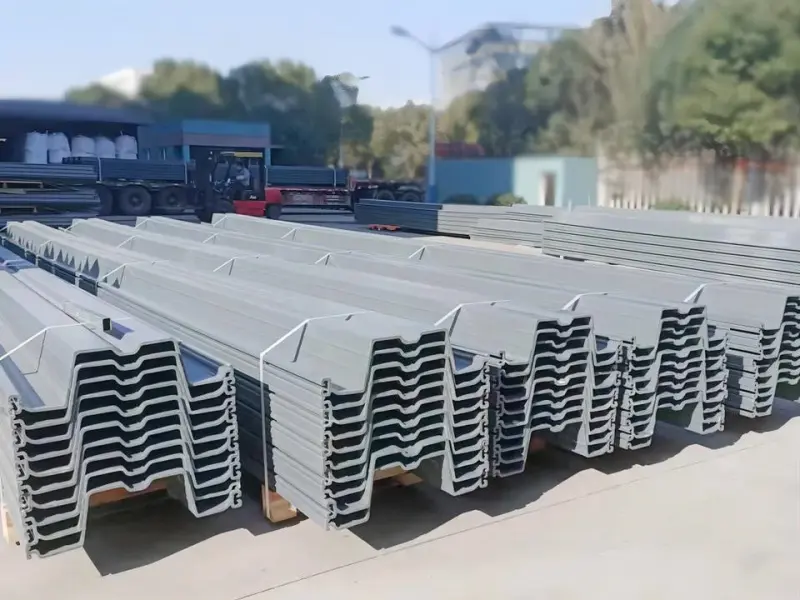
Steel is generally considered the best material for sheet piling because it offers high strength, long service life, excellent interlocking performance, and strong adaptability for temporary and permanent structures.
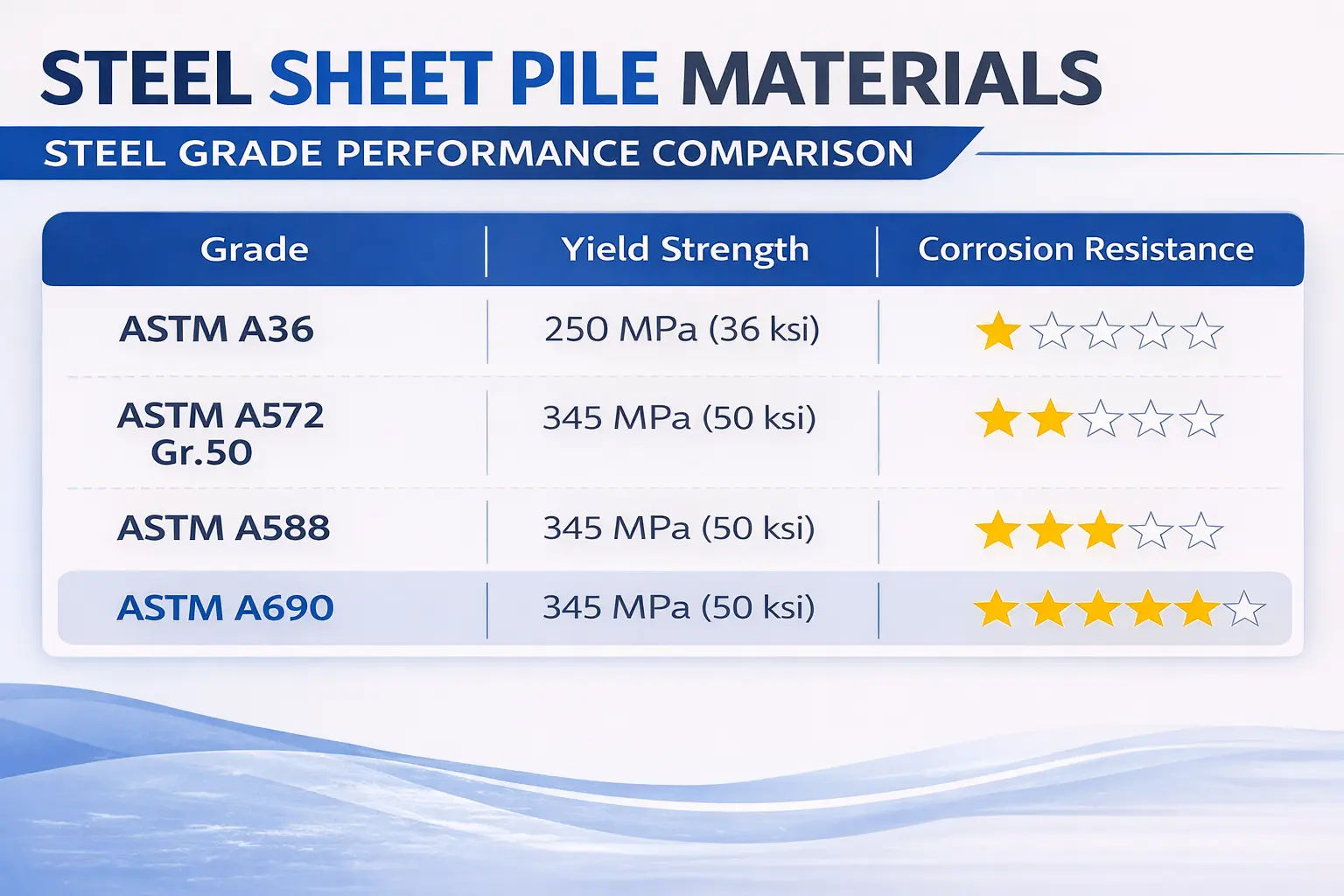
Common Sheet Pile Materials
Several materials are available on the market today.
Steel Sheet Piles
Steel remains the industry standard.
Advantages include:
- High structural capacity
- Long service life
- Reusability
- Proven engineering performance
Vinyl Sheet Piles
Vinyl piles are often used for light-duty applications.
Advantages include:
- Corrosion resistance
- Lightweight handling
Limitations include:
- Lower strength
- Limited structural applications
Composite Sheet Piles
Composite systems combine different materials.
They offer:
- Corrosion resistance
- Reduced maintenance
However, they often cost more than traditional steel systems.
Material Comparison
| Material | Strength | Lifespan | Cost Efficiency | Reusability |
|---|---|---|---|---|
| Steel | Excellent | Excellent | Excellent | Excellent |
| Vinyl | Low | Good | Moderate | Limited |
| Composite | Moderate | Excellent | Moderate | Limited |
Why I Usually Recommend Steel
My business focuses on supplying steel sheet piles because they provide the best balance between cost and performance.
Most contractors work on projects such as:
- Bridge foundations
- Deep excavations
- Retaining walls
- Marine structures
These applications require substantial structural capacity.
I also value steel because it supports customization. We can provide U-shaped, Z-shaped, Ω-shaped, flat plate, straight flange, and other profiles according to project needs.
Another advantage is inspection and quality control. Certified mills and SGS inspections help ensure consistent performance.
In my opinion, steel remains the most practical material for serious civil engineering projects. The higher initial investment often results in lower lifecycle costs.
For steel sheet pile specification and durability references, see the Steel Piling Group specifiers’ guide and the Deep Foundations Institute.
What are the three types of piling?
Many people use the word "piling" broadly. This can create confusion because piling systems include several categories.
The three main types of piling are driven piles, bored piles, and sheet piles. Each type serves different structural and geotechnical purposes depending on soil conditions and load requirements.
Driven Piles
Driven piles are manufactured before installation.
Contractors drive them into the ground using impact or vibratory equipment.
Common materials include:
- Steel
- Concrete
- Timber
Bored Piles
Bored piles are constructed on-site.
Contractors drill a hole and fill it with reinforced concrete.
These piles are often selected for:
- High-load buildings
- Urban construction
- Restricted vibration environments
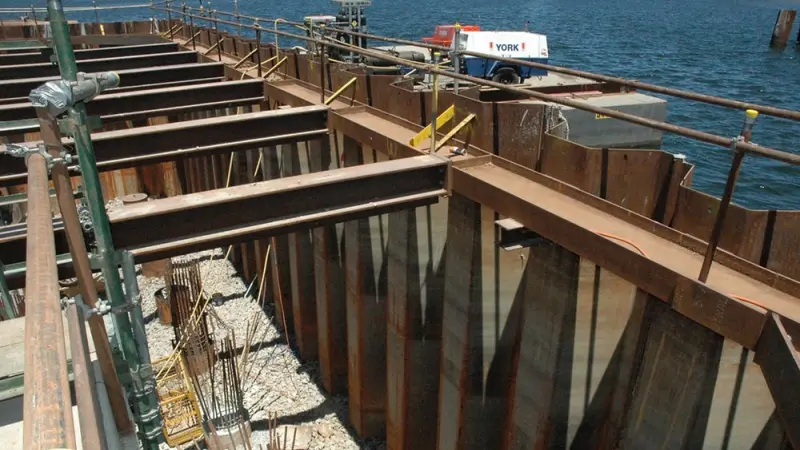
Sheet Piles
Sheet piles differ from bearing piles.
Their main purpose is soil retention rather than carrying vertical loads.
Applications include:
- Excavation support
- Flood protection
- Waterfront structures
Comparison Table
| Pile Type | Primary Function | Installation Method |
|---|---|---|
| Driven Piles | Load Bearing | Driven Into Ground |
| Bored Piles | Load Bearing | Drilled and Cast |
| Sheet Piles | Soil Retention | Driven Into Ground |
How Contractors Choose
I often see buyers mixing retaining systems with foundation systems.
The correct selection depends on project goals.
If the project requires vertical load transfer, engineers often select driven or bored piles.
If the project requires earth retention, sheet piles become a preferred option.
I believe this distinction is important because misunderstandings during procurement can result in incorrect quotations and project delays.
Before offering a proposal, I always ask whether the client needs structural foundations, excavation support, or both.
What is the difference between a PZ and a PZC sheet pile?
Buyers frequently encounter PZ and PZC sections in older specifications. The names look similar, but their structural properties are not identical.
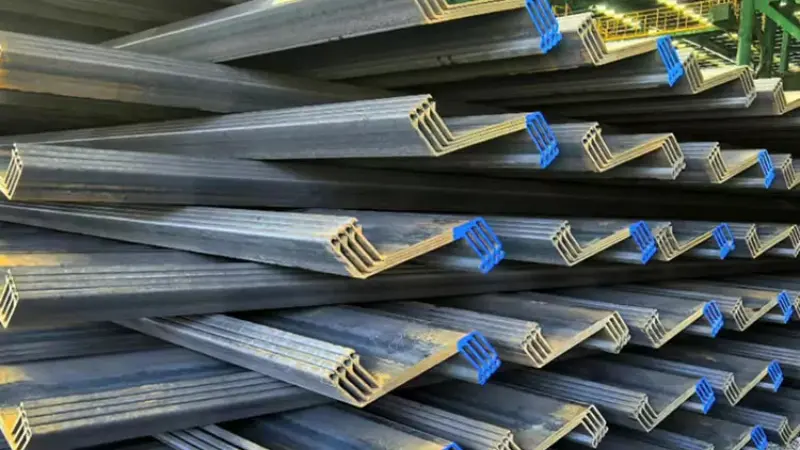
PZC sheet piles are an improved version of traditional PZ sheet piles. PZC sections generally provide higher section modulus, greater strength, and better material efficiency while maintaining similar installation characteristics.
Historical Background
PZ sheet piles were widely used in North America for decades.
As engineering requirements evolved, manufacturers developed PZC profiles to improve performance.
Main Differences
| Feature | PZ | PZC |
|---|---|---|
| Section Modulus | Lower | Higher |
| Structural Capacity | Moderate | Higher |
| Steel Efficiency | Lower | Better |
| Modern Usage | Less Common | More Common |
Why Engineers Prefer PZC
The improved geometry allows engineers to achieve higher bending resistance.
This can reduce:
- Steel consumption
- Project weight
- Transportation costs
Replacement Considerations
When replacing existing structures, engineers often evaluate:
- Existing design loads
- Soil conditions
- Compatibility requirements
A direct replacement is not always possible.
My Perspective
Many international buyers no longer request PZ or PZC specifically. Instead, they focus on equivalent structural properties.
When customers send drawings, I compare the required section modulus and moment of inertia with available profiles from certified mills.
This approach provides more flexibility and often shortens procurement lead times.
I believe performance-based selection is more effective than focusing only on historical profile names.
For technical reference on steel sheet pile section selection, see the ArcelorMittal AZ sections page and the ArcelorMittal design guidance.
Which is stronger, PPC or OPC?
Many construction buyers compare PPC and OPC when evaluating project materials. While these terms relate to cement rather than sheet piles, the question appears often in infrastructure projects.
OPC (Ordinary Portland Cement) generally develops higher early strength, while PPC (Portland Pozzolana Cement) offers better long-term durability and resistance to chemical attack. The stronger choice depends on project requirements and testing age.
Understanding OPC
OPC is one of the most widely used cements.
Advantages include:
- Rapid strength gain
- Predictable performance
- Wide availability
Understanding PPC
PPC contains pozzolanic materials.
Advantages include:
- Lower heat generation
- Improved durability
- Better resistance to aggressive environments
Comparison Table
| Property | OPC | PPC |
|---|---|---|
| Early Strength | Higher | Lower |
| Long-Term Strength | High | High |
| Durability | Good | Excellent |
| Heat Generation | Higher | Lower |
| Sulfate Resistance | Moderate | Better |
Why This Matters for Sheet Pile Projects
Many marine and retaining wall projects include concrete elements.
Examples include:
- Anchor blocks
- Capping beams
- Foundation systems
The cement choice affects long-term performance.
My Opinion
I usually see engineers selecting PPC for durability-focused infrastructure projects.
I often see OPC chosen when faster construction schedules require early strength development.
The right choice depends on project priorities rather than a simple strength comparison.
What are the types of sheet piles?
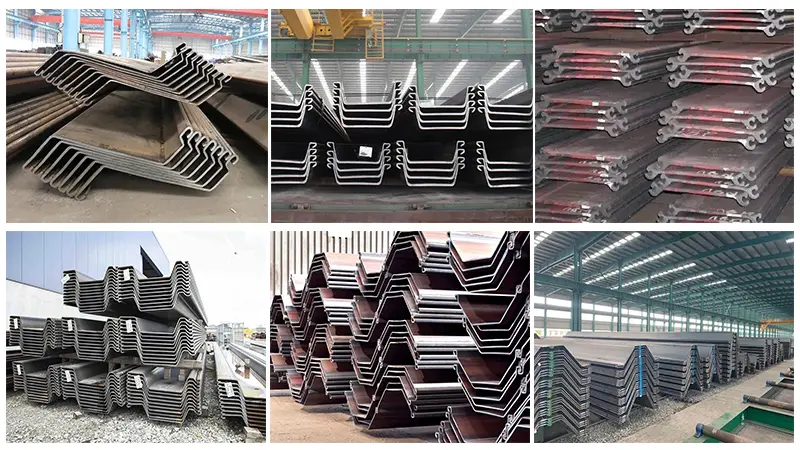
Many new buyers assume all sheet piles are identical. The market actually offers several profile categories designed for different engineering requirements.
The main types of sheet piles include U-shaped, Z-shaped, straight web, flat plate, Ω-shaped, disc-type, cap-type, and straight flange sheet piles. Each profile serves specific structural and construction needs.
U-Shaped Sheet Piles
U-shaped profiles remain among the most popular options worldwide.
Advantages include:
- Strong interlocks
- Easy installation
- Wide availability
Z-Shaped Sheet Piles
Z profiles offer:
- High section modulus
- Excellent strength efficiency
- Strong performance in deep excavations
Straight Web Sheet Piles
These profiles are commonly used in circular structures and special applications.
Flat Plate Sheet Piles
These sections are often selected for cutoff walls and specific retaining systems.
Other Specialized Profiles
Our product range also includes:
- Ω-shaped sheet piles
- Disc-type sheet piles
- Cap-type sheet piles
- Straight flange sheet piles
Profile Comparison
| Type | Main Advantage | Typical Use |
|---|---|---|
| U Type | Strong Interlock | Retaining Walls |
| Z Type | High Efficiency | Deep Excavations |
| Straight Web | Circular Structures | Cells and Cofferdams |
| Flat Plate | Cutoff Walls | Water Control |
| Ω Type | Special Applications | Infrastructure Projects |
| Straight Flange | Heavy Structures | Marine Engineering |
My Recommendation for Buyers
I never recommend a profile solely based on popularity.
I usually ask for:
- Soil reports
- Excavation depth
- Design drawings
- Corrosion requirements
This information allows me to match the profile to the project.
In my experience, successful sheet pile procurement starts with understanding project demands rather than selecting the most common section.
For additional technical information, buyers can review guidance from the Steel Sheet Piling Association and the Deep Foundations Institute.
Conclusion
AZ and PU sheet piles serve different purposes. The right choice depends on structural requirements, installation conditions, durability goals, and total project value rather than profile shape alone.