Construction projects often face space and budget limitations. Cold formed sheet piles offer a cost-effective, flexible solution.
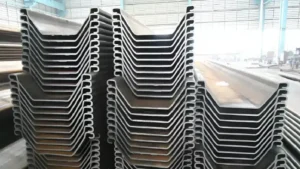
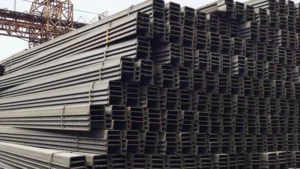
Cold formed sheet piles are steel sheets bent at room temperature to form interlocking profiles. They provide retaining walls and soil support efficiently in light to medium load projects.
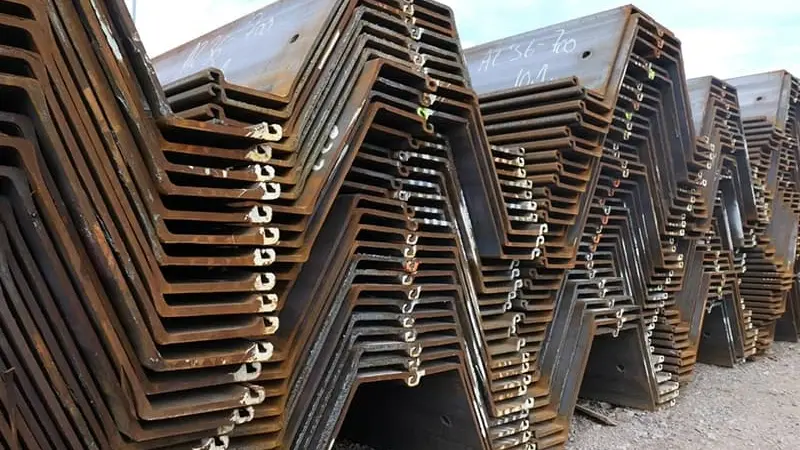
I have worked on several urban projects where cold formed sheet piles made excavation support faster and more economical. Understanding their production and applications helps make smarter project choices.
How Are Cold Formed Sheet Piles Manufactured?
Producing sheet piles requires precision and control. Cold forming uses simple yet effective methods.
Cold formed sheet piles are made by bending steel sheets into interlocking profiles without heating. Roll forming or press brake methods produce consistent shapes suitable for retaining walls.
I first saw the process in a local mill. Watching flat steel gradually shape into strong interlocking sections impressed me.
Cold Forming Methods
| Method | Description | Advantage |
|---|---|---|
| Roll Forming | Steel passes through rolls to bend gradually | Continuous high-volume production |
| Press Brake | Sheet bent in sections using a brake | Flexibility for custom profiles |
| Folding | Edge folding for interlocks | Simple for smaller projects |
Material Selection
- Steel Grade: Typically S235 or S355 for strength and ductility.
- Thickness: 4–12 mm, depending on wall height and load.
- Coating: Hot-dip galvanizing or epoxy for corrosion resistance.
Cold forming avoids heat, reducing distortion and stress. I always verify profile dimensions after production. Proper interlock alignment ensures wall stability.
Advantages and Limitations of Cold Formed Sheet Piles
Cold formed sheet piles offer flexibility but also have limits. Knowing both sides is crucial.
Advantages include lower cost, lighter weight, and adaptability. Limitations involve reduced load capacity compared to hot rolled piles and less suitability for deep or heavy-duty projects.
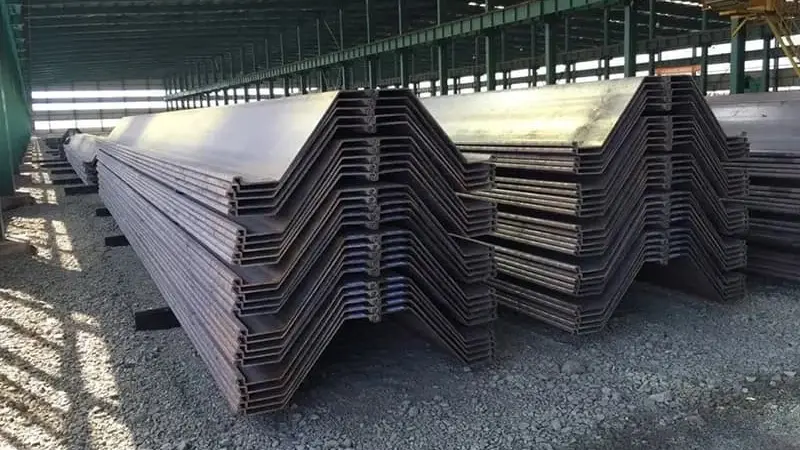
I often choose them for temporary urban excavation support. They save time and money without sacrificing safety for moderate loads.
Key Advantages
| Advantage | Benefit |
|---|---|
| Cost-effective | Lower production and transport costs |
| Lightweight | Easier handling and installation |
| Flexible | Can be made to custom profiles |
| Fast Delivery | Short production times |
Main Limitations
| Limitation | Effect |
|---|---|
| Lower Strength | Not ideal for deep, high-load walls |
| Limited Durability | Corrosion protection critical |
| Profile Consistency | Less suitable for very large walls |
Understanding these limits helps plan the right projects. I avoid cold formed piles for river flood control or heavy dock walls, where hot rolled piles perform better.
Applications of Cold Formed Sheet Piles
Cold formed piles have many uses, mainly for moderate loads and temporary or urban projects.
They are used in light retaining walls, temporary excavation support, flood protection, and coastal or riverbank projects where space and budget are limited.
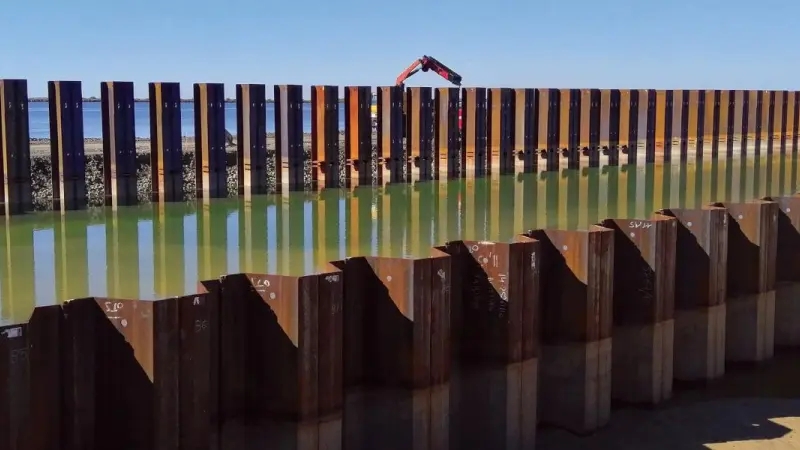
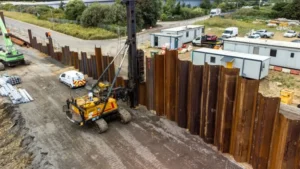
On one small urban site, I installed cold formed piles along the sidewalk to support basement excavation safely without heavy equipment.
Typical Uses
| Application | Example |
|---|---|
| Temporary Excavation | Urban basement construction |
| Small Retaining Walls | Parks or landscaping |
| Flood Control | Riverbank protection |
| Coastal Protection | Shoreline stabilization |
I have found that proper planning and interlock inspection ensure cold formed piles perform reliably even in temporary flood control scenarios.
Case Study
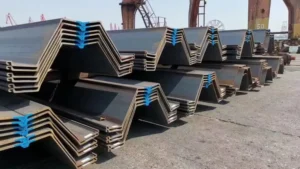
We used cold formed Z-shaped piles for a 3-meter deep urban excavation. Interlocks held soil perfectly, and removal after construction was easy. The project finished ahead of schedule.
Comparison Between Cold Formed and Hot Rolled Sheet Piles
Choosing between cold formed and hot rolled piles depends on load, depth, and budget.
Cold formed piles are lighter, cheaper, and suitable for moderate loads. Hot rolled piles handle heavier loads and deeper installations but cost more and need larger equipment.
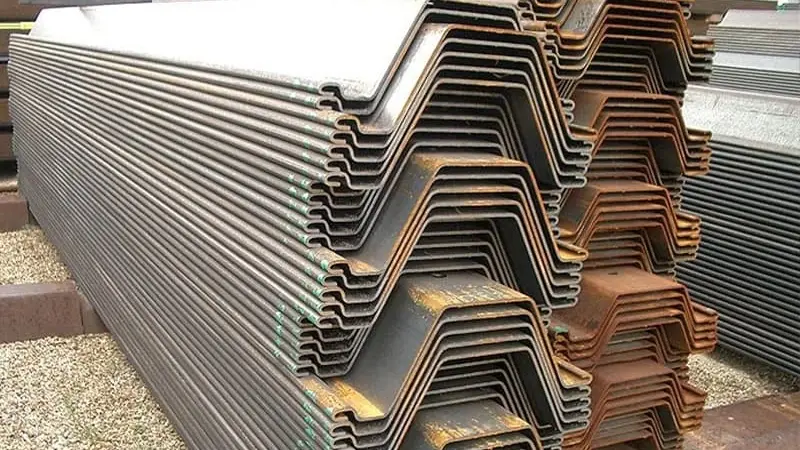
I compare them for each project. For a temporary flood wall, cold formed is ideal. For a port quay, only hot rolled piles meet the strength requirements.
Side-by-Side Comparison
| Feature | Cold Formed | Hot Rolled |
|---|---|---|
| Weight | Lighter | Heavier |
| Strength | Moderate | High |
| Cost | Lower | Higher |
| Suitable Depth | Shallow/Moderate | Deep |
| Installation Equipment | Smaller, flexible | Larger cranes, heavy machinery |
| Lead Time | Short | Medium to long |
Understanding these differences allows me to recommend the right type for each project. Efficiency, safety, and cost all improve when the correct sheet pile type is selected.
Conclusion
Cold formed sheet piles provide cost-effective, flexible retaining walls for moderate loads and temporary projects, complementing heavy-duty hot rolled alternatives.