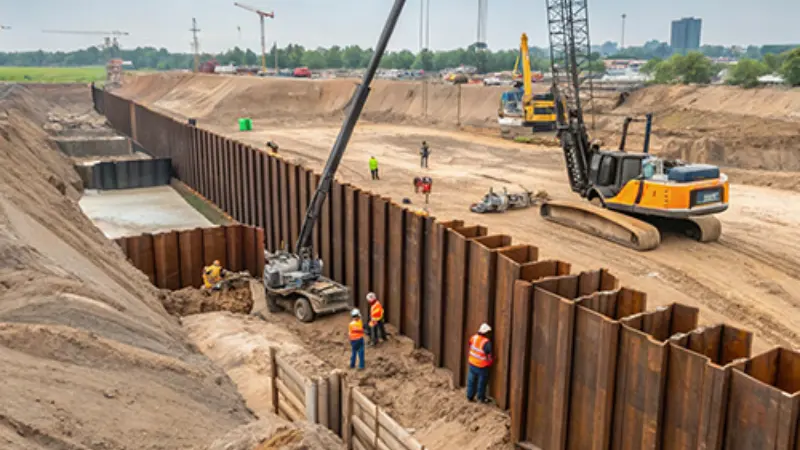
Construction sites often face soil collapse and water challenges. Sheet pile retaining walls offer an efficient, reliable solution.
A retaining wall made of sheet piles is a continuous steel barrier driven into the ground to hold soil, control water, and provide structural support for construction projects.
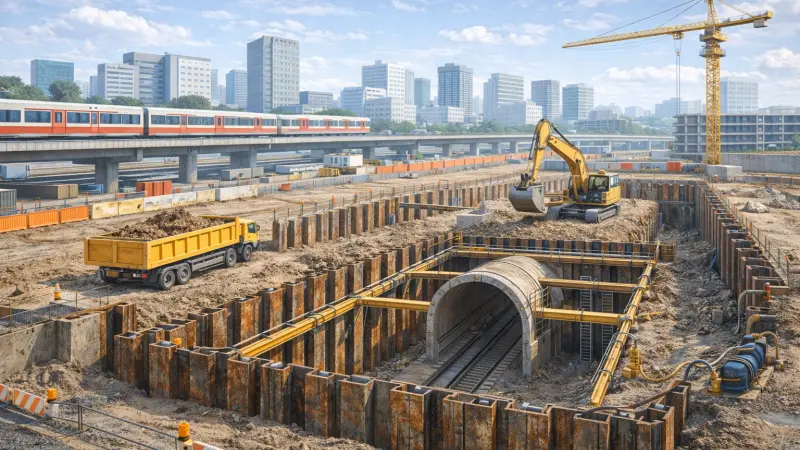
I have seen these walls protect riverbanks and deep excavations, keeping projects safe and on schedule. Understanding their structure helps you plan and manage your project better.
How Do Sheet Pile Retaining Walls Work?
Soil and water exert pressure on excavations. Without support, the ground can fail. Sheet piles resist this pressure.
Sheet pile retaining walls work by interlocking steel sheets driven into the ground to form a continuous vertical barrier. They resist lateral soil and water pressure, stabilizing structures and excavations.
I first observed a sheet pile wall on a riverbank project. Watching the sheets interlock and hold soil securely was impressive.
Structural Mechanism
Sheet piles use interlocks to form a tight wall. Soil pushes on the wall. The wall pushes back. This balance keeps the soil in place.
- Cantilever walls resist soil on their own.
- Anchored walls use ties or anchors behind the wall for deep excavations.
- Braced walls use struts inside the excavation for confined spaces.
Load Distribution
| Wall Type | Soil Resistance | Typical Use |
|---|---|---|
| Cantilever | Moderate | Shallow excavation |
| Anchored | High | Deep excavation |
| Braced | Very High | Confined sites |
Sheet piles transfer soil forces efficiently. I noticed on multiple projects that proper alignment is critical. Even small gaps weaken the structure.
Materials Commonly Used for Sheet Pile Walls
Steel is common, but choices vary with project needs. Material affects strength, corrosion resistance, and lifespan.
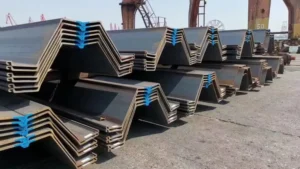
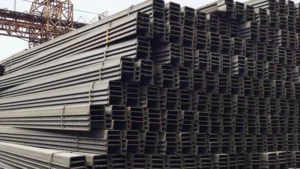
Hot-rolled steel is most common. Coated or composite sheets can be used for marine or corrosive environments.
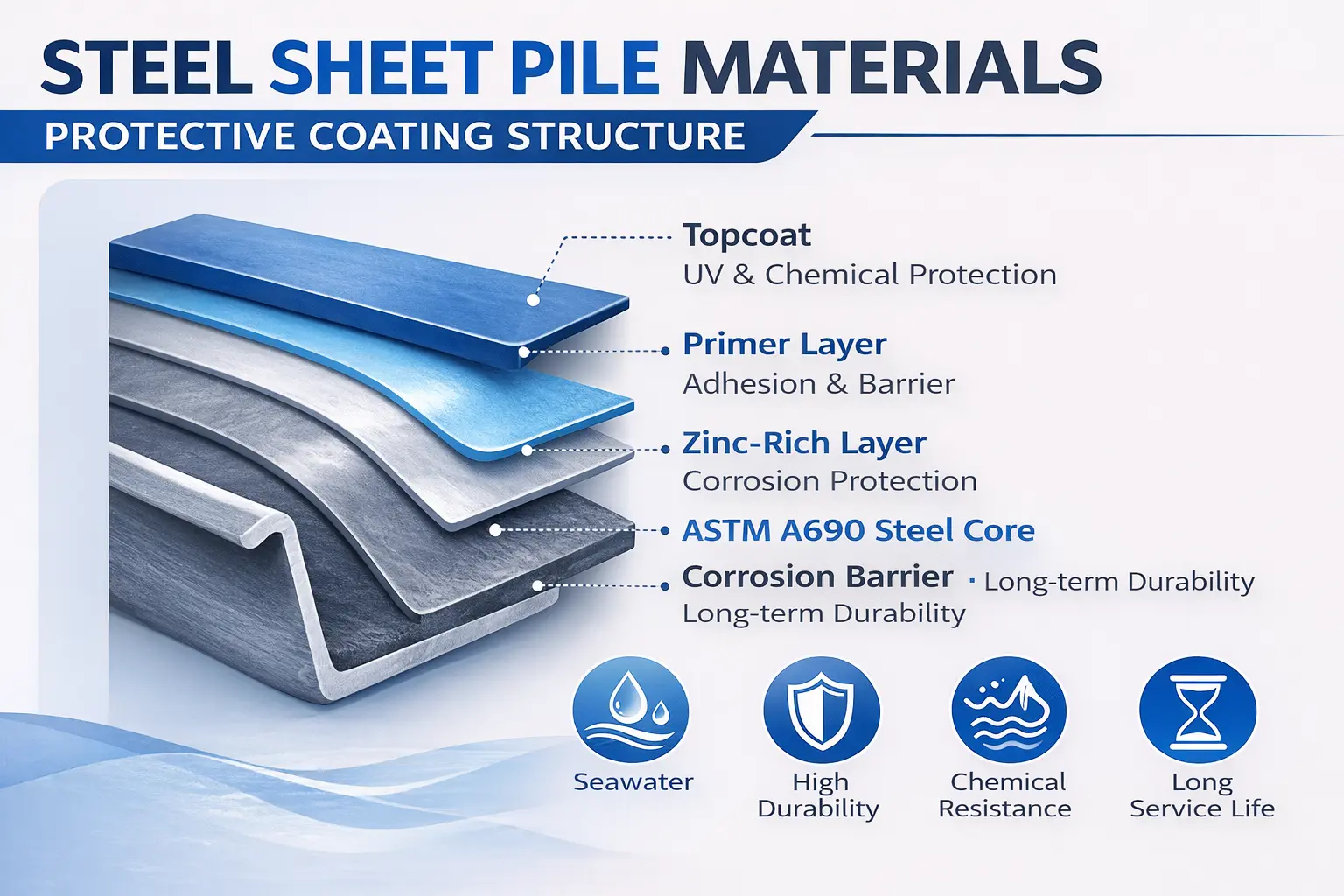
In my projects, I prefer ASTM-certified steel because it balances strength, durability, and cost.
Material Options
| Material | Advantages | Disadvantages |
|---|---|---|
| Hot-rolled Steel | High strength, easy interlock | Can corrode if unprotected |
| Coated Steel | Corrosion resistance | Higher cost |
| Composite | Lightweight, corrosion resistant | Lower structural strength |
Selection Tips
Engineers choose materials based on soil type, water exposure, and wall height. For marine projects, coated or composite piles prevent corrosion. Inland, standard steel often suffices.
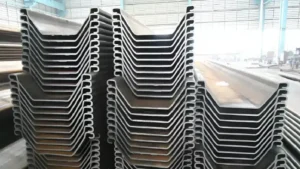
Steel grade, thickness, and section shape all affect load capacity. On one project, U-shaped piles allowed faster installation without sacrificing strength.
I always test small sections before full deployment. This helps identify driving issues and ensures safety.
Applications of Sheet Pile Retaining Walls
Sheet pile walls are versatile. They appear in ports, riverbanks, basements, and bridge foundations.
They are used to retain soil, control water, prevent erosion, and stabilize structures in diverse construction projects.
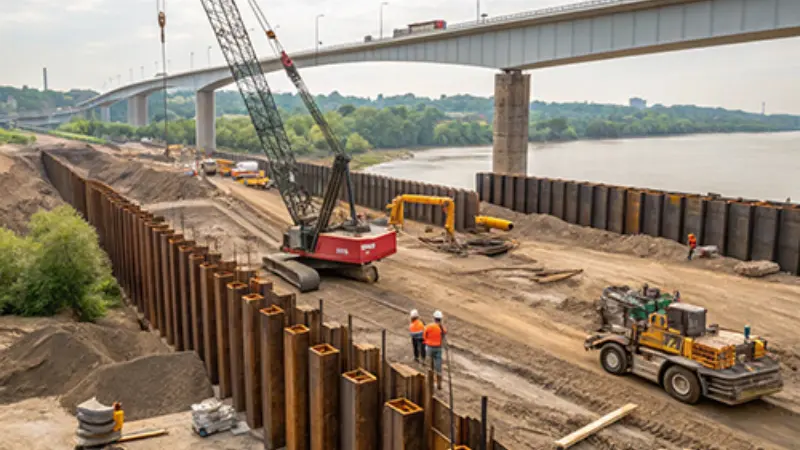
During a riverbank protection project in Southeast Asia, I observed hot-rolled U-type piles prevent erosion effectively.
Common Uses
| Application | Function | Example |
|---|---|---|
| Riverbank Protection | Stop erosion and floods | Southeast Asia river project |
| Deep Excavation | Soil retention | Urban basement foundations |
| Flood Control | Reduce water impact | Coastal cities |
| Port & Dock | Support quay walls | Middle East ports |
Case Study: Riverbank Protection
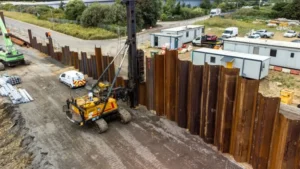
We used hot-rolled U-type sheet piles along the river. Interlocking sheets formed a continuous barrier. Vibratory hammers sped up installation. The wall stabilized soil, controlled water, and provided long-term protection.
Sheet piles are also reusable. I often advise clients to consider both temporary and permanent applications for cost efficiency.
Design Considerations for Sheet Pile Retaining Walls
Designing a wall requires attention to depth, load, soil type, and water table. Mistakes can lead to failure.
Design considerations include pile type, wall depth, soil conditions, lateral loads, and corrosion protection. Proper planning ensures stability and long-term performance.
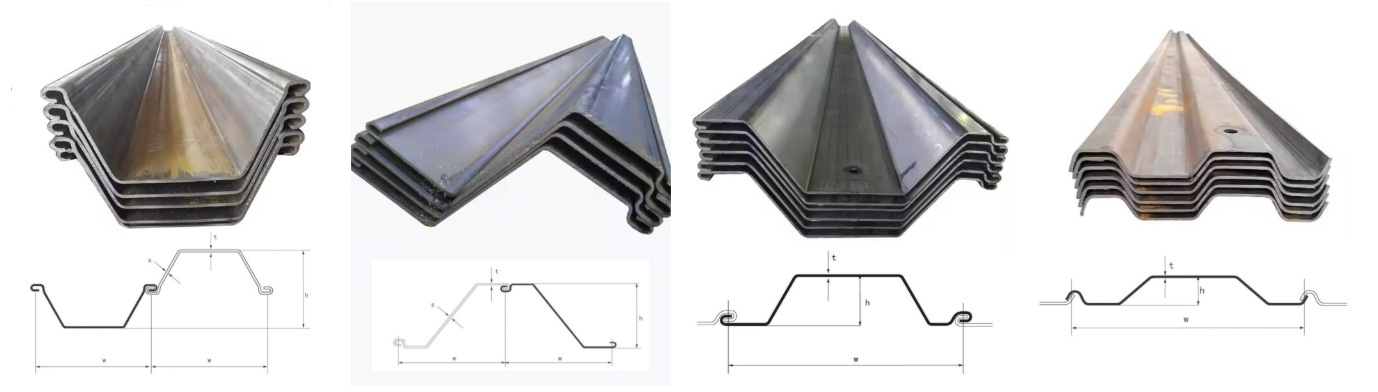
I always analyze geotechnical reports before selecting sheet type and depth. Proper planning prevents costly adjustments later.
Key Design Factors
| Factor | Importance | Notes |
|---|---|---|
| Soil Type | High | Soft soils require deeper piles |
| Water Table | High | Wall must extend below water level |
| Load | High | Heavier loads require reinforced or anchored piles |
| Wall Height | Medium | Taller walls need proper embedment |
| Corrosion Protection | Medium | Coated steel in aggressive environments |
Engineers must also consider future use. Temporary walls may not need heavy coatings, but permanent walls must resist corrosion.
I always check design calculations twice. Errors in embedment depth or load assumptions can reduce wall lifespan and safety.
Installation Techniques and Best Practices
Installing sheet piles requires precision. Equipment, alignment, and soil conditions affect results.
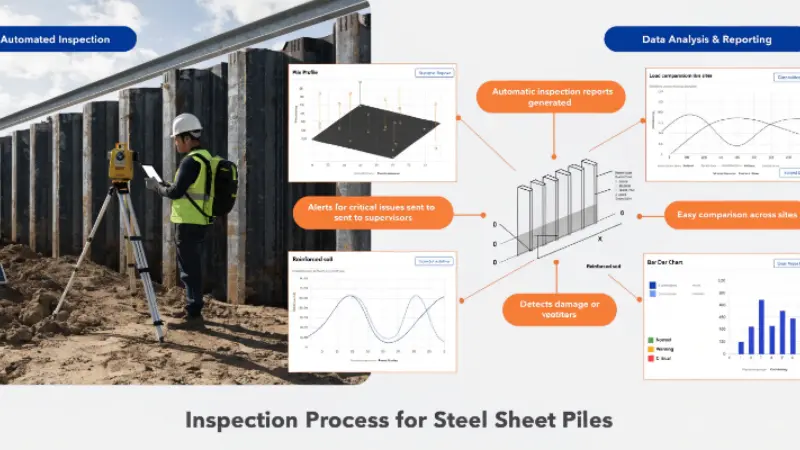
Sheet piles are installed using vibratory hammers, impact hammers, or pressing methods. Correct alignment and continuous inspection ensure a stable retaining wall.
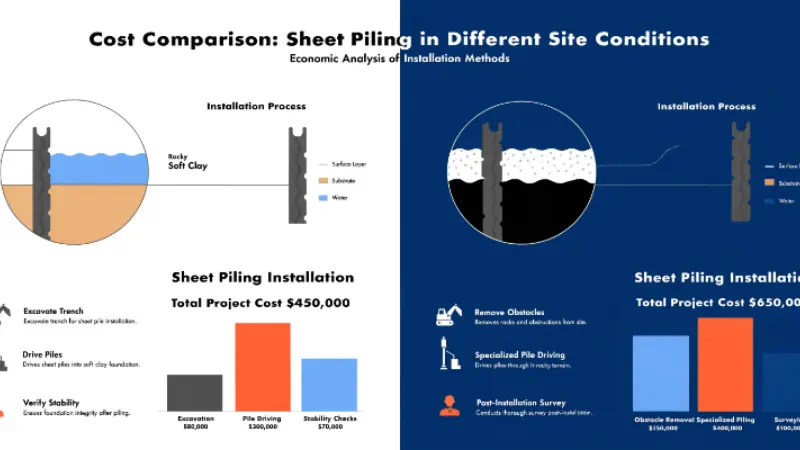
I remember the first time using a vibratory hammer. Watching sheets slide into the soil smoothly impressed me.
Common Installation Methods
| Method | Advantage | Limitation |
|---|---|---|
| Vibratory Hammer | Fast, low noise | Not ideal for dense soils |
| Impact Hammer | Can penetrate dense soil | Slower, loud |
| Pressing | Controlled placement | Needs stable soil |
Best Practices
- Prepare the site and remove obstacles.
- Check alignment before driving the first sheet.
- Interlock sheets carefully for a continuous wall.
- Use bracing or anchors as needed.
- Inspect wall continuously during installation.
Monitoring installation avoids misalignment, bending, or gaps. I adjust methods based on soil hardness and wall height to maintain safety and speed.
Conclusion
Sheet pile retaining walls provide efficient soil retention, water control, and structural support for diverse construction projects.