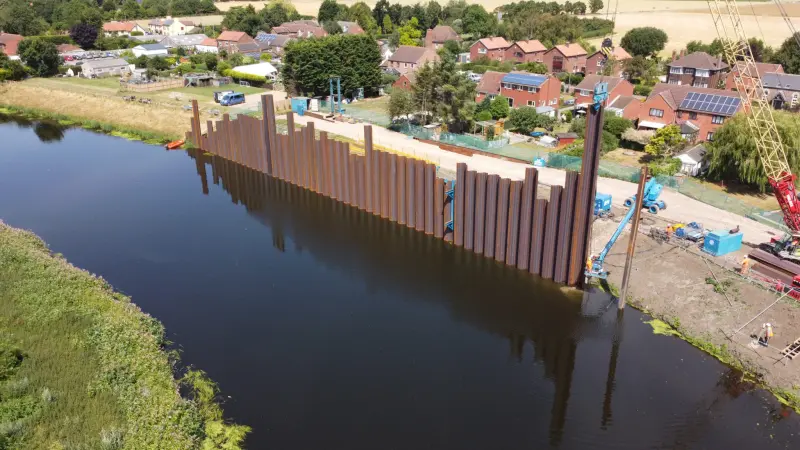
Steel sheet pile walls can solve tough soil and water problems efficiently. They protect structures and prevent erosion.
A sheet pile wall system is a continuous barrier made of interlocking steel sheets. It provides soil retention, flood control, and structural support for construction projects.
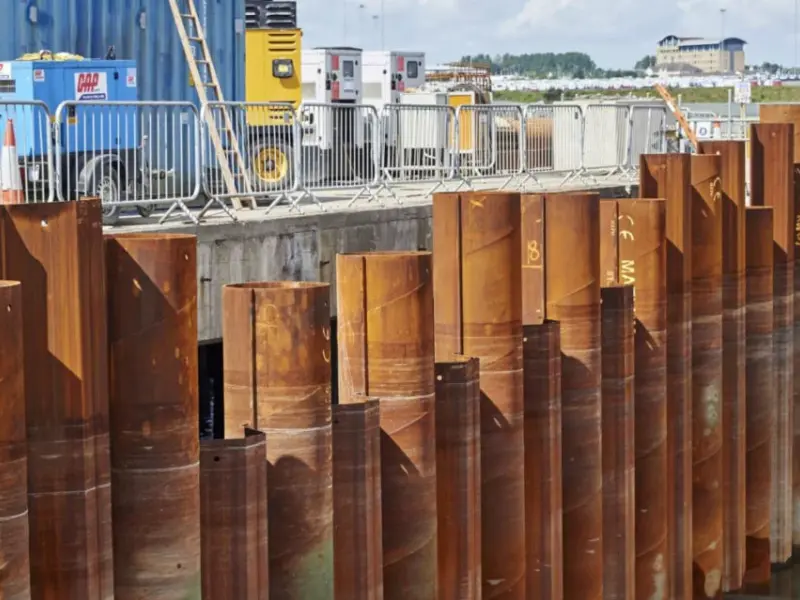
These walls are more than just steel. I will guide you through how they work, the materials used, where they apply, and why engineers trust them.
How Do Sheet Pile Walls Work?
Steel sheet piles lock together to form a strong barrier. They resist soil and water pressure.
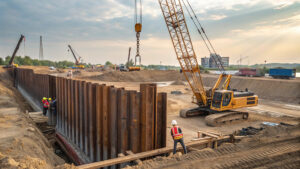
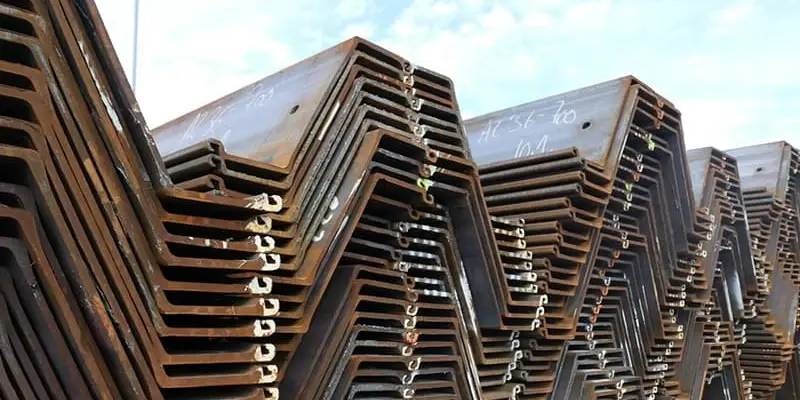
Sheet piles work by driving interlocked steel sections into the ground. They form a continuous wall that supports excavations and prevents soil collapse.
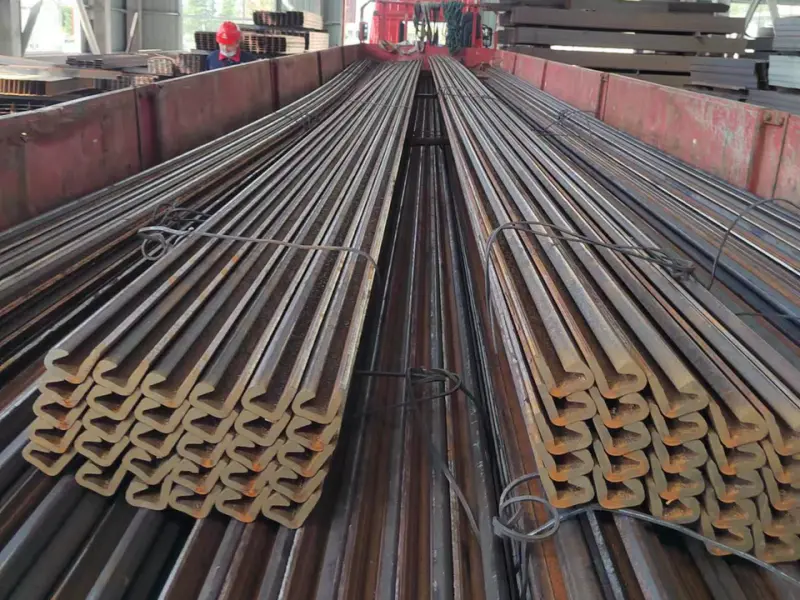
I first saw this system on a riverbank project. Watching the sheets lock gave me a clear picture of why they are so reliable.
Structural Mechanism
The wall works like a puzzle. Each sheet has an interlock that connects tightly with the next sheet. The soil pressure pushes on the wall. The wall pushes back. This balance keeps the soil in place.
Types of Structural Action
| Type | Description | Use Case |
|---|---|---|
| Cantilever | Free-standing, resists soil alone | Small excavations |
| Anchored | Uses anchors behind the wall | Deep excavations |
| Braced | Supports from inside with struts | Confined areas |
Key Considerations
Engineers must check soil type, water level, and wall height. Poor planning can cause bending or failure. Driving method and sheet type also affect performance.
Sheet piles transfer soil forces efficiently. I noticed in my projects that proper alignment is critical. Even small gaps weaken the structure.
Common Materials Used in Sheet Pile Walls
Not all steel is equal. The material choice impacts strength and longevity.
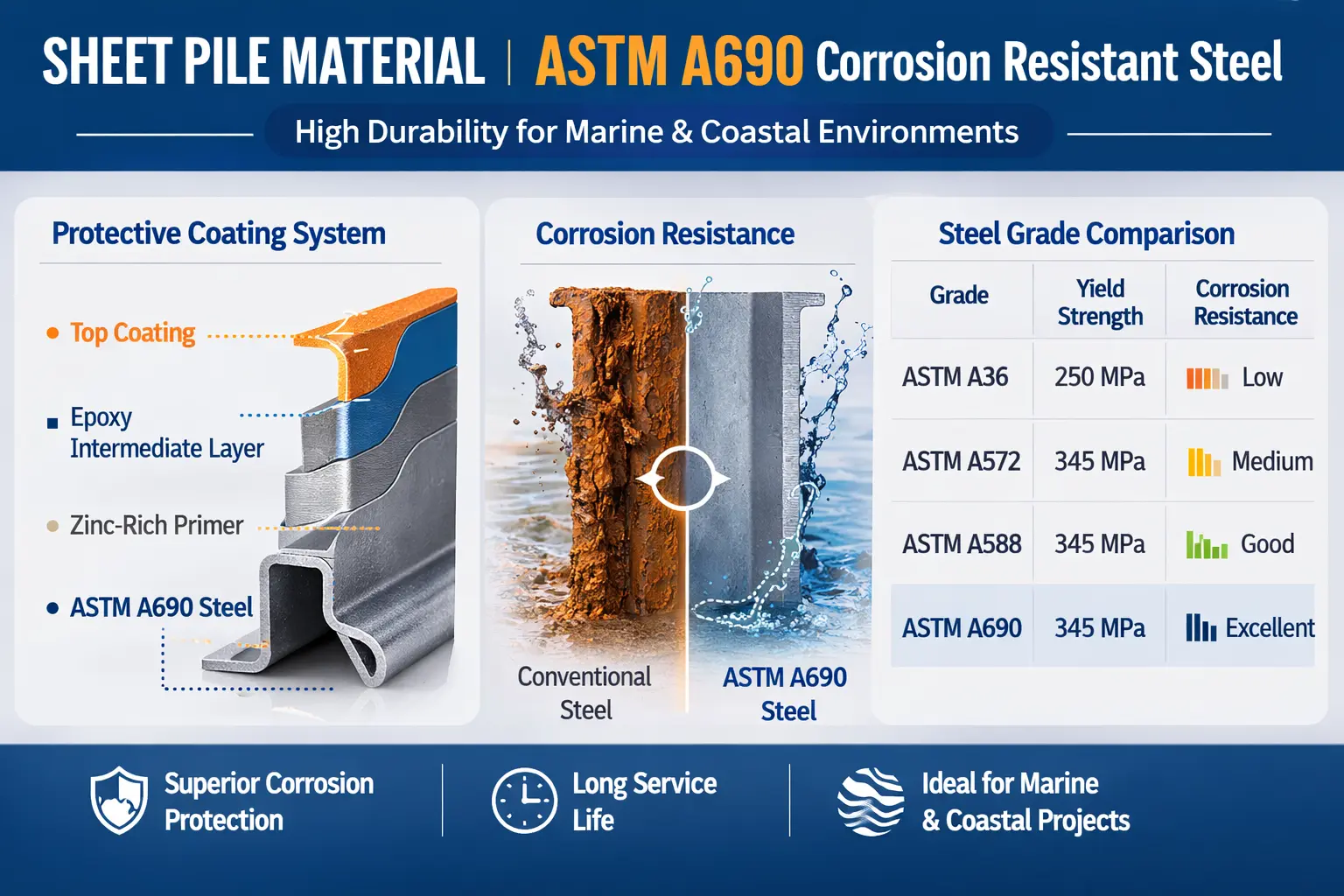
Sheet piles are usually made of hot-rolled steel. Sometimes coated steel or composite materials are used for corrosion resistance.
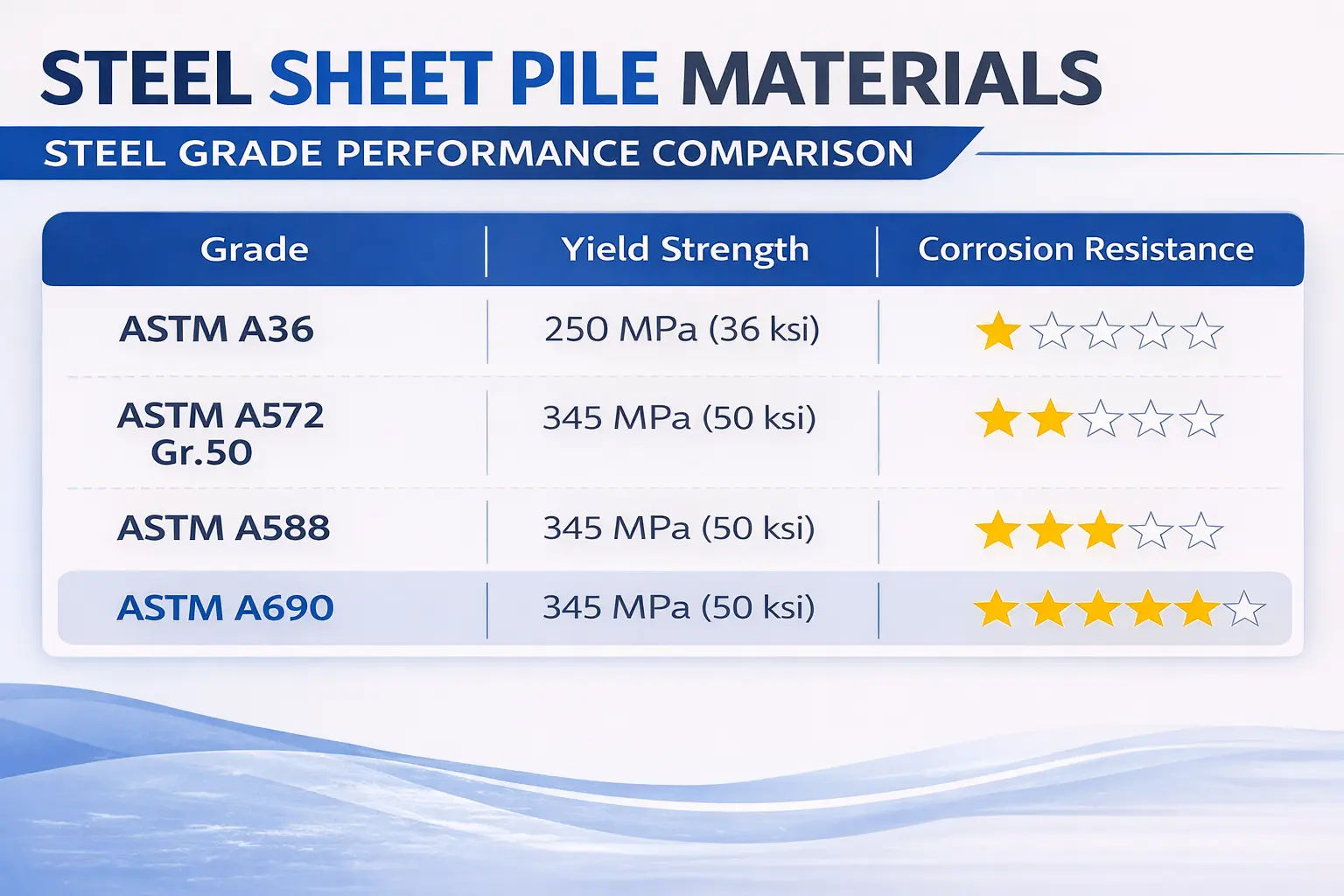
I often prefer ASTM-certified steel because it balances durability and cost.
Material Options
| Material | Pros | Cons |
|---|---|---|
| Hot Rolled Steel | High strength, easy interlock | Can corrode if unprotected |
| Coated Steel | Corrosion resistance | Higher cost |
| Composite | Lightweight, corrosion resistant | Less strength |
Material Selection Tips
Engineers check the project environment. For rivers or marine projects, corrosion resistance is crucial. For inland projects, standard steel often works.
Steel grade, thickness, and section shape all affect load capacity. In one project, using U-shaped piles allowed faster installation without sacrificing strength.
I always test small sections before full deployment. This helps detect any driving or bending issues.
Applications of Sheet Pile Wall Systems
These walls are everywhere. From ports to deep excavations, they secure the soil and structures.
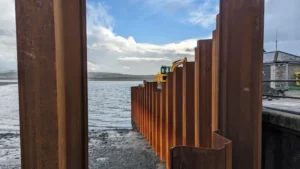
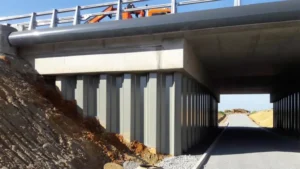
Sheet pile walls are used in riverbank protection, flood control, retaining walls, and bridge foundations. They provide stability where soil movement is a risk.
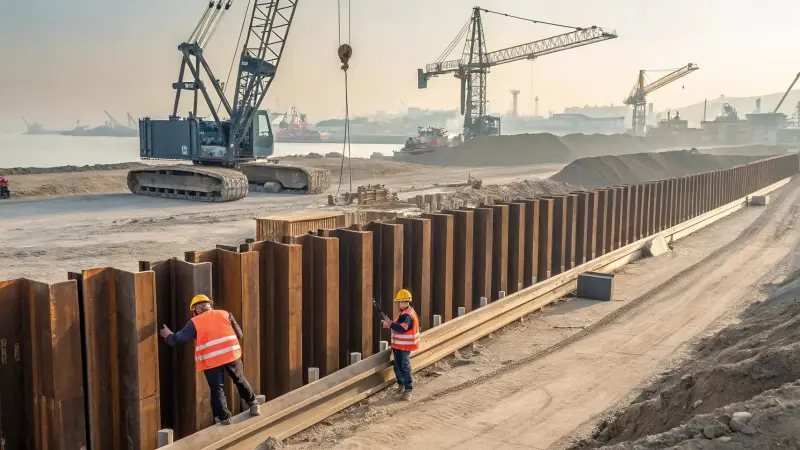
During a riverbank protection project in Southeast Asia, I watched how U-type sheet piles prevented erosion effectively.
Major Uses
| Application | Description | Example |
|---|---|---|
| Riverbank Protection | Prevents erosion | Southeast Asia project |
| Deep Excavation | Retains soil in foundation work | Urban construction |
| Flood Control | Stops water overflow | Coastal cities |
| Port & Dock | Supports quay walls | Middle East ports |
Case Study: Riverbank Project
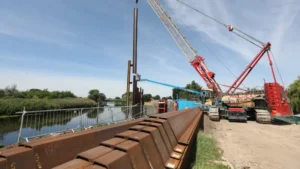
We used hot-rolled U-type steel sheet piles. They were driven along the river to form a continuous wall. The strong interlocking system kept soil and water in check. Vibratory piling equipment made installation fast. This setup gave long-term protection for the riverbank.
Sheet piles are adaptable. I have seen them in temporary works and permanent structures. Engineers rely on them because of their predictable performance.
Advantages and Limitations of Sheet Pile Walls
Every method has pros and cons. Sheet piles are no exception.
Advantages include fast installation, reusability, and strong soil retention. Limitations involve cost and depth restrictions.
I have learned that understanding both sides helps clients make better decisions.
Advantages
| Feature | Benefit |
|---|---|
| Quick Installation | Saves project time |
| Reusable | Sheets can be used in other projects |
| High Strength | Can hold deep excavation walls |
| Water Control | Reduces flood and seepage risks |
Limitations
| Feature | Drawback |
|---|---|
| Cost | Higher than some temporary solutions |
| Depth Limit | Cantilever walls have height limits |
| Corrosion Risk | Needs coatings or maintenance in water |
Balancing Factors
Engineers evaluate site conditions, budget, and timeline. In one coastal project, we chose coated steel despite higher cost. It lasted over 15 years without major maintenance.
I always explain these trade-offs to clients. Knowing limits avoids surprises and ensures safety.
Installation Methods and Techniques
Installing sheet piles is both art and science. Correct techniques prevent problems.
Sheet piles are installed using vibratory hammers, impact hammers, or pressing. Proper alignment and soil preparation are crucial.
I remember the first project where we used a vibratory hammer. Watching the sheets slide together smoothly was satisfying.
Driving Methods
| Method | Pros | Cons |
|---|---|---|
| Vibratory Hammer | Fast, less noise | Not for very hard soils |
| Impact Hammer | Can penetrate dense soil | Slower, noisy |
| Pressing | Controlled placement | Requires stable soil |
Step-by-Step Installation
- Prepare site and clear obstacles.
- Check alignment and stake positions.
- Drive first sheet and connect next sheets using interlocks.
- Use bracing or anchors if needed.
- Inspect wall continuously during installation.
Tips for Success
- Always verify sheet quality before driving.
- Monitor soil behavior during installation.
- Adjust method if encountering hard layers.
In my projects, careful planning saved time and prevented costly errors. Installation errors can reduce the wall’s lifespan significantly.
Conclusion
Sheet pile walls are reliable, versatile, and essential for soil and water management projects.