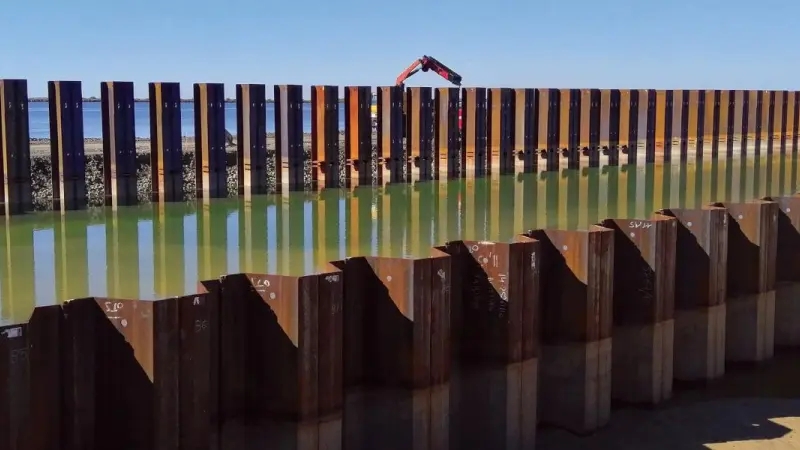
Many projects fail because sheet piles are not driven deep enough. This leads to wall movement, water leakage, and serious structural risk.
Steel sheet piles can typically be installed from 6 meters to over 30 meters deep, depending on soil conditions, equipment, and engineering design requirements.
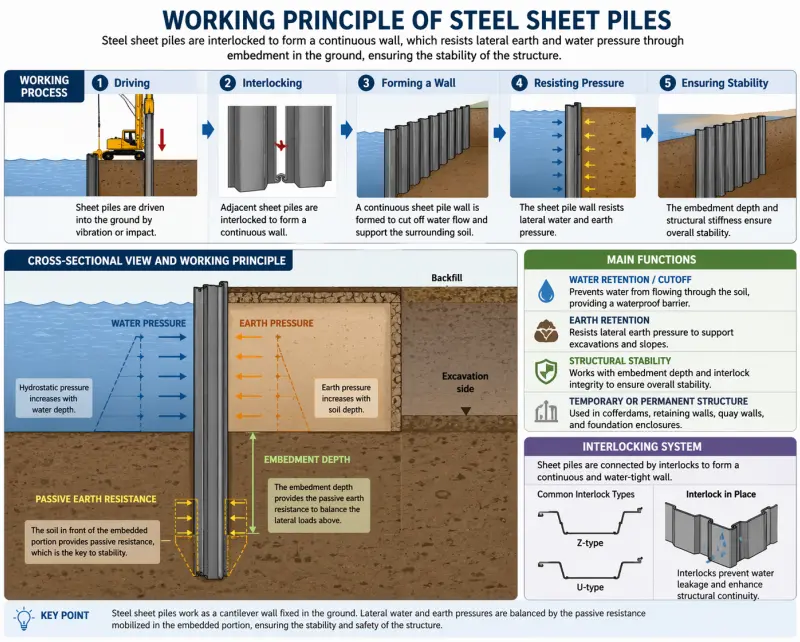
I often see clients focus on pile length only. But depth is not just about length. It depends on soil, load, and installation method. This is where many mistakes happen.
What Factors Determine the Maximum Depth of Steel Sheet Pile Installation?
Many people think deeper is always better. This is not true. Wrong depth can increase cost and even create instability.
The maximum depth of steel sheet pile installation depends on soil resistance, pile type, driving equipment, and structural design requirements.
Soil Resistance
Soil type controls how deep piles can go. Soft soil allows deeper driving. Hard soil or rock limits penetration.
Pile Section Properties
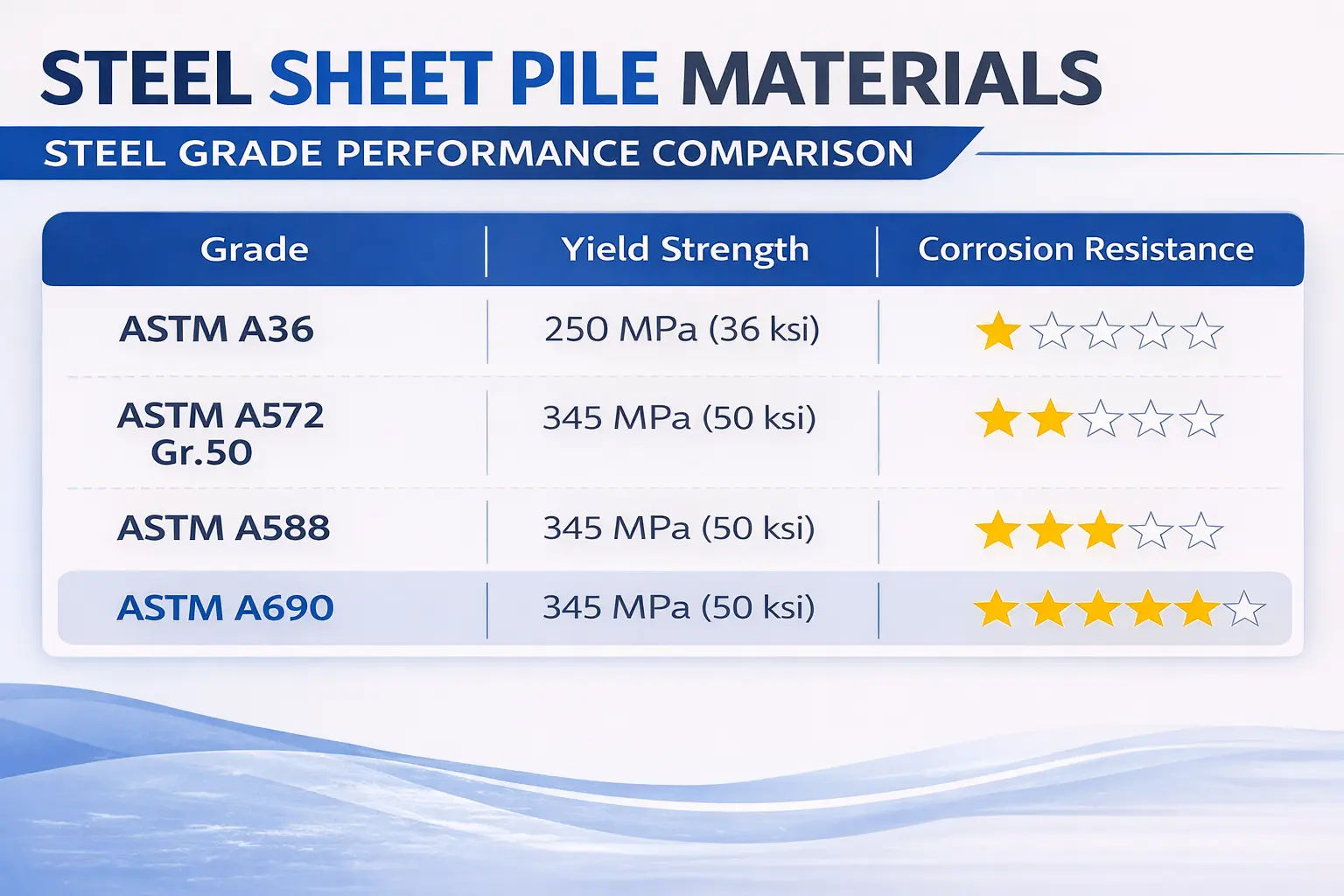
Stronger and thicker sheet piles can be driven deeper without deformation. U type steel sheet piles and Z type steel sheet piles perform differently under load.
Equipment Capacity
Driving equipment limits depth. Vibratory hammers are good for medium depth. Impact hammers are better for deeper or harder soil.
Structural Design Requirements
Engineers define required embedment depth based on load and safety factors.
| Factor | Influence on Depth |
|---|---|
| Soil Type | Controls penetration resistance |
| Pile Strength | Limits deformation risk |
| Equipment | Defines achievable depth |
| Design Load | Determines required embedment |
From my experience, depth should always come from engineering calculation, not guesswork.
How Does Soil Condition Affect Sheet Pile Driving Depth?
Many failures come from ignoring soil conditions. Soil is not uniform, and it changes behavior at different depths.
Soil condition affects sheet pile installation depth by influencing driving resistance, stability, and required embedment for safe load transfer.
Soft Clay and Loose Sand
These soils allow easy penetration. But they require deeper embedment to achieve stability.
Dense Sand and Gravel
These soils increase resistance. Driving becomes difficult. Specialized equipment is needed.
Rock or Hard Layer
Sheet piles usually cannot penetrate rock. Pre-drilling or alternative solutions are required.
Groundwater Influence
Water reduces soil strength. This can affect both driving process and final stability.
| Soil Type | Driving Difficulty | Required Depth |
|---|---|---|
| Soft Clay | Easy | Deep |
| Loose Sand | Easy | Medium to Deep |
| Dense Sand | Hard | Medium |
| Rock | Very Hard | Limited |
In my projects, soil investigation reports are always the first thing I check before suggesting pile length.
What Equipment Is Used to Install Deep Steel Sheet Piles?
Many clients underestimate how important equipment is. Even the best sheet pile cannot reach design depth without the right machine.
Deep steel sheet piles are installed using vibratory hammers, impact hammers, and hydraulic pressing machines, depending on soil condition and depth requirement.
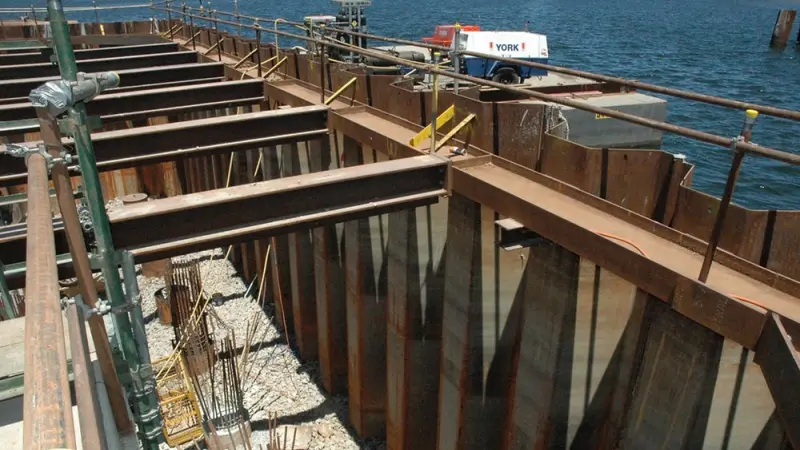
Vibratory Hammer
This is the most common equipment. It uses vibration to reduce soil resistance.
Impact Hammer
This equipment uses repeated blows to drive piles deeper.
Hydraulic Press-In Method
This method presses piles into the ground silently.
| Equipment | Depth Capability | Noise Level | Application |
|---|---|---|---|
| Vibratory Hammer | Medium | Medium | General projects |
| Impact Hammer | High | High | Deep and hard soil |
| Hydraulic Press | Medium | Low | Urban areas |
From my experience, equipment selection often decides whether the project succeeds or fails.
What Are the Typical Depth Ranges for Different Sheet Pile Applications?
Many clients ask for a standard depth. But there is no single answer. Each application has its own range.
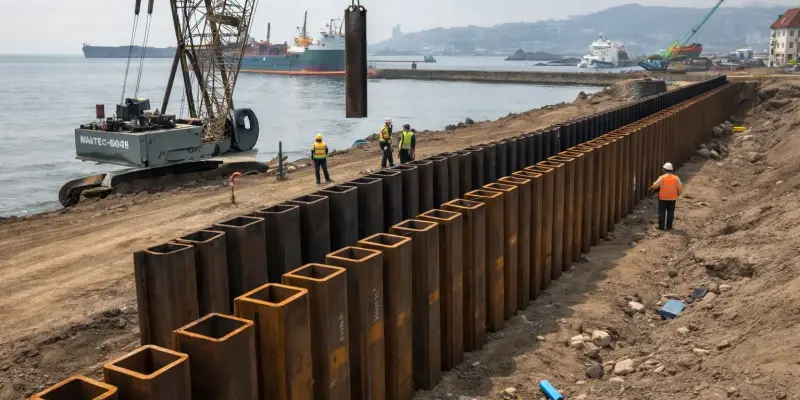
Typical sheet pile depths range from 6–12 meters for temporary excavation support, 12–20 meters for retaining walls, and up to 30 meters or more for marine structures.
Temporary Excavation Support
Depth is usually 6–12 meters. This is enough for shallow basements.
Permanent Retaining Walls
Depth is usually 12–20 meters. This provides long-term stability.
Marine and Port Structures
Depth can exceed 25–30 meters. This depends on water depth and soil condition.
| Application | Typical Depth |
|---|---|
| Temporary Works | 6–12 m |
| Retaining Walls | 12–20 m |
| Marine Structures | 20–30+ m |
In my riverbank project in Southeast Asia, we used deeper embedment to ensure long-term stability against water pressure.
How Do Engineers Calculate the Required Embedment Depth of Sheet Piles?
Many people think depth is based on experience. But real engineering uses calculation and safety factors.
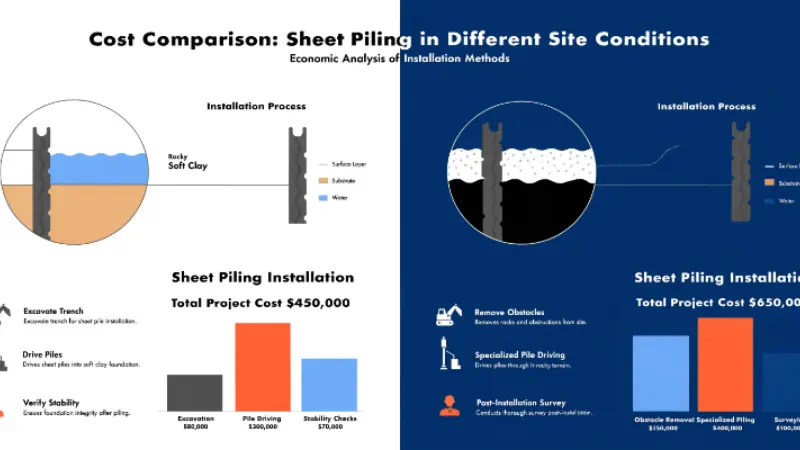
Engineers calculate embedment depth based on soil pressure, water pressure, structural load, and safety factors to ensure stability and prevent failure.
Earth Pressure Calculation
Engineers calculate lateral earth pressure using soil parameters.
Water Pressure Consideration
Water adds extra load. This must be included in design.
Safety Factor
A safety margin is added to prevent unexpected failure.
Simplified Concept Formula
σ = K × γ × H
| Parameter | Role |
|---|---|
| Soil Density | Affects pressure |
| Depth | Increases load |
| Water Level | Adds pressure |
| Safety Factor | Ensures stability |
From my perspective, correct calculation is the most important step. I never suggest depth without checking soil data and project requirements.
Conclusion
Steel sheet pile depth depends on soil, design, and equipment. I always recommend careful calculation to ensure safety and performance.