You are building a new metro line through a dense city center. The excavation is deep, the surrounding buildings are old, and you cannot afford ground movement. The clock is ticking.
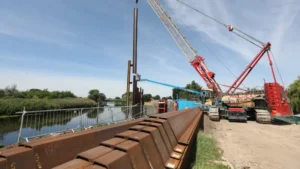
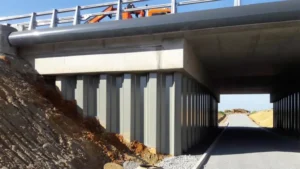
Steel sheet piles1 are ideal for metro and underground construction because they provide rapid installation, excellent water tightness, and can be extracted after use. They are used for temporary excavation support2, permanent retaining walls, and cut-and-cover tunnel construction in urban environments.
](https://cnsteelplant.com/wp-content/uploads/2026/03/Article-Application-Subway-2.webp)
I worked on a metro project in Southeast Asia where the contractor had to dig a 20-meter-deep station box between two historic buildings. The sheet piles went in fast, held the ground perfectly, and came out clean when the permanent structure was finished. Let me share what I have learned about using sheet piles in underground construction.
What are the different types of steel sheet piling?
In metro and underground work, you have several sheet pile options. Each has its place.
The main types of steel sheet piling are U-shaped (symmetric, forgiving installation), Z-shaped (higher strength, efficient for deep walls), straight web (used for cellular cofferdams), and combination walls (sheet piles with H-piles for extra strength). For metro construction, U and Z piles are most common, with Z piles often used for deeper excavations.
](https://cnsteelplant.com/wp-content/uploads/2026/03/Article-Application-Subway-1.webp)
Which Type for Underground Work?
Let me explain how each type applies to metro construction.
U-Shaped Sheet Piles1
U piles are the workhorse for many underground projects. Their symmetric shape makes them easy to install, even in tight urban sites. The Larssen interlock provides good water tightness, which is critical below the water table.
For shallower excavations (up to about 10 meters), U piles are often the most economical choice. They are also preferred when the excavation has curves or corners, as they follow alignments more easily.
Z-Shaped Sheet Piles2
Z piles are the choice for deeper excavations. Their higher section modulus per kilogram means you can achieve greater depth with the same weight of steel. Modern Z piles with ball-and-socket interlocks drive well and provide good water tightness.
For metro station boxes deeper than 10 meters, Z piles are typical. They are also used for cut-and-cover tunnels where the excavation width is large and the walls must be efficient.
Straight Web Piles3
Straight web piles are used primarily for cellular cofferdams. In metro work, these are used for river crossings or where a large, stable work platform is needed in water.
Combination Walls4
For very deep excavations or where heavy surcharge loads exist, combination walls use H-piles (king piles) with sheet piles between them. The H-piles provide the bending strength, and the sheet piles fill the gaps. These are used for the deepest station boxes, often with multiple levels of bracing.
Comparison for Metro Use
| Type | Best Depth | Advantages | Typical Use |
|---|---|---|---|
| U Piles | Up to 10m | Easy installation, curves | Shallow stations, ramps |
| Z Piles | 10-20m | Efficient, deep walls | Station boxes, cut-and-cover |
| Straight Web | Variable | Cellular structures | River crossings, shafts |
| Combination | 20m+ | Highest strength | Deep stations, heavy loads |
What are the three types of piling?
In underground construction, you rarely use just one type of pile. Different piles serve different purposes.
The three main types of piling are sheet piles1 (retaining walls), bearing piles2 (load support), and secant or contiguous piles3 (drilled shafts). In metro construction, sheet piles1 form the excavation support, bearing piles2 support the permanent structure, and secant piles are sometimes used where vibration from driven piles is prohibited.
](https://cnsteelplant.com/wp-content/uploads/2026/03/product-image-2-1.webp)
How Each Type Is Used in Metro Work
Let me explain how these three types come together in underground construction.
Sheet Piles
Sheet piles are the excavation support system. They are driven around the perimeter of the excavation before digging begins. Their job is to hold back the soil and water while workers excavate and build the permanent structure.
In metro work, sheet piles1 are typically:
- Driven to depths of 15-30 meters
- Installed with vibratory hammers for speed
- Used in combination with internal bracing or tiebacks
- Often extracted after the permanent structure is built
Bearing Piles
Bearing piles support the permanent metro structure. They carry the weight of the station, the tracks, and the trains. In cut-and-cover construction4, these are installed after excavation and before the concrete slab is poured.
In metro work, bearing piles2 are typically:
- Steel pipe piles or concrete piles
- Driven or drilled to rock or dense soil
- Designed for high axial loads
- Permanent (left in place)
Secant or Contiguous Piles
These are drilled shafts, not driven piles. They are used where vibration from pile driving could damage nearby structures. The piles are drilled and filled with concrete, often interlocking to form a watertight wall.
In metro work, secant piles are used:
- Adjacent to historic or sensitive buildings
- Where noise and vibration are strictly limited
- For permanent retaining walls that become part of the structure
- When sheet piles1 cannot be extracted due to space constraints
How They Work Together
A typical cut-and-cover metro station:
- Sheet piles are driven around the site perimeter
- Internal bracing is installed as excavation proceeds
- The station box is excavated to final depth
- Bearing piles are installed for the permanent structure
- The concrete base slab is poured
- Station walls and roof are built
- Sheet piles are extracted or left as part of permanent wall
My Experience
For a metro project in Southeast Asia, we supplied sheet piles1 for the excavation support. Behind them, the contractor installed concrete bearing piles2 for the station structure. The sheet piles1 were extracted after the permanent walls were completed, allowing the contractor to reuse them on another project.
What are the disadvantages of using sheet piles?
Sheet piles are excellent for metro work, but they have limitations. You need to know them before you specify.
The main disadvantages of sheet piles for underground construction are noise and vibration during installation, difficulty driving in hard soils or through obstructions, potential for ground movement if not installed carefully, and the need for internal bracing or tiebacks for deep excavations. In urban areas, noise restrictions can limit working hours.
](https://cnsteelplant.com/wp-content/uploads/2026/03/product-image-64.webp)
Addressing the Challenges in Urban Settings
Let me explain how engineers mitigate these disadvantages.
Noise and Vibration1
Pile driving is loud. In dense cities, noise restrictions often limit work to daytime hours or require quieter methods.
Mitigations:
- Vibratory hammers are quieter than impact hammers
- Press-in methods (silent piling) eliminate noise almost entirely
- Pre-drilling reduces the energy needed for driving
- Bubble curtains in water reduce underwater noise
- Working within permitted hours and monitoring noise levels
For metro work adjacent to hospitals or schools, silent piling is often required.
Hard Driving
Urban sites often have buried obstructions—old foundations, utility lines, debris. Driving through these can damage piles or stop progress.
Mitigations:
- Pre-drilling to clear obstructions
- Use of pile shoes to protect the tip
- Impact hammers for hard layers
- Alternative pile types (secant piles) where obstructions are extensive
Ground Movement2
Pile driving displaces soil. In sensitive urban areas, ground movement can damage adjacent buildings.
Mitigations:
- Careful sequencing of installation
- Monitoring of ground movement and building settlement
- Pre-drilling or jetting to reduce displacement
- Use of silent piling (press-in) which minimizes ground movement
Bracing Requirements3
Deep excavations require internal bracing or tiebacks to hold the sheet piles. Bracing takes up space inside the excavation.
Mitigations:
- Design bracing to work around construction activities
- Use of rakers (diagonal braces) that allow more working space
- Tiebacks that are drilled into the soil behind the wall (requires property access)
- Combination walls that provide higher bending capacity, reducing bracing levels
Corrosion4
In wet ground or with groundwater, sheet piles can corrode.
Mitigations:
My Experience
On a metro project in a dense city center, we used silent piling (press-in) to install sheet piles adjacent to a 100-year-old building. There was no measurable ground movement, and the building owners had no complaints. The method cost more but was essential for that site.
What are the 4 formats of pile foundation?
When you design a metro structure, you need to understand the different pile formats and how they work together.
The four main formats of pile foundation are end-bearing piles1 (transfer load to rock), friction piles2 (transfer load through skin friction), combination piles3 (both end-bearing and friction), and sheet piles4 (retaining walls). In metro construction5, sheet piles4 are the excavation support, while bearing piles (end-bearing or friction) support the permanent structure.
](https://cnsteelplant.com/wp-content/uploads/2026/03/product-image-65.webp)
How Formats Apply to Metro Construction
Let me explain each format in the context of underground work.
End-Bearing Piles
End-bearing piles transfer load through weak soil to a strong bearing layer below. The pile acts like a column standing on bedrock or very dense soil.
In metro work, end-bearing piles1 are used for:
- Station columns that must carry heavy loads
- Tunnel portal structures
- Areas where shallow rock is present
- Permanent structure foundations
Friction Piles
Friction piles transfer load through skin friction along the pile shaft. The soil grips the pile and holds it up.
In metro work, friction piles2 are used for:
- Station slabs where rock is too deep for end-bearing
- Areas with deep soft soil
- Temporary support structures
- When end-bearing is not feasible
Combination Piles
Combination piles use both end-bearing and friction to carry loads. This is the most common case—most piles develop some friction even if they bear on rock.
In metro work, combination piles3 are the norm. The pile is driven to a specified resistance, which includes both end-bearing and friction.
Sheet Piles
Sheet piles are retaining walls, not load-bearing piles. They hold back soil and water but do not support vertical loads from the structure.
In metro work, sheet piles4 are used for:
- Excavation support during construction
- Permanent retaining walls where the structure is built inside
- Cofferdams for river crossings
- Temporary works that are extracted later
How They Work Together in a Metro Station
A typical deep station box uses all four formats:
-
Sheet piles are driven around the perimeter. They hold the soil while excavation proceeds.
-
End-bearing piles are installed for the main station columns. They go down to rock to carry the heavy loads from the roof and trains.
-
Friction piles support the base slab where the loads are lighter. The slab sits on piles that are driven to depth but not necessarily to rock.
-
Combination piles support the track bed. They develop friction through the soil and also bear on the dense layer at depth.
My Experience
For the metro project in Southeast Asia, the sheet piles4 were temporary—extracted after construction. The permanent station sat on end-bearing piles1 drilled into rock. The approach ramps used friction piles2 where the rock was too deep. Each format had its role.
Conclusion
For metro and underground construction, steel sheet piles1 provide fast, reliable excavation support. Choose U piles2 for moderate depths and Z piles for deeper work. Consider noise, vibration, and ground movement in urban areas.
-
Explore this link to understand how steel sheet piles enhance excavation support and their advantages in construction. ↩ ↩ ↩ ↩ ↩ ↩ ↩ ↩ ↩ ↩ ↩ ↩ ↩
-
Learn more about U piles and their specific applications in construction, especially for moderate depths. ↩ ↩ ↩ ↩ ↩ ↩ ↩ ↩ ↩ ↩ ↩
-
Discover the benefits of combination piles that utilize both end-bearing and friction for load support. ↩ ↩ ↩ ↩ ↩
-
Find out how sheet piles function as retaining walls and their importance in excavation support. ↩ ↩ ↩ ↩ ↩ ↩ ↩ ↩
-
Gain insights into the complexities of metro construction and how different pile formats are applied. ↩