Have you ever wondered how builders stop a giant hole from collapsing during construction? Or how a riverbank stays firm against constant water pressure? The answer often lies deep underground with a simple but powerful product.
Steel sheet piles1 are long, interlocking steel sections2 driven into the ground to create a continuous wall. Their main job is to retain soil and water, providing structural support for excavations and permanent structures like seawalls.
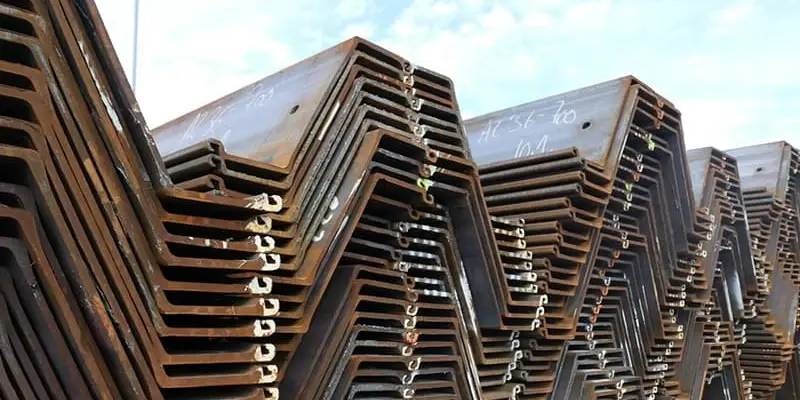
You might have seen them on a construction site or near a waterfront. They look like large, corrugated metal plates being hammered into the earth. But there is much more happening beneath the surface. Let’s walk through how they work and why so many engineers choose them for tough jobs. I work with these materials every day, supplying them to projects around the world, and I want to share what I have learned.
What are the advantages of steel sheet piles?
Choosing the right material for a retaining wall is a big decision. I have seen projects succeed or fail based on this one choice. The pressure to get it right is high.
Steel sheet piles1 offer a unique combination of strength, reusability, and fast installation. They provide a watertight barrier, can withstand high driving stresses, and are 100% recyclable, making them a top choice for temporary and permanent works.
Breaking Down the Key Benefits
To understand why this advantage matters, we need to look at the specific features that set steel apart from other materials like concrete or timber. Here is a breakdown based on what I see in the field:
| Advantage | How It Works | Why It Matters |
|---|---|---|
| High Strength & Durability2 | Steel has a high strength-to-weight ratio. It can handle heavy loads from soil, water, and traffic without cracking. | This allows for deeper excavations and taller retaining walls. Projects are safer and can be built in challenging conditions. |
| Easy Installation & Speed3 | Sections are relatively light and can be driven quickly using vibratory hammers. They connect with a simple interlock. | This saves significant time on the job site. Faster installation means lower labor costs and the project finishes sooner. |
| Reusability4 | Steel piles can be extracted after temporary use, like for a construction pit. They can then be inspected and used again on another project. | This reduces material costs for contractors and minimizes construction waste. It is a very sustainable practice. |
| Watertightness5 | The interlocking edges create a near-perfect seal, especially when filled with a sealant. This stops water from seeping through the wall. | This is critical for dewatering a site, building cofferdams, or creating flood barriers. It keeps the work area dry and safe. |
| Longevity with Protection | When combined with a cathodic protection system or a coating, the lifespan of steel piles in harsh environments like seawater can extend for decades. | This provides long-term reliability for permanent structures like ports and seawalls, reducing future maintenance costs. |
| 100% Recyclability6 | At the end of its life, steel is the world’s most recycled material. Old piles can be melted down to make new steel. | This makes steel an environmentally responsible choice, supporting green building certifications and circular economy goals. |
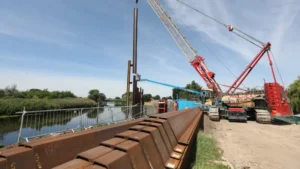
I recall a project in Southeast Asia where we supplied U-type piles for riverbank protection. The contractor needed to work during the monsoon season. The speed of installation was the deciding factor. They could drive the piles during a short weather window and secure the bank before the heavy rains came. If they had chosen a poured concrete wall, the project would have been delayed for months. That real-world pressure often makes the advantages of steel very clear.
What is the function of sheet pile1s?
It is easy to look at a sheet pile1 and just see a piece of steel. But in the ground, it performs a very specific job.
The primary function of a sheet pile1 is to act as a retaining wall2. It holds back soil, water, or any other loose material from a vertical or near-vertical cut. It transfers the load from the retained material down into the ground.
](https://cnsteelplant.com/wp-content/uploads/2026/03/Article-images-8.webp)
More Than Just a Wall
But the function changes slightly depending on the project. We can break this down into three main roles:
-
Retention for Excavations: Imagine you need to dig a 10-meter-deep hole in the middle of a city for a building’s basement. The soil wants to collapse inward. Driven sheet pile1s around the perimeter create a stable box. They hold the soil back, allowing workers to dig safely inside. This is a temporary function.
-
Water Control Structures: Think about building a pier in a harbor. You need a dry area to work. Sheet piles are driven in a circle or square to create a cofferdam. This wall keeps the river or sea water out. The interlock function here is critical. Even a small leak can make pumping the water out much harder.
-
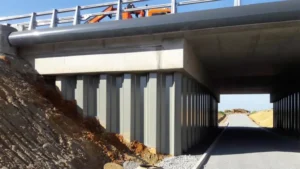
Permanent Earth Retention: For a highway built along a hillside, the road is cut into the slope. A permanent wall is needed to stop soil and rocks from falling onto the road. Sheet piles can be driven and left in place forever. They become a permanent part of the landscape, resisting the constant push of the earth year after year.
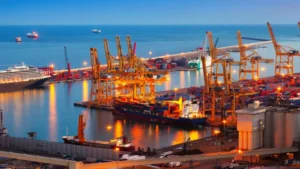
From my experience with buyers in places like Saudi Arabia and Australia, the choice of pile often comes down to which of these three functions is most important. For a deep basement in a city, strength and vibration control during installation are key. For a port in Iraq, corrosion resistance and the ability to create a watertight seal are the top priorities. The function dictates the form.
How do steel piles work?
This is a question I get from many new contractors. They see a thin wall of steel and wonder how it can possibly hold back tons of soil. The physics behind it is fascinating.
Steel piles work through a combination of geometry and soil mechanics. Once driven, the wall resists the horizontal pressure from the soil behind it. This pressure is transferred down the length of the pile and into the deeper, stable ground.
](https://cnsteelplant.com/wp-content/uploads/2026/03/Article-images-2.webp)
The Mechanics of Resistance
Let’s simplify this into a few key engineering principles. This is what happens below the surface.
-
Passive and Active Pressure1: On the side where the soil is being retained (the "active" side), the soil pushes against the wall. On the opposite side, deep in the ground (the "passive" side), the soil resists this push. The wall acts as a lever, using the resistance of the deep soil to counteract the push from the retained soil. The deeper the pile is driven, the more passive resistance it gains.
-
Moment of Inertia2: This is a fancy term for a simple idea. The shape of the steel pile, like a "U" or a "Z," gives it stiffness. A flat sheet of steel would bend easily. But by creating peaks and valleys in the profile, we increase its section modulus. This allows a relatively thin piece of steel to resist a huge bending force, much like how an I-beam works in a building.
-
The Arching Effect3: Soil is not a liquid; it has internal friction. Between individual piles, the soil can create a natural arching effect, transferring some of the pressure to the piles themselves. The strong interlocks4 ensure that all the piles in the wall work together as one single, massive unit. If one pile tries to move, the interlocks4 transfer that load to its neighbors.
I remember talking to an engineer from a project in Pakistan. They were building a deep foundation near a river. They were worried about the water pressure. We discussed how the interlock system, combined with the depth of the drive, would create enough passive resistance to handle the load. He called me after the installation. He said watching the piles go in was easy, but understanding how they would stand firm against the river was the real engineering marvel.
What is the main function of piles?
When we talk about foundations, the word "pile" can mean a few things. It is important to separate sheet piles1 from other types.
The main function of any pile is to transfer structural loads to deeper, stronger soil or rock layers. This happens when the surface soil is too weak to support the weight of a building or structure.
](https://cnsteelplant.com/wp-content/uploads/2026/03/Article-images-7.webp)
Sheet Piles vs. Load-Bearing Piles
This is where a common confusion happens. People mix up "sheet piles1" and "load-bearing piles2." They are both piles, but their jobs are completely different. Let me clarify it with a simple comparison.
-
Load-Bearing Piles (or H-Piles): Think of these as columns. Their job is to carry the weight of a bridge or a skyscraper straight down. They are driven deep until they hit hard rock or a dense soil layer that can support that massive weight. They work in compression, like a pillar holding up a roof.
-
Sheet Piles: Think of these as a wall. Their job is not to hold up the building, but to hold back the ground around the building. They work in bending, like a beam resisting a sideways push. They create a barrier.
So, the main function of sheet piles1 specifically is to provide lateral support. The main function of load-bearing piles2 is to provide vertical support. In many big projects, you will see both types used. The load-bearing piles2 hold up the bridge columns, and the sheet piles1 form a cofferdam so those columns can be built in a dry environment. They work as a team, but they have very different individual roles.
What are the three types of piling?
The world of piling is more diverse than many people realize. When you start looking at a project, the variety of options can be overwhelming.
The three main types of piling based on material are timber piles1, concrete piles2, and steel piles3. Each has its own place in construction based on cost, strength, and site conditions.
](https://cnsteelplant.com/wp-content/uploads/2026/03/Article-images-1.webp)
A Closer Look at Piling Materials
Choosing the right material is a critical step. I often help buyers weigh the pros and cons based on their specific project needs, budget, and timeline. Here is how I break it down for them:
-
Timber Piles:
- Description: The oldest type of piles. They are simply logs driven into the ground.
- Pros: Cheap and readily available in some regions. Easy to handle.
- Cons: Must be kept below the water table to prevent rot. Limited load-bearing capacity. Can be damaged by marine organisms.
- Best For: Light loads, temporary structures in fresh water, or permanent work where they are always submerged.
-
Concrete Piles:
- Description: Can be pre-cast (made in a factory and delivered) or cast-in-situ (poured into a hole on site). Often reinforced with steel rebar.
- Pros: Very strong in compression. Highly resistant to corrosion. Can be made in many lengths and sizes.
- Cons: Heavy and difficult to transport and handle. Can crack under tension or during driving. Cast-in-situ quality can be hard to control.
- Best For: Heavy load-bearing foundations for large buildings and bridges.
-
Steel Piles:
- Description: Includes H-piles (load-bearing) and sheet piles (retaining walls). Made from rolled steel sections.
- Pros: High strength-to-weight ratio. Can withstand hard driving. Easy to splice or cut. The only type that is truly reusable. The interlock system is unique for retaining walls.
- Cons: Susceptible to corrosion in certain environments without protection. Higher initial material cost than timber.
- Best For: Deep foundations needing to penetrate hard layers, retaining walls, cofferdams, and projects where speed is critical.
From my sales perspective, I see a clear pattern. For a client in Jordan building a deep basement, steel sheet piles are the automatic choice for the wall. For a client in Africa building a bridge pier in a river, they might choose large concrete load-bearing piles for the foundation and steel sheet piles for the temporary cofferdam. It is rarely a single material for the whole job, but steel’s versatility in the retaining wall space is unmatched.
What is the 3 stage of piles?
This question usually refers to a medical condition, but in construction, it can describe the process of installing a pile. Every pile driving job follows a similar sequence.
In construction, the three stages are Positioning1, Driving2, and Inspecting3. This simple process ensures the pile is installed correctly and will perform its function for the life of the project.
](https://cnsteelplant.com/wp-content/uploads/2026/03/Article-images-3.webp)
The Lifecycle of an Installed Pile
Let’s walk through these three stages as they happen on a real site. This is the rhythm of the work.
-
Stage 1: Positioning1. The crane and pile driver move into place. A single sheet pile is lifted from the staging area and hooked into the leads of the pile driver. The crane operator carefully maneuvers it over the exact spot where it needs to go. The bottom of the pile is set on the ground, and the crew checks its vertical alignment (plumb) with levels. This stage is all about precision.
-
Stage 2: Driving2. This is where the action happens. A heavy hammer (often vibratory for sheet piles, or impact for load-bearing piles) starts to drive the pile into the ground. For sheet piles, the interlock of the next pile is hooked onto the one being driven. The pile sinks with each blow or vibration. The crew monitors the rate of penetration and any changes in the sound of the hammer. This tells them about the soil layers below. The driving continues until the pile reaches the required depth or "refusal" (when it will not go any further).
-
Stage 3: Inspecting3. Once all the piles are driven, the work is not done. The crew must inspect the installation. For sheet piles, they check the vertical alignment of the entire wall and ensure all interlocks are fully connected. Sometimes a diver is sent down to check underwater connections for a cofferdam. For load-bearing piles, tests might be done to confirm the pile can hold the designed weight. This stage confirms that the installation was a success.
I once supplied piles for a port project in the UAE. The site supervisor was very strict about Stage 1. He spent hours making sure the first pile of the wall was perfectly positioned and plumb. He told me, "If the first one is wrong, the whole wall will be wrong." He was right. That attention to detail in the positioning stage made the driving of the next 500 piles smooth and fast. It saved them time and money in the long run.
Conclusion
Steel sheet piles1 are a vital tool for modern construction, providing strong, reusable, and quick-to-install solutions for retaining walls2 and water control in projects around the world.
-
Explore this link to understand how Steel sheet piles enhance construction efficiency and sustainability. ↩ ↩ ↩ ↩ ↩ ↩ ↩ ↩ ↩ ↩ ↩ ↩ ↩ ↩ ↩
-
Learn more about retaining walls to see their importance in structural integrity and landscape design. ↩ ↩ ↩ ↩ ↩ ↩ ↩ ↩ ↩ ↩ ↩
-
Learning about Inspecting practices ensures that you grasp the quality control measures essential for successful construction projects. ↩ ↩ ↩ ↩ ↩
-
Discovering the stages of the pile driving process will deepen your understanding of construction methodologies and project management. ↩ ↩ ↩
-
Find out why watertightness is essential for site safety and project success in water-sensitive areas. ↩
-
Explore the environmental benefits of using recyclable materials in construction and their impact on green building. ↩