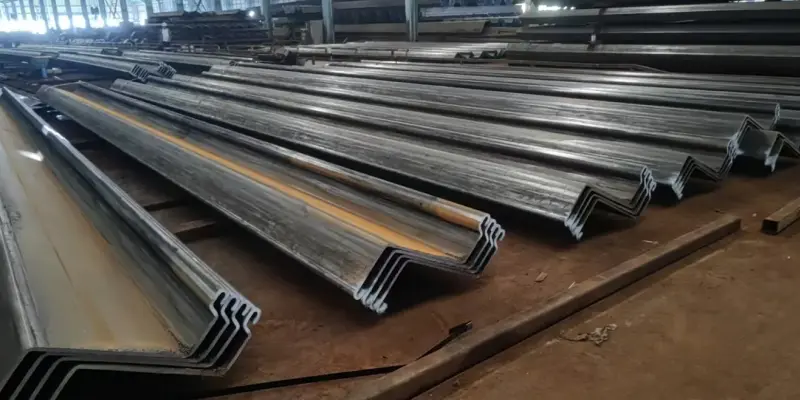
You are designing a deep foundation for a bridge or a port. The engineer specifies steel pipe piles. But how are they made, and which manufacturing method is right for your project?
Steel pipe piles are manufactured using three main methods: seamless (no weld), longitudinal welded (LSAW1), and spiral welded (SSAW2). Each method has different characteristics for diameter, wall thickness, weld integrity, and cost. LSAW1 pipes offer the best quality for critical piling applications.
](https://cnsteelplant.com/wp-content/uploads/2026/03/Article-Application-Port-2.webp)
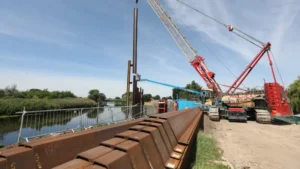
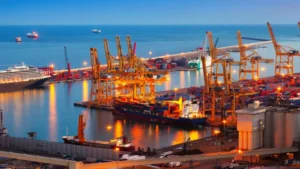
I have supplied steel pipe piles for projects across the Middle East and Southeast Asia. A port project in the UAE used LSAW1 piles for the main berth. A bridge project in Southeast Asia used SSAW2 piles for the approach trestle. Let me walk you through the manufacturing methods.
What is the difference between seamless and welded steel pipes?
The main difference between seamless and welded steel pipes is the presence of a weld seam. Seamless pipes have no weld, while welded pipes1 have a longitudinal or spiral seam.
Seamless pipes are made by piercing a solid steel billet and rolling it into a tube. Welded pipes are made by forming steel plates or coils into a cylinder and welding the seam. Seamless pipes have uniform properties and no weld to fail, but they are limited in diameter and more expensive. Welded pipes can be made in larger diameters and longer lengths at lower cost2.
](https://cnsteelplant.com/wp-content/uploads/2026/03/Article-Application-City-2.webp)
Detailed Comparison of Seamless and Welded Pipes
Let me explain the differences in detail.
Seamless Steel Pipes
| Property | Range |
|---|---|
| Diameter | Up to 24 inches (610 mm) |
| Wall thickness | Up to 40 mm |
| Length | Typically 10-12 m |
| Weld seam | None |
| Manufacturing | Pierced billet, rolled |
| Strength | Excellent (uniform properties) |
| Cost | Highest |
Advantages of Seamless Pipes
- No weld seam to fail during driving
- Uniform mechanical properties around the pipe
- Excellent fatigue resistance
- No risk of weld defects
Disadvantages of Seamless Pipes
- Limited diameter (typically under 24 inches)
- Higher cost2 than welded pipes1
- Longer lead times for large diameters
Welded Steel Pipes (LSAW and SSAW)
| Property | Range |
|---|---|
| Diameter | 16 to 120 inches (406 to 3,048 mm) |
| Wall thickness | 4 to 50 mm+ |
| Length | 12-64 m |
| Weld seam | Longitudinal or spiral |
| Manufacturing | Formed plates or coils, welded |
| Strength | Good (weld is the critical point) |
| Cost | Lower than seamless |
Advantages of Welded Pipes
- Larger diameters available
- Longer lengths reduce field splices
- Lower cost2 than seamless
- Wall thickness can be varied
Disadvantages of Welded Pipes
- Weld seam is a potential weak point
- Requires inspection of welds
- Weld properties differ from base metal
My Experience
For a high-load bridge foundation, we used seamless pipe piles. The uniform properties and absence of a weld seam gave the engineer confidence in the design. However, the cost2 was 40% higher than welded alternatives. For most piling projects, welded pipes1 are the better choice.
How are LSAW pipes manufactured?
LSAW (Longitudinal Submerged Arc Welded1) pipes are made from steel plates formed into a cylinder with a single straight weld seam. They are the preferred choice for critical piling applications.
LSAW pipes start as steel plates. The plate is cut to the required width and then formed into a cylinder using a UOE, JCOE, or press bending process. The formed cylinder has a single longitudinal seam. This seam is welded from both the inside and outside using submerged arc welding (DSAW). After welding, the pipe is often mechanically expanded to achieve precise dimensions and reduce residual stresses.
](https://cnsteelplant.com/wp-content/uploads/2026/03/Article-application-6.webp)
Step-by-Step LSAW Manufacturing Process
Let me walk you through the LSAW manufacturing process.
Step 1: Plate Preparation
Steel plates are inspected for surface defects and dimensions. The edges are beveled to prepare for welding. The plates are cut to the exact width required for the pipe diameter.
Step 2: Forming (UOE Process)
The UOE process2 has three stages:
- U-ing: The plate is pressed into a U shape using a U-press
- O-ing: The U shape is pressed into an O shape using an O-press
- Expanding: The pipe is mechanically expanded to achieve precise diameter and reduce residual stresses
Alternative forming methods include JCOE (J-ing, C-ing, O-ing, Expanding) for thicker walls.
Step 3: Welding (DSAW)
Double Submerged Arc Welding3 is used:
- Inside weld: First pass from inside the pipe
- Outside weld: Second pass from outside
- The weld is fully penetrated through the wall thickness
- Submerged arc process uses granular flux to protect the weld
Step 4: Inspection
The weld is inspected using:
- Visual inspection of weld profile
- Ultrasonic testing (UT) for internal defects
- Radiographic testing (RT) for critical applications
Step 5: Finishing
- Pipe ends are beveled for field welding
- Hydrostatic testing for pressure applications (if required)
- Coating application (if specified)
LSAW Pipe Characteristics
| Property | Range |
|---|---|
| Diameter | 16 to 60 inches (406 to 1,524 mm) |
| Wall thickness | 6 to 50 mm+ |
| Length | 12-18 m typical |
| Weld seam | One longitudinal seam |
| Quality | Excellent (DSAW full penetration) |
| Cost | High |
My Experience
For a deepwater port project, we used LSAW pipes with 30 mm wall thickness. The UOE forming produced pipes with perfect roundness. The DSAW welds passed ultrasonic inspection with no defects. The piles were driven to 40 m depth through dense sand.
What are the advantages of SSAW pipes?
SSAW (Spiral Submerged Arc Welded) pipes offer several advantages for piling applications, especially for large diameters and long lengths.
SSAW pipes are manufactured by forming steel coil into a spiral and welding the seam using submerged arc welding. The main advantages are large diameters (up to 120 inches), very long lengths (up to 64 m), and lower cost than LSAW. They are ideal for projects where large diameter piles are needed and driving conditions are moderate.
](https://cnsteelplant.com/wp-content/uploads/2026/03/Article-application-4.webp)
Advantages of SSAW Pipes
Let me explain the key advantages of SSAW pipes for piling.
1. Large Diameters1
SSAW pipes can be manufactured in diameters up to 120 inches (3,048 mm) or more. This makes them ideal for large-diameter pipe piles used in marine structures and deep foundations where LSAW pipes would require very wide plates.
2. Very Long Lengths2
Because the manufacturing process is continuous, SSAW pipes can be produced in lengths up to 64 meters. This reduces the number of field splices needed, saving time and labor during installation.
3. Lower Cost3
SSAW pipes typically cost 20-30% less than LSAW pipes of the same diameter and wall thickness. The continuous manufacturing process is more efficient, and steel coils are often less expensive than steel plates.
4. Good for Moderate Driving Conditions4
For projects where driving conditions are not severe (soft to medium soils, no cobbles or boulders), SSAW pipes perform well and offer significant cost savings.
SSAW Pipe Characteristics
| Property | Range |
|---|---|
| Diameter | 16 to 120 inches (406 to 3,048 mm) |
| Wall thickness | 4 to 25 mm typical |
| Length | Up to 64 m continuous |
| Weld seam | Helical (spiral) |
| Quality | Good |
| Cost | Lower than LSAW (20-30% savings) |
When to Choose SSAW Pipes
| Application | Suitable for SSAW? |
|---|---|
| Large diameter piles (>60") | Yes (often only option) |
| Long piles (over 30 m) | Yes (reduces splices) |
| Soft to medium soils | Yes |
| Hard driving with cobbles | No |
| Marine environment with corrosion allowance | Check wall thickness |
My Experience
For a port approach trestle, we used SSAW pipes with 36-inch diameter and 12 mm wall thickness. The water depth was moderate (8 m), and the soil was soft sand. The SSAW pipes drove easily and cost 25% less than LSAW. The long lengths (50 m) eliminated field splices.
How to choose the right pipe pile manufacturing method1 for your project?
Choosing the right pipe pile manufacturing method1 depends on project requirements for diameter, wall thickness, driving conditions2, and budget3.
The selection guide considers: diameter needed4 (seamless for under 24", LSAW for 24-60", SSAW for over 60"), wall thickness (LSAW for thick walls over 25 mm), driving conditions2 (LSAW for hard driving, SSAW for moderate), and budget3 (SSAW for cost savings, seamless for highest quality). For critical applications with hard driving, LSAW is the best choice.
[^1] selection guide chart](https://placehold.co/600x400 "Pipe Pile Selection Guide")](https://cnsteelplant.com/wp-content/uploads/2026/03/Article-application-5.webp)
Selection Criteria for Pipe Pile Manufacturing Methods
Let me provide a practical selection guide.
Selection by Diameter
| Diameter Range | Recommended Method |
|---|---|
| Under 16 inches | Seamless or ERW |
| 16-24 inches | Seamless, LSAW, or SSAW |
| 24-60 inches | LSAW or SSAW |
| Over 60 inches | SSAW (only option) |
Selection by Wall Thickness
| Wall Thickness | Recommended Method |
|---|---|
| Under 12 mm | SSAW or LSAW |
| 12-25 mm | LSAW or SSAW |
| 25-40 mm | LSAW or seamless |
| Over 40 mm | LSAW (seamless limited to small diameters) |
Selection by Driving Conditions
| Driving Condition | Recommended Method |
|---|---|
| Soft soil, moderate driving | SSAW (most economical) |
| Dense sand, gravel | LSAW (stronger weld) |
| Cobbles, boulders | LSAW (thick wall) |
| Hard driving, impact hammer | LSAW (weld aligned with stress) |
| Sensitive, vibration limits | Any (depends on installation method) |
Selection by Budget
| Budget | Recommended Method |
|---|---|
| Lowest cost | SSAW |
| Moderate cost | LSAW |
| Highest quality (unlimited budget3) | Seamless |
Decision Matrix
| Project Requirement | Seamless | LSAW | SSAW |
|---|---|---|---|
| Small diameter (60") | Not possible | Limited | Best |
| Thick wall (>25 mm) | Limited | Best | Not possible |
| Hard driving | Best | Best | Not recommended |
| Cost sensitive | Not recommended | Good | Best |
| Long lengths (>30 m) | Not possible | Limited | Best |
My Experience
For a major port project, we used LSAW for the main berth piles (30 mm wall, 24-inch diameter, hard driving) and SSAW for the approach trestle (12 mm wall, 36-inch diameter, moderate driving). Each method was chosen for its strengths. The LSAW piles cost more but handled the hard driving. The SSAW piles saved money where conditions were easier.
Conclusion
Steel pipe piles are manufactured by three methods: seamless (no weld), LSAW1 (longitudinal weld), and SSAW2 (spiral weld). LSAW1 offers the best quality for critical piling with thick walls. SSAW2 is economical for large diameters and long lengths. Seamless is best for small diameters and highest loads.
-
Explore this link to understand why LSAW is preferred for critical piling applications. ↩ ↩ ↩ ↩ ↩ ↩ ↩ ↩ ↩ ↩ ↩ ↩
-
Discover the cost-effectiveness and applications of SSAW in large diameter projects. ↩ ↩ ↩ ↩ ↩ ↩ ↩ ↩ ↩ ↩ ↩ ↩
-
Understand the relationship between budget and pipe pile selection to make cost-effective decisions for your project. ↩ ↩ ↩ ↩ ↩
-
Learn how diameter influences the choice of pipe pile methods, ensuring optimal performance for your project. ↩ ↩