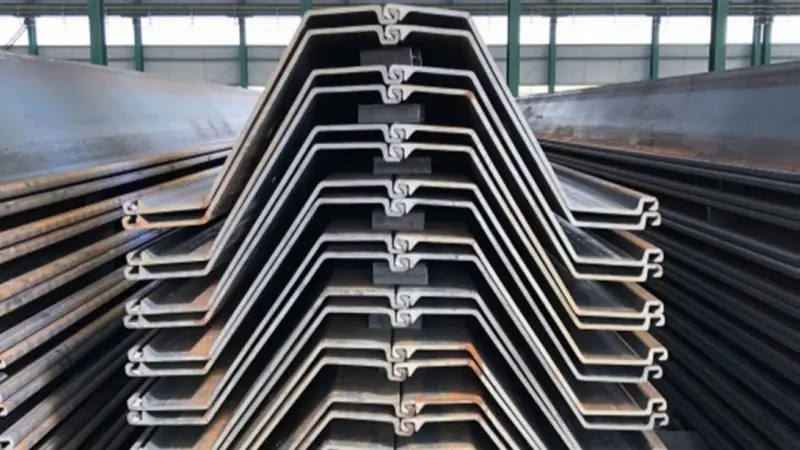
Many infrastructure projects face problems with unstable soil, water pressure, and limited construction space. Choosing the wrong retaining solution can increase cost, delay construction, and create safety risks.
Steel sheet piles are widely used in infrastructure projects because they provide strong soil support, fast installation, and flexible applications in marine, transportation, and civil engineering works.
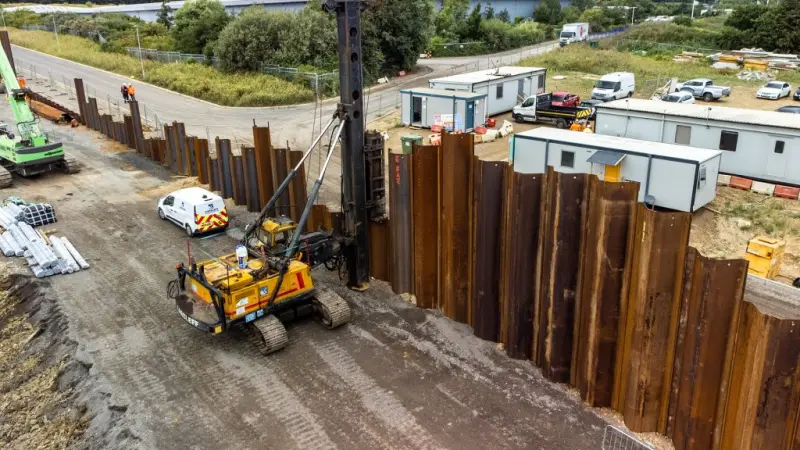
I have worked with many customers who need reliable solutions for excavation support, river protection, port construction, and foundation projects. They usually care about three things: structural safety, installation efficiency, and long-term performance. Steel sheet piles can meet these requirements when engineers select the correct section type, steel grade, and installation method.
In modern infrastructure construction, contractors often need materials that can work in difficult environments. Traditional concrete structures may require more preparation time and larger working areas. Steel sheet piles provide another option because they can be installed quickly and create a continuous retaining structure.
I will explain why steel sheet piles are commonly selected for infrastructure projects. I will also discuss their limitations, compare them with concrete piles, and explain their main applications.
What are the disadvantages of sheet piles?
Steel sheet piles provide many advantages, but I know that no construction material is perfect. Engineers need to understand their disadvantages before selecting them for a project.
The main disadvantages of sheet piles include corrosion risk, installation noise, vibration, and the need for professional installation equipment.
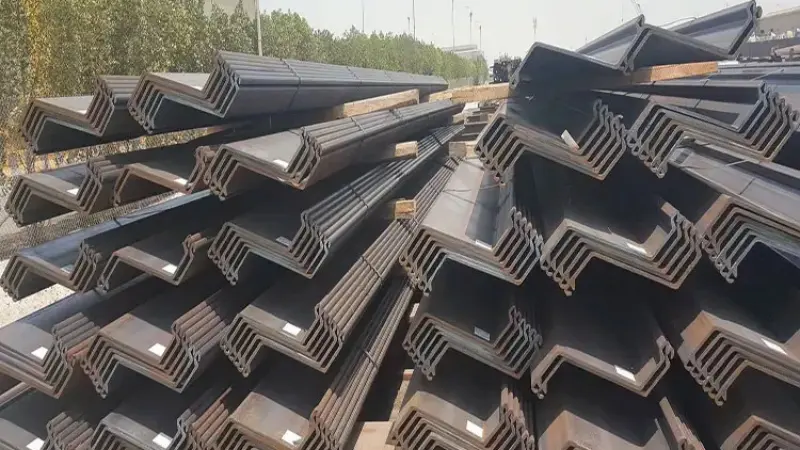
Steel sheet piles are strong and efficient, but their performance depends on correct design and construction methods. When contractors ignore site conditions, the final structure may not achieve the expected service life.
Common limitations of steel sheet piles
Steel sheet piles are usually manufactured from high-strength steel and designed for demanding environments. However, several factors can affect their performance.
| Disadvantage | Description | Common Solution |
|---|---|---|
| Corrosion | Steel may rust when exposed to seawater, chemicals, or wet soil | Apply protective coating or use corrosion allowance |
| Noise | Pile driving equipment creates construction noise | Use proper scheduling and noise control methods |
| Vibration | Installation vibration may affect nearby structures | Monitor vibration levels and select suitable equipment |
| Soil conditions | Hard soil or rock can make installation difficult | Perform soil investigation before construction |
| Initial cost | Material cost may be higher than some temporary solutions | Compare total project cost instead of only material price |
One major concern I often discuss with customers is corrosion. Steel sheet piles are commonly used in marine environments, where saltwater exposure can accelerate corrosion. Projects near ports, rivers, and coastal areas need additional protection methods.
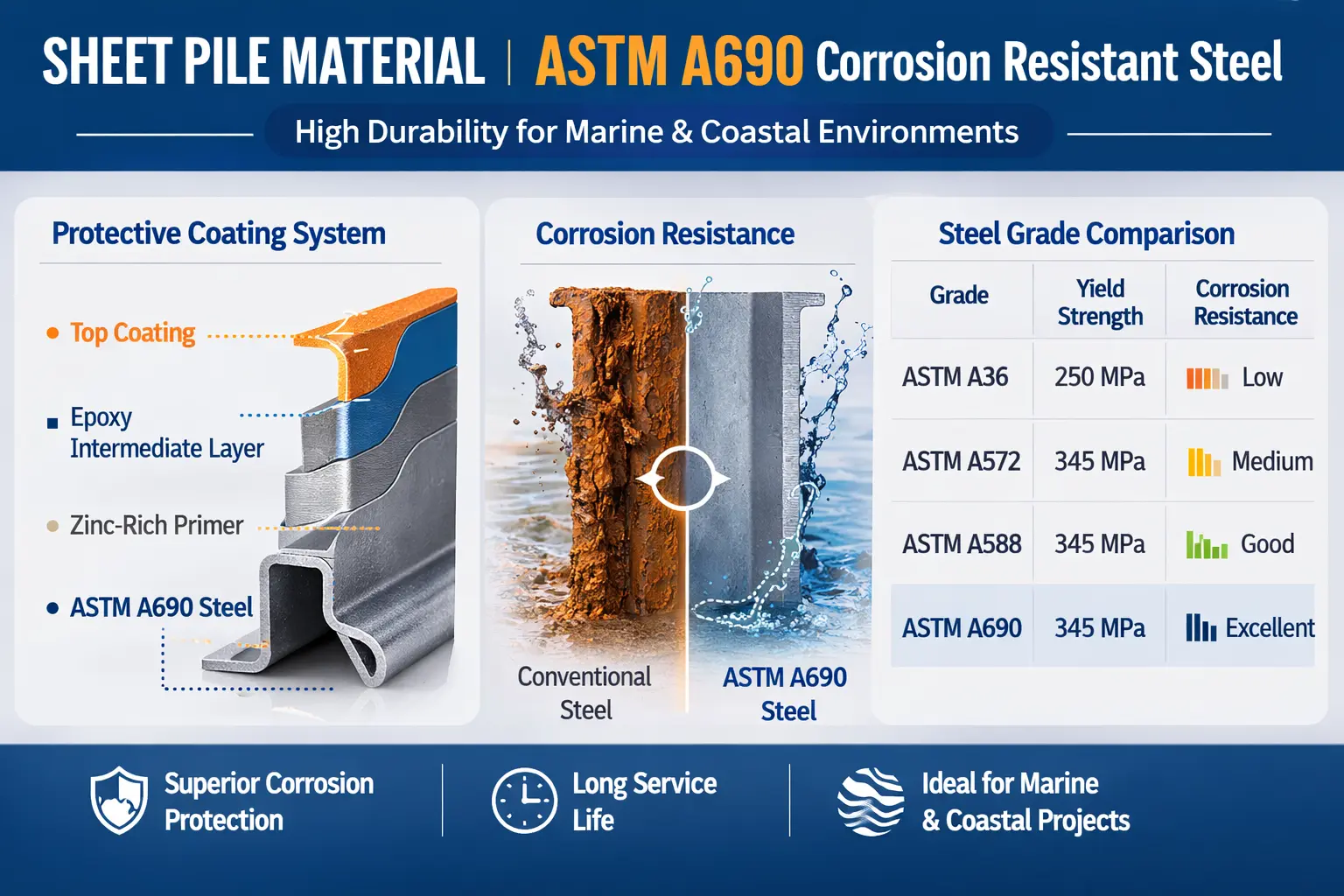
For example, contractors can use protective coatings, increased steel thickness, or corrosion-resistant steel grades to improve service life. Proper maintenance can also extend the working period of a sheet pile wall.
Another limitation is installation vibration. Steel sheet piles are usually installed by vibratory hammers or impact hammers. These methods are effective, but they can create vibration near existing buildings or sensitive structures. Engineers need to evaluate the surrounding environment before installation.
Steel sheet piles require professional design
I believe many problems with sheet piles are not caused by the material itself. They usually happen because of incorrect design or unsuitable installation methods.
The design process needs to consider several factors:
| Design Factor | Why It Matters |
|---|---|
| Soil condition | Determines stability and required embedment depth |
| Water pressure | Affects lateral loading on the retaining system |
| Steel section type | Influences strength and bending resistance |
| Project duration | Determines temporary or permanent design requirements |
| Environmental condition | Affects corrosion protection requirements |
For example, a riverbank protection project requires different considerations compared with an underground excavation project. A marine project may focus more on corrosion resistance, while an urban excavation project may focus more on vibration control.
In my experience, steel sheet piles remain one of the most practical solutions for many infrastructure projects because their disadvantages can usually be managed through engineering planning. Contractors should not only compare material prices. They should evaluate the complete project requirements, including installation, maintenance, and service life.
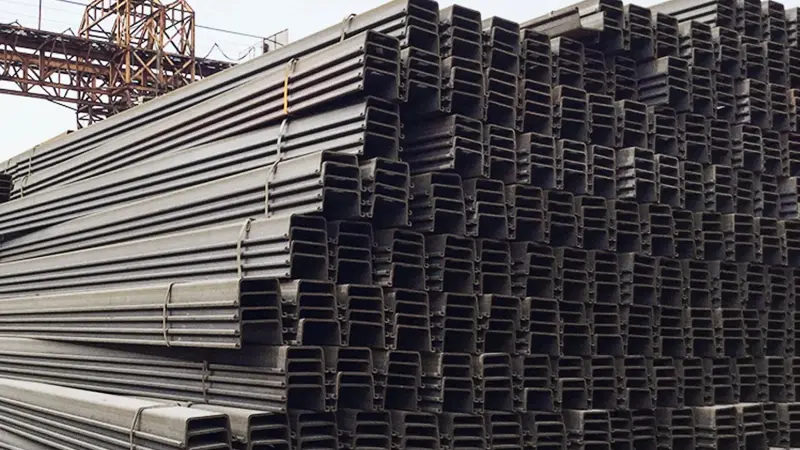
When engineers compare foundation and retaining solutions, they often ask whether steel piles are better than concrete piles. I believe the answer depends on the project conditions, because each material has different strengths.
Steel piles usually provide faster installation, higher flexibility, and easier transportation. Concrete piles often provide strong compressive capacity and good long-term durability in certain applications.
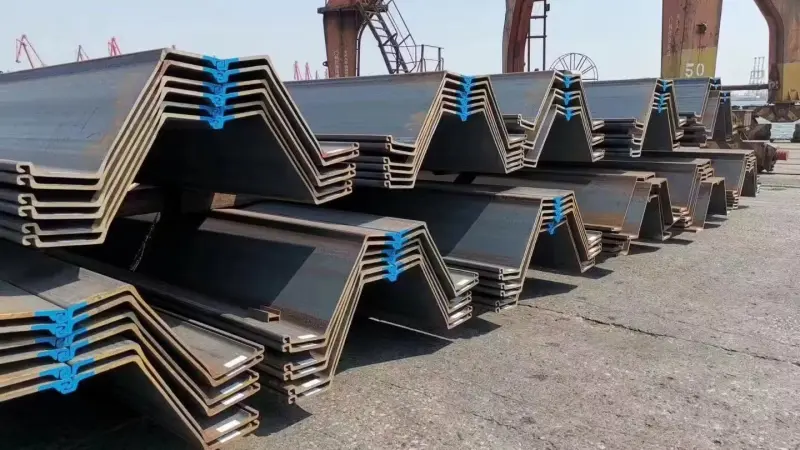
I have found that contractors usually choose steel piles when they need quick installation, limited construction space, or solutions for difficult ground conditions. They often choose concrete piles when they need large load capacity and permanent foundation support.
The decision should not only depend on the material price. Engineers need to consider soil conditions, project schedule, environmental requirements, and expected service life.
Steel piles vs concrete piles comparison
Both steel piles and concrete piles are important foundation materials. The correct choice depends on the specific project.
| Feature | Steel Piles | Concrete Piles |
|---|---|---|
| Installation speed | Faster installation with piling equipment | Usually requires more preparation time |
| Material strength | High tensile strength and good flexibility | High compressive strength |
| Transportation | Easier because of lighter weight | More difficult because of heavier weight |
| Site adaptability | Suitable for many soil conditions | Works well in stable soil conditions |
| Construction space | Requires smaller working areas | Usually requires larger preparation areas |
| Modification | Easier to cut, extend, or connect | More difficult to modify after installation |
| Corrosion resistance | Requires protection in aggressive environments | Naturally resistant to many conditions |
Steel piles are widely used in projects where flexibility and speed are important. For example, contractors use steel piles in bridge foundations, marine structures, temporary works, and deep excavation support projects.
Concrete piles are also valuable. They can provide strong vertical support for buildings, highways, and heavy structures. Reinforced concrete piles can handle large compressive loads and are commonly selected for permanent foundation systems.
Why contractors choose steel piles for infrastructure projects
I often communicate with customers who work on large infrastructure projects. Many of them select steel piles because construction schedules are becoming shorter and project conditions are becoming more complex.
Steel piles have several advantages:
| Advantage | Benefit for Contractors |
|---|---|
| High strength-to-weight ratio | Reduces transportation and handling difficulties |
| Fast installation | Helps shorten project construction time |
| Flexible design options | Supports different engineering requirements |
| Reusable options | Some temporary piles can be removed and reused |
| Strong connection system | Creates stable structural support |
One important advantage of steel piles is their flexibility. Steel can absorb certain levels of deformation without sudden failure. This characteristic is useful in areas with changing loads, vibration, or difficult soil conditions.
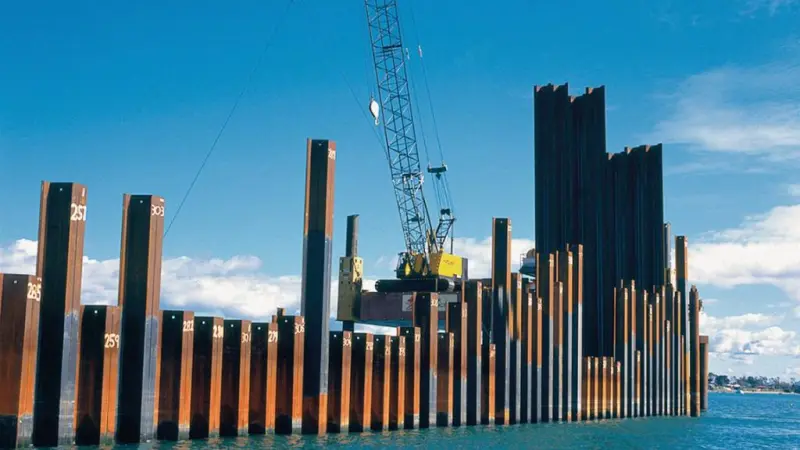
For marine construction, steel piles are especially common because they can be installed in water environments. Contractors use them for docks, seawalls, offshore structures, and coastal protection systems.
When concrete piles may be a better choice
Although I often recommend steel solutions for many applications, concrete piles still have important advantages.
Concrete piles may be preferred when:
- The project requires very high compression capacity.
- The structure needs a permanent deep foundation system.
- The environment has low risk of steel corrosion.
- Local construction resources are more suitable for concrete work.
The best material depends on the complete engineering analysis.
My experience with steel pile selection
In my opinion, steel piles are not simply a replacement for concrete piles. They are a different engineering solution for different project needs.
I usually advise customers to consider the following questions before choosing:
| Question | Purpose |
|---|---|
| What type of load will the pile resist? | Determines required strength |
| What is the soil condition? | Helps select the correct pile design |
| Is the project near water? | Determines corrosion protection needs |
| How fast must construction finish? | Influences installation method |
| Is the structure temporary or permanent? | Affects material selection |
For example, in riverbank protection projects, I have seen contractors choose hot rolled U type steel sheet piles because they needed a fast and reliable retaining system. The interlocking structure helped create a continuous wall that controlled soil erosion and improved bank stability.
From my perspective, steel piles often provide better project flexibility, especially for civil and marine construction. However, engineers should always select materials based on technical requirements instead of choosing only by cost.
What are the disadvantages of steel piles?
Steel piles are widely used in infrastructure projects because they provide high strength, fast installation, and flexible engineering solutions. However, I know that every material has limitations. Understanding these disadvantages helps contractors make better decisions before starting construction.
The main disadvantages of steel piles include corrosion risk, higher material cost, transportation requirements, and the need for skilled installation teams.
Steel piles perform well in many difficult environments, but engineers need to consider the complete project conditions. A good design can reduce most risks, while poor planning can create problems during operation.
Main challenges of using steel piles
Steel piles are manufactured from structural steel, which provides excellent strength and durability. However, the same steel properties that make them strong also create some challenges.
| Disadvantage | Description | Impact on Project |
|---|---|---|
| Corrosion risk | Steel can react with water, oxygen, and chemicals | Requires coating or protection methods |
| Higher initial material cost | Steel prices can change based on market conditions | May increase early project investment |
| Installation vibration | Driving piles can create ground vibration | May affect nearby buildings |
| Noise pollution | Pile driving equipment produces noise | Requires construction management |
| Skilled installation required | Correct installation needs experienced operators | Poor installation may reduce performance |
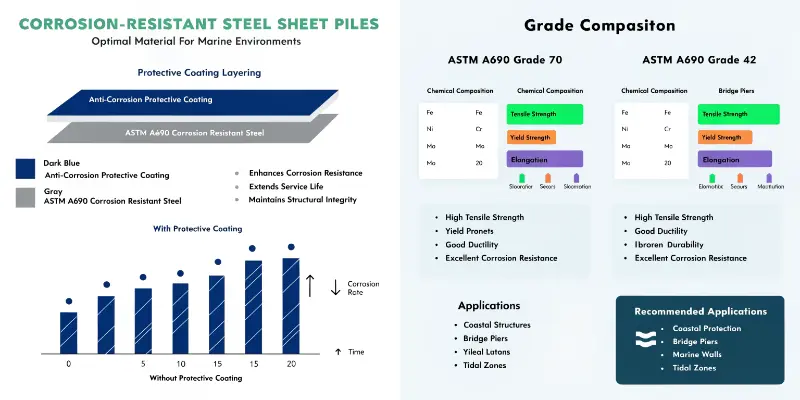
One of the biggest concerns with steel piles is corrosion. When steel piles are exposed to seawater, groundwater, or aggressive soil, corrosion can reduce the thickness of the steel section over time.
This issue is especially important in marine construction. Ports, docks, seawalls, and offshore structures often face continuous exposure to saltwater. In these situations, engineers usually consider additional protection methods.
Common corrosion protection methods include:
| Protection Method | How It Works |
|---|---|
| Protective coating | Creates a barrier between steel and the environment |
| Increased steel thickness | Provides additional material allowance for corrosion |
| Cathodic protection | Reduces electrochemical corrosion process |
| Regular inspection | Helps identify problems early |
I often explain to customers that corrosion does not mean steel piles cannot be used in water environments. Many marine structures have used steel piles successfully for decades. The key point is selecting the correct steel grade, design thickness, and protection method.
Installation limitations of steel piles
Another disadvantage is that steel pile installation requires professional equipment and experience.
Steel piles are usually installed using:
| Equipment | Application |
|---|---|
| Vibratory hammer | Fast installation with reduced vibration |
| Impact hammer | Used for harder soil conditions |
| Crane equipment | Handles and positions pile sections |
| Hydraulic equipment | Supports specialized installation methods |
The installation process can create vibration and noise. This can become a concern when projects are located near residential areas, historical buildings, or sensitive structures.
For example, an underground excavation project in a city center may need additional vibration monitoring. The contractor needs to balance construction efficiency with environmental protection.
Cost considerations of steel piles
Some customers believe steel piles are always expensive because the steel material price is higher than some alternatives. However, I think the total project cost should include more than the material price.
The complete cost includes:
| Cost Factor | Explanation |
|---|---|
| Material cost | Price of steel pile sections |
| Transportation cost | Delivery from factory to construction site |
| Installation cost | Equipment and labor expenses |
| Protection cost | Coating and maintenance requirements |
| Project time | Impact of construction speed on total budget |
Steel piles can sometimes reduce total project costs because they allow faster installation and require less working space.
For example, in a limited construction area, a steel sheet pile wall may be installed quickly without large excavation work. This can reduce labor requirements and shorten the project schedule.
Environmental and project limitations
Steel piles also have some environmental considerations. Installation noise and vibration may affect surrounding areas. Contractors need to follow local regulations and use suitable construction methods.
However, modern technology has improved steel pile installation. Low-vibration equipment, better monitoring systems, and improved coatings have reduced many traditional problems.
In my experience, the disadvantages of steel piles are manageable when engineers plan properly. Steel piles are still one of the most reliable solutions for infrastructure, marine, and foundation projects.
I believe the correct question is not whether steel piles have disadvantages. Every construction material has limitations. The better question is whether steel piles are suitable for the specific project conditions.
When contractors select the correct pile type, installation method, and protection system, steel piles can provide stable performance for long-term infrastructure projects.
What are steel sheet piles used for?
Steel sheet piles are used in many infrastructure projects because they provide strong soil retention, water control, and fast construction solutions. I have seen steel sheet piles become an important material in civil engineering, marine construction, and foundation projects.
Steel sheet piles are mainly used for retaining walls, deep excavation support, flood protection, riverbank protection, port construction, and temporary or permanent earth retaining structures.
The main reason contractors choose steel sheet piles is their ability to create a continuous wall through an interlocking system. Each pile connects with the next pile, forming a stable structure that can resist soil pressure and control water movement.
I often explain to customers that steel sheet piles are not only steel products. They are complete engineering solutions that help solve problems related to unstable ground, limited space, and water environments.
Common applications of steel sheet piles
Steel sheet piles are suitable for many types of construction projects. The following table shows some common applications.
| Application | Function of Steel Sheet Piles |
|---|---|
| Retaining walls | Holds back soil and prevents ground movement |
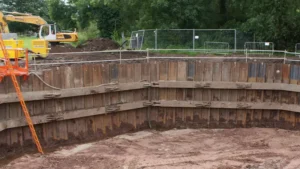
| Deep excavation support | Creates a safe working area for underground construction |
| Riverbank protection | Prevents erosion and improves flood control |
| Port construction | Supports coastal structures and controls water pressure |
| Bridge foundation projects | Provides excavation support around foundation areas |
| Flood protection systems | Creates barriers against water impact |
| Underground structures | Supports tunnels, basements, and utility projects |
Steel sheet piles in marine construction
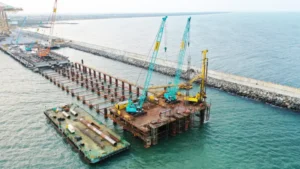
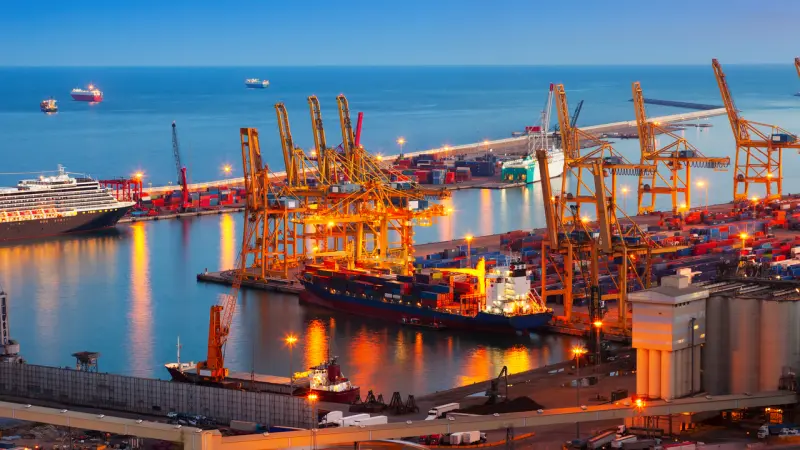
Marine construction is one of the most common areas where steel sheet piles are used. Ports, harbors, seawalls, and coastal structures often require materials that can work under water pressure and changing environmental conditions.
Steel sheet piles are suitable for marine projects because they provide:
| Feature | Benefit in Marine Projects |
|---|---|
| Strong interlocking connection | Creates continuous walls for water and soil control |
| High structural strength | Resists lateral pressure from soil and water |
| Fast installation | Helps reduce construction time in difficult environments |
| Flexible design options | Supports different project requirements |
| Long service life | Performs well with proper corrosion protection |
For example, contractors use steel sheet piles for quay walls in ports. These structures need to support heavy loads from containers, equipment, and vehicles. The sheet pile wall helps stabilize the shoreline and provides a safe foundation for port facilities.
Steel sheet piles are also widely used in flood protection projects . Riverbank areas often face soil erosion because of strong water flow. A properly designed sheet pile wall can reduce erosion and improve the stability of the riverbank.
Steel sheet piles for excavation support
Urban construction projects often have limited space. Traditional concrete retaining walls may require larger working areas and longer construction periods.
Steel sheet piles provide a practical solution for deep excavation projects.
| Project Type | Why Steel Sheet Piles Are Used |
|---|---|
| Basement construction | Supports excavation sides in limited spaces |
| Subway construction | Provides temporary ground protection |
| Pipeline installation | Prevents soil collapse during trench work |
| Foundation excavation | Improves worker safety during construction |
I have worked with customers who needed excavation support solutions for projects located near existing buildings. In these situations, contractors usually focus on installation speed and structural reliability.
Steel sheet piles can be installed quickly with vibratory piling equipment. This helps contractors maintain project schedules and reduce disruption around the construction area.
The required installation depth depends on soil conditions, water pressure, and structural loading. Engineers usually evaluate factors such as embedment depth, lateral forces, and ground stability before selecting the final design.
Different types of steel sheet piles for different projects
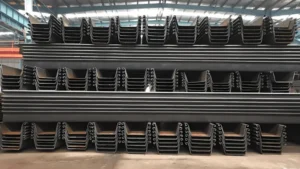
Steel sheet piles are available in different shapes and designs. Each type has different engineering characteristics.
| Type | Common Application |
|---|---|
| U-shaped sheet piles | Retaining walls, flood control, marine structures |
| Z-shaped sheet piles | Large excavation and heavy loading projects |
| Straight web sheet piles | Circular structures and special retaining systems |
| Omega sheet piles | Temporary works and specific engineering applications |
The selection depends on factors such as soil pressure, bending moment, installation depth, and project environment.
For example, a large port project may require stronger Z-shaped sheet piles because the structure needs to resist high lateral loads. A small river protection project may use U-shaped sheet piles because they provide a practical and economical solution.
Case study: Riverbank protection project
In one riverbank protection project in Southeast Asia, my customer selected hot rolled U type steel sheet piles for flood control and erosion prevention.
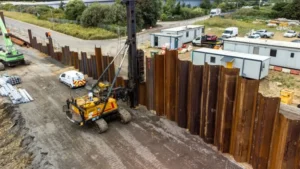
The contractor installed the sheet piles along the riverbank to create a continuous retaining structure. The strong interlocking system connected each section and improved the stability of the riverbank.
The project team used vibratory piling equipment, which helped complete installation efficiently and maintain the construction schedule.
This project showed me that steel sheet piles are valuable materials for infrastructure development. They can provide reliable support in challenging environments when engineers select the correct design and installation method.
My Insight
From my experience, steel sheet piles are widely used because they combine strength, speed, and flexibility. The most important factor is not only the product quality but also choosing the right type for the actual project conditions.
Conclusion
Steel sheet piles support modern infrastructure by providing reliable solutions for retaining walls, marine construction, excavation, and flood protection projects.