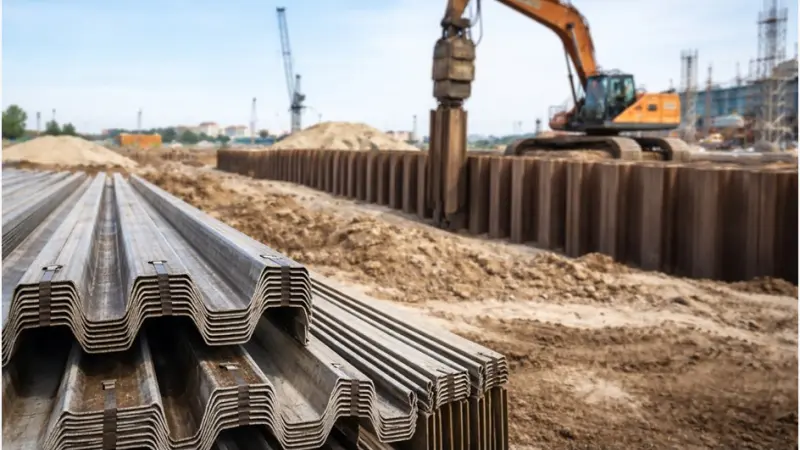
Choosing the right retaining structure is a key decision in construction. A wrong choice can increase costs, delay projects, and create safety risks.
Steel sheet piles and concrete walls are both used for retaining structures, but steel sheet piles usually provide faster installation, flexible application, and better performance in temporary and marine projects. The best choice depends on soil conditions, project requirements, and design goals.
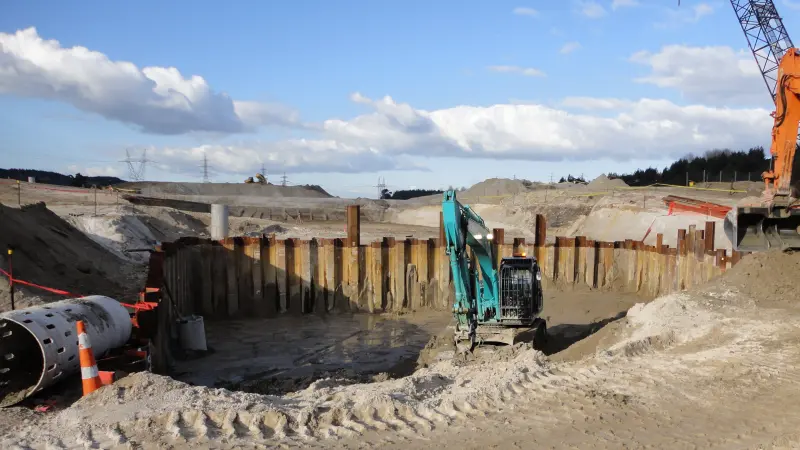
I have worked with many contractors and steel distributors who compare steel sheet piles with traditional concrete retaining walls before starting projects. Many customers focus only on material price, but I believe the complete solution should include installation speed, construction difficulty, service life, and project environment.
Steel sheet piles and concrete walls both have their own advantages. Engineers need to understand how each system works before making the final decision. In this article, I will compare these two retaining solutions and explain why many civil and marine projects choose steel sheet piles.
Are steel piles better than concrete piles?
Many contractors ask whether steel piles can replace concrete piles in retaining and foundation projects. The answer depends on the application, because both materials have different structural characteristics.
Steel piles are often better than concrete piles for projects that require fast installation, high flexibility, and strong resistance against lateral forces. Concrete piles may be preferred for heavy vertical loads and permanent foundation structures.
Different working principles
Steel piles and concrete piles work in different ways.
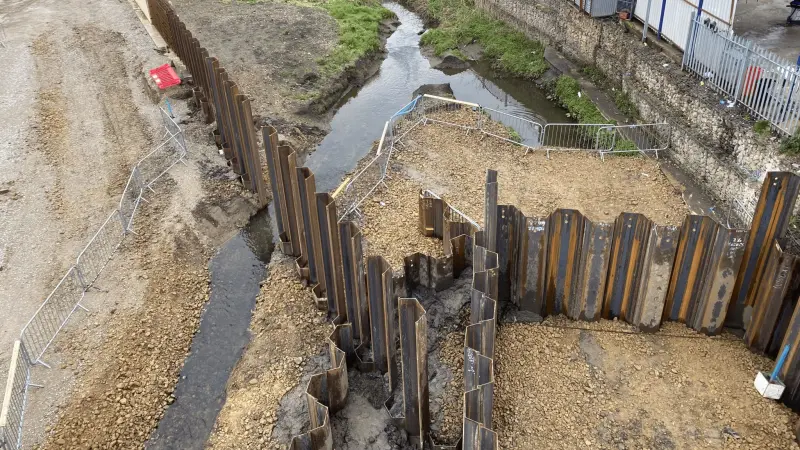
Steel sheet piles mainly resist horizontal pressure from soil and water. They create a continuous retaining wall through interlocking connections.
Concrete piles mainly transfer vertical loads from structures into deeper soil layers.
The main difference is their purpose.
| Comparison Factor | Steel Sheet Piles | Concrete Piles |
|---|---|---|
| Main function | Retaining soil and controlling water | Supporting vertical building loads |
| Installation speed | Fast installation | Usually slower |
| Flexibility | High flexibility | Lower flexibility |
| Reusability | Possible in temporary projects | Usually permanent |
| Application | Excavation, marine, flood control | Buildings, bridges, foundations |
I always explain to customers that steel sheet piles and concrete piles are not direct replacements in every situation. Engineers select them based on the forces that the structure needs to resist.
Advantages of steel sheet piles
Steel sheet piles have several benefits in retaining applications.
The first advantage is installation speed.
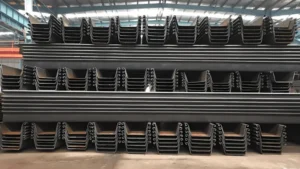
Steel sections are manufactured before reaching the construction site. Contractors can directly install them using vibratory hammers or impact equipment.
This reduces construction time.
The second advantage is flexibility.
Steel sheet piles can adapt to different project conditions.
They are commonly used for:
- Deep excavation support
- Riverbank protection
- Flood control systems
- Port construction
- Temporary retaining walls
The third advantage is strength-to-weight ratio.
Steel provides high bending strength while keeping the section relatively lightweight.
This allows contractors to transport and install piles more efficiently.
The structural efficiency of steel sheet piles is usually evaluated through properties such as section modulus and bending resistance. Engineers select different pile profiles according to the required load capacity and soil conditions.
Advantages of concrete piles
Concrete piles also have important advantages.
Concrete provides excellent compressive strength.
It performs well when structures need to carry large vertical loads.
Concrete piles are commonly used for:
- Building foundations
- Bridge foundations
- Heavy industrial structures
- Large infrastructure projects
Concrete also provides good durability when properly designed and installed.
However, concrete structures usually require more preparation work.
The construction process may include:
- Formwork installation
- Reinforcement placement
- Concrete pouring
- Curing time
These steps can increase project duration.
Installation comparison
Installation is one of the biggest differences between steel sheet piles and concrete systems.
| Factor | Steel Sheet Piles | Concrete Walls/Piles |
|---|---|---|
| Preparation time | Low | Higher |
| Installation speed | Fast | Slower |
| Equipment requirement | Crane and piling equipment | Concrete equipment and machinery |
| Weather impact | Lower | Higher during concrete work |
| Site flexibility | High | Moderate |
For emergency projects, steel sheet piles often provide advantages because contractors can install them quickly.
For example, flood protection projects usually require fast response. Contractors need structures that can be installed before water levels rise.
Steel sheet piles can provide this fast solution.
Many flood control projects use retaining systems that can be installed efficiently because construction time is a critical factor.
Performance in marine environments
Marine projects create difficult conditions.
Structures must resist:
- Water pressure
- Wave impact
- Soil erosion
- Corrosion risks
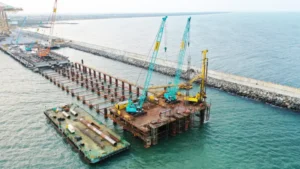
Steel sheet piles are widely used in marine construction because they can create continuous barriers.
Applications include:
- Seawalls
- Quay walls
- Port structures
- River protection systems
Concrete can also be used in marine environments, but construction conditions are often more complicated.
Steel sheet piles can reduce installation challenges because the sections are prefabricated.
The connection between each pile is created through an interlocking connection, which helps form a continuous retaining structure. This design allows engineers to build stable walls while reducing the amount of additional construction work required on site.
Cost considerations
Many customers compare only the material cost.
However, the total project cost includes many factors.
| Cost Factor | Steel Sheet Piles | Concrete Structures |
|---|---|---|
| Material cost | Depends on steel grade and profile | Depends on concrete and reinforcement |
| Installation cost | Usually lower due to speed | Higher due to construction steps |
| Labor cost | Reduced installation time | More workers required |
| Maintenance | Depends on protection system | Depends on concrete quality |
A cheaper material does not always create a cheaper project.
The installation time and construction efficiency can greatly affect the final budget.
For example, selecting suitable steel grades can improve durability and reduce long-term maintenance requirements. Engineers usually evaluate the project environment before choosing the final material specification.
Environmental considerations
Steel sheet piles also provide advantages in environmental protection.
Steel is recyclable.
Temporary sheet piles can often be removed and reused in other projects.
This reduces material waste.
Concrete structures usually become permanent after installation and are harder to reuse.
For projects that need temporary support, steel sheet piles can provide a more flexible solution.
The recyclability of steel makes it a common choice for projects that focus on sustainable construction practices.
My insight
From my experience, I do not think steel sheet piles are always better than concrete piles. Each material has its own suitable applications. However, for retaining structures, flood control, and marine projects, steel sheet piles often provide better efficiency because they combine strength, speed, and flexibility.
What is the strongest material for a retaining wall?
Selecting the strongest material for a retaining wall depends on the project environment, load requirements, and expected service life. Engineers cannot judge strength only by the material itself because a retaining structure works as a complete system.
The strongest materials for retaining walls include steel, reinforced concrete, and special engineered materials. Steel sheet piles provide high bending strength and flexibility, while reinforced concrete provides excellent compression strength for heavy permanent structures.
Understanding retaining wall strength
A retaining wall needs to resist several types of forces.
The wall does not only support soil weight. It also needs to handle water pressure, external loads, and environmental conditions.
The main forces include:
| Force Type | Description |
|---|---|
| Earth pressure | Pressure created by retained soil |
| Water pressure | Force from groundwater or surface water |
| Surcharge load | Additional pressure from vehicles or buildings |
| Wind and wave force | Common in marine environments |
| Seismic force | Movement caused by earthquakes |
The strongest retaining material is the one that matches the project requirements.
A material with very high strength may not be the best choice if it creates installation difficulties or increases project costs.
Common retaining wall materials
Different materials are used for retaining structures.
| Material | Main Feature | Common Application |
|---|---|---|
| Steel sheet piles | High bending strength and fast installation | Marine walls, excavation support |
| Reinforced concrete | High compression strength | Permanent retaining walls |
| Concrete blocks | Easy construction | Small landscaping walls |
| Gabion walls | Flexible and drainage-friendly | Riverbank protection |
| Timber | Low cost but limited durability | Temporary projects |
I usually recommend customers compare the complete project conditions instead of selecting a material only because of its strength value.
Steel strength in retaining structures
Steel sheet piles are strong because steel has excellent tensile and bending performance.
A retaining wall mainly experiences horizontal forces.
This makes steel a suitable material because it can resist bending caused by soil pressure.
The performance of steel sheet piles depends on:
| Factor | Influence |
|---|---|
| Steel grade | Determines strength level |
| Pile profile | Affects bending resistance |
| Wall design | Controls load distribution |
| Embedment depth | Provides soil support |
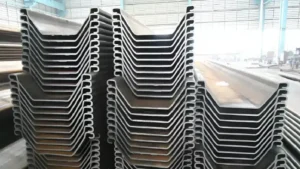
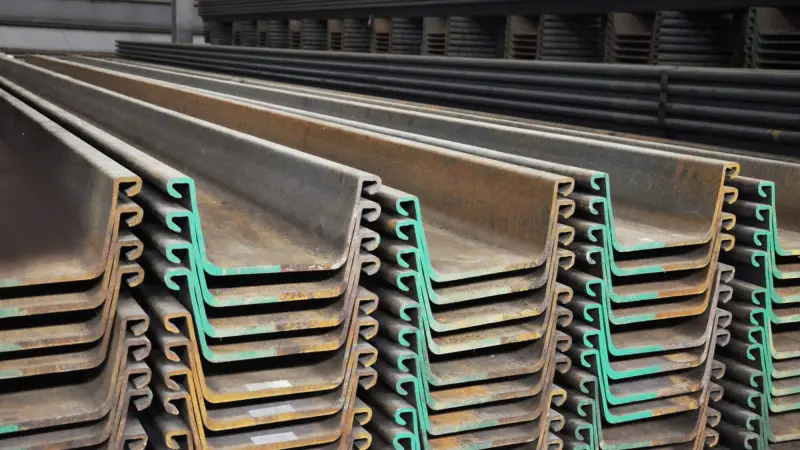
For example, Z-shaped steel sheet piles are often selected for projects requiring higher bending efficiency because their shape provides a large section modulus.
U-shaped steel sheet piles are also widely used because they provide balanced strength and convenient installation.
Reinforced concrete performance
Reinforced concrete is another strong retaining wall material.
Concrete performs very well under compression.
This makes it suitable for structures that carry heavy loads.
A reinforced concrete retaining wall usually contains:
- Concrete
- Steel reinforcement bars
- Drainage systems
- Foundation support
The steel reinforcement inside concrete improves tensile resistance.
However, concrete walls usually require more construction preparation.
The process may include:
- Excavation.
- Foundation preparation.
- Reinforcement installation.
- Formwork construction.
- Concrete pouring.
- Curing period.
This process can take more time compared with steel sheet pile installation.
Steel sheet piles vs concrete retaining walls
Both systems have advantages.
| Comparison | Steel Sheet Piles | Concrete Retaining Walls |
|---|---|---|
| Installation speed | Fast | Slower |
| Construction process | Simple | More steps |
| Flexibility | High | Lower |
| Water control | Excellent with proper design | Requires waterproofing |
| Temporary use | Suitable | Less suitable |
| Heavy vertical load | Limited | Excellent |
The choice depends on the project purpose.
For example:
A basement excavation project may use steel sheet piles because contractors need fast soil support.
A large building foundation may use reinforced concrete because it needs to carry heavy structural loads.
Why steel sheet piles perform well in marine projects
Marine environments create special challenges.
The retaining wall must resist:
- Tidal changes
- Wave impact
- Water pressure
- Soil erosion
Steel sheet piles are commonly used in:
- Ports
- Harbors
- Seawalls
- Flood protection projects
The interlocking connection creates a continuous wall.
This helps control soil movement and reduces water flow through the structure.
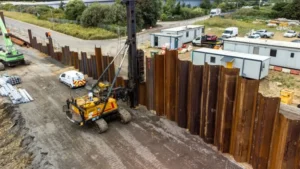
In our Southeast Asia riverbank protection project, we supplied hot rolled U-shaped steel sheet piles for flood control.
The contractor installed the piles along the riverbank to create a stable retaining structure.
The system helped prevent soil erosion and improved riverbank stability.
Durability and service life comparison
A strong retaining wall also needs long-term durability.
Different materials have different maintenance requirements.
| Material | Durability Consideration |
|---|---|
| Steel sheet piles | Requires corrosion protection in aggressive environments |
| Concrete | Requires proper design to prevent cracking |
| Timber | Limited lifespan in wet conditions |
| Gabion | Requires maintenance of stone structure |
Steel sheet piles can provide decades of service when engineers select suitable steel grades and protection methods.
Protection options include:
- Coating systems
- Increased steel thickness
- Cathodic protection
- Special steel grades
For projects exposed to seawater or aggressive environments, cathodic protection can be used to reduce corrosion risks and extend the service life of steel structures.
The importance of engineering design
I often tell customers that material strength is only one part of the solution.
A strong material cannot perform well without correct design.
Engineers need to consider:
| Design Factor | Importance |
|---|---|
| Soil investigation | Determines ground conditions |
| Load calculation | Defines required strength |
| Water conditions | Affects pressure |
| Installation method | Influences final performance |
| Maintenance plan | Controls long-term durability |
A properly designed steel sheet pile wall can outperform a poorly designed concrete wall.
The complete engineering solution matters more than the material alone.
Choosing the right retaining wall material
The best material depends on project requirements.
Steel sheet piles are usually suitable for:
- Fast construction projects
- Temporary retaining systems
- Marine applications
- Flood protection
- Deep excavation support
Concrete retaining walls are usually suitable for:
- Permanent structures
- Heavy vertical loads
- Architectural requirements
- Large infrastructure projects
My insight
In my opinion, there is no single strongest retaining wall material for every project. Steel sheet piles provide excellent performance when speed, flexibility, and lateral resistance are important. Concrete provides advantages when heavy permanent loads are the main concern. The correct choice should always match the engineering conditions.
What are the disadvantages of sheet piles?
Steel sheet piles provide many benefits in retaining structures, but I know that every construction material has limitations. Understanding the disadvantages helps engineers choose the right solution for each project.
Steel sheet piles may face challenges such as corrosion risk, installation noise, vibration, and higher equipment requirements. These factors need proper planning during design and construction.
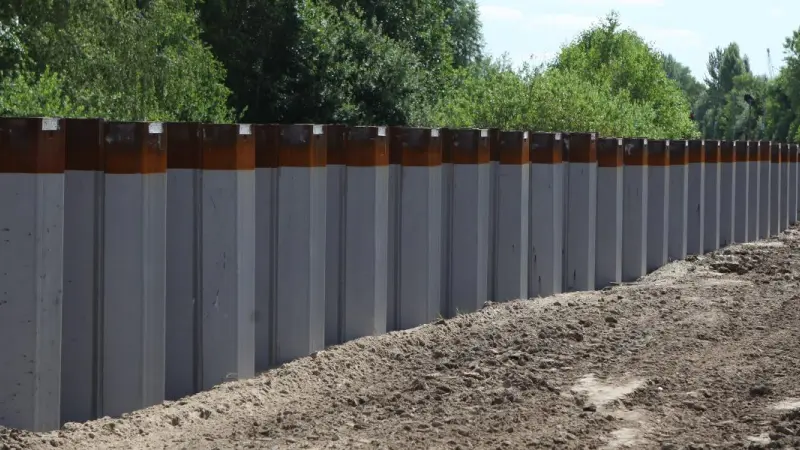
When I compare steel sheet piles with concrete retaining walls, I always consider the project environment, soil condition, service life requirement, and installation method. A material that works well for one project may not be the best choice for another project.
For example, steel sheet piles are widely used in ports, riverbank protection, flood control systems, and deep excavation projects because they can be installed quickly and provide strong lateral support. However, engineers need to consider factors such as corrosion protection, maintenance requirements, and site restrictions before selecting them.
Common disadvantages of steel sheet piles
Steel sheet piles have several limitations that contractors should understand before starting a project. The following table shows the main concerns.
| Disadvantage | Description | Possible Solution |
|---|---|---|
| Corrosion risk | Steel can rust when exposed to water, salt, or aggressive soil conditions | Use coatings, cathodic protection, or corrosion-resistant steel grades |
| Installation vibration | Driving steel sheet piles can create vibration near buildings | Use vibration monitoring or alternative installation methods |
| Noise during installation | Pile driving equipment can create high noise levels | Apply noise control measures and schedule work properly |
| Equipment requirements | Installation requires cranes, vibratory hammers, or hydraulic equipment | Work with experienced piling contractors |
| Soil limitations | Very hard soil or rock layers can make driving difficult | Conduct soil investigation before installation |
One important point I have learned from working with steel sheet pile projects is that most disadvantages can be controlled through good engineering planning. The material itself is not the problem. The key factor is choosing the correct sheet pile type, steel grade, and installation method.
For example, in marine projects, corrosion is one of the biggest concerns because seawater contains salt that can accelerate steel deterioration. I usually recommend considering corrosion allowance, protective coating, or special steel materials for long-term applications.
Another concern is vibration. When contractors install sheet piles near existing buildings, bridges, or underground structures, vibration control becomes very important. Engineers can select different installation methods to reduce possible impact.
Compared with concrete retaining walls, steel sheet piles usually require less construction time and smaller working areas. However, they need professional design and proper maintenance to achieve their expected service life.
In my opinion, the disadvantages of sheet piles are not reasons to avoid using them. They are factors that engineers need to manage. When the project team understands the site conditions and selects the right solution, steel sheet piles can still provide reliable performance for many years.
Can sheet piles be used as a retaining wall?
Steel sheet piles can be used as retaining walls because they create a continuous structural barrier that holds back soil and controls water movement. I use sheet piles in many engineering applications where space, speed, and strength are important factors.
Yes, steel sheet piles can work as retaining walls. They support soil pressure, prevent ground movement, and provide stable protection for excavation, waterfront, and flood control projects.
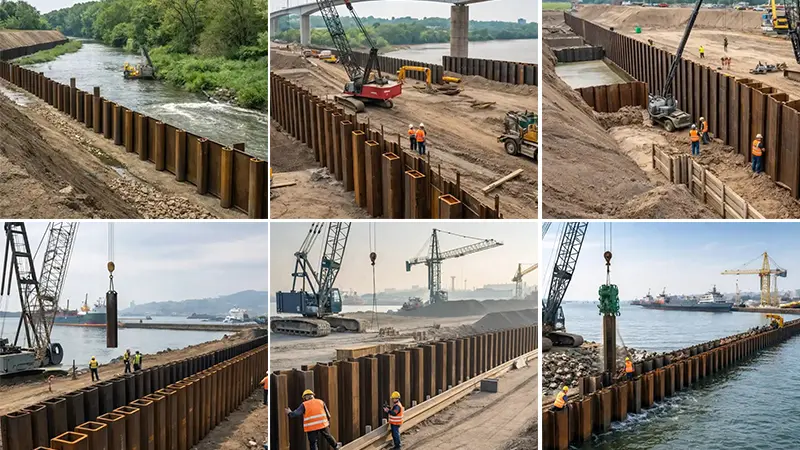
A retaining wall needs to resist different forces from the surrounding environment. These forces include soil pressure, groundwater pressure, traffic loads, and construction loads. Steel sheet piles are designed to transfer these forces into the surrounding soil through their embedded depth and interlocking structure.
I often explain to customers that a steel sheet pile retaining wall is different from a traditional concrete retaining wall. A concrete wall usually depends on its weight and reinforced structure to resist pressure. A sheet pile wall depends on the strength of the steel section, the connection between piles, and the support provided by the surrounding soil.
How steel sheet piles create retaining walls
Steel sheet piles form a continuous wall by connecting individual sections through their interlocks. Each pile is driven into the ground and connected with the next pile. This creates a strong barrier that can resist horizontal forces.
| Component | Function in retaining wall system |
|---|---|
| Steel sheet pile section | Provides structural strength and resists bending forces |
| Interlocking connection | Connects each pile and creates a continuous wall |
| Embedded depth | Provides stability against overturning and sliding |
| Surrounding soil | Supports the pile and transfers loads |
| Anchoring system | Improves stability for deeper or heavier applications |
The performance of a steel sheet pile retaining wall depends on correct design. Engineers need to calculate earth pressure, water pressure, pile length, and section strength before installation. A wrong design can reduce the stability of the entire system.
Common applications of sheet pile retaining walls
I have seen steel sheet piles used in many types of construction projects because they provide flexible solutions.
| Application | Why steel sheet piles are used |
|---|---|
| Deep excavation support | They provide temporary or permanent ground support in limited spaces |
| Riverbank protection | They prevent erosion and improve flood control |
| Port construction | They resist water pressure and protect coastal structures |
| Bridge foundation works | They support excavation around foundation areas |
| Underground construction | They create safe working areas for tunnels and basements |
In marine construction, steel sheet piles are especially useful because they can provide both soil retention and water control. Contractors often use them for seawalls, quay walls, and coastal protection structures.
One project example from my experience involved a riverbank protection project in Southeast Asia. The contractor used hot rolled U type steel sheet piles to build a retaining structure along the river. The piles were driven into the soil using vibratory equipment, and the interlocking system created a stable barrier against soil erosion and water impact.
This project showed me that steel sheet piles are not only construction materials. They are complete engineering solutions when they are selected and installed correctly.
Steel sheet pile wall vs concrete retaining wall
| Feature | Steel Sheet Pile Wall | Concrete Retaining Wall |
|---|---|---|
| Installation speed | Faster installation with piling equipment | Usually requires longer construction time |
| Space requirement | Requires less working space | Needs larger construction area |
| Weight | Lightweight compared with concrete structures | Heavy structure |
| Reuse possibility | Some temporary sheet piles can be reused | Usually permanent |
| Water control | Good performance with interlocking design | Requires additional waterproofing |
| Construction flexibility | Suitable for difficult site conditions | Less flexible in some locations |
From my perspective, steel sheet piles are a strong option for retaining walls when the project needs fast installation, high strength, and limited construction space. They are especially suitable for marine, flood control, and excavation projects.
However, I always recommend that customers evaluate soil conditions, loading requirements, and service life expectations before choosing a retaining system. The best solution depends on the complete project environment, not only the material price.
My Insight
I believe steel sheet piles remain one of the most practical retaining wall solutions for modern engineering projects. Their advantages come from fast installation, strong interlocking performance, and flexible applications. The key is selecting the correct sheet pile type and designing the structure based on real site conditions.
Conclusion
Steel sheet piles provide strong, flexible retaining wall solutions for excavation, marine, and flood control projects when properly designed and installed.